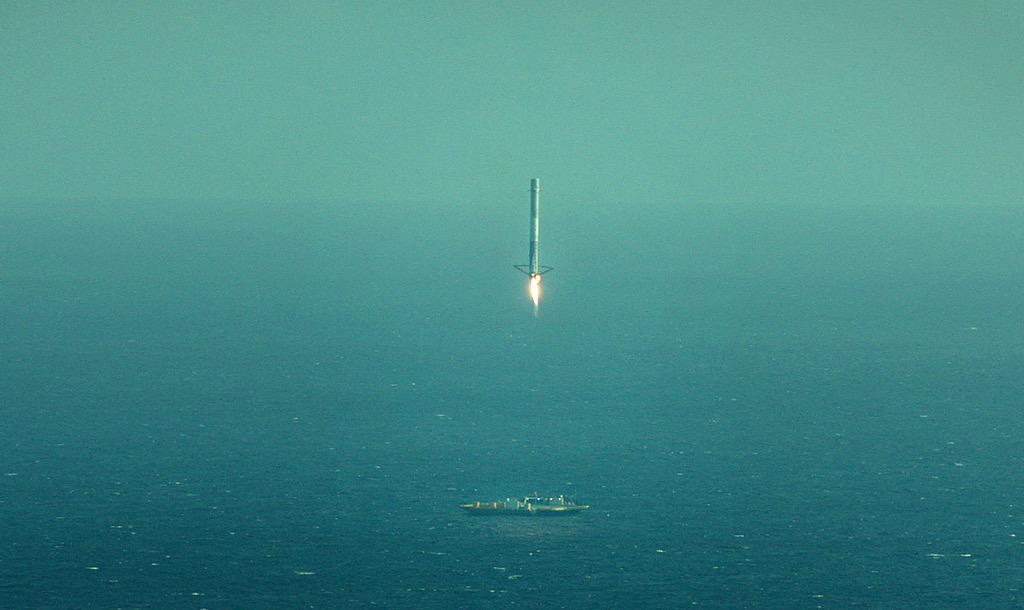
The video clearly shows a significant oscillation in attitude, and pronounced gimballing. Take a look if you can.
I did see it. But I did not see something that can not be not explained by descending faster.
If the deviation from the planned trajectory gets bigger, the steering commands get bigger. For changing attitude, the engine has to gimbal. For changing velocity (and by it, position), the while rocket has to rotate.
If you need stronger steering commands, such a rocket stage with a very uneven mass distribution will have a tendency to overcompensate. Again, nothing unexpected. Such a stage is no LM, you have to handle it with care or you can buckle it like a Proton launcher trying perform a loop.
Especially important for understanding the performance of the autopilot are the velocities of the stage - there you can see that the attitude changes had been conform to necessary position changes.
The strong changes in attitude can indeed be explained then mostly by the lower altitude. Yes, some control system issues have to be noted there. Especially BEFORE the start of the video. But the more I think about it, the more I can really understand attributing the failure to the valve.
But that such a minor valve problem can cause a landing failure is of course a huge technological debt in the Falcon 9 1.1 development. And that is not just fixed by better valves. That just prevents one problem that can make the landing uncontrollable, but there can be much more.
The whole final targeting phase before powered descent has to be more precise. And/or the powered descent has to start earlier to allow compensating problems without exceeding control stability limits.




 )
)


