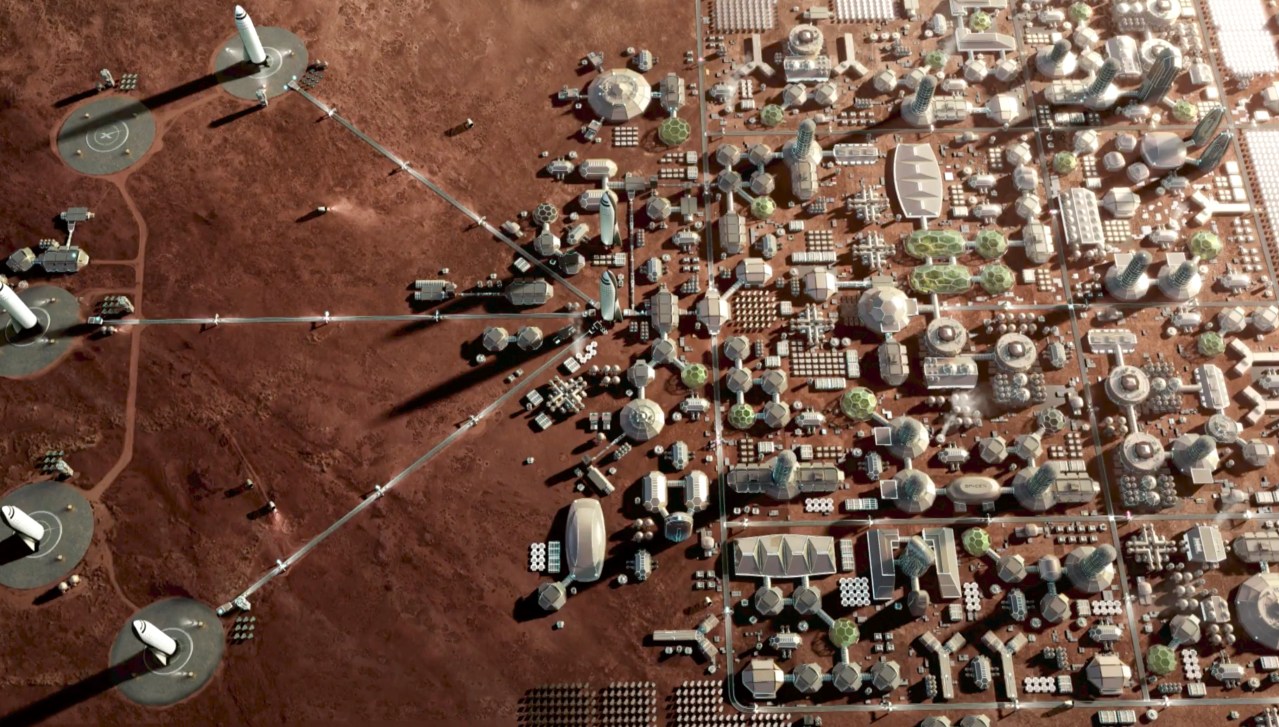
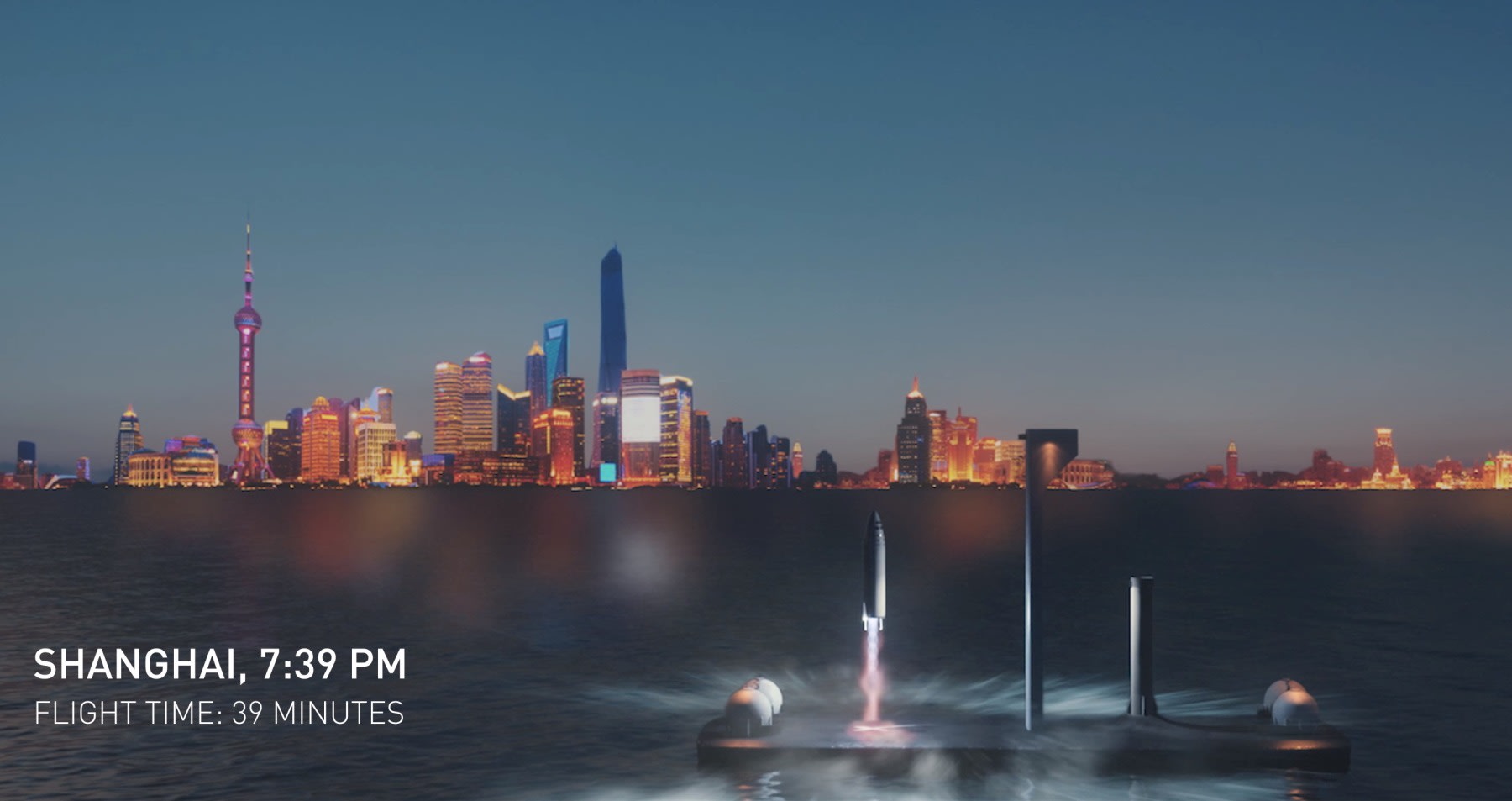
New addon request: SpaceX Interplanetary Transport System!



Since presentation of ITS I thought that it would be cool to try something like this in Orbiter. So I want to make a prototype of ITS. I have Blender but no c++ compiler. Where would you suggest me to start from? I want to do it simple and quick first. I have a little experience with Spacecraft3 but not with multistage or velcro, and I want to do this in Orbiter 2016.
Right, I forgot that I need also the landing autopilot and there's no library or tool for this. It's too much effort to code it myself, so I just hope that it will be available from other devs.What about docking the stages together and make them independent spacecraft? This way you can also implement the refueling in space.
I still wait for a reaction from BrianJ there... he already has a SpaceX-like autopilot for landing that seems to work well.
Meanwhile launching the thing would also be something and docking booster and spaceship may be a good idea if Orbiter updates masses properly and allows docked vessels to sit on the ground.

Meanwhile launching the thing would also be something and docking booster and spaceship may be a good idea if Orbiter updates masses properly and allows docked vessels to sit on the ground.
Also what about aerodynamics? Wouldn't even 2016 calculate the drag-forces for each docked element individually and add them up, because it can't calculate the "shadowing" by elements in front of the stack? I guess for that aspects to be compensated you'll need awareness of the full stack in each element, anyway.
Hi,What about docking the stages together and make them independent spacecraft? This way you can also implement the refueling in space.
I still wait for a reaction from BrianJ there... he already has a SpaceX-like autopilot for landing that seems to work well.
Hi,
I'm kind of busy with other stuff at the moment, to do any add-on development. The code for landing the Falcon 1st stage is included in the Falcon9/FalconHeavy add-ons if anyone wants to use it, but it's horrible code and should probably be re-written from scratch (the code evolved from my first attempts and has become very "tangled"!). If anyone takes up this ITS project, feel free to drop me a line if I can be of any help.
Cheers,
Brian
Guess I should include a "free to use and redistribute for non-commercial purposes" note (I know even less about code copyright than I do about writing code!). Anyway, folks are welcome to re-cycle any useful bits of my Orbiter add-ons.OK, sounds like a starting point there. How is the code licensed? You did include the sources but no copyleft license to continue development. (So default copyright applies, the source code is read-only)


I probably won't have a chance to get started until then anyway.I'd hold off on making an ITS addon until SpaceX updates their plans at IAC this year.

Completely reusable, both stages
Booster returns and lands on the launch mount
Multi-engine out capability, even during booster landing
Expected landing reliability on a par with major airliners
Automated rendezvous and docking
On-orbit propellant transfer from BFR tanker to BFR spaceship
Presence of the Delta Wing
Reusable heat-shield technology
150 tonnes (150 long tons; 170 short tons) payload mass, both to low-Earth orbit and, with on-orbit propellant loading, to the Moon or Mars, with full reusability; 250 tonnes (250 long tons; 280 short tons) payload mass if flown in expendable configuration
9 metres (30 ft) diameter
106 metres (348 ft) rocket length, booster stage plus the BFR spaceship (or BFR tanker) combined* liftoff mass 4400 tons
31 Raptor engines on the booster, providing 5400 tons of liftoff thrust
48 metres (157 ft) length of the BFR spaceship or BFR tanker or BFR orbital payload releaser, carrying 150 tonne maximum ascent payload with a typical return payload of 50 tonnes; carrying 1100 tonnes of propellant mass.
The BFR spaceship contains 825m3 of pressurised volume, with 40 cabins, large common areas, central storage, galley, and a solar storm shelter in Mars transit configuration.
Raptor engines have been tested for a combined total of 1200 seconds of test firing time over 42 main engine tests. The longer test was 100 seconds, which is limited by the size of the propellant tanks at the SpaceX ground test facility. The test engine operates at 200 atmospheres. The flight engine is aimed for 250 bar, and SpaceX expects to achieve 300 bar in later iterations.
The new BFR would also be able to perform crew rotation missions to the International Space Station – with Mr. Musk noting that while the BFR’s size compared to the ISS looks somewhat humorous, “Shuttle was [also] big. It’ll work.”
During the course of the presentation, a cargo version of BFR was also confirmed, one that would have the ability to launch large telescopes (with mirrors three times the size of Hubble’s) and satellites into orbit or also conduct orbit cleaning operations of defunct satellites – according to Mr. Musk.
 ):
):