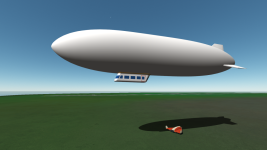
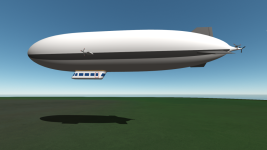
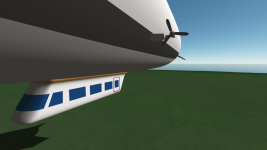
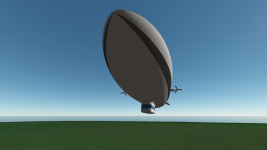
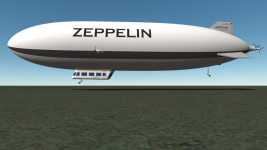
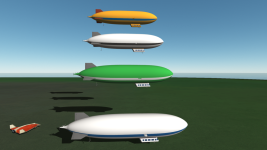
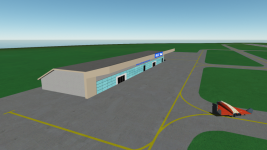
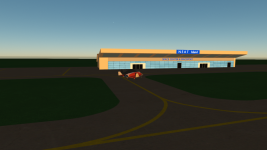
The tails are best done vertically or horizontally, and then rotated into position once complete. One is enough, and the other is just a mirrored copy. You can even make a copy of the body and rotate it the same angle, so you can see how the tail and body will connect as you make the tail.I am not yet convinced. Maybe the problem is, that I want to do this:
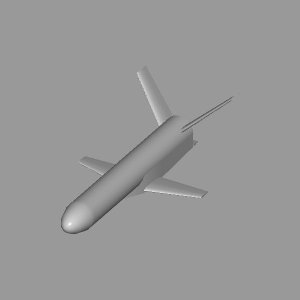
And not spend a lot of time learning tutorials that teach me how to make flower pots. But I appreciate the mentioning of the Youtube channel of somebody making Aircraft models. Maybe one day I will see the light.
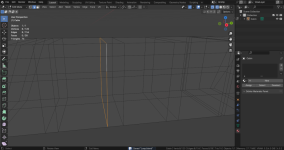
To mark locations, what works for me is having 2 (or 3, depends what the need is) perpendicular planes crossing at the point of interest. A single plane will also help in marking bounds for something. When the work is complete, those planes can be deleted, or simply hidden for future checks or corrections, without exporting them to msh.Mostly how to get the dimensions right, I made it based on a technical drawing and since I need the mesh for testing a module, I want to get the dimensions as accurate as possible, e.g. for having no divergence between thruster positions and thruster force reference. Also creating the fuselage transitions is hard in Blender.
This is what I call "virtual scaffolding".