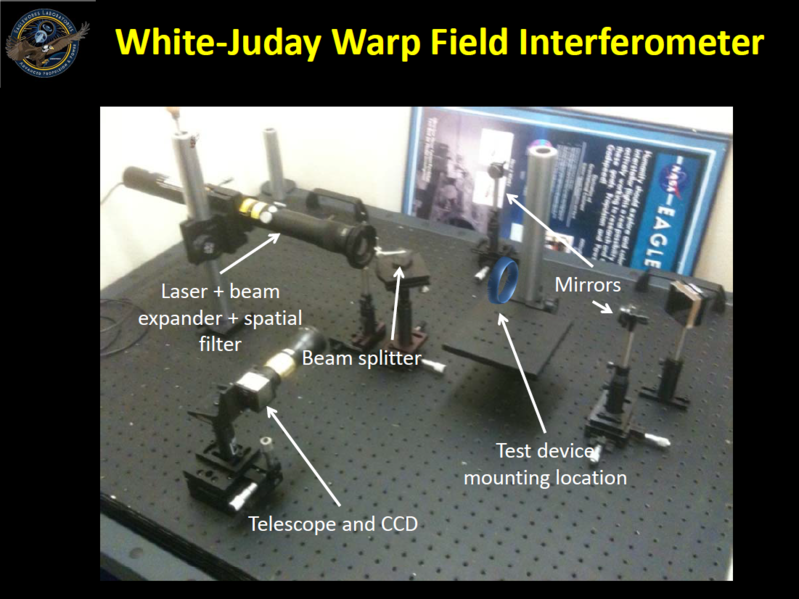
Explanation of the interferometer concept:
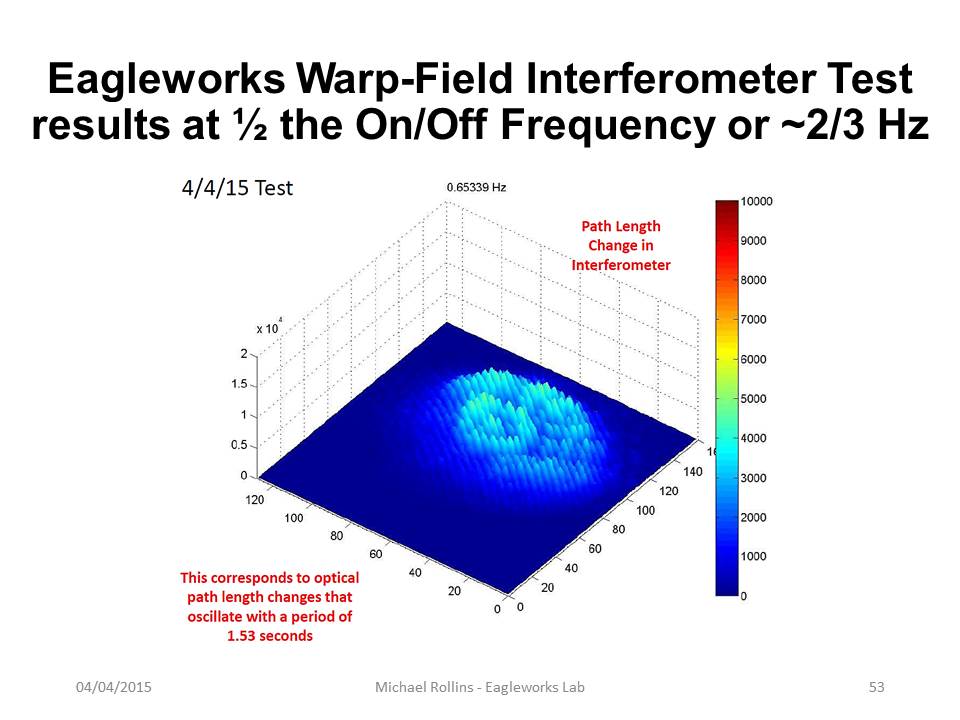
Essentially, the device measures difference in length of the two arms of the interferometers (up/down and left/right) by measuring flight time of photons. The gizmo is mounted on the left/right path. What White is seeing, is that the if the gizmo is powered on, the interferometer shows that the path length on the left/right arm increases by some ~250nm. This is simply not supposed to be happening.
But it gets worse: it appears that the difference in flight time depends on the location inside the cavity, i.e. since the beam has non-zero radius, different parts of the beam experience different change in time of flight (path length). This is even more difficult to explain.
The upside is that the setup looks easy to duplicate for any competent optics lab, so we should have independent confirmation or lack thereof in less than one year.
---------- Post added at 11:05 AM ---------- Previous post was at 11:03 AM ----------
So let me repeat it again: if what the drive produces is rotational momentum, it is close to useless for applications in space. This - and only this - is what my statement was about.
That statement is true.
However, please note that we are dealing with a gizmo that should not be producing
any forces, rotational or otherwise!
Not to mention that it should not be affecting light.
---------- Post added at 11:22 AM ---------- Previous post was at 11:05 AM ----------
DIY version of the gizmo:
http://www.reddit.com/r/EmDrive/comments/34226k/yes_you_really_can_build_an_emdrive_test_article/
(Usual warnings about working with high power RF apply)