
dennis.krenz
Well-known member
They are working on a website to show live streams from the Moon.
Is Twitch not posh enough for NASA?


ORBITER-FORUM will be temporarily closed at 2026-07-23 18:00 UTC while we complete some OF maintenance tasks. The amount of downtime is expected to take up to one hour, but probably less.
They are working on a website to show live streams from the Moon.
JAXA + Toyota to build a pressurized rover, 15tn, 10 year-lifetime, 3.5km/h (way too slow)
 special.mercedes-benz-trucks.com

But it doesn't work on the Moon...And way too heavy. Thats the weight of compareable to a modern Unimog U4023. And that one is faster and likely more mobile (27° ramp angle, 38° tilt, 16m turning circle) in offroad terrain.
Unimog
But it doesn't work on the Moon...

An Audi Sport Quattro would take well to the Lunar terrain... too bad there's no atmosphere to make it run... or hear itIf Audi can do moon rovers (hahahaha), Mercedes can do lunar Mogs.

An Audi Sport Quattro would take well to the Lunar terrain... too bad there's no atmosphere to make it run... or hear it



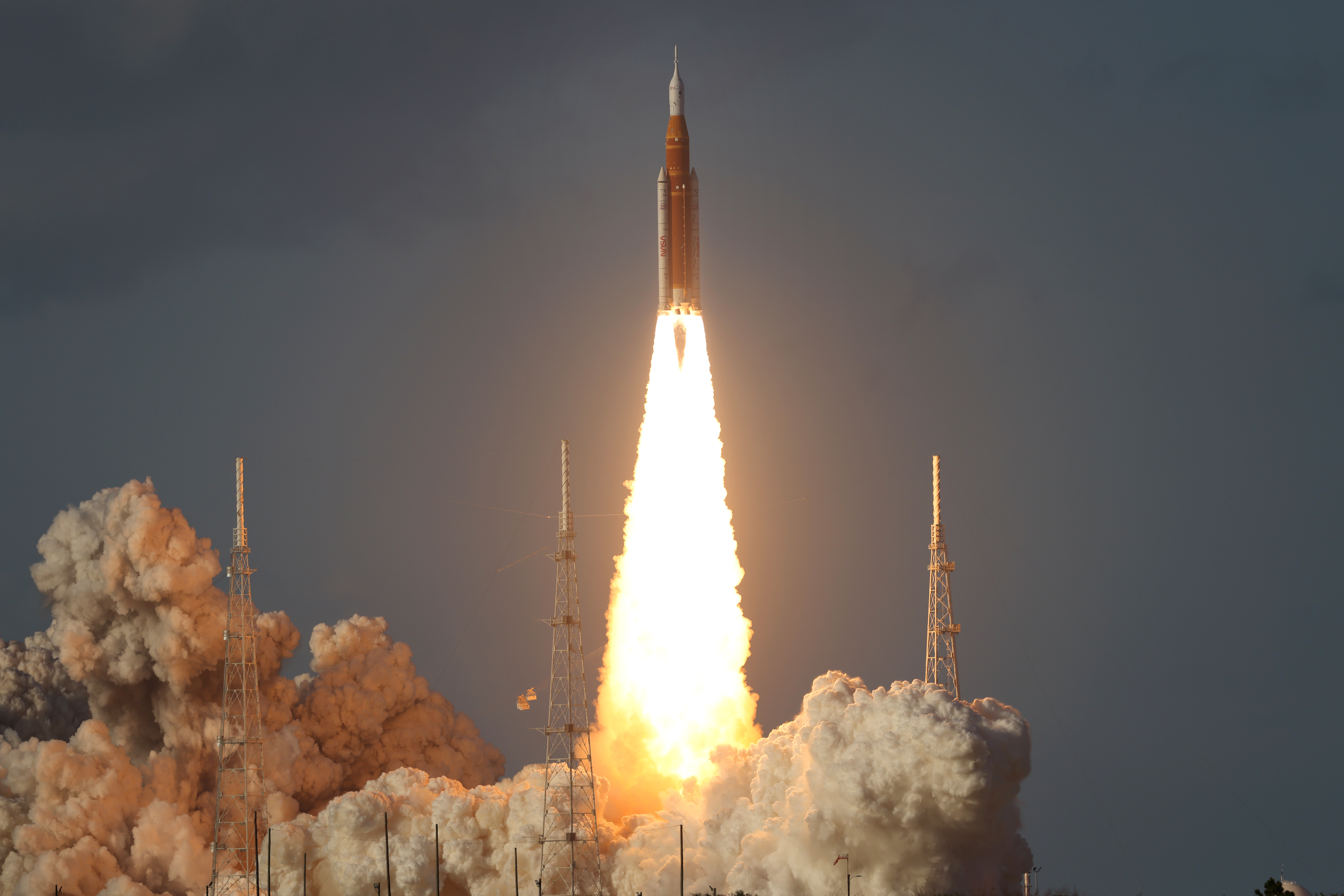
 www.nasa.gov

Funny you say that, my youtube feed got flooded with people live streaming their reactions to the launch. I guess I'm happy that people care about it, but...Is Twitch not posh enough for NASA?

I hope a blame-game doesn't start now :\Can't NASA store a spacecraft module properly? I-Hab was still fine when it left Italy in February this year.
I hope a blame-game doesn't start now :\

They also need to determine what the actual boil-off rate of propellants would be for a fully fueled Starship. They can't determine their fuel margins for ANY mission profile until they understand this fully. This isn't a minor detail - this is currently unknown and the number of tanks of fuel needed for the entire mission architecture will be dictated by it. Everyday Astronaut's numbers don't account for this at all. It's not just a Tsiolkovsky rocket equation problem, that would be easy - it's a miserable combined mode heat transfer and thermodynamics problem for a very complicated liquid fuel system.What could go wrong?
Does SpaceX even have a "translunar depot" (or tanker) yet to be tested?
They also need to determine what the actual boil-off rate of propellants would be for a fully fueled Starship. They can't determine their fuel margins for ANY mission profile until they understand this fully. This isn't a minor detail - this is currently unknown and the number of tanks of fuel needed for the entire mission architecture will be dictated by it. Everyday Astronaut's numbers don't account for this at all. It's not just a Tsiolkovsky rocket equation problem, that would be easy - it's a miserable combined mode heat transfer and thermodynamics problem for a very complicated liquid fuel system.
It would suck, to put it mildly, to realize that your fuel margins go negative due to boil-off halfway to the Moon or Mars, especially when you need the propulsion to actually slow down and land at your destination.


