
-
ORBITER-FORUM will be temporarily closed at 2026-07-23 18:00 UTC while we complete some OF maintenance tasks. The amount of downtime is expected to take up to one hour, but probably less.
You are using an out of date browser. It may not display this or other websites correctly.
You should upgrade or use an alternative browser.
You should upgrade or use an alternative browser.
New Release D3D9Client Development
- Thread starter jarmonik
- Start date
- Joined
- Mar 28, 2008
- Messages
- 2,707
- Reaction score
- 881
- Points
- 128
Due to nature of the problem I can't imagine how a driver update could make things worse. Does there exists a version of the client where the seams won't exists ? I tried revision 787 which is the oldest we got for Orbiter 2016 (September-2016) and it did have the seams. As far as I can remember the seems have been there.Terrain editing is very much welcome, but the current terrain seams bug is pretty nasty.
I know it's not your fault but it got worse today after updating Nvidia drivers.
I just tried the Alps 2016 scenario and the black seams become visible as soon as the terrain loads....
You can reduce the seams by moving the "Texture Bias" slider higher but it comes with a performance cost.
- Joined
- Mar 28, 2008
- Messages
- 2,707
- Reaction score
- 881
- Points
- 128
If I recall it should set the threshold where vessel self shadows appear. The math that controls the shadows may have changed and the comment is outdated.Quick Q: What does SHADOW_THRESHOLD in Common.hlsl do? Currently it is set to 0.1 but the comment suggests the lowest limit is 0.3 and the highest limit is 7.0.
- Joined
- Mar 28, 2008
- Messages
- 2,707
- Reaction score
- 881
- Points
- 128
Possible but problematic. We should have an official way to do something like that. Client side hack doesn't sound like a good idea. It's getting too messy. Lot of things are already too messy.I was wondering though, is it possible to set the elevation of an area, without having it rendered?

n72.75
Seize the means of computation
Orbiter Contributor
Addon Developer
Tutorial Publisher
Donator
- Joined
- Mar 21, 2008
- Messages
- 2,874
- Reaction score
- 1,718
- Points
- 128
- Location
- Saco, ME
- Website
- mwhume.space
- Preferred Pronouns
- he/him
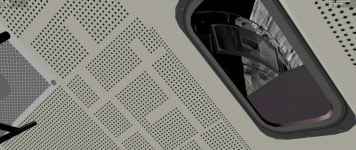
Just messing around, not official dev work...yet.

Mr. Residuals
50 18
If I had to be honest, this is really true. If somebody were to make it happen then I would appreciated greatly.NASSP needs an external texture overhaul for the CSM anyway.

In todays Orbiter source code dive I found information on all the mesh flags that MOGE uses, and maybe the D3D9 folks could take a look and implement some (or all) of them. It all begins in file Mesh.cpp:958, where the mesh file is parsed.
- Joined
- Mar 28, 2008
- Messages
- 2,707
- Reaction score
- 881
- Points
- 128
We probably should create a branch for Orbiter r.90 and repurpose the trunk for Orbiter x64. I tried to compile the client as x64 and the amount of errors was much less than I feared.

- Joined
- Jun 2, 2008
- Messages
- 2,299
- Reaction score
- 447
- Points
- 98
- Location
- Valmorea
- Website
- www.fabri91.eu
@Face also managed to get a "working" version compiled. Didn't expect it so soon!We probably should create a branch for Orbiter r.90 and repurpose the trunk for Orbiter x64. I tried to compile the client as x64 and the amount of errors was much less than I feared.

Replacing the libs, casting DLGPROC and refactoring the CPU context logging was all I had to do (besides adding an x64 target, of course). Very well crafted code-base!We probably should create a branch for Orbiter r.90 and repurpose the trunk for Orbiter x64. I tried to compile the client as x64 and the amount of errors was much less than I feared.

- Joined
- Apr 1, 2008
- Messages
- 2,167
- Reaction score
- 663
- Points
- 113
Unfortunately I can not get enough time to work on this as I would like to....
But here's the changes I've made to the D3D9Client (2016.branch based).
You might take a look if these fit your changes. A proper merging is beyond my time limit unfortunately. But I try to sneak some time in.
Regarding "branching for r90" and make 'trunk' the main x64 development branch: It's fine with me. Should we name the branch "2016-P1"[*] "2019"[**] ?
[*] calling it "something BETA" seems odd now
[**] "2019" would be appropriate as r90 was from September 14th 2019
But here's the changes I've made to the D3D9Client (2016.branch based).
You might take a look if these fit your changes. A proper merging is beyond my time limit unfortunately. But I try to sneak some time in.
Regarding "branching for r90" and make 'trunk' the main x64 development branch: It's fine with me. Should we name the branch "
[*] calling it "something BETA" seems odd now
[**] "2019" would be appropriate as r90 was from September 14th 2019
Attachments
Last edited:
- Joined
- Apr 1, 2008
- Messages
- 2,167
- Reaction score
- 663
- Points
- 113
I've created the '2019' branch (svn://mirror.orbiter-radio.co.uk/D3D9client/branches/2019) so 'trunk' might become the main x64 development place.
But his means that we "break" existing working copies out there, referencing 'trunk' which expect it to be for 32-bit Orbiter BETA!
Those will update and suddenly have a complete mess on their working-copy....
Only if they know that this happened and they switch to the new branch before doing an update will they prevent pain!
It might be better to do the x64 development in a branch. This way we don't break already checked-out working copies.
Nothing has changed on 'trunk' yet, so we can still go any direction.
But his means that we "break" existing working copies out there, referencing 'trunk' which expect it to be for 32-bit Orbiter BETA!
Those will update and suddenly have a complete mess on their working-copy....
Only if they know that this happened and they switch to the new branch before doing an update will they prevent pain!
It might be better to do the x64 development in a branch. This way we don't break already checked-out working copies.
Nothing has changed on 'trunk' yet, so we can still go any direction.

- Joined
- Jan 14, 2008
- Messages
- 9,266
- Reaction score
- 1,740
- Points
- 203
- Location
- VA
- Website
- alteaaerospace.com
- Preferred Pronouns
- he/him
We could also do the x64 build using #ifdef's and #typedef's to keep the changes all in the same branch (that's how we did it at work in a previous life) so we don't have to constantly merge two branches to keep changes in sync. But either way would work.
I don't have a vote, but IMO this is better.It might be better to do the x64 development in a branch.

Lucy
in the sky, with diamonds.
Administrator
Moderator
Orbiter Contributor
Addon Developer
Webmaster
GFX Staff
Beta Tester
- Joined
- Aug 9, 2009
- Messages
- 7,111
- Reaction score
- 1,310
- Points
- 203
- Location
- 10.0.0.1
- Website
- www.orbiter-radio.co.uk
- Preferred Pronouns
- she/her
All I'd say on that is that SVN handles branches very differently from git, be careful....
n72.75
Seize the means of computation
Orbiter Contributor
Addon Developer
Tutorial Publisher
Donator
- Joined
- Mar 21, 2008
- Messages
- 2,874
- Reaction score
- 1,718
- Points
- 128
- Location
- Saco, ME
- Website
- mwhume.space
- Preferred Pronouns
- he/him
Other way around for meSVN is kind of home territory to me.... git is foreign
 .
.- Joined
- Feb 4, 2008
- Messages
- 9,758
- Reaction score
- 1,028
- Points
- 203
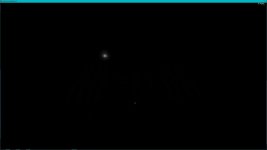
I don't want to disturb the transition from x86 to x64 that's going here, but I think I have discovered a bug with D3D9Client. And that bug is that the sun is visible through the planet! I have attached a screenshot of this. You can see the sun where you shouldn't be able to. Scenario is also attached to recreate the bug, uses nothing but the default Project Alpha ISS. Orbiter 2016 with D3D9Client R4.24.
Attachments
Hi,
For the latest D3D9 releases (4.22-4.24) for Orbiter 2016, I get a black rendering when viewing planets at low angles at certain zooms. Older D3D9Client.dll do not give this.
Horizontal haze disable in the video settings removes the black.
Happy to do any testing of settings if it helps.
Sorry if I'm repeating something that has been identified.
For the latest D3D9 releases (4.22-4.24) for Orbiter 2016, I get a black rendering when viewing planets at low angles at certain zooms. Older D3D9Client.dll do not give this.
Horizontal haze disable in the video settings removes the black.
Happy to do any testing of settings if it helps.
Sorry if I'm repeating something that has been identified.
Attachments

Last edited:
Similar threads

- Sticky
- Replies
- 6
- Views
- 10K

- Replies
- 10
- Views
- 4K


- Replies
- 1
- Views
- 4K


- Replies
- 7
- Views
- 4K