Yes. And it has a carbon fiber composite pressure vessel. It was "rated" for 4,000 m which is just a couple hundred meters lower than the Titanic/sea floor in that area. Some sources reference that 4,000 m as the crush depth, which I sincerely hope is incorrect as it would mean the safety factor would be just barely over 1 even for a pristine pressure vessel.Looks like the hull never underwent a classic certification, because it wasn't mandatory....
The thought of cycling this pressure vessel through large fractions of its design load even for a low number of dives makes the hairs on my head stand up. Composite strength degradation due to fatigue loading is poorly understood, especially in compressive loading. The fibers, instead of being under tension as in compressed gas pressure vessels, can compress and buckle. The buckling deforms the laminations, which causes stress concentrations, which can cause more buckling. Those buckling and deformations would occur under load, but they would relax when unloaded (at the surface). OceanGate apparently had some acoustic NDI system to inspect the hull between dives, but acoustic NDI of composites is also a bleeding edge and immature technology. Their magic acoustic NDI system may not be able to see the degree of distortion and fiber damage that occurs at maximum depth.
Just because the technology exists doesn't mean it is mature and well understood. A lot of engineers and tech organizations don't understand this and never learn this lesson. It's rather ironic that they were exploring the wreck of the Titanic, touted to be "unsinkable" in a fit of engineering hubris.
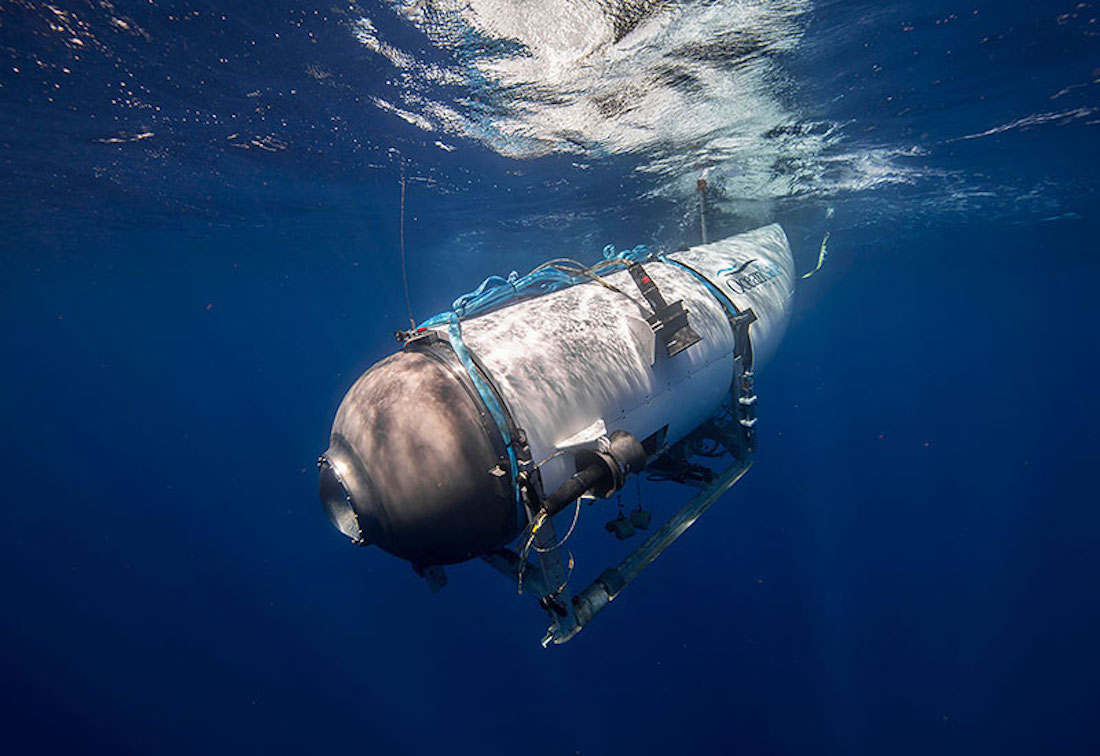
A whistleblower raised safety concerns about OceanGate’s submersible in 2018. Then he was fired.
The director of marine operations at OceanGate was fired after raising concerns about its first-of-a-kind carbon fiber hull.
 techcrunch.com



 All in all it seems they have an arrogant attitude...