Orbiter Screenshot Thread

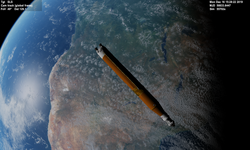
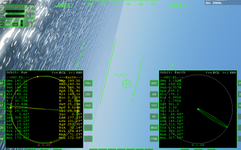
Monday morning. Clear sky. The SLS is ready for a launch from Cape Canaveral.
Screenshot (127414).png

Liftoff!
Screenshot (127415).png

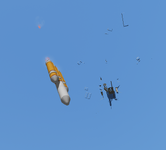
But a few seconds after launch...
Screenshot (127416).png
The pilot even tried to prevent that, but nothing helped. The rocket exploded simulation crashed to desktop.

Screenshot (127420).png
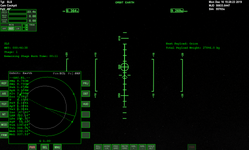
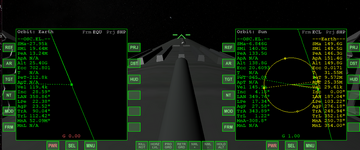
"About To Explode" No, about to crash to desktop.
 
Actually no, it rotates like this everytime I launch it (and don't steer against the rotation with all power until the rotation gets too strong) and then it CTDs when it would most likely explode in real. The SLS seems not to love manual control. But there is one lifesaver: autopilot. At least that makes it go to orbit successfully.
 
Last edited:
Great addons, with a little makeover (tex. etc.) they'd be right up front (aren't they all SC?)
 
aren't they all SC?
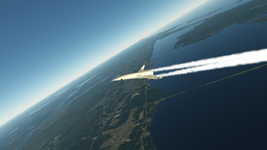
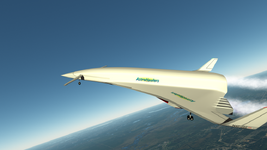
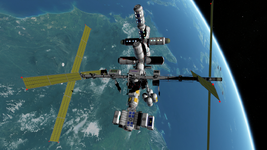
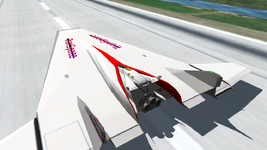
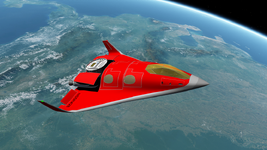
Yes. They all require Spacecraft3.dll. And SwiftSS Aerospaceplane too. I just want to shown a couple of screenshots of it as well:

b.pnga.png

I tried it with Legacy Touchdown Points, and the vessels move along the ground quite stable, although sometimes some problems occur.

I'm just amazed what the highly-detailed texture labels (fonts) were used for these addons in 2007.
 
These would be perfect to convert to VB (great for learning too!), unfortuneately GregBurch hasn't been around for a long time, but if you release it as a patch it shouldn't be a problem, I would love to see these in current Orbiters (it was on my long list of "must have" addons I wanted to update), certainly help where I can.
 
Monday, September 2, 2024.

LAX_1.JPG

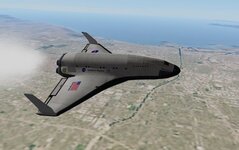
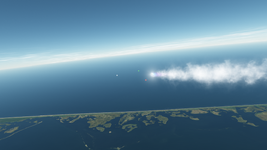
Picture 1: Right-wing chase plane footage as Enterprise overflies the Los Angeles River. Signal Hill, Seal Beach and Long Beach are visible in the distance.

LAX_2.JPG

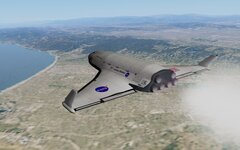
Picture 2: Left-wing chase plane footage as
Enterprise continues its overflight over the greater Los Angeles metropolitan area, with Santa Monica, the Pacific Palisades, and the Pacific Coast Highway in view.

LAX_3.JPG

Picture 3: A view from ground level as Enterprise overflies.

SDO-201 'Enterprise' has spent the last 160 days berthed in OPF-5 at Edwards Air Force Base in California. All major repair milestones have been met, inspections have been completed, and a spaceworthiness release and authorization for return to service has been committed.

Enterprise launched from Edwards AFB at 8:00 local time and completed its 50-minute suborbital flight at the Kennedy Space Center while carrying out a special overflight of the City of Los Angeles upon departure. This leg of the flight, carried out subsonically and above the arrival and departure corridors of commercial air traffic (to chiefly limit noise and risk of collision with other aircraft operating in the area) was done to allow the general public visibility on Enterprise's return to service.

SDO-201 has been tapped to run the next iteration of the ongoing SOFIR (Safer Options for Flying In Radiation) experiment battery, plus a classified DOD mission.
 
Last edited:
Collection of random Orbiter bugs because I was bored:

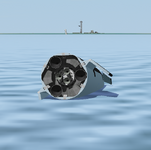
A funny Delta IV Heavy submarine (which not only works in water!):
Screenshot (135616).png

Oh no, my rocket got banned from the solar system!:
Screenshot (135625).png

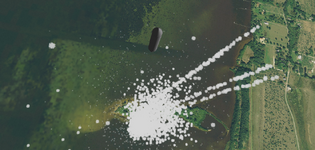
Surface Crash + Lag =
Screenshot (135652).png

Orbiter has secret super powers: It can slow down your ship withing a few milliseconds in the atmosphere, no matter how fast you were before entering the atmosphere. If you get below ca. 40 km altitude inside Earth's atmosphere, there is no way to escape Orbiter's super power in any way
(Note: The following view is looking down at the ocean, not up at the sky!):
Screenshot (135680).png
Screenshot (135681).png

Blaming a surface landing bug (which also occurs on land on some vessels) on normal water floating:
Screenshot (135687).png


EDIT:

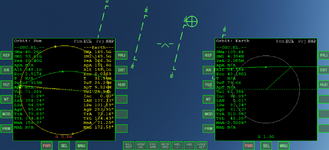
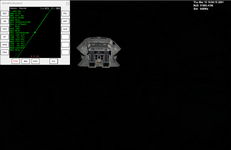
A few minutes ago, I encountered another bug: While being "quasi"-landed (touching planet's surface but having not zero speed), I pressed CTRL+S (quicksave) which caused a second-long lag because I had hundreds of other quicksaves and I got again banned from the solar system, but with (warning, huge numbers ahead!) 5,051,683,737,148,823,552 meters/s or 33,768,420.0551 AU/S or 533.963392339 lightyears/s. Because of floating point imprecisions, the camera distance from the center of the vessel is 0, thus the view from inside the shuttle. I was unable to open the MFDs (even in cockpit view!), but I luckily was able to open an external MFD to see what's going on. A scenario file is attached ("shuttle banned from solar system.scn") for those of you who want to experience this bug. Simply copy it in your Orbiter\Scenarios directory and load it from the Orbiter scenario list.

Screenshot (135812).png
 

Attachments

Last edited:
Two things from yesterday:

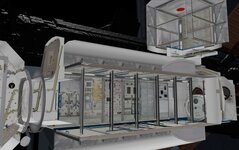
1. Docking a shuttle-derived orbiter to the ISS, switching focus to the ISS itself, and transitioning from the ISS's CBM through Constitution's extendable docking port ostensibly enables M.C. Escher mode.

psychedelic_ISS.JPG

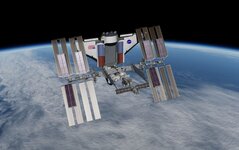
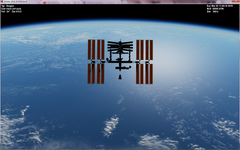
2. Someone has brought to our attention that there is a size concern with the shuttle-derived orbiters and extended ISS ops. I'm not sure what the problem is.

ISS_and_elephantine_orbiter.JPG
 
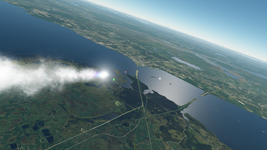
🇵🇱🚀 Meteor-3A, mesospheric sounding rocket


Two versions had been produced:
▫️Meteor-3A - with 4.5 kg dart, flight ceiling: 65 km (nominal) - 72 km (computational ceiling), operational in 1968-1971 (26 rockets launched),
▫️Meteor-3E - with 7.2 kg dart, flight ceiling: 44 km, operational in 1973-1974 (8 rockets launched).
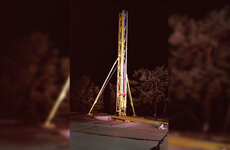
During early conceptual works, also the Meteor-3B was considered (with lateral boosters attached to the first stage - depending on their length, the Meteor-3B would have been capable of reaching altitudes between 74-100 km).

The Meteor-3 sounding rockets had been launched from Łeba Rocket Sounding Station, located between the narrow strip of land between the Baltic Sea and Łebsko Lake. The main purpose of the rockets was research of meteorological conditions of upper layers of the atmosphere. After burnout of the second stage in the troposphere, the rocket ascended to the mesosphere and jettisoned a dart with chaff made of glass fiber and aluminium that could have been tracked by ground-based radars. After releasing the chaff, the dart opened a parachute and collected scientific data during descending using its sensors.


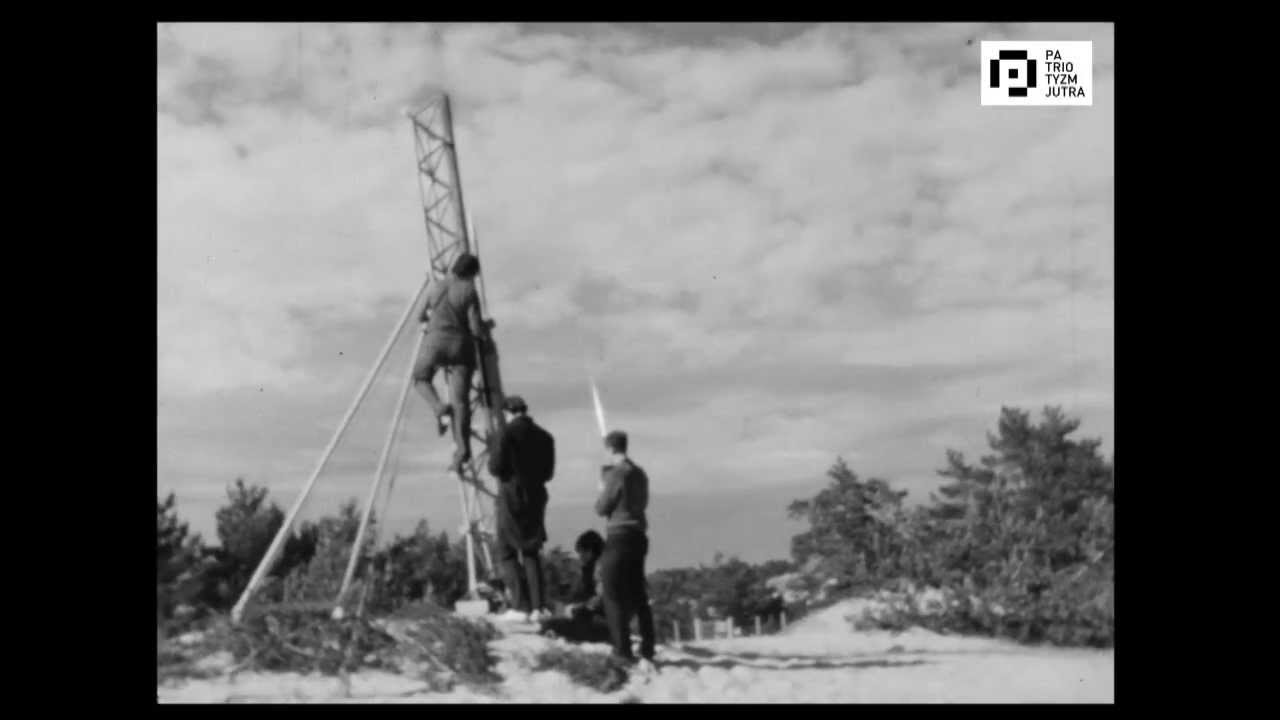
+ bonus: historical photo:

46-01.jpg

Launch preparations of the Meteor-1 and Meteor-3 rockets (with depictions of the Meteor-3s' launches):

 
Back
Top