misha.physics
Well-known member
- Joined
- Dec 22, 2021
- Messages
- 1,535
- Reaction score
- 2,326
- Points
- 128
- Location
- Lviv
- Preferred Pronouns
- he/him
Just Orbiter.

ORBITER-FORUM will be temporarily closed at 2026-07-23 18:00 UTC while we complete some OF maintenance tasks. The amount of downtime is expected to take up to one hour, but probably less.


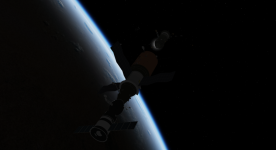


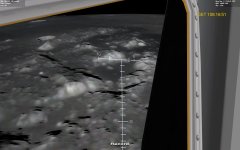
View from Snoopy (LM-4), at the exact second that Eagle (LM-5) touches down on the Moon.
View attachment 27851
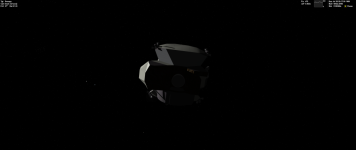
Simulations in GMAT show that Apollo 11's LEM (Eagle) is possibly still orbiting the Moon, unknowingly jettisoned in one of the "frozen orbits" that also make LRO's orbit not so chaotic for many yearsAlways thought it incredible to know LM-4's ascent stage is still out there, largely intact, after having once been occupied and operated by humans. A time capsule, in a sense.
News to me. Very cool. Thanks for that.Simulations in GMAT show that Apollo 11's LEM (Eagle) is possibly still orbiting the Moon, unknowingly jettisoned in one of the "frozen orbits" that also make LRO's orbit not so chaotic for many years


we're safe for nowWait, we might have an entire LM in orbit, but we're not sure? That sounds like a major hazard...

LM-5 is in at least two separate pieces, the Descent Stage on the lunar surface and the Ascent Stage in lunar orbit.Wait, we might have an entire LM in orbit, but we're not sure? That sounds like a major hazard...
In theory yes. Remember that radar return strength falls off in proportion to 1/R^4 though so that would limit you to the very largest of radars and it may need a few orbits to find it if dosnt come over the horizon exactly where you expect it.Shouldn't we be able to detect it? After all, its a pretty big shiny object with very distinct surface properties.

In theory yes. Remember that radar return strength falls off in proportion to 1/R^4 though so that would limit you to the very largest of radars and it may need a few orbits to find it if dosnt come over the horizon exactly where you expect it.
Oh good point. Just need to convince someone to point a telescope there.No just by radar - I mean optically. We can detect much darker smaller asteroids at similar distances than that already. Its just the nearby moon, that causes problems, but would we do something like a long-term observation of the moon, we should detect any bigger object orbiting it....
Oh good point. Just need to convince someone to point a telescope there.

Well, I wish you all the best since not even the HST can resolve any Apollo objects! They're way too small to be resolved even by its 2.4 diameter primary mirror. So unless you have something a few hundred times larger in your backyards, all you are going to see is the usual lunar selenological stuff.
Well, I wish you all the best since not even the HST can resolve any Apollo objects! They're way too small to be resolved even by its 2.4 diameter primary mirror. So unless you have something a few hundred times larger in your backyards, all you are going to see is the usual lunar selenological stuff.