
You are using an out of date browser. It may not display this or other websites correctly.
You should upgrade or use an alternative browser.
You should upgrade or use an alternative browser.
Updates ISS UPDATES
- Thread starter Chipstone306
- Start date
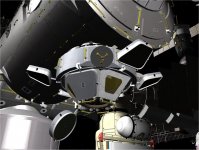
I wonder if the exterior of the ISS has more "hits" like that. I believe that happens quite often, but you just didn't notice it because it wasn't a window.
We probably would need an SMmSS (Station Micrometeroid Sensor System) to be sure about that.
We probably would need an SMmSS (Station Micrometeroid Sensor System) to be sure about that.

- Joined
- Oct 30, 2009
- Messages
- 14,018
- Reaction score
- 4
- Points
- 0
NASA:
MEDIA ADVISORY : M12-113
Coverage Set For Next Soyuz Space Station Crew Rotation
June 14, 2012
HOUSTON -- Over the next several weeks, NASA Television will provide coverage of the departure of three crew members from the International Space Station and prelaunch, launch and arrival activities of three new residents.
Coverage will begin Wednesday, June 20, with the first of a series of Video Files of Expedition 32/33 Flight Engineers Suni Williams of NASA, Aki Hoshide of the Japan Aerospace Exploration Agency and Yuri Malenchenko of the Russian Federal Space Agency (Roscosmos) participating in training and ceremonial activities at the Gagarin Cosmonaut Training Center in Star City, Russia.
On June 29, NASA TV will broadcast a change of command ceremony aboard the orbiting laboratory in which Expedition 31 Commander Oleg Kononenko of Roscosmos will hand over the reins of command to Gennady Padalka. Padalka, a cosmonaut for Roscosmos, will become the International Space Station's first three-time commander. When the Soyuz TMA-03M undocks on June 30, Expedition 31 will transition to Expedition 32 under Padalka's command.
Kononenko and Flight Engineers Don Pettit of NASA and Andre Kuipers of the European Space Agency will depart the station in their Soyuz TMA-03M spacecraft June 30 for a July 1 landing in Kazakhstan to complete their six-and-a-half-month mission. Two weeks later, July 14 (July 15 in Kazakhstan), Williams, Hoshide and Malenchenko will launch to the station in the Soyuz TMA-05M spacecraft from the Baikonur Cosmodrome in Kazakhstan. The three will arrive at the station July 16 to join Padalka and Flight Engineers Joe Acaba of NASA and Sergei Revin of Roscosmos, who have been aboard the station since mid-May.
NASA TV's scheduled coverage includes (all times Central):
Wednesday, June 20
Saturday, June 30
Sunday, July 1
Saturday, July 14
Monday, July 16
Tuesday, July 17
Additional Video File footage of the Expedition 32/33 crew's pre-launch activities in Star City, Russia; Moscow; and Baikonur, Kazakhstan will be broadcast on NASA TV on June 22 and July 2, 10, 11, 12 and 13. Post-launch and post-docking Video Files will air on NASA TV on July 14 and 17. Video Files involving the Expedition 31 crew activities following their Soyuz landing in Kazakhstan will air on July 1.
For NASA's complete list of Soyuz landing and launch coverage, visit:
For NASA TV downlink and streaming video information, visit:
{...}
MEDIA ADVISORY : M12-113
Coverage Set For Next Soyuz Space Station Crew Rotation
June 14, 2012
HOUSTON -- Over the next several weeks, NASA Television will provide coverage of the departure of three crew members from the International Space Station and prelaunch, launch and arrival activities of three new residents.
Coverage will begin Wednesday, June 20, with the first of a series of Video Files of Expedition 32/33 Flight Engineers Suni Williams of NASA, Aki Hoshide of the Japan Aerospace Exploration Agency and Yuri Malenchenko of the Russian Federal Space Agency (Roscosmos) participating in training and ceremonial activities at the Gagarin Cosmonaut Training Center in Star City, Russia.
On June 29, NASA TV will broadcast a change of command ceremony aboard the orbiting laboratory in which Expedition 31 Commander Oleg Kononenko of Roscosmos will hand over the reins of command to Gennady Padalka. Padalka, a cosmonaut for Roscosmos, will become the International Space Station's first three-time commander. When the Soyuz TMA-03M undocks on June 30, Expedition 31 will transition to Expedition 32 under Padalka's command.
Kononenko and Flight Engineers Don Pettit of NASA and Andre Kuipers of the European Space Agency will depart the station in their Soyuz TMA-03M spacecraft June 30 for a July 1 landing in Kazakhstan to complete their six-and-a-half-month mission. Two weeks later, July 14 (July 15 in Kazakhstan), Williams, Hoshide and Malenchenko will launch to the station in the Soyuz TMA-05M spacecraft from the Baikonur Cosmodrome in Kazakhstan. The three will arrive at the station July 16 to join Padalka and Flight Engineers Joe Acaba of NASA and Sergei Revin of Roscosmos, who have been aboard the station since mid-May.
NASA TV's scheduled coverage includes (all times Central):
Wednesday, June 20
- 11 a.m. -- Video File of the Expedition 32/33 (Suni Williams, Yuri Malenchenko, Aki Hoshide) qualification training simulation runs at Star City, Russia.
Saturday, June 30
- 8:15 p.m. -- Expedition 31 farewells and hatch closure coverage (hatch closure at 8:40 p.m.)
- 11:30 p.m. -- Expedition 31/Soyuz TMA-03M undocking coverage (undocking at 11:53 p.m.)
Sunday, July 1
- 2 a.m. -- Expedition 31/Soyuz TMA-03M deorbit burn and landing coverage (deorbit burn at 2:19 a.m., landing at 3:15 a.m.)
Saturday, July 14
- 8:30 p.m. -- Expedition 32/33 Soyuz TMA-05M launch coverage (includes video b-roll of the crew's prelaunch activities at 8:45 p.m.; launch scheduled at 9:40 p.m.)
Monday, July 16
- 11:15 p.m. -- Expedition 32/33 Soyuz TMA-05M docking coverage (docking at 11:50 p.m. followed by post-docking news conference from Mission Control in Korolev, Russia)
Tuesday, July 17
- 2:15 a.m. -- Expedition 32/33 Soyuz TMA-05M hatch opening and welcoming ceremony coverage (hatch opening and welcoming ceremony at 2:45 a.m.)
Additional Video File footage of the Expedition 32/33 crew's pre-launch activities in Star City, Russia; Moscow; and Baikonur, Kazakhstan will be broadcast on NASA TV on June 22 and July 2, 10, 11, 12 and 13. Post-launch and post-docking Video Files will air on NASA TV on July 14 and 17. Video Files involving the Expedition 31 crew activities following their Soyuz landing in Kazakhstan will air on July 1.
For NASA's complete list of Soyuz landing and launch coverage, visit:
For NASA TV downlink and streaming video information, visit:
{...}
- Joined
- Oct 30, 2009
- Messages
- 14,018
- Reaction score
- 4
- Points
- 0
NASA:
International Space Station > Living and Working
Departure Preps, Science Experiments and Maintenance for Station Crew
The Expedition 31 crew living and working aboard the International Space Station Thursday prepared for the upcoming departure of three of its crew members, worked with a variety of science experiments and continued the ongoing maintenance of the systems aboard the orbiting laboratory.
Commander Oleg Kononenko focused on the transfer and inventory of cargo to the docked Soyuz TMA-03M spacecraft for return to Earth. He and Flight Engineers Don Pettit and Andre Kuipers are scheduled to return to Earth aboard the spacecraft on July 1.
Pettit performed maintenance on the Fluid Physics Experiment Facility in the Kibo Laboratory, cleaning up some contamination on the front and downward mirrors and collecting samples for analysis. He also performed some routine maintenance on the Water Recovery System.
Kuipers reviewed procedures for loading software on the EXPRESS Rack 4 Rack Interface Controller and inspected the water valves in the Columbus laboratory, looking for deposits due to condensation.
Flight Engineer Joe Acaba swapped laptop computers on the EXPRESS Rack 2, performing a software update on the new laptop. He also worked with the BASS (Burning and Suppression of Solids) experiment, which examines the burning and extinction characteristics of a wide variety of fuel samples in microgravity.
Flight Engineers Gennady Padalka and Sergei Revin worked in the Russian segment of the station, monitoring its systems and performing a variety of maintenance activities. Padalka performed maintenance on the Elektron oxygen generator, while Revin performed an oxygen transfer from the docked ISS Progress 47 cargo craft.
International Space Station > Living and Working
Departure Preps, Science Experiments and Maintenance for Station Crew
The Expedition 31 crew living and working aboard the International Space Station Thursday prepared for the upcoming departure of three of its crew members, worked with a variety of science experiments and continued the ongoing maintenance of the systems aboard the orbiting laboratory.
[table="head;width=300"]

Flight Engineer Andre Kuipers (left), Commander Oleg Kononenko and Flight Engineer Don Pettit pose for a photo in the Unity node of the station.
Click on image to enlarge

Flight Engineer Andre Kuipers (left), Commander Oleg Kononenko and Flight Engineer Don Pettit pose for a photo in the Unity node of the station.
Credit: NASA
[/table]Commander Oleg Kononenko focused on the transfer and inventory of cargo to the docked Soyuz TMA-03M spacecraft for return to Earth. He and Flight Engineers Don Pettit and Andre Kuipers are scheduled to return to Earth aboard the spacecraft on July 1.
Pettit performed maintenance on the Fluid Physics Experiment Facility in the Kibo Laboratory, cleaning up some contamination on the front and downward mirrors and collecting samples for analysis. He also performed some routine maintenance on the Water Recovery System.
Kuipers reviewed procedures for loading software on the EXPRESS Rack 4 Rack Interface Controller and inspected the water valves in the Columbus laboratory, looking for deposits due to condensation.
Flight Engineer Joe Acaba swapped laptop computers on the EXPRESS Rack 2, performing a software update on the new laptop. He also worked with the BASS (Burning and Suppression of Solids) experiment, which examines the burning and extinction characteristics of a wide variety of fuel samples in microgravity.
Flight Engineers Gennady Padalka and Sergei Revin worked in the Russian segment of the station, monitoring its systems and performing a variety of maintenance activities. Padalka performed maintenance on the Elektron oxygen generator, while Revin performed an oxygen transfer from the docked ISS Progress 47 cargo craft.
- Joined
- Oct 30, 2009
- Messages
- 14,018
- Reaction score
- 4
- Points
- 0
- Joined
- Oct 30, 2009
- Messages
- 14,018
- Reaction score
- 4
- Points
- 0
NASA: New Gravitational Biology Lab Allows for Testing in Artificial Gravity:
NASA is expanding its existing capabilities for doing plant and animal tissue investigations on the International Space Station with the delivery of a new centrifuge scheduled for this summer. The centrifuge is a NASA and commercial industry collaboration, and will be housed in the NanoRacks facility.
The small Gravitational Biology Lab will allow biological experimentation in artificial gravity -- from zero gravity to twice Earth’s normal gravity -- for prolonged periods of time. The new facility will provide environmental control, lighting, data transfer, commanding, and observation of experiments in Mars and moon gravity conditions, as well as mimicking Earth's gravity. This is useful for biological research, and could lead to advances in medications and vaccines, agricultural controls, and discoveries in genetics -- all beneficial to those of us on Earth.
{...}
- Joined
- Oct 30, 2009
- Messages
- 14,018
- Reaction score
- 4
- Points
- 0
Space News: NASA Banking on Commercial Crew To Grow Space Station’s Population:
WASHINGTON — NASA is banking on its Commercial Crew Program to increase international space station (ISS) crew capacity to seven from the current six — something that could happen as soon as 2017 if Congress is willing to dramatically increase the program’s budget, the agency’s top human spaceflight official said.
“We would definitely increase the crew size on ISS to seven crew members,” William Gerstenmaier, associate administrator for NASA’s Human Exploration and Operations Mission Directorate said June 20 during a hearing before the Senate Commerce science and space subcommittee. “We think that will increase the research capability onboard station and allow us to do more national lab research and be more effective in utilizing space station.”
To do that, and to ensure that the privately operated astronaut taxis NASA is helping industry develop are flying by 2017, the Commercial Crew Program will need more than $800 million in annual funding from 2014 to 2017. Congress gave the program $406 million for 2012, less than half what NASA requested. The program is poised to fare somewhat better in 2013, with key lawmakers pledging $525 million of the $830 million the agency requested.
NASA currently pays the Russian space agency, Roscosmos, about $60 million a seat to ferry crew members to the international space station aboard Soyuz spacecraft. The U.S. companies competing to develop a domestic alternative to Soyuz are expected to beat that price, Gerstenmaier said.
“We expect there to be a cost reduction, but I think it’s a little too early for us to pick a particular value for a cost reduction,” Gerstenamier said. He added that NASA plans to buy seats on two commercial crew flights a year. The agency would book four seats on each flight, he said.
{...}
- Joined
- Oct 30, 2009
- Messages
- 14,018
- Reaction score
- 4
- Points
- 0
Aviation Week: Second Phase Of U.S./Canadian ISS Robot Refueling Demo Under Way:
June 21, 2012
HOUSTON — NASA and Canadian Space Agency (CSA) ground control teams combined efforts June 19-20 to begin the second phase of a robotic refueling demonstration outside the International Space Station, a pioneering effort to establish engineering strategies for extending the operating lives of aging satellites.
The three-day second phase of the two-year, $22.6 million Robotic Refueling Mission (RRM) employes the 58-ft.-long Canadarm2; Canada’s Special Purpose Dextrous Manipulator (Dextre), a two-armed, 11.5-ft.-long robotic handyman; and the Goddard Space Flight Center’s satellite simulator, an engineering demonstrator delivered and installed on the station’s long solar power truss by the crew of NASA’s final shuttle mission, STS-135, in July 2011.
The washing machine-sized demonstrator serves as a 3-D task board and tool storage device. The development effort features refueling techniques for satellites not initially designed to be refueled in orbit.
Working without the station’s six-member crew, ground control teams at St. Hubert, Quebec, and NASA’s Mission Control in Houston placed Dextre in the grasp of the larger robot arm for the first of three overnight sessions.
During the first session, Dextre pulled a multifunction tool from the Goddard demonstrator to remove and store a two-way T-valve. In similar fashion, Dextre will wield adapter tools to remove a gas cap from the demonstrator and simulate the penetration of the fuel tank seal installed prior to most satellite launches.
The first phase of the RRM demo was successfully carried out in March, with Canadarm2 and Dextre again responding to joint NASA and CSA commands for the checkout and activation of the Goddard demonstrators’s safety cap removal, wire cutter and multifunction tools. The three-day exercise simulated the release of launch locks on tool adapters and the severing of lock wires of the type used to close out fuel and coolant valve fittings on many satellites.
The final phase of the refueling mission demonstration is currently scheduled for later this year. Ground controllers will use the Canadarm2 and Dextre to demonstrate the manipulation of the thermal blankets that jacket satellites, electrical cap extraction and actual refueling. The satellite simulator is equipped with a nozzle tool, a half-gallon of ethanol fuel and a test fuel reservoir for the transfer task that will mark the third phase of the engineering test.
{...}
- Joined
- Oct 30, 2009
- Messages
- 14,018
- Reaction score
- 4
- Points
- 0
RIA Novosti: New Space Station Crew Confirmed:
Space officials confirmed on Friday the line-up of a new mission to the International Space Station (ISS) ahead of their launch next month.
Three Expedition 32 crew members - NASA astronaut Suni Williams, cosmonaut Yury Malenchenko and Japanese astronaut Aki Hoshide - are scheduled to launch aboard the Soyuz TMA-05M from the Baikonur Space Center in Kazakhstan on July 15, said a spokesman for the Gagarin Cosmonaut Training Center in Star City, outside Moscow.
The trio has been passing tests at the facility.
They will join Expedition 31's NASA astrounaut Joe Acaba and cosmonauts Gennady Padalka and Sergei Revin on board the orbiting outpost.
Meanwhile, fellow Expedition 31 members cosmonaut Oleg Kononenko and NASA's Don Pettit and Andre Kuipers are preparing for their July 1 return to Earth.
A back-up ISS crew was also confirmed on Friday. It includes Canadian astronaut Chris Hadfield, NASA astronaut Tom Marshburn and cosmonaut Roman Romanenko.
{...}
- Joined
- Oct 30, 2009
- Messages
- 14,018
- Reaction score
- 4
- Points
- 0
RIA Novosti: ISS to Build Up Meteorite Defenses:
Russian cosmonauts will conduct a space walk in August during which they will install additional anti-meteorite panels on the International Space Station (ISS), cosmonaut Yury Malanchenko said on Friday.
Malanchenko, his U.S. and Japanese colleagues, Sunita Williams and Hoshide Akihiko, are scheduled to depart for a space mission on July 15.
“We will have a space walk in August, which I will conduct together with [Russian cosmonaut] Gennady Padalka,” Malanchenko told journalists in Star City near Moscow, where Russian cosmonauts live and train.
“We will have to move a cargo platform so as to use it more conveniently in the future. We will also install meteorite protection panels [on the ISS],” he said, adding that the space walk will last six hours.
{...}
- Joined
- Oct 30, 2009
- Messages
- 14,018
- Reaction score
- 4
- Points
- 0
- Joined
- Oct 30, 2009
- Messages
- 14,018
- Reaction score
- 4
- Points
- 0
- Joined
- Oct 30, 2009
- Messages
- 14,018
- Reaction score
- 4
- Points
- 0
ESA: Wrapping up six months of work:
26 June 2012
ESA astronaut André Kuipers is scheduled to leave the International Space Station and land on 1 July. André is finishing experiments and packing his bags ready for departure. One of the last experiments is looking at how a human body stays warm.
{...}
- Joined
- Oct 30, 2009
- Messages
- 14,018
- Reaction score
- 4
- Points
- 0
- Joined
- Oct 30, 2009
- Messages
- 14,018
- Reaction score
- 4
- Points
- 0
NASA: One Step Closer to Robotic Refueling Demonstrations on Space Station:
Aviation Week:
SPACE.com: Space Station Science at a Critical Point, NASA Says
NASA completed another successful round of Robotic Refueling Mission (RRM) operations on the International Space Station with the Canadian Dextre robot and RRM tools, leaving the RRM module poised for the highly-anticipated refueling demonstration scheduled for late summer 2012.
{...}
Aviation Week:
SPACE.com: Space Station Science at a Critical Point, NASA Says
- Joined
- Oct 30, 2009
- Messages
- 14,018
- Reaction score
- 4
- Points
- 0
- Joined
- Oct 30, 2009
- Messages
- 14,018
- Reaction score
- 4
- Points
- 0
Similar threads

- Replies
- 0
- Views
- 5K

- Replies
- 2
- Views
- 2K

- Replies
- 60
- Views
- 25K

- Replies
- 0
- Views
- 3K