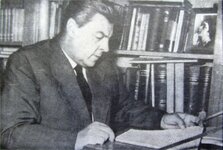
Иван Ефремов в своем кабинете, где написаны книги «Таис Афинская» и «Лезвие бритвы». Ivan Efremov in his office, where the books "Thais of Athens" and "The Razor's Edge" were written. Ivan Efremov en su despacho, donde escribió los libros "Taís de Atenas" y "El filo de la navaja".

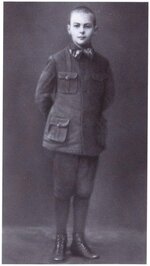
Иван Ефремов — капитан гидрогеографического катера Ленкорань, 1925 год. Ivan Efremov, captain of the hydrogeographical boat Lankaran, 1925. Ivan Efremov, capitán del barco hidrogeográfico Lankaran, 1925.
Елена Конжукова и Иван Ефремов с сыном Алланом. Elena Konzhukova and Ivan Efremov with their son Allan. Elena Konzhukova y Ivan Efremov con su hijo Allan.
«Будущие три десятилетия для человечества являются решающими в борьбе за счастье и социальную справедливость. Вторая половина нашего века отчетливо показала, что наука без серьезных социальных преобразований не способна решить проблемы, стоящие перед человечеством. Эти проблемы становятся всё острее, нехватка пресной воды, истощение естественных ресурсов, разрушение природы. До сих пор наука или косвенно способствует этому или берет на себя роль регистратора процесса вместо того, чтобы полностью поставить себя на службу счастья человечества. Физика, например, из самой передовой всё больше превращается в консервативную и абстрактную дисциплину. Ей следуют и некоторые другие отрасли знания. Между тем, религия в плане всего человечества отошла на задний план. А на ней раньше покоилась общественная мораль. Наука, заменившая религию, особенно в социалистических странах, уделяла мало внимания разработке научно обоснованной системы морали и общественного поведения человека в обществе, отдавая почти все силы погоне за открытиями вообще. Но познание вообще антигуманно и аморально, поэтому все резче обозначается расхождение между насущными потребностями человека и ходом развития науки и техники». (1971. Иван Ефремов в интервью румынской газете). "The coming three decades will be decisive for humanity in its struggle for happiness and social justice. The second half of our century has clearly demonstrated that science, without profound social transformations, is incapable of solving the problems facing humankind. These problems are becoming increasingly acute: shortages of fresh water, depletion of natural resources, and the destruction of nature. Until now, science has either indirectly contributed to these processes or assumed the role of a mere observer recording them, instead of placing itself fully at the service of human happiness.
Physics, for example, once the most advanced of sciences, is increasingly becoming a conservative and abstract discipline. Some other branches of knowledge are following the same path.
Meanwhile, religion, on the scale of humanity as a whole, has receded into the background. Yet it was once the foundation of public morality.
Science, which has replaced religion—especially in socialist countries—has devoted too little attention to the development of a scientifically grounded system of morality and social behavior, directing almost all its efforts toward the pursuit of discoveries for their own sake.
But knowledge in itself is neither inherently humane nor moral. Therefore, the gap between humanity's urgent needs and the course of scientific and technological development is becoming ever more apparent". (Ivan Yefremov, interview with a Romanian newspaper, 1971). «Las tres próximas décadas serán decisivas para la humanidad en su lucha por la felicidad y la justicia social. La segunda mitad de nuestro siglo ha demostrado claramente que la ciencia, sin profundas transformaciones sociales, es incapaz de resolver los problemas que enfrenta la humanidad. Estos problemas se vuelven cada vez más graves: la escasez de agua dulce, el agotamiento de los recursos naturales y la destrucción de la naturaleza. Hasta ahora, la ciencia ha contribuido indirectamente a estos procesos o ha asumido el papel de simple observadora que los registra, en lugar de ponerse plenamente al servicio de la felicidad humana.
La física, por ejemplo, que fue la ciencia más avanzada, se está convirtiendo cada vez más en una disciplina conservadora y abstracta. Otras ramas del conocimiento siguen el mismo camino.
Mientras tanto, la religión, en la escala de toda la humanidad, ha pasado a un segundo plano. Sin embargo, durante mucho tiempo fue el fundamento de la moral social.
La ciencia, que ha sustituido a la religión, especialmente en los países socialistas, ha prestado muy poca atención al desarrollo de un sistema de moral y de conducta social científicamente fundamentado, dedicando casi todas sus fuerzas a la búsqueda de descubrimientos por sí mismos.
Pero el conocimiento por sí solo no es ni humanista ni moral. Por ello, la divergencia entre las necesidades urgentes del ser humano y el rumbo del desarrollo científico y tecnológico se hace cada vez más evidente». (Iván Efremov, entrevista concedida a un periódico rumano, 1971)
Кабинет писателя Ивана Ефремова. Письменный стол, за которым написаны романы «Таис Афинская» и «Час быка». The office of writer Ivan Efremov. The desk at which the novels "Thais of Athens" and "The Hour of the Bull" were written. El despacho del escritor Iván Efremov. El escritorio donde se escribieron las novelas "Taís de Atenas" y "La hora del toro".
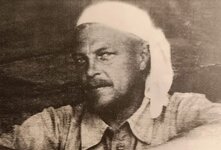
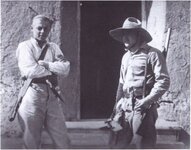
Иван Ефремов во время раскопок в пустыне Гоби. Ivan Efremov during excavations in the Gobi Desert. Ivan Efremov durante las excavaciones en el desierto de Gobi.
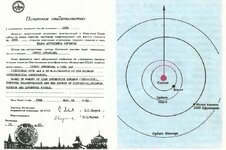
В честь Ивана Ефремова были названа малая планета 2269 – Ефремиана – открыта 2 мая 1976 года астрономом Н.Черных. In honor of Ivan Efremov, a minor planet 2269 was named - Efremiana - discovered on May 2, 1976 by astronomer N. Chernykh. En honor a Ivan Efremov, se nombró al planeta menor 2269, Efremiana, descubierto el 2 de mayo de 1976 por el astrónomo N. Chernykh.
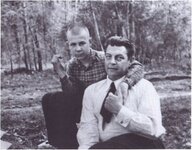
Иван Ефремов (слева) во время своей первой экспедиции. Ivan Efremov (left) during his first expedition. Iván Efremov (izquierda) durante su primera expedición.
Жена Ивана Ефремова, Елена Дементьевна Конжукова. Ivan Efremov’s wife, Elena Dementievna Konzhukova. La esposa de Ivan Efremov, Elena Dementievna Konzhukova.
Иван Ефремов и его вторая жена Таисия Иосифовна Юхневская. Ivan Efremov and his second wife Taisiya Iosifovna Yukhnevskaya. Ivan Efremov y su segunda esposa Taisiya Iosifovna Yukhnevskaya
Иван Антонович в селе Куду-Кюёль в Олёкминском районе Якутии. 1934 г. Фото: Музей истории Байкало-Амурской магистрали. Ivan Antonovich in the village of Kudu-Kyuyol in the Olyokminsky District of Yakutia. 1934. Photo: Baikal-Amur Mainline History Museum. Ivan Antonovich en el pueblo de Kudu-Kyuyol en el distrito Olyokminsky de Yakutia. 1934. Foto: Museo de Historia Principal de Baikal-Amur.
This site uses cookies to help personalise content, tailor your experience and to keep you logged in if you register.
By continuing to use this site, you are consenting to our use of cookies.