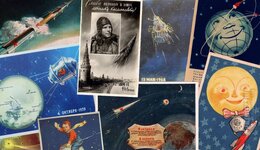
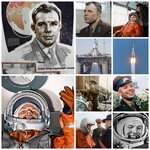
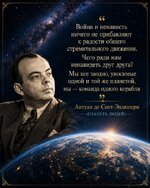
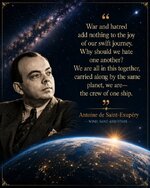
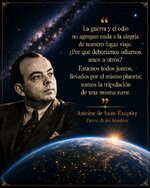
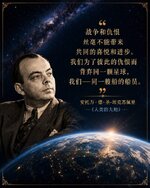
Дорогие друзья! Разрешите пригласить вас в тему "История советской космонавтики". Буду рад видеть в ней всех, кому интересна тема космонавтики в СССР. Здесь вы найдете фотографии космонавтов, конструкторов космических кораблей и орбитальных станций, популяризаторов космонавтики и советских фантастов, которые писали о космических путешествиях в будущем. В этой теме будут выкладываться фрагменты книг космонавтов и конструкторов космических кораблей. Добро пожаловать! Dear friends! Allow me to invite you to the topic “History of Soviet Cosmonautics.” I will be glad to see everyone there who is interested in the history of space exploration in the USSR.
In this topic you will find photographs of cosmonauts, designers of spacecraft and orbital stations, popularizers of cosmonautics, and Soviet science fiction writers who wrote about future space travel.
Fragments from books written by cosmonauts and spacecraft designers will also be published here. Welcome! ¡Queridos amigos! Permítanme invitarles al tema «Historia de la cosmonáutica soviética». Me alegrará ver allí a todos los que estén interesados en el tema de la exploración espacial en la URSS.
En este tema encontrarán fotografías de cosmonautas, diseñadores de naves espaciales y estaciones orbitales, divulgadores de la cosmonáutica y escritores soviéticos de ciencia ficción que escribieron sobre los viajes espaciales del futuro.
Aquí también se publicarán fragmentos de libros escritos por cosmonautas y diseñadores de naves espaciales. ¡Bienvenidos!
После возвращения на Землю Ю.А.Гагарин написал: «Облетев Землю в корабле-спутнике, я увидел, как прекрасна наша планета. Люди, будем хранить и приумножать эту красоту, а не разрушать ее!»
After returning to Earth, Yuri A. Gagarin wrote: “Having orbited the Earth aboard a satellite spacecraft, I saw how beautiful our planet is. People, let us preserve and increase this beauty, and not destroy it!”
Después de regresar a la Tierra, Yuri A. Gagarin escribió: «Después de haber orbitado la Tierra a bordo de una nave satélite, vi lo hermosa que es nuestro planeta. ¡Gente, preservemos y multipliquemos esta belleza, y no la destruyamos!»
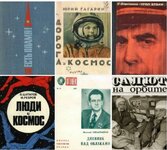
"Начало пилотируемой космонавтики было и началом космической художественной публицистики и художественного очерка. Вышли в свет книги "Есть пламя!" и "Дорога в космос" Ю. А. Гагарина, "Угол атаки" Г. Т. Берегового, "Дневник над облаками" В. И. Севастьянова, "Люди и космос" В. А. Шаталова и другие. Эти книги космонавтов содержат бесценную информацию из первых рук, часто фиксируемую в бортовых журналах непосредственно за переживаемыми мгновениями, информацию о новом мире человека, о беспрецедентных космическо-земных условиях обитания в кораблях и станциях. "Наши спальные места чем - то напоминают мне улей (лесной), куда залетают пчёлы. Тоже небольшие отверстия, в которые мы вплываем, когда приходит время сна, и выплываем, когда звучит команда побудки", - такую запись сделал в бортовом журнале Владислав Волков ("Салют" на орбите. М., 1973, с. 137, 139.) И эта неожиданность и точность сравнения, пожалуй, не пришла бы в голову ни одному "земному" фантасту. Волкову не довелось закончить свою книгу. Он отдал жизнь на тернистом пути космонавтики вместе с другими членами экипажа станции "Салют-1" - Георгием Добровольским и Виктором Пацаевым. Сложный мир космонавта и космонавтики настойчиво требует к себе внимания писателей, живописцев, музыкантов. Современные научные открытия астрономии, астрофизики и космонавтики понемногу подчиняют себе, ориентируют и научную фантастику, и научно-фантастические аспекты иных, по существу, реалистических и "приземлённых" произведений. Космическая тема теперь привлекает фантастов, утопистов и реалистов преимущественно с точки зрения не естественнонаучной или научно-технической, а гуманитарной. Да это и понятно. В наше время усложнения и специализации естественнонаучного и научно-технического знания прогнозы и открытия в этой области делаются высококвалифицированными специалистами и большими коллективами учёных и техников. Эпоха случайных прозрений здесь, как нам кажется, уходит в историю. Но, с другой стороны, ныне, как никогда, требуется интеграция науки и техники с человеком, развитие человеческого и личностного начала, гуманитарности и гуманизма, культуры и искусства". (Ю. Школенко. "Космический век"). Издательство "Молодая гвардия". 1986 год.
“The beginning of manned cosmonautics was also the beginning of space-related literary journalism and the artistic essay. Books such as “There Is Flame!” and “The Road to Space” by Y. A. Gagarin, “Angle of Attack” by G. T. Beregovoy, “Diary Above the Clouds” by V. I. Sevastyanov, “People and Space” by V. A. Shatalov, and others were published. These books by cosmonauts contain invaluable first-hand information, often recorded in onboard logs immediately after the moments experienced—information about a new human world, about the unprecedented space-and-Earth conditions of life aboard spacecraft and orbital stations.
“Our sleeping places remind me somewhat of a beehive (a forest hive) into which bees fly. There are also small openings that we float into when it is time to sleep, and float out of when the wake-up command sounds,” — such a note was made in the onboard journal by Vladislav Volkov (“Salyut in Orbit.” Moscow, 1973, pp. 137, 139.).
And this unexpected yet precise comparison would hardly have occurred to any “earthbound” science-fiction writer. Volkov did not live to finish his book. He gave his life on the thorny path of cosmonautics together with the other members of the crew of the Salyut-1 station — Georgy Dobrovolsky and Viktor Patsayev.
The complex world of the cosmonaut and of cosmonautics persistently demands the attention of writers, painters, and musicians. Modern scientific discoveries in astronomy, astrophysics, and cosmonautics are gradually influencing and guiding both science fiction and the science-fictional aspects of other works that are essentially realistic and “earthbound.”
The cosmic theme now attracts science-fiction writers, utopians, and realists primarily from a humanitarian point of view rather than from a purely natural-scientific or technical one. And this is understandable. In our time, with the growing complexity and specialization of natural-scientific and technological knowledge, predictions and discoveries in this field are made by highly qualified specialists and large teams of scientists and engineers. The era of accidental insights here, it seems, is becoming a thing of the past.
But, on the other hand, today more than ever there is a need for the integration of science and technology with the human being — for the development of the human and personal dimension, for humanitarian values and humanism, for culture and art.” (Yu. Shkolenko, “The Cosmic Age.” Publishing House Molodaya Gvardiya, 1986.)
«El comienzo de la cosmonáutica tripulada fue también el comienzo del periodismo literario espacial y del ensayo artístico. Se publicaron libros como «¡Hay llama!» y «El camino al espacio» de Y. A. Gagarin, «Ángulo de ataque» de G. T. Beregovói, «Diario sobre las nubes» de V. I. Sevastiánov, «Las personas y el cosmos» de V. A. Shátalov, entre otros. Estos libros de cosmonautas contienen información invaluable de primera mano, a menudo registrada en los diarios de a bordo inmediatamente después de los momentos vividos: información sobre un nuevo mundo humano, sobre las condiciones sin precedentes de vida cósmica y terrestre en las naves y estaciones orbitales.
«Nuestros lugares para dormir me recuerdan en cierto modo a una colmena (de bosque) en la que entran las abejas. También hay pequeñas aberturas en las que flotamos cuando llega la hora de dormir y de las que salimos flotando cuando suena la orden de despertar», — así escribió Vladislav Volkov en el diario de a bordo («Salyut en órbita». Moscú, 1973, pp. 137, 139.).
Y esta comparación, inesperada y precisa, difícilmente se le habría ocurrido a ningún escritor de ciencia ficción “terrestre”. Volkov no tuvo la oportunidad de terminar su libro. Entregó su vida en el arduo camino de la cosmonáutica junto con los otros miembros de la tripulación de la estación Salyut-1 — Georgy Dobrovolsky y Viktor Patsáyev.
El complejo mundo del cosmonauta y de la cosmonáutica exige insistentemente la atención de escritores, pintores y músicos. Los descubrimientos científicos modernos en astronomía, astrofísica y cosmonáutica van influyendo poco a poco y orientando tanto a la ciencia ficción como a los aspectos de ciencia ficción presentes en otras obras que, en esencia, son realistas y “terrenales”.
El tema del cosmos atrae ahora a los escritores de ciencia ficción, a los utopistas y a los realistas principalmente desde un punto de vista humanitario, más que desde el natural-científico o técnico. Y esto es comprensible. En nuestra época de creciente complejidad y especialización del conocimiento científico y técnico, las predicciones y los descubrimientos en este campo son realizados por especialistas altamente cualificados y por grandes colectivos de científicos e ingenieros. La época de las intuiciones casuales, al parecer, está pasando a la historia.
Pero, por otra parte, hoy más que nunca se requiere la integración de la ciencia y la tecnología con el ser humano: el desarrollo del principio humano y personal, de la dimensión humanitaria y del humanismo, de la cultura y del arte». (Yu. Shkolenko, «La era cósmica». Editorial Molodaya gvardiya, 1986.)
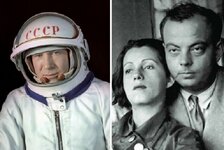
"Находясь с дружеским визитом во Франции, Алексей Архипович встретился с женой известного французского летчика и писателя Антуана де Сент-Экзюпери. Экстравагантная Консуэло, всегда избегавшая лётчиков, просила аудиенции у лётчика: "В любой день и час!". Встретившись с Леоновым, маленькая, современно одетая женщина, со следами былой красоты, говорила:
Я хотела встретиться с вами, мсье Леонов, чтобы сказать, что вы напомнили мне Антуана.
Я необычайно счастлив, что вижу спутницу великого Экзюпери.
Вы знаете Антуана, читали его, да? Он, правда, неплохо писал?
В нашей стране любят Экзюпери, его книги изданы огромными тиражами. "Маленький принц" идёт в театрах многих городов...
Консуэло встрепенулась.
Вы помните "Маленького принца"? Да, да, вы художник, я совсем забыла. - Глаза её повлажнели, но, вспомнив о присутствующих здесь респектабельных мужчинах, она улыбнулась: - Это хорошо, когда художники приходят в авиацию.
Меня авиация сделала художником, - стеснительно заметил Леонов, - Она стала темой моего творчества.
Скажите, для чего вы пишете? Я не обижаю вас этим вопросом? Я спрашиваю не о суммах ваших гонораров.
Почему я пишу? Мне пишется. Я ищу способ самовыражения. Карандаш, кисть помогают мне познать человека, в том числе и себя, раскрыть духовный мир моих современников, проникнуть в мысли, чувства, сделать человека лучше...
Что же побудило вас стать художником?
Моя профессия!
Космонавт говорил правду. Никого из космонавтов не оставил равнодушным вид нашей планеты с орбиты. Земля из космоса каждый раз, для каждой новой группы экипажа виделась разной, неповторимой, с необычными оттенками цветов. Как передать это землянам, какими средствами поведать о невиданном зрелище? Конечно, есть фотоаппарат, есть память, слово, но об увиденном все это не давало полного представления. Прекрасный мир красок был практически непередаваем".(В. Митрошенков, Л. Чуйко. "Палитра вселенной"). 1986. Издательство "Московский рабочий". “While on a friendly visit to France, Alexei Arkhipovich Leonov met the wife of the famous French pilot and writer Antoine de Saint-Exupéry. The extravagant Consuelo, who had always avoided pilots, requested an audience with the pilot: “Any day and at any hour!” When she met Leonov, the small, modernly dressed woman, bearing traces of former beauty, said:
— I wanted to meet you, Monsieur Leonov, to tell you that you reminded me of Antoine.
— I am extraordinarily happy to see the companion of the great Exupéry.
— You know Antoine, you have read him, haven’t you? He really wrote quite well, didn’t he?
— In our country people love Exupéry; his books have been published in enormous editions. “The Little Prince” is performed in theaters in many cities…
Consuelo stirred.
— You remember “The Little Prince”? Yes, yes, you are an artist, I completely forgot. — Her eyes grew moist, but remembering the presence of the respectable gentlemen here, she smiled. — It is good when artists come into aviation.
— Aviation made me an artist, — Leonov remarked modestly. — It became the theme of my work.
— Tell me, why do you paint? I hope I do not offend you with this question. I am not asking about the amount of your fees.
— Why do I paint? I simply feel the need to. I am looking for a way of self-expression. The pencil and the brush help me understand a person, including myself, reveal the spiritual world of my contemporaries, penetrate their thoughts and feelings, and make a person better…
— And what prompted you to become an artist?
— My profession!
The cosmonaut was telling the truth. None of the cosmonauts remained indifferent to the sight of our planet from orbit. Each time the Earth from space appeared different for every new crew, unique, with unusual shades of color. How could this be conveyed to people on Earth? By what means could one tell about such an unseen spectacle?
Of course, there is a camera, there is memory, there are words—but none of these could fully convey what had been seen. The magnificent world of colors was practically impossible to transmit.” (V. Mitroshenkov, L. Chuiko — “Palette of the Universe.” Moscow Worker Publishing House, 1986.)
«Durante una visita amistosa a Francia, Alexéi Arjípovich Leonov se reunió con la esposa del famoso piloto y escritor francés Antoine de Saint-Exupéry. La extravagante Consuelo, que siempre había evitado a los pilotos, pidió una audiencia con el piloto: «¡En cualquier día y a cualquier hora!» Al encontrarse con Leonov, la pequeña mujer, vestida de manera moderna y con rastros de su antigua belleza, dijo:
— Quería reunirme con usted, monsieur Leonov, para decirle que usted me recordó a Antoine.
— Estoy extraordinariamente feliz de ver a la compañera del gran Exupéry.
— Usted conoce a Antoine, lo ha leído, ¿verdad? Él realmente escribía bastante bien, ¿no es así?
— En nuestro país aman a Exupéry; sus libros se han publicado en tiradas enormes. «El principito» se representa en los teatros de muchas ciudades…
Consuelo se animó.
— ¿Recuerda «El principito»? Sí, sí, usted es artista, lo había olvidado por completo. — Sus ojos se humedecieron, pero al recordar la presencia de los respetables caballeros allí presentes, sonrió. — Es bueno cuando los artistas llegan a la aviación.
— La aviación me convirtió en artista, — observó modestamente Leonov. — Se convirtió en el tema de mi creación.
— Dígame, ¿para qué pinta usted? ¿No lo ofendo con esta pregunta? No me refiero a la cantidad de sus honorarios.
— ¿Por qué pinto? Simplemente siento la necesidad de hacerlo. Busco una forma de expresión personal. El lápiz y el pincel me ayudan a comprender al ser humano, incluido a mí mismo, revelar el mundo espiritual de mis contemporáneos, penetrar en sus pensamientos y sentimientos, hacer al ser humano mejor…
— ¿Qué lo impulsó a convertirse en artista?
— ¡Mi profesión!
El cosmonauta decía la verdad. Ninguno de los cosmonautas permaneció indiferente ante la vista de nuestro planeta desde la órbita. Cada vez la Tierra desde el espacio aparecía distinta para cada nuevo grupo de tripulación, única, con matices de colores extraordinarios. ¿Cómo transmitir esto a los habitantes de la Tierra? ¿Con qué medios contar sobre un espectáculo nunca visto?
Por supuesto, existe la cámara fotográfica, la memoria, la palabra; pero nada de esto podía dar una idea completa de lo visto. El maravilloso mundo de los colores era prácticamente imposible de transmitir.» (V. Mitroshenkov, L. Chuiko — «La paleta del universo». Editorial Moskovski Rabochi, 1986.)
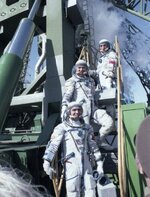
История советской космонавтики в фотографиях. На фото (сверху вниз) космонавты:
Владимир Васютин, Георгий Гречко, Александр Волков. 17 сентября 1985 года.
The History of Soviet Cosmonautics in Photographs In the photo (from top to bottom):
the cosmonauts Vladimir Vasyutin, Georgy Grechko, Alexander Volkov. September 17, 1985.
La historia de la cosmonáutica soviética en fotografías En la foto (de arriba hacia abajo):
los cosmonautas Vladimir Vasyutin, Georgy Grechko, Alexander Volkov. 17 de septiembre de 1985.
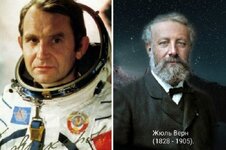
"Не могу представить себе классической литературы без имени Жюля Верна. П. Груссе, один из друзей Жюля Верна, сказал: «Никто до Жюля Верна не делал из науки основы монументального произведения, посвященного изучению Земли и Вселенной, промышленного прогресса, результатов, достигнутых человеческим знанием, и его предстоящих завоеваний».
Жюль Верн был необычайно прозорливым специалистом, как мы сейчас бы сказали, в области технического прогнозирования. Он предвидел появление подводных лодок и авиации, звукового кино и дальнобойной артиллерии, полетов на Луну и путешествий в глубь Земли. И вместе с тем он признавал: «Что бы я ни сочинял, что бы я ни выдумывал — все это будет уступать истине, ибо настанет время, когда достижения науки превзойдут силу воображения».
Этот первый «пласт» произведений Ж. Верна — прогностический — конечно, уже превзойден развитием современной науки и техники. и тем не менее лучшие романы Ж. Верна живут и еще долго будут жить. Прежде всего потому, что Ж. Верн впервые ввел в литературу нового героя — человека, для которого главной целью жизни является научное познание и поиск истины. Ради этого герои Ж. Верна преодолевают тысячи препятствий, демонстрируют на этом пути необыкновенную творческую изобретательность и мужество, являя собой пример людей, чуждых корысти и лицемерия. Многие образы, созданные воображением писателя,— особенно капитан Немо — являются для нас более реальными, чем иные живые люди. Эти герои Ж. Верна будут жить в нашем сознании до тех пор, пока люди будут стремиться к познанию неизведанного.
С романов Ж. Верна начинается бурное развитие нового жанра литературы — научной фантастики, которую сегодня с жадностью «поглощают» сотни миллионов людей во всем мире.
Я инженер, а не литературовед, но глубоко убежден, что без великого мечтателя Жюля Верна не было бы современной научной фантастики. Не было бы той фантастики, где драма идей поднята на ступень искусства, где наука и искусство обогащают друг друга.
Думая о Жюле Верне, я всегда вспоминаю, что кратер на обратной стороне Луны, названный советскими учеными его именем, находится рядом с Морем Мечты…".(Олег Макаров. "Великий мечтатель").
...................................................................
Цитируется по: Жюль Верн
ДЕТИ КАПИТАНА ГРАНТА
Вступительное слово летчика-космонавта
СССР дважды Героя Советского Союза О. Г. Макарова
Москва/ Издательство "Правда"/ 1985 год “I cannot imagine classical literature without the name of Jules Verne. Paschal Grousset, one of Jules Verne’s friends, once said:
‘Before Jules Verne, no one had ever made science the foundation of a monumental body of work devoted to the exploration of the Earth and the Universe, to industrial progress, to the achievements of human knowledge, and to its future conquests.’
Jules Verne was an extraordinarily far-sighted specialist in what today we would call technological forecasting. He foresaw the appearance of submarines and aviation, sound cinema and long-range artillery, flights to the Moon and journeys into the depths of the Earth. At the same time he admitted:
‘Whatever I may write, whatever I may invent, all of it will fall short of the truth, for the time will come when the achievements of science will surpass the power of imagination.’
This first “layer” of Verne’s works — the predictive one — has, of course, already been surpassed by the development of modern science and technology. Nevertheless, the best novels of Jules Verne live on and will continue to live for a long time.
Above all, because Jules Verne was the first to introduce into literature a new kind of hero — a person for whom the main goal in life is scientific knowledge and the search for truth. For this reason Verne’s heroes overcome thousands of obstacles, demonstrating extraordinary creative ingenuity and courage along the way, serving as examples of people who are free from greed and hypocrisy. Many characters created by the writer’s imagination — especially Captain Nemo — seem more real to us than some living people. These heroes of Jules Verne will live in our consciousness as long as humanity strives to explore the unknown.
With the novels of Jules Verne begins the rapid development of a new literary genre — science fiction, which today is eagerly ‘devoured’ by hundreds of millions of people around the world.
I am an engineer, not a literary scholar, but I am deeply convinced that without the great dreamer Jules Verne there would be no modern science fiction. There would be no such science fiction in which the drama of ideas is raised to the level of art, where science and art enrich one another.
When I think of Jules Verne, I always remember that a crater on the far side of the Moon, named by Soviet scientists in his honor, lies next to the Sea of Dreams…”
(Oleg Makarov, “The Great Dreamer”)
Quoted from:
The Children of Captain Grant
Introductory article by the pilot-cosmonaut of the USSR,
twice Hero of the Soviet Union O. G. Makarov Moscow — Pravda Publishing House, 1985.
«No puedo imaginar la literatura clásica sin el nombre de Jules Verne. Paschal Grousset, uno de los amigos de Julio Verne, dijo:
“Antes de Julio Verne, nadie había hecho de la ciencia la base de una obra monumental dedicada al estudio de la Tierra y del Universo, al progreso industrial, a los logros alcanzados por el conocimiento humano y a sus futuras conquistas”.
Julio Verne fue un especialista extraordinariamente perspicaz en lo que hoy llamaríamos previsión tecnológica. Previó la aparición de los submarinos y de la aviación, del cine sonoro y de la artillería de largo alcance, de los vuelos a la Luna y de los viajes al interior de la Tierra. Y al mismo tiempo reconocía:
“Por mucho que yo escriba, por mucho que imagine, todo ello quedará por debajo de la verdad, porque llegará un tiempo en que los logros de la ciencia superarán la fuerza de la imaginación”.
Este primer “estrato” de las obras de Verne — el predictivo —, por supuesto, ya ha sido superado por el desarrollo de la ciencia y la tecnología modernas. Y, sin embargo, las mejores novelas de Julio Verne viven y seguirán viviendo durante mucho tiempo.
Ante todo porque Julio Verne fue el primero en introducir en la literatura un nuevo tipo de héroe: una persona para la cual el objetivo principal de la vida es el conocimiento científico y la búsqueda de la verdad. Por ello los héroes de Verne superan miles de obstáculos, demostrando en ese camino una extraordinaria inventiva creativa y valentía, dando ejemplo de personas ajenas a la codicia y a la hipocresía. Muchos personajes creados por la imaginación del escritor — especialmente Captain Nemo — nos parecen más reales que algunas personas vivas. Estos héroes de Verne vivirán en nuestra conciencia mientras los seres humanos sigan aspirando a conocer lo desconocido.
Con las novelas de Julio Verne comienza el rápido desarrollo de un nuevo género literario: la ciencia ficción, que hoy es “devorada” con avidez por cientos de millones de personas en todo el mundo.
Soy ingeniero y no crítico literario, pero estoy profundamente convencido de que sin el gran soñador Julio Verne no existiría la ciencia ficción moderna. No existiría esa ciencia ficción en la que el drama de las ideas se eleva al nivel del arte, donde la ciencia y el arte se enriquecen mutuamente.
Cuando pienso en Julio Verne, siempre recuerdo que un cráter en la cara oculta de la Luna, llamado por científicos soviéticos con su nombre, se encuentra junto al Sea of Dreams…»
(Oleg Makarov, «El gran soñador»)
Citado según:
Los hijos del capitan Grant
Palabras introductorias del piloto-cosmonauta de la URSS,
dos veces Héroe de la Unión Soviética O. G. Makarov Moscú — Pravda Publishing House, 1985.
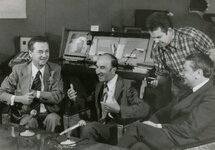
История советской космонавтики в фотографиях. Академик О. Г. Газенко (в центре), космонавты В. И. Севастьянов (слева) и Б. Б. Егоров (сидит справа) отвечают на вопросы журналистов.
The history of Soviet cosmonautics in photographs. Academician O. G. Gazenko (center), cosmonauts V. I. Sevastyanov (left) and B. B. Egorov (seated, right) answer journalists' questions.
La historia de la cosmonáutica soviética en fotografías. El académico O. G. Gazenko (centro), los cosmonautas V. I. Sevastyanov (izquierda) y B. B. Egorov (sentado a la derecha) responden a las preguntas de los periodistas.
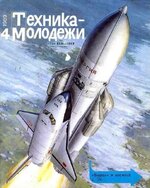
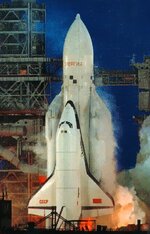
Космические обложки советских журналов. "Техника - молодежи". №4, 1989 год. На обложке космический корабль «Бура́н» — советский орбитальный корабль-ракетоплан многоразовой транспортной космической системы (МТКС), созданный в рамках программы «Энергия — Буран». Space-themed covers of Soviet magazines. "Technology for Youth," issue #4, 1989. The cover features the Buran spacecraft—the Soviet orbital rocketship of the reusable space transportation system (RTS), created as part of the Energia-Buran program.
Portadas de revistas soviéticas con temática espacial. «Tecnología para la Juventud», número 4, 1989. La portada muestra la nave espacial Buran, el cohete orbital soviético del sistema de transporte espacial reutilizable (RTS), creado como parte del programa Energía-Buran.
Старт комплекса «Энергия — Буран» 15 ноября 1988 года с космодрома Байконур Первый и единственный космический полёт «Буран» совершил 15 ноября1988 года в автоматическом режиме, без экипажа на борту; больше его не запускали («Буран» был рассчитан на 100 полётов в космос
The Energia-Buran complex launched from the Baikonur Cosmodrome on November 15, 1988.
The Buran spacecraft completed its first and only space flight on November 15, 1988, in automatic mode, without a crew on board. It was never launched again (Buran was designed for 100 space flights).
El complejo Energia-Buran fue lanzado desde el Cosmódromo de Baikonur el 15 de noviembre de 1988.
La nave espacial Buran completó su primer y único vuelo espacial el 15 de noviembre de 1988, en modo automático y sin tripulación a bordo. Nunca volvió a ser lanzada (Buran fue diseñada para 100 vuelos espaciales).
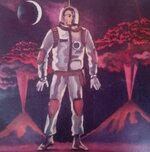
Космическая живопись в СССР. Иллюстрация к роману Сергея Павлова "Лунная радуга". Художник Г. Метченко. 1978 год.
Space painting in the USSR. Illustration for Sergei Pavlov's novel "Moon Rainbow." Artist: G. Metchenko. 1978. Pintura espacial en la URSS.
Ilustración para la novela de Serguéi Pávlov «El arco iris lunar». Artista: G. Metchenko. 1978.
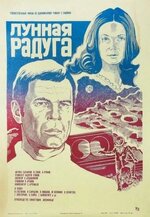
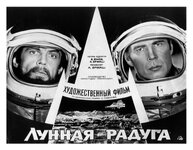
Афиши советских фантастических фильмов. "Лунная радуга". Мосфильм. Премьера: декабрь 1983 г.
Режиссер: Андрей Филиппович Ермаш
Автор сценария: Сергей Павлов, Андрей Ермаш, Валентин Ежов
В главных ролях:Владимир Гостюхин, Василий Ливанов,
Юрий Соломин, Игорь Старыгин
Год: 1983 Композитор: Эдуард Артемьев
Posters for Soviet science fiction films. "Moon Rainbow." Mosfilm. Premiere: December 1983
Director: Andrei Filippovich Yermash
Screenwriter: Sergei Pavlov, Andrei Yermash, Valentin Yezhov
Starring: Vladimir Gostyukhin, Vasily Livanov,
Yuri Solomin, Igor Starygin
Year: 1983 Composer: Eduard Artemyev
Carteles de películas soviéticas de ciencia ficción. "Arcoíris Lunar". Mosfilm. Estreno: diciembre de 1983
Director: Andrei Filippovich Yermash
Guionistas: Sergei Pavlov, Andrei Yermash, Valentin Yezhov
Protagonizada por: Vladimir Gostyukhin, Vasily Livanov,
Yuri Solomin, Igor Starygin
Año: 1983 Músico: Eduard Artemyev
Трейлер научно-фантастического фильма Александра Ермаша "Лунная радуга" (1983 год, киностудия "Мосфильм") Trailer for Alexander Yermash's science fiction film "Moon Rainbow" (1983, Mosfilm Studios) Tráiler de la película de ciencia ficción de Alexander Yermash, "Moon Rainbow" (1983, Mosfilm Studios).
«Лунная радуга» (1983) — российский научно-фантастический/детективный фильм — английская озвучка — РЕДКАЯ VHS-кассета
Представляем вашему вниманию VHS-копию редкого российского научно-фантастического фильма «Лунная радуга» (1983) с английской озвучкой. С обратной стороны коробки VHS-кассеты Burbank Video: «В XXI веке российский проект «Лунная радуга» таинственным образом уничтожен. В результате масштабных разрушений выжившие получили странные электромагнитные способности. Когда четверо космонавтов отказываются обсуждать произошедшее, КГБ считает их угрозой миру. Одному следователю предстоит раскрыть правду, которая может спасти им жизнь, но сможет ли он защитить себя, когда четверо обратят свои таинственные способности против него?» Размещено исключительно в архивных и развлекательных целях.
Moon Rainbow (1983) Russian Sci-Fi/Mystery Movie - English Dub - RARE VHS
Here is a VHS rip of a rare Russian Sci-Fi movie, "Moon Rainbow" (1983), with the English Dub. From the back of the Burbank Video VHS box - "During the 21st century, the Russian project Lunar Rainbow, is mysteriously destroyed. The massive destruction has left the only survivors with strange, electromagnetic powers. When the four Cosmonauts refuse to discuss what happened, the KGB considers them a threat to world peace. It is up to one investigator to discover the truth that may save their lives, but will he be able to defend himself when the four turn their mysterious powers against him?" Posted for archival and entertainment purposes only. Moon Rainbow (1983) Película rusa de ciencia ficción y misterio - Doblaje en inglés - VHS RARO. Aquí tienes una copia en VHS de la rara película rusa de ciencia ficción "Moon Rainbow" (1983), con doblaje en inglés. De la contraportada de la caja de VHS de Burbank Video: "Durante el siglo XXI, el proyecto ruso Lunar Rainbow es destruido misteriosamente. La destrucción masiva ha dejado a los únicos supervivientes con extraños poderes electromagnéticos. Cuando los cuatro cosmonautas se niegan a hablar de lo sucedido, la KGB los considera una amenaza para la paz mundial. Un investigador deberá descubrir la verdad que podría salvarles la vida, pero ¿podrá defenderse cuando los cuatro usen sus misteriosos poderes contra él?". Publicado únicamente con fines de archivo y entretenimiento.
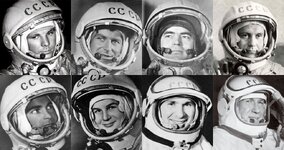
Коллаж "Космонавты СССР". На фото космонавты: Ю.Гагарин; Г. Титов; А.Николаев; П.Попович; В. Быковский. В.Терешкова; П.Беляев; А.Леонов. Collage "Cosmonauts of the USSR". Cosmonauts in the photo: Yu. Gagarin; G. Titov; A. Nikolaev; P. Popovich; V. Bykovsky. V. Tereshkova; P. Belyaev; A. Leonov. Collage "Cosmonautas de la URSS".
Cosmonautas en la foto: Yu. Gagarin; G. Titov; A. Nikolaev; P. Popovich; V. Bykovsky. V. Tereshkova; P. Belyaev; A. Leónov.
This site uses cookies to help personalise content, tailor your experience and to keep you logged in if you register.
By continuing to use this site, you are consenting to our use of cookies.