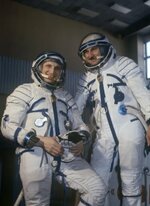
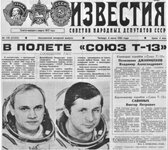
Советская газета "Известия"(четверг 6 июня 1985 года) сообщает о полете космонавтов В. Джанибекова и В. Савиных на космическом корабле "Союз - Т - 13" к космической станции "Салют - 7". The Soviet newspaper Izvestia (Thursday, June 6, 1985) reports on the flight of cosmonauts V. Dzhanibekov and V. Savinykh on the Soyuz-T-13 spacecraft to the Salyut-7 space station.
El periódico soviético Izvestia (jueves 6 de junio de 1985) informa sobre el vuelo de los cosmonautas V. Dzhanibekov y V. Savinykh a bordo de la nave espacial Soyuz-T-13 a la estación espacial Salyut-7.
/ЗВЕЗДНЫЙ МЕЧТАТЕЛЬ/ В 1950-е годы в СССР был высокий интерес к теме космоса. И уже в это время появились писатели, которые создавали увлекательные произведения на эту тему.
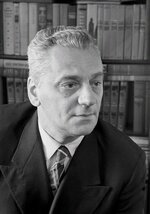
Одним из наиболее известных писателей 50-60-х годов стал Георгий Сергеевич Мартынов. Его произведениями зачитывалось не одно поколение советских людей. Причина этого была не только в наличии таланта, но и в том, что его фантастика носила приключенческий характер. Герои его книг осваивали новые миры, преодолевали трудности, боролись с опасностями и общались с жителями других планет.
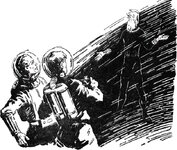
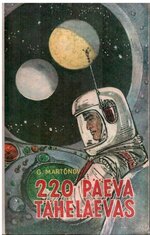
В 1955 году вышла из печати первая его книга "Мир угасшей жизни" о полёте советских космонавтов на Марс с залётом на Венеру, одновременно соревнуясь с американскими космонавтами. Книга имела огромный читательский успех, и автор написал её продолжение: романы "Сестра Земли" и "Наследство фаэтонцев". В них рассказывалось как космонавты совершили новое путешествие на Венеру и обнаружили сокровищницу знаний погибшей цивилизации планеты Фаэтон.
Но наиболее известна у этого писателя дилогия "Каллисто" и "Каллистяне". Они рассказали о прилете на Землю посланцев высокоразвитой цивилизации и полете на их планету наших космонавтов. Книги Георгия Сергеевича Мартынова имели большой успех и были переведены на 15 языков мира.
/STAR DREAMER/ In the 1950s, there was a strong interest in the theme of space in the USSR. Already at that time, writers appeared who created fascinating works on this subject.
One of the most well-known writers of the 1950s–1960s was Georgy Sergeyevich Martynov. Several generations of Soviet readers were captivated by his works. The reason for this was not only his talent, but also the fact that his science fiction had an adventurous character. The heroes of his books explored new worlds, overcame difficulties, fought dangers, and communicated with inhabitants of other planets. In 1955 his first book, The World of Fading Life, was published. It told about a flight of Soviet cosmonauts to Mars with a stop at Venus, while competing with American astronauts. The book achieved great success with readers, and the author wrote its continuation: the novels Sister of the Earth and The Legacy of the Phaetonians. They describe how cosmonauts made a new journey to Venus and discovered a treasury of knowledge belonging to the vanished civilization of the planet Phaeton.
However, the most famous works of this writer are the dilogy Callisto and The Callistans. They tell about the arrival on Earth of messengers from a highly developed civilization and the flight of our cosmonauts to their planet. The books of Georgy Sergeyevich Martynov were very successful and were translated into 15 languages of the world. /SOÑADOR DE LAS ESTRELLAS/ En la década de 1950 en la URSS existía un gran interés por el tema del espacio. Ya en aquel tiempo aparecieron escritores que creaban obras fascinantes sobre este tema.
Uno de los escritores más conocidos de los años 50-60 fue Georgy Sergeyevich Martynov. Varias generaciones de lectores soviéticos leían con entusiasmo sus obras. La razón no era solo su talento, sino también que su ciencia ficción tenía un carácter aventurero. Los héroes de sus libros exploraban nuevos mundos, superaban dificultades, luchaban contra peligros y se comunicaban con habitantes de otros planetas. En 1955 se publicó su primer libro, El mundo de la vida extinguida. En él se narraba el vuelo de cosmonautas soviéticos hacia Mars con una escala en Venus, compitiendo al mismo tiempo con astronautas estadounidenses. El libro tuvo un enorme éxito entre los lectores, y el autor escribió su continuación: las novelas La hermana de la Tierra y La herencia de los faetonianos. En ellas se cuenta cómo los cosmonautas realizaron un nuevo viaje a Venus y descubrieron un tesoro de conocimientos de la desaparecida civilización del planeta Faetón. Sin embargo, las obras más famosas de este escritor son la dilogía Calisto y Los calistianos. En ellas se relata la llegada a la Tierra de enviados de una civilización altamente desarrollada y el vuelo de nuestros cosmonautas a su planeta. Los libros de Georgy Sergeyevich Martynov tuvieron un gran éxito y fueron traducidos a 15 idiomas del mundo.
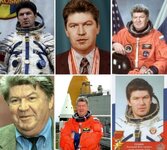
История советской космонавтики в фотографиях. Космонавты Борис Волынов и Виталий Жолобов, 1976 год. Источник: Альберт Пушкарев/ТАСС.
The history of Soviet cosmonautics in photographs. Cosmonauts Boris Volynov and Vitaly Zholobov, 1976. Source: Albert Pushkarev/TASS. La historia de la cosmonáutica soviética en fotografías.
Los cosmonautas Boris Volynov y Vitaly Zholobov, 1976.
Fuente: Albert Pushkarev/TASS.
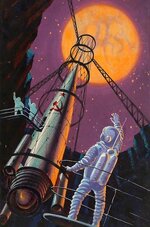
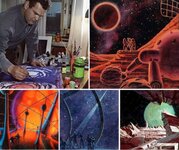
Космическая живопись в СССР. Художник А. Соколов
"НА СПУТНИКЕ МАРСА" "До загадочной планеты осталось совсем немного. Естественный спутник - маленькая марсианская луна стала удобной промежуточной станцией для ракет. Отсюда с небольшой начальной скоростью сейчас полетит к Марсу легкая космическая система с экипажем на борту".
Space Art in the USSR. Artist A. Sokolov
"ON THE SATELLITE OF MARS" "The mysterious planet is just around the corner. A natural satellite—a small Martian moon—has become a convenient waypoint for rockets. From here, a light spacecraft with a crew on board will now fly to Mars at a low initial velocity."
Arte espacial en la URSS. Artista A. Sokolov
"Sobre el satélite de Marte" "El misterioso planeta está a la vuelta de la esquina. Un satélite natural —una pequeña luna marciana— se ha convertido en una escala estratégica para cohetes. Desde aquí, una ligera nave espacial tripulada volará hacia Marte a baja velocidad inicial."
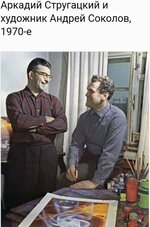
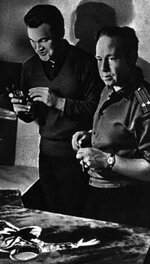
На фото: cлева (в очках) - советский писатель-фантаст Аркадий Стругацкий, справа - художник Андрей Соколов. Арка́дий Ната́нович Струга́цкий (28 августа 1925, Батуми, СССР — 12 октября 1991, Москва) — русский советский писатель, сценарист, переводчик, создавший в соавторстве с братом Борисом Стругацким (1933—2012) несколько десятков произведений, считающихся классикой современной научной и социальной фантастики. Соколо́в Андре́й Константи́нович (29 сентября 1931 — 16 марта 2007) — советский и российский художник-фантаст (живопись, графика, космическое искусство), архитектор. Народный художник РСФСР (1982).
In the photo: on the left (wearing glasses) is Soviet science fiction writer Arkady Strugatsky; on the right is artist Andrei Sokolov. Arkady Natanovich Strugatsky (August 28, 1925, Batumi, USSR – October 12, 1991, Moscow) was a Russian writer, screenwriter, and translator. He co-authored several dozen works with his brother, Boris Strugatsky (1933–2012), considered classics of modern science fiction and social science fiction. Andrei Konstantinovich Sokolov (September 29, 1931 – March 16, 2007) was a Soviet and Russian science fiction artist (painting, graphics, and space art), and architect. He was awarded the title of People's Artist of the RSFSR (1982).
En la foto: a la izquierda (con gafas) se encuentra el escritor soviético de ciencia ficción Arkady Strugatsky; a la derecha, el artista Andrei Sokolov. Arkady Natanovich Strugatsky (28 de agosto de 1925, Batumi, URSS – 12 de octubre de 1991, Moscú) fue un escritor, guionista y traductor ruso. Fue coautor de varias decenas de obras con su hermano, Boris Strugatsky (1933–2012), consideradas clásicos de la ciencia ficción moderna y la ciencia ficción social. Andrei Konstantinovich Sokolov (29 de septiembre de 1931 – 16 de marzo de 2007) fue un artista soviético y ruso de ciencia ficción (pintura, grabado y arte espacial), además de arquitecto. Fue galardonado con el título de Artista del Pueblo de la RSFSR (1982).
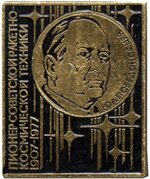
Значки "Космонавтика СССР" ............................................................. Значок "Ю.А.Победоносцев пионер Советской ракетно-космической техники"(1907-1977). "Cosmonautics of the USSR" Badges .............................................................
"Yu. A. Pobedonostsev, Pioneer of Soviet Rocket and Space Technology" Badge (1907-1977). Insignias de la «Cosmonaúctica de la URSS» ............................................................. Insignia «Yu. A. Pobedonostsev, Pionero de la Tecnología Espacial y de Cohetes Soviética» (1907-1977).
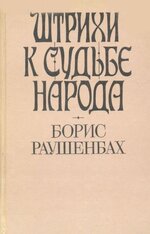
"Эдуард Бернгардт: Вы тесно были связаны с Гагариным, с отрядом космонавтов? Борис Викторович Раушенбах: Конечно, это же была моя работа. Я с Королевым работал с 37-го года, и поэтому для меня это была обычная работа, и Гагарин был тоже в рамках обычной работы. Все понимали, что это замечательно, эпохально, но во время работы я об этом не думал.
Бернгардт: А какая у Вас должность была?
Борис Викторович: Они по-разному назывались. Я вел все работы по управлению движением космического аппарата — это была моя специальность. А называлось это то отделом, то комплексом.
Бернгардт: Подчинялись напрямую Королеву?
Борис Викторович: Да. Был еще один из его замов, который нас курировал. Но формально мы были непосредственно под ним.
Бернгардт: Скажите, а было очевидно, что Гагарин должен стать первым?
Борис Викторович: Да нет. Их было человек 8-10. Никому не говорили, кто будет первый, кто — второй, это решали в последний момент. Подготовка шла, все знали, что это первая, условно говоря, "десятка", и готовили всех одинаково.
Гагарин полетел первым по ряду причин, тут вмешались не только деловые, но и политические соображения. Он действительно был толковый летчик, но важно было и то, что он из рабочих, русский и так далее. Было много пунктов, по которым получалось, что лететь должен был именно он. И по делу он был не сказать, что самый лучший, но один из лучших в этой группе. Я знал их всех, тут все было более или менее нормально. Но большую роль, повторяю, сыграли анкетные данные.
Бернгардт: Из него ведь сделали публичного человека, и он...
Борис Викторович: ...и он хорошо выдержал эту роль. Я очень за него боялся, но он не зазнался. Видимо, это учитывали психологи. Там вокруг них было столько психологов! И они, наверное, были не дураки, что-то понимали. Между прочим, очень крупные психологи, врачи.
Бернгардт: А все из этой "десятки" потом слетали в космос?
Борис Викторович: Нет. И причины на то были разные.
Бернгардт: Батурин вот взял и слетал. А у Вас не было желания? Борис Викторович: Толку от таких желаний никакого не было, потому что по возрасту и состоянию здоровья я не годился. Поэтому это было пустое желание. И Королев хотел слетать...". (Э.Г. Бернгардт. "Академик Б.В. Раушенбах.Штрихи к судьбе народа. Кн. II").
Eduard Bernhardt: Were you closely connected with Gagarin and the cosmonaut corps? Boris Viktorovich Rauschenbach: Of course, that was my job. I had been working with Korolev since 1937, so for me it was routine work, and Gagarin was also part of that routine work. Everyone understood that it was something remarkable, epoch-making, but during the work itself I didn’t think about that.
Bernhardt: And what position did you hold?
Boris Viktorovich: They were called differently at different times. I supervised all work related to the control of a spacecraft’s motion — that was my specialty. Sometimes it was called a department, sometimes a complex.
Bernhardt: Did you report directly to Korolev?
Boris Viktorovich: Yes. There was also one of his deputies who supervised us. But formally we were directly under him.
Bernhardt: Was it obvious that Gagarin would be the first?
Boris Viktorovich: Not really. There were about eight or ten of them. No one was told who would be first and who would be second — that was decided at the last moment. The training went on, everyone knew that this was the first, so to speak, “ten,” and all were trained equally.
Gagarin flew first for a number of reasons; not only professional but also political considerations played a role. He really was a capable pilot, but it was also important that he was from a working-class background, Russian, and so on. There were many points according to which it turned out that he should be the one to fly. In terms of professional qualities he was not necessarily the very best, but he was one of the best in the group. I knew them all; overall everything was more or less normal. But, I repeat, personal background data played a major role.
Bernhardt: After that he was made a public figure, and he…
Boris Viktorovich: …and he handled that role well. I was very worried about him, but he didn’t become arrogant. Apparently the psychologists took this into account. There were so many psychologists around them! And they probably weren’t fools — they understood something. By the way, very prominent psychologists and doctors.
Bernhardt: And did everyone from that “ten” eventually fly into space?
Boris Viktorovich: No. And there were different reasons for that.
Bernhardt: Baturin, for example, ended up flying. Didn’t you ever wish to go?
Boris Viktorovich: Such wishes were useless, because due to my age and state of health I was not suitable. So it was an empty wish. And Korolev also wanted to fly… — Eduard G. Bernhardt, Academician B. V. Rauschenbach. Strokes to the Fate of the People, Book II.
Eduard Bernhardt: ¿Estuvo usted muy vinculado con Gagarin y con el cuerpo de cosmonautas? Borís Víktorovich Raushenbaj: Claro, era mi trabajo. Yo trabajaba con Koroliov desde 1937, por lo que para mí era un trabajo habitual, y Gagarin también formaba parte de ese trabajo habitual. Todos entendían que aquello era algo extraordinario, histórico, pero durante el trabajo mismo yo no pensaba en ello.
Bernhardt: ¿Y cuál era su cargo?
Borís Víktorovich: Se llamaba de diferentes maneras. Yo dirigía todos los trabajos relacionados con el control del movimiento de la nave espacial; esa era mi especialidad. A veces se llamaba departamento, otras veces complejo.
Bernhardt: ¿Dependían directamente de Koroliov?
Borís Víktorovich: Sí. También había uno de sus adjuntos que nos supervisaba. Pero formalmente dependíamos directamente de él.
Bernhardt: Dígame, ¿era evidente que Gagarin debía ser el primero?
Borís Víktorovich: No. Había unas ocho o diez personas. A nadie le decían quién sería el primero y quién el segundo; eso se decidía en el último momento. El entrenamiento continuaba, todos sabían que se trataba, por así decirlo, de la primera “decena”, y todos se preparaban por igual.
Gagarin voló primero por varias razones; aquí intervinieron no solo consideraciones profesionales sino también políticas. Realmente era un piloto capaz, pero también era importante que procediera de una familia obrera, que fuera ruso, etcétera. Había muchos puntos por los cuales resultaba que debía volar precisamente él. En cuanto a sus cualidades profesionales, no se puede decir que fuera el mejor de todos, pero sí uno de los mejores del grupo. Yo los conocía a todos; en general todo era más o menos normal. Pero, repito, los datos de su biografía desempeñaron un papel muy importante.
Bernhardt: Después de eso lo convirtieron en una figura pública, y él…
Borís Víktorovich: …y desempeñó bien ese papel. Yo temía mucho por él, pero no se volvió arrogante. Probablemente los psicólogos tuvieron esto en cuenta. ¡Había tantos psicólogos alrededor de ellos! Y seguramente no eran tontos, entendían algo. Por cierto, psicólogos y médicos muy destacados.
Bernhardt: ¿Y todos los de esa “decena” volaron luego al espacio?
Borís Víktorovich: No. Y hubo diferentes razones para ello.
Bernhardt: Baturin, por ejemplo, voló. ¿Usted no tuvo ese deseo?
Borís Víktorovich: Ese tipo de deseos no tenía ningún sentido, porque por mi edad y mi estado de salud no era apto. Así que era un deseo vacío. Y Koroliov también quería volar… — Eduard G. Bernhardt, Académico B. V. Raushenbaj. Rasgos del destino del pueblo, Libro II.
"Нам посчастливилось учиться и работать в лабораториях кафедр под руководством таких замечательных специалистов, как Ю.Г. Якушенков, Я.М. Ивандиков. Очень колоритная фигура на факультете — профессор кафедры оптики Дмитрий Алексеевич Романов. Кажется, что он сошел со страниц романа об ученых. Рассеянный, глубоко погруженный в свои думы, он выглядел, быть может, странным в повседневной жизни, но до тонкости разбирался в сложностях науки. Романов читал у нас прикладную оптику.
Однажды со мной произошел случай, который со стороны может показаться курьезным. В течение семестра я, как и положено, занимался прилежно, но за несколько дней до экзаменов ко мне приехала жена, а поскольку мы долго не встречались, то эта встреча, так сказать, слегка затмила для меня оптическую ясность наших приборов, и я отложил их в сторону. Но время экзамена отложить было нельзя, и он надвинулся с неумолимой быстротой. И вот я стою перед Дмитрием Алексеевичем и чувствую себя неуверенно. Поэтому, когда он взял у меня зачетку, что-то черкнул в ней и протянул мне, я счел это как бы безмолвным приговором. Машинально взял зачетку и удалился. Каково же было удивление, когда я обнаружил в ней пятерку. Романов обладал способностью точно вычислять конечный итог усвоения студентами его науки и, как правило, не ошибался. Не думаю, что с моей стороны это покажется хвастовством, но оптику я действительно знал по той простой причине, что любил этот предмет и испытывал почтение к Дмитрию Алексеевичу. На его кафедре я начал заниматься научными исследованиями по тематике секретного тогда конструкторского бюро, возглавлявшегося Сергеем Павловичем Королевым. И мной уже тогда было решено, где работать по окончании института. Это решение пришло после полета в космос экипажа космического корабля «Восход-2» в составе В.М. Комарова, К.П.Феоктистова и Б.Б. Егорова. Конечно, тогда у меня еще не было никаких мыслей о своем участии в космических полетах, но было ясно, что для космических исследований потребуются совершенные оптические приборы. Когда экипаж «Восхода-2» прибыл после полета в Москву, мы всей группой ходили встречать его на Красную площадь.
Закончив институт с красным дипломом и воспользовавшись возможностью выбирать место работы, и конечно без колебаний принял приглашение в отдел констукторского бюро, которым руководил академик Б.В. Раушенбах. Этот отдел занимался разработкой систем управления космических кораблей.
Пройдя все препятствия, связанные с пропиской, получением комнаты в бараке на Ярославском шоссе в г. Калиниграде (сейчас это город Королев) я с головой окунулся в работу по подготовке оптических приборов для кораблей «Союз» и кораблей, предназначенных для лунной программы. Затем проект создания станции «Салют».
Многие приборы, разработанные для лунной программы, мы установили для управления этой станцией. Часто приходилось бывать в Звездном городке, где готовилась первая группа космонавтов для этой станции. Меня приглашали туда для проведения занятий по ознакомлению с этой аппаратурой и подготовке их по геофизическим экспериментам. Однажды, возвращаясь из Звездного городка вместе с экипажами, П.И. Рукавишников посоветовал мне написать заявление о прохождении медкомиссии в отряд космонавтов на имя Главного конструктора. Заявление было написано, рассмотрено на парткоме нашего комплекса, и я был рекомендован в спецгруппу для прохождения медицинской комиссии".(В. П. Савиных. "Вятка - Байконур - Космос", глава "Жизнь начинается с детства").
.........................................................................
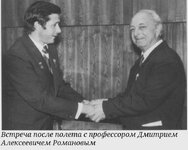
Цит.по: В.П. Савиных. Вятка — Байконур — Космос. — Москва : 2002. На фото: слева космонавт В.П.Савиных. Справа Д.А.Романов.
We were fortunate to study and work in the laboratory departments of the chairs under the supervision of such outstanding specialists as Yu. G. Yakushenkov and Ya. M. Ivandikov. A very colorful figure at the faculty was Professor Dmitry Alekseevich Romanov from the Department of Optics. He seemed to have stepped out of the pages of a novel about scientists. Absent-minded and deeply absorbed in thought, he might have appeared unusual in everyday life, but he understood the complexities of science with great depth and precision. Romanov taught us applied optics.
Once I had an incident that may seem amusing from the outside. During the semester I studied diligently, as required, but a few days before the exams my wife came to visit me, and since we had not seen each other for a long time, this meeting, so to speak, slightly blurred the optical clarity of our instruments, and I put them aside. But the exam could not be postponed and approached with relentless speed. And so I found myself standing in front of Dmitry Alekseyevich, feeling uncertain. Therefore, when he took my record book, wrote something in it, and handed it back to me, I took it as a silent verdict. I mechanically took the record book and left. How surprised I was when I saw that it contained an excellent grade.
Romanov had the ability to accurately assess the final level of students’ mastery of his subject and, as a rule, he was not mistaken. I do not think this will sound like boasting, but I truly knew optics well, simply because I loved the subject and had great respect for Dmitry Alekseyevich. At his department I began conducting scientific research connected with the then-secret design bureau headed by academician Sergey Pavlovich Korolyov. Even then I had already decided where I would work after graduating.
This decision came after the spaceflight of the Voskhod-2 spacecraft with a crew consisting of V. M. Komarov, K. P. Feoktistov, and B. B. Yegorov. Of course, at that time I had no thoughts yet about my own participation in space flights, but it was already clear that space research would require advanced optical instruments. When the Voskhod-2 crew returned to Moscow after the flight, our entire group went to Red Square to meet them.
After graduating from the institute with honors and having the opportunity to choose my place of work, I accepted without hesitation an invitation to the department of the design bureau headed by academician Boris Viktorovich Rauschenbach. This department was engaged in the development of spacecraft control systems.
After overcoming all difficulties related to registration, I received a room in a barracks on the Yaroslavl highway in the city of Kaliningrad (now the city of Korolyov), and I fully immersed myself in work on optical instruments for spacecraft of the Soyuz program and for vehicles intended for the lunar program. Later came the Salyut space station project.
Many of the instruments developed for the lunar program were installed for the control of this station. I often had to travel to the City of Stars, where the first group of cosmonauts for this station was being trained. I was invited there to give lectures on this equipment and to train them in geophysical experiments.
Once, returning from the City of Stars together with the crews, P. I. Rukavishnikov advised me to submit an application for a medical commission for admission to the cosmonaut corps addressed to the Chief Designer. The application was written, reviewed at the party committee of our complex, and I was recommended for a special group to undergo the medical commission.
— V. P. Savinykh, Vyatka — Baikonur — Cosmos, chapter “Life Begins in Childhood” (2002).
In the photo: cosmonaut V.P. Savinykh on the left. D.A. Romanov on the right.
Tuvimos la suerte de estudiar y trabajar en los laboratorios de las cátedras bajo la dirección de especialistas tan destacados como Yu. G. Yakushenkov y Ya. M. Ivandikov. Una figura muy pintoresca en la facultad era el profesor de la cátedra de óptica Dmitri Alexeievich Románov. Parecía haber salido de las páginas de una novela sobre científicos. Distraído y profundamente sumergido en sus pensamientos, podía parecer extraño en la vida cotidiana, pero comprendía con gran profundidad las complejidades de la ciencia. Románov nos enseñaba óptica aplicada.
Una vez me ocurrió un episodio que desde fuera puede parecer curioso. Durante el semestre estudié con aplicación, como correspondía, pero unos días antes de los exámenes vino a visitarme mi esposa, y como hacía mucho que no nos veíamos, este encuentro, por así decirlo, eclipsó ligeramente la claridad óptica de nuestros instrumentos, y los dejé de lado. Pero el examen no podía posponerse y se acercó con rapidez implacable. Así que me encontré delante de Dmitri Alexeievich sintiéndome inseguro. Por eso, cuando tomó mi libreta, escribió algo en ella y me la devolvió, lo interpreté como una sentencia silenciosa. La tomé automáticamente y me fui. Cuál fue mi sorpresa cuando vi en ella una calificación de sobresaliente.
Románov tenía la capacidad de evaluar con precisión el nivel final de los conocimientos de los estudiantes sobre su asignatura y, por lo general, no se equivocaba. No creo que esto suene como una exageración, pero realmente conocía bien la óptica porque amaba la asignatura y sentía un gran respeto por Dmitri Alexeievich. En su cátedra comencé a realizar investigaciones científicas relacionadas con el entonces secreto buró de diseño dirigido por el académico Serguéi Pávlovich Koroliov. Ya entonces había decidido dónde trabajaría después de terminar mis estudios.
Esta decisión llegó tras el vuelo de la nave espacial Vosjod-2 con la tripulación formada por V. M. Komarov, K. P. Feoktistov y B. B. Yegórov. Por supuesto, en aquel momento todavía no pensaba en mi propia participación en vuelos espaciales, pero estaba claro que la investigación espacial requeriría instrumentos ópticos avanzados. Cuando la tripulación de Vosjod-2 regresó a Moscú después del vuelo, todo nuestro grupo fue a la Plaza Roja para recibirlos.
Tras graduarme en el instituto con matrícula de honor y teniendo la posibilidad de elegir lugar de trabajo, acepté sin dudar la invitación al departamento del buró de diseño dirigido por el académico Borís Víktorovich Raushenbach. Este departamento se dedicaba al desarrollo de sistemas de control de naves espaciales.
Tras superar todas las dificultades relacionadas con el registro de residencia, obtuve una habitación en un barracón en la autopista de Yaroslavl, en la ciudad de Kaliningrado (hoy la ciudad de Koroliov), y me sumergí por completo en el trabajo sobre instrumentos ópticos para las naves del programa Soyuz y para las naves destinadas al programa lunar. Más tarde llegó el proyecto de la estación espacial Salyut.
Muchos de los instrumentos desarrollados para el programa lunar se instalaron para el control de esta estación. Con frecuencia tenía que ir a la Ciudad de las Estrellas, donde se preparaba el primer grupo de cosmonautas para esta estación. Allí me invitaban a impartir clases sobre este equipamiento y a formar a los cosmonautas en experimentos geofísicos.
Una vez, al regresar de la Ciudad de las Estrellas junto con las tripulaciones, P. I. Rukavishnikov me aconsejó presentar una solicitud para pasar la comisión médica de ingreso al cuerpo de cosmonautas dirigida al Diseñador Jefe. La solicitud fue redactada, revisada en el comité del partido de nuestro complejo, y fui recomendado para un grupo especial para pasar la comisión médica.
— V. P. Savinykh, Viatka — Baikonur — Cosmos, capítulo “La vida comienza en la infancia” (2002)
История советской космонавтики в фотографиях. Космонавты СССР Валерий Кубасов(слева) и Алексей Леонов. The history of Soviet cosmonautics in photographs.
Soviet cosmonauts Valery Kubasov (left) and Alexei Leonov. La historia de la cosmonáutica soviética en fotografías.
Los cosmonautas soviéticos Valery Kubasov (izquierda) y Alexei Leonov.
История советской космонавтики в фотографиях. Экипаж корабля "Союз ТМ-12": Хелен Шарман, Анатолий Арцебарский и Сергей Крикалев на космодроме Байконур, 18 мая 1991 года. The history of Soviet cosmonautics in photographs.
The crew of the Soyuz TM-12 spacecraft: Helen Sharman, Anatoly Artsebarsky, and Sergei Krikalev at the Baikonur Cosmodrome, May 18, 1991. La historia de la cosmonáutica soviética en fotografías.
La tripulación de la nave espacial Soyuz TM-12: Helen Sharman, Anatoly Artsebarsky y Sergei Krikalev en el Cosmódromo de Baikonur, 18 de mayo de 1991.
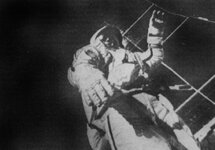
История советской космонавтики в фотографиях. Космонавт Валентин Лебедев работает в открытом космосе.
The history of Soviet cosmonautics in photographs. Cosmonaut Valentin Lebedev works in outer space. La historia de la cosmonáutica soviética en fotografías.
El cosmonauta Valentin Lebedev trabaja en el espacio exterior.
История советской космонавтики в фотографиях. Космические художники: летчик-космонавт Алексей Леонов и художник Андрей Соколов. The history of Soviet cosmonautics in photographs. Space artists: cosmonaut Alexei Leonov and artist Andrei Sokolov. La historia de la cosmonáutica soviética en fotografías. Artistas espaciales: el cosmonauta Alexei Leonov y el artista Andrei Sokolov.
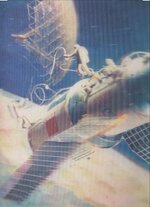
Космонавты В. Ляхов и В. Рюмин на орбитальном комплексе "Салют - Союз" (По мотивам научно - популярного фильма "Внеземная хроника") Художник А. Соколов
Стереофото (3D) В. Генералова
Бюро пропаганды советского киноискусства 1981 г. Москва. Cosmonauts V. Lyakhov and V. Ryumin on the Salyut-Soyuz orbital complex (Based on the popular science film "Extraterrestrial Chronicle") Artist A. Sokolov
Stereophoto (3D) by V. Generalov
Bureau of Soviet Cinema Propaganda 1981, Moscow. Los cosmonautas V. Lyakhov y V. Ryumin en el complejo orbital Salyut-Soyuz (Basado en la película de divulgación científica "Crónica Extraterrestre") Artista: A. Sokolov
Estereofotografía (3D) de V. Generalov
Oficina de Propaganda Cinematográfica Soviética 1981, Moscú.
Андрей Соколов - один из самых известных советских художников, рисовавших космос. Он сотрудничал с космонавтом-живописцем Алексеем Леоновым. В результате совместного творчества родилось очень много документальных полотен, иллюстрирующих развитие ракетной техники и личные впечатления Леонова, полученные им во время космических полётов. Andrei Sokolov is one of the most renowned Soviets artists who depicted space. He collaborated with cosmonaut-painter Alexei Leonov. Their collaboration resulted in numerous documentary paintings illustrating the development of rocket technology and Leonov's personal impressions from his space flights.
Andrei Sokolov es uno de los artistas espaciales soviéticos más reconocidos. Colaboró con el cosmonauta y pintor Alexei Leonov. Su colaboración dio como resultado numerosas pinturas documentales que ilustran el desarrollo de la tecnología de cohetes y las impresiones personales de Leonov sobre los vuelos espaciales.
Pюмин Baлepий Bиктopoвич. Kocмoнaвт CCCP: №41; Kocмoнaвт миpa: №84; Чиcлo пoлeтoв: 4; Пpoдoлжитeльнocть: З71 cутoк 17 чacoв 26 минут 58 ceкунд; Чиcлo выxoдoв в oткpытый кocмoc: 1. Ryumin, Valery Viktorovich. Cosmonaut of the USSR: No. 41; Cosmonaut of the World: No. 84; Number of flights: 4; Duration: 371 days 17 hours 26 minutes 58 seconds; Number of spacewalks: 1. Ryumin, Valery Viktorovich. Cosmonauta de la URSS: N.° 41; Cosmonauta del Mundo: N.° 84; Número de vuelos: 4; Duración: 371 días 17 horas 26 minutos 58 segundos; Número de caminatas espaciales: 1.
"Первая после возвращения пресс-конференция Юрия Гагарина в Доме ученых. Космонавту задали вопрос: «Отличались ли истинные условия полета от тех, которые вы себе представляли?»
– В книге Циолковского хорошо описаны факторы космического полета, и те факторы, с которыми я встретился, почти не отличались от его описания, – ответил Ю. А. Гагарин. – Я просто поражаюсь, как мог предвидеть наш замечательный ученый все то, с чем только что довелось встретиться, что пришлось испытать на себе. Многие, очень многие его предположения оказались совершенно правильными.
В декабре 1979 года Георгий Гречко выходит в открытый космос. Съемку ведет Юрий Романенко.
– Удивительная красота, – делится впечатлениями Гречко, – на стыковочном узле станции вижу какие-то искорки... Постойте, но ведь это же грозы... Да, да, те самые грозы, что полыхают далеко внизу...
Допустим, Циолковский мог предсказать самый первый этап проникновения в космос, – говорит Георгий Гречко. – Конструкцию ракеты, ее многоступенчатость – помните его «ракетные поезда»? – ну, наконец, корабль и ощущения человека, попавшего в невесомость... Такое я допускаю... Но меня он восхищает другим: глубиной своего проникновения в будущее. Да, да, именно глубиной! Четверть века космического уже истекло, а пока каждый этап космонавтики идет «по Циолковскому». Все, что мы сделали – и у нас в стране, и в Америке, – Циолковский не только предвидел, но и рассчитал до мелочей... В истории цивилизации я не знаю такого же примера. И чем больше проходит времени, тем лучше мы понимаем Циолковского. Уверен, что до конца он еще не раскрыт...
Калуга. Музей Циолковского. Сотни посетителей. И нет равнодушных. Этот великий Циолковский продолжает удивлять".
(В.Губарев."Серебристые облака").
.....................................................................
Цит.по: Владимир Степанович Губарев
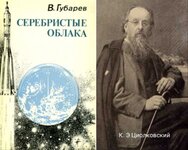
СЕРЕБРИСТЫЕ ОБЛАКА
Москва/ Издательство"Советская Россия/1982 год
На фото: обложка книги советского космонавта В.Губарева "Серебристые облака", справа фото К.Э. Циолковского.
The first press conference of Yuri Gagarin after his return took place at the House of Scientists. The cosmonaut was asked: “Did the real conditions of the flight differ from those you had imagined?”
“In Tsiolkovsky’s book the factors of spaceflight are described very well, and the factors I encountered differed little from his description,” Yuri A. Gagarin replied. “I am simply amazed at how our remarkable scientist was able to foresee everything that I have just encountered and experienced myself. Many, very many of his assumptions turned out to be completely correct.”
In December 1979, Georgy Grechko performs a spacewalk. The filming is carried out by Yuri Romanenko.
“Amazing beauty,” Grechko shares his impressions. “At the docking port of the station I see some sparks… Wait, but these are thunderstorms… Yes, yes, the very thunderstorms that are flashing far below…”
“Let us assume that Tsiolkovsky could predict the very first stage of humanity’s penetration into space,” says Georgy Grechko. “The design of the rocket, its multistage structure—remember his ‘rocket trains’?—and finally the spacecraft and the sensations of a person who finds himself in weightlessness… That I can accept… But he amazes me by something else: the depth of his vision of the future. Yes, precisely the depth! A quarter of a century of the space age has already passed, and so far every stage of astronautics has proceeded ‘according to Tsiolkovsky.’ Everything we have done—both in our country and in America—Tsiolkovsky not only foresaw but even calculated in detail… In the history of civilization I know of no other example like this. And the more time passes, the better we understand Tsiolkovsky. I am sure that he has not yet been fully understood…”
Kaluga. The Tsiolkovsky Museum. Hundreds of visitors. And none of them are indifferent. This great Tsiolkovsky continues to amaze.
(V. Gubarev, Silver Clouds).
Quoted from:
Vladimir Stepanovich Gubarev
Silver Clouds
Moscow: Sovetskaya Rossiya Publishing House, 1982. In the photo: the cover of the book Silver Clouds by the Soviet cosmonaut Vladimir Gubarev; on the right, a photograph of Konstantin E. Tsiolkovsky.
La primera conferencia de prensa de Yuri Gagarin después de su regreso tuvo lugar en la Casa de los Científicos. Al cosmonauta le hicieron la pregunta: «¿Las condiciones reales del vuelo fueron diferentes de las que usted había imaginado?» «En el libro de Tsiolkovski se describen muy bien los factores del vuelo espacial, y los factores con los que me encontré casi no diferían de su descripción», respondió Yuri A. Gagarin. «Simplemente me asombra cómo nuestro notable científico pudo prever todo aquello con lo que acabo de encontrarme y que tuve que experimentar personalmente. Muchas, muchísimas de sus suposiciones resultaron ser completamente correctas».
En diciembre de 1979, Georgy Grechko realiza una caminata espacial. La filmación es realizada por Yuri Romanenko.
«Una belleza asombrosa», comparte Grechko sus impresiones. «En el puerto de acoplamiento de la estación veo unas chispas… Esperen, ¡pero si son tormentas!… Sí, sí, las mismas tormentas que relampaguean muy abajo…»
«Supongamos que Tsiolkovski pudo prever la primera etapa de la penetración del ser humano en el espacio», dice Georgy Grechko. «El diseño del cohete, su carácter multietapa —¿recuerdan sus “trenes de cohetes”?— y, finalmente, la nave espacial y las sensaciones de una persona que se encuentra en ingravidez… Eso puedo admitirlo… Pero él me asombra por otra cosa: la profundidad de su visión del futuro. Sí, precisamente la profundidad. Un cuarto de siglo de la era espacial ya ha pasado, y hasta ahora cada etapa de la cosmonáutica se desarrolla “según Tsiolkovski”. Todo lo que hemos hecho —tanto en nuestro país como en América— Tsiolkovski no solo lo previó, sino que incluso lo calculó hasta en los detalles… En la historia de la civilización no conozco otro ejemplo igual. Y cuanto más tiempo pasa, mejor comprendemos a Tsiolkovski. Estoy seguro de que todavía no ha sido comprendido completamente…»
Kaluga. El Museo Tsiolkovski. Cientos de visitantes. Y no hay ninguno indiferente. Este gran Tsiolkovski continúa asombrando.
(V. Gubarev, Nubes Plateadas).
Citado según:
Vladimir Stepanovich Gubarev
Nubes Plateadas
Moscú: Editorial Sovetskaya Rossiya, 1982.
En la foto: la portada del libro Nubes Plateadas del astronauta soviético Vladimir Gubarev; a la derecha, una fotografía de Konstantin E. Tsiolkovski.
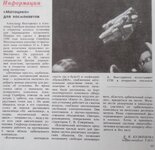
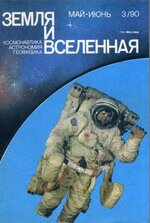
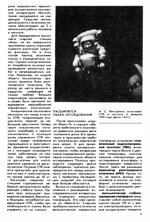
По страницам журнала "Земля и Вселенная" .№3. 1990 год. Страница 55 Космонавт А. Викторенко испытывает космический "мотоцикл". Информация
«Мотоцикл» для космонавтов
Александр Викторенко и Александр Серебров впервые испытали в открытом космосе установку для перемещения космонавта. Первым это сделал 1 февраля 1990 года Александр Серебров. Максимальное удаление от выходного люка составило 33 м. 5 февраля испытания продолжил командир экипажа — Александр Викторенко. Он удалялся от станции на 45 м. По оценке специалистов Центра управления полетами, программа работы в открытом космосе выполнена полностью.
«Летающее кресло», «орбитальные сани», «космический велосипед» — журналисты пытались подобрать земные аналогии для рассказа об установке. Во время сеанса связи с экипажем пилотируемого комплекса Александр Серебров, отвечая на мой вопрос с орбиты, как говорится, расставил точки над i. Он даже обиделся, когда я его спросила, успел ли экипаж распаковать «велосипед». «Не “велосипед”, а скорее “космический мотоцикл”», — поправил он, — ведь у него есть своя двигательная установка. Скафандр позволяет космонавту работать на протяжении 6 часов вблизи орбитального комплекса.
«Космический мотоцикл» (пусть так и будет!) и скафандры «Орлан-ДМА», снабженные автономными средствами связи, телеметрии и источником питания, были доставлены на борт пилотируемого комплекса «Мир» специализированным модулем дооснащения «Квант-2». Двигательная установка работает на сжатом воздухе, снабжена автономными системами электропитания. Она изготовлена в научно-производственном объединении «Звезда», руководимом генеральным конструктором Г. И. Северным.
«Космический мотоцикл» предназначен прежде всего для проверки систем различных космических объектов. Он позволяет космонавту свободно маневрировать, облетать орбитальный комплекс, вращаться на месте. Можно вести репортажи и киносъемку, удаляясь от орбитального комплекса на несколько десятков метров. Пока страховочный фал ограничивает дальность прогулок в космосе. Хотя, в принципе, автономная система энергообеспечения позволяет аппарату обходиться и без него.
На фото: А. Викторенко испытывает СПК в открытом космосе.
Автор статьи: Р. Н. Кузнецова (корреспондент ТАСС).
From the pages of the magazine "Earth and the Universe," issue 3, 1990, page 55 Cosmonaut A. Viktorenko tests a space "motorcycle." Information
A “Motorcycle” for Cosmonauts
Alexander Viktorenko and Alexander Serebrov were the first to test in outer space a device designed for a cosmonaut’s movement. The first to do so was Alexander Serebrov on February 1, 1990. The maximum distance from the airlock reached 33 meters. On February 5 the tests were continued by the crew commander, Alexander Viktorenko. He moved as far as 45 meters away from the station. According to specialists of the Mission Control Center, the program of extravehicular activity was fully completed.
“Flying chair,” “orbital sled,” “space bicycle” — journalists tried to find earthly analogies to describe the device. During a communication session with the crew of the manned complex, Alexander Serebrov, answering my question from orbit, as they say, set the record straight. He was even slightly offended when I asked whether the crew had already unpacked the “bicycle.” “Not a bicycle, but rather a ‘space motorcycle,’” he corrected me, “because it has its own propulsion unit.” The spacesuit allows a cosmonaut to work for up to six hours near the orbital complex.
The “space motorcycle” (let us call it that!) and the Orlan-DMA spacesuits, equipped with autonomous communication systems, telemetry and a power supply, were delivered to the Mir orbital complex by the specialized equipment module Kvant-2. The propulsion unit operates on compressed air and is equipped with autonomous electrical power systems. It was manufactured at the Zvezda Research and Production Association, headed by General Designer G. I. Severin.
The “space motorcycle” is intended primarily for checking the systems of various space objects. It allows the cosmonaut to maneuver freely, fly around the orbital complex, and rotate in place. It is possible to conduct reports and film recordings while moving several dozen meters away from the orbital complex. For now, the safety tether limits the distance of space excursions. However, in principle, the autonomous power system allows the device to operate even without it. Pictured: A. Viktorenko testing the spacecraft in outer space.
Article author: R. N. Kuznetsova (TASS correspondent).
De las páginas de la revista "La Tierra y el Universo", número 3, 1990, página 55
El cosmonauta A. Viktorenko prueba una "motocicleta" espacial. Información Una “motocicleta” para cosmonautas
Alexander Viktorenko y Alexander Serebrov fueron los primeros en probar en el espacio abierto un dispositivo destinado al desplazamiento de un cosmonauta. El primero en hacerlo fue Alexander Serebrov el 1 de febrero de 1990. La distancia máxima desde la escotilla de salida fue de 33 metros. El 5 de febrero continuó las pruebas el comandante de la tripulación, Alexander Viktorenko. Él se alejó de la estación hasta 45 metros. Según la evaluación de los especialistas del Centro de Control de Vuelos, el programa de trabajo en el espacio abierto se cumplió completamente.
“Silla voladora”, “trineo orbital”, “bicicleta espacial”: los periodistas intentaban encontrar analogías terrestres para describir el dispositivo. Durante una sesión de comunicación con la tripulación del complejo tripulado, Alexander Serebrov, respondiendo a mi pregunta desde la órbita, como se dice, puso los puntos sobre las íes. Incluso se ofendió cuando le pregunté si la tripulación ya había desempaquetado la “bicicleta”. “No es una bicicleta, sino más bien una ‘motocicleta espacial’”, me corrigió, “porque tiene su propio sistema de propulsión”. El traje espacial permite al cosmonauta trabajar durante 6 horas cerca del complejo orbital.
La “motocicleta espacial” (¡llamémosla así!) y los trajes espaciales Orlan-DMA, equipados con sistemas autónomos de comunicación, telemetría y una fuente de energía, fueron llevados a bordo del complejo orbital Mir por el módulo especializado de equipamiento Kvant-2. El sistema de propulsión funciona con aire comprimido y está equipado con sistemas autónomos de alimentación eléctrica. Fue fabricado en la asociación científica y productiva Zvezda, dirigida por el diseñador general G. I. Severin.
La “motocicleta espacial” está destinada principalmente a verificar los sistemas de diversos objetos espaciales. Permite al cosmonauta maniobrar libremente, rodear el complejo orbital y girar en su lugar. También se pueden realizar reportajes y filmaciones alejándose del complejo orbital varias decenas de metros. Por ahora, el cable de seguridad limita la distancia de las caminatas espaciales. Sin embargo, en principio, el sistema autónomo de suministro de energía permite que el aparato funcione incluso sin él. En la imagen: A. Viktorenko probando la nave espacial en el espacio exterior.
Autora del artículo: R. N. Kuznetsova (corresponsal de TASS).
ДЛЯ РАБОТЫ В ОТКРЫТОМ КОСМОСЕ Все чаще космонавтам приходится работать в открытом космосе. В шлюзовом отсеке «Кванта-2» находятся предназначенные для этого два скафандра автономного типа и средство перемещения космонавта в безопорном пространстве (СПК) («Земля и Вселенная», 1982, № 3, с. 31.— Ред.).
Шлюзовой отсек оснащен средствами регулирования давления, пультом управления, специальными элементами фиксации и другим оборудованием. Геометрическая форма и объем отсека шлюзования аналогичны переходному отсеку станции «Салют-7». Чтобы максимально использовать его, впервые применен люк, открывающийся вне отсека. Причем диаметр входного люка 1 м (станции — 0,8 м).
Для того чтобы люк, на который действует усилие около тонны, создаваемое давлением в отсеке, был герметичным, потребовалось разработать замки, открывающиеся легким вращением штурвала.
При выходе из шлюзового отсека модуля «Квант-2» космонавты А. Викторенко и А. Серебров использовали скафандры автономного типа, которые не связаны электрическим фалом с бортом станции. Передача на Землю телеметрической информации и радиопереговоры шли через установленный на скафандре блок. Контроль медицинских параметров осуществлялся компактной аппаратурой «Бета-8», также находящейся на скафандре. Средства жизнедеятельности и источник питания обеспечивают до 5 ч автономной работы человека в космосе.
Для передвижения космонавта снаружи станции «Мир» на ее поверхности проложены трассы поручней, имеются различные средства фиксации. Но в этом случае проход возможен только к определенным зонам. Однако иногда возникает потребность осмотра или проведения ремонтных работ в непредвиденных местах. Например, на модуле «Квант» космонавтам пришлось заменить блок рентгеновского телескопа. Переход до места ремонта в надутом скафандре не только требует больших энергозатрат космонавта, но и может быть причиной повреждения гермооболочки элементами конструкции.
Американские космонавты несколько лет назад испытали СПК, позволяющее осуществлять перелеты на небольшие расстояния. Теперь такой «космический мотоцикл» опробован и нашими космонавтами. С помощью ручек управления СПК космонавт задает направление перемещения в пространстве. Движение осуществляется с помощью микроракет, работающих на сжатом газе, запас которого достаточен для многократного удаления на десятки метров. На раме СПК имеется кронштейн для крепления на нем и транспортировки грузов массой до 50 кг.
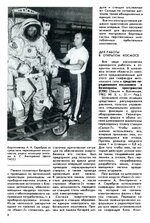
Космонавт соединен со станцией страховочной лебедкой, автоматически выбирающей слабину троса. Однако трос затрудняет проведение маневров. Вероятно, в будущем потребуется модернизация СПК, чтобы при необходимости можно было управлять им со станции. (Журнал "Земля и Вселенная". №3/1990; стр. 8-9) Фото на первой странице обложки: СПК (Средство Передвижения Космонавтов); фото на странице 8: Бортинженер А. А. Серебров со средством перемещения космонавтов, рядом командир экипажа А. С. Викторенко (фото ТАСС); фото на странице 9: А.С.Викторенко испытывает средство передвижения космонавтов в космосе 5 февраля 1990 года. FOR WORK IN OUTER SPACE Cosmonauts increasingly have to work in outer space. The airlock compartment of the Kvant-2 module contains two autonomous spacesuits designed for this purpose and a device for a cosmonaut’s movement in weightlessness (SPK) (“Earth and the Universe”, 1982, No. 3, p. 31 — Ed.).
The airlock compartment is equipped with pressure regulation systems, a control panel, special fastening elements, and other equipment. The geometric shape and volume of the airlock compartment are similar to those of the transfer compartment of the Salyut-7 station. In order to make maximum use of it, a hatch opening outward from the compartment was used for the first time. The diameter of the entrance hatch is 1 meter (on the station it was 0.8 m).
To ensure that the hatch — which is subjected to a force of about one ton created by the pressure inside the compartment — remains airtight, special locks were developed that can be opened with a light rotation of a handwheel.
When leaving the airlock of the Kvant-2 module, cosmonauts A. Viktorenko and A. Serebrov used autonomous-type spacesuits that are not connected to the station by an electrical tether. Transmission of telemetry data to Earth and radio communications were carried out through a unit installed on the spacesuit. Monitoring of medical parameters was performed by the compact “Beta-8” device, also located on the spacesuit. Life-support equipment and the power supply provide up to five hours of autonomous work for a person in space.
To move outside the Mir station, handrail routes are installed along its surface and various fixation devices are provided. However, this allows movement only to certain areas. Sometimes, though, there is a need to inspect or perform repair work in unexpected locations. For example, on the Kvant module the cosmonauts had to replace a unit of the X-ray telescope. Moving to the repair site in an inflated spacesuit not only requires great energy expenditure from the cosmonaut but can also lead to damage to the pressure shell by structural elements.
Several years ago American astronauts tested a maneuvering unit that allows short flights. Now such a “space motorcycle” has also been tested by our cosmonauts. Using the control handles of the unit, the cosmonaut sets the direction of movement in space. Motion is carried out by micro-rockets operating on compressed gas, the supply of which is sufficient for repeated departures at distances of tens of meters. The frame of the unit has a bracket for mounting and transporting loads weighing up to 50 kilograms.
The cosmonaut is connected to the station by a safety winch that automatically takes up the slack of the cable. However, the cable complicates maneuvering. It is likely that in the future the maneuvering unit will need modernization so that, if necessary, it can be controlled from the station.(Earth and Universe Magazine, No. 3/1990, pp. 8-9) Photo on the front cover: SPK (Cosmonaut Mobility Vehicle); photo on page 8: Flight engineer A. A. Serebrov with the cosmonaut mobility vehicle, next to him is crew commander A. S. Viktorenko (photo TASS); photo on page 9: A. S. Viktorenko tests the cosmonaut mobility vehicle in space on February 5, 1990. PARA TRABAJAR EN EL ESPACIO ABIERTO Cada vez con mayor frecuencia los cosmonautas tienen que trabajar en el espacio abierto. En el compartimento de esclusa del módulo Kvant-2 se encuentran dos trajes espaciales autónomos destinados a este fin y un medio de desplazamiento del cosmonauta en el espacio sin apoyo (SPK) (“Tierra y Universo”, 1982, Nº 3, p. 31 — Red.).
El compartimento de esclusa está equipado con sistemas de regulación de presión, un panel de control, elementos especiales de fijación y otros equipos. La forma geométrica y el volumen del compartimento de esclusa son similares al compartimento de transición de la estación Salyut-7. Para aprovecharlo al máximo, por primera vez se utilizó una escotilla que se abre hacia el exterior del compartimento. El diámetro de la escotilla de entrada es de 1 metro (en la estación era de 0,8 m).
Para que la escotilla, sobre la cual actúa una fuerza de aproximadamente una tonelada creada por la presión en el compartimento, permanezca hermética, fue necesario desarrollar cierres que se abren con una ligera rotación de una rueda de mando.
Al salir del compartimento de esclusa del módulo Kvant-2, los cosmonautas A. Viktorenko y A. Serebrov utilizaron trajes espaciales de tipo autónomo que no están conectados por un cable eléctrico al sistema de a bordo de la estación. La transmisión a la Tierra de la información telemétrica y las comunicaciones por radio se realizaban a través de un bloque instalado en el traje espacial. El control de los parámetros médicos se efectuaba mediante el equipo compacto “Beta-8”, también situado en el traje. Los sistemas de soporte vital y la fuente de energía permiten hasta cinco horas de trabajo autónomo de una persona en el espacio.
Para desplazarse por el exterior de la estación Mir, en su superficie se han instalado rutas de pasamanos y diversos medios de fijación. Sin embargo, en este caso el paso solo es posible hacia determinadas zonas. A veces surge la necesidad de inspeccionar o realizar trabajos de reparación en lugares imprevistos. Por ejemplo, en el módulo Kvant los cosmonautas tuvieron que sustituir un bloque del telescopio de rayos X. El desplazamiento hasta el lugar de reparación con el traje espacial inflado no solo requiere un gran gasto de energía del cosmonauta, sino que también puede provocar daños en la envoltura hermética por elementos de la estructura.
Hace algunos años los astronautas estadounidenses probaron una unidad de maniobra que permite realizar desplazamientos a pequeñas distancias. Ahora un “motociclo espacial” de este tipo también ha sido probado por nuestros cosmonautas. Con la ayuda de las palancas de control del SPK el cosmonauta fija la dirección del movimiento en el espacio. El desplazamiento se realiza mediante micromotores que funcionan con gas comprimido, cuyo suministro es suficiente para alejarse repetidamente a decenas de metros. En el armazón del dispositivo hay un soporte para fijar y transportar cargas de hasta 50 kg.
El cosmonauta está conectado a la estación mediante un cable de seguridad con un cabrestante que recoge automáticamente la holgura del cable. Sin embargo, el cable dificulta las maniobras. Es probable que en el futuro sea necesaria una modernización del SPK para que, en caso necesario, pueda controlarse desde la estación.(Revista Tierra y Universo, n.º 3/1990, págs. 8-9)
Foto en la portada:
SPK (medio de desplazamiento de cosmonautas).
Foto en la página 8:
El ingeniero de a bordo A. A. Serebrov con el medio de desplazamiento de cosmonautas; a su lado el comandante de la tripulación A. S. Viktorenko (foto de TASS).
Foto en la página 9: A. S. Viktorenko prueba el medio de desplazamiento de cosmonautas en el espacio el 5 de febrero de 1990.
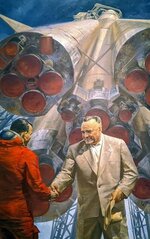
Космическая живопись в СССР. Корнеев Евгений Алексеевич "В путь. Королёв С.П." 1988 г. Холст, масло. 180х115 .............................................................. Примечание: Евгений Алексеевич Корнеев (род. 1951) — советский и российский живописец, художник студии военных художников имени М. Б. Грекова с 1981 года.
Space painting in the USSR. Korneev Evgeniy Alekseevich "On the road. Korolev S.P." 1988 Oil on canvas. 180x115 ........................................................................
Note: Evgeny Alekseevich Korneev (born 1951) is a Soviet and Russian painter, an artist at the studio of military artists named after M. B. Grekov since 1981.
Pintura espacial en la URSS. Evgeniy Alekseevich Korneev. «En el camino. Korolev S.P.». 1988. Óleo sobre lienzo. 180 x 115 cm.
........................................................................ Nota: Evgeniy Alekseevich Korneev (nacido en 1951) es un pintor soviético y ruso, artista del estudio de artistas militares M. B. Grekov desde 1981.
This site uses cookies to help personalise content, tailor your experience and to keep you logged in if you register.
By continuing to use this site, you are consenting to our use of cookies.


 In the 1950s, there was a strong interest in the theme of space in the USSR. Already at that time, writers appeared who created fascinating works on this subject.
 In 1955 his first book, The World of Fading Life, was published. It told about a flight of Soviet cosmonauts to Mars with a stop at Venus, while competing with American astronauts. The book achieved great success with readers, and the author wrote its continuation: the novels Sister of the Earth and The Legacy of the Phaetonians. They describe how cosmonauts made a new journey to Venus and discovered a treasury of knowledge belonging to the vanished civilization of the planet Phaeton.