- Joined
- Mar 31, 2012
- Messages
- 2,298
- Reaction score
- 4
- Points
- 0
Nope. You are lumping together two issues:
(1) Whether the device generates thrust at all
(2) Whether thrust generation can be explained in the realm of known physics
Question (1) is a purely experimental matter, (2) is the job for theorists.
The crackpot argument is: (drive works) => (physics wrong), which is jumping to conclusions.
The pseudo-skeptical argument is: NOT (physics wrong) => NOT (drive works), which is viewing physics (or rather one's limited understanding thereof) as dogma.
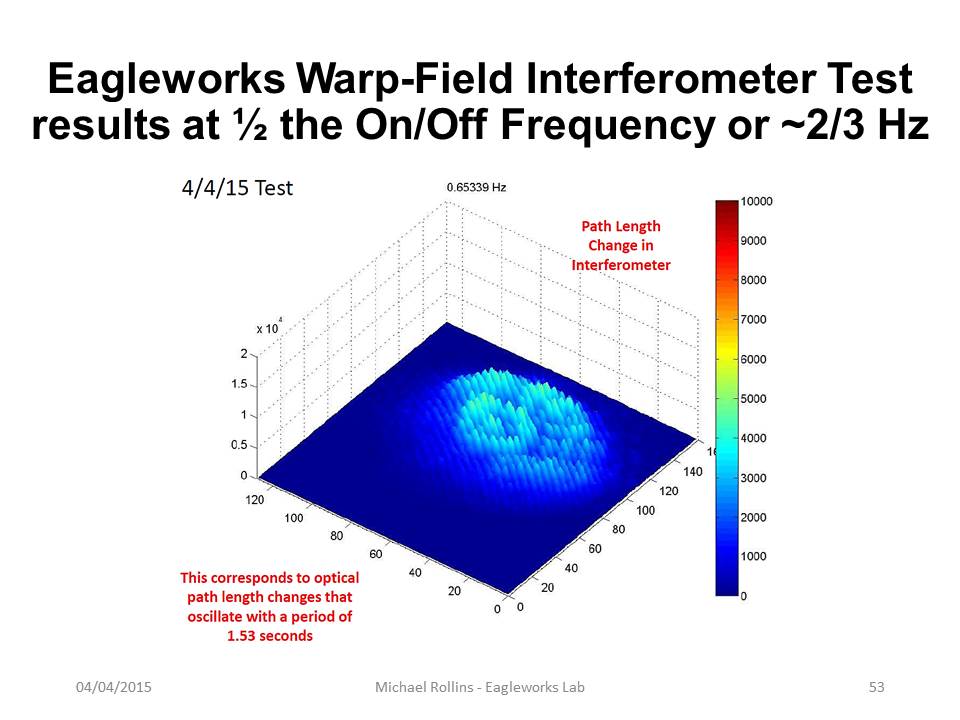
The interferometer anomaly suggests that the drive's operation (if it works at all, that is -- I'm not entirely sure) can be explained by the warping of space. In such case, Newton's laws do not apply, because they require flat spacetime. Thus (drive works) <=> NOT (physics wrong).
(1) Whether the device generates thrust at all
(2) Whether thrust generation can be explained in the realm of known physics
Question (1) is a purely experimental matter, (2) is the job for theorists.
The crackpot argument is: (drive works) => (physics wrong), which is jumping to conclusions.
The pseudo-skeptical argument is: NOT (physics wrong) => NOT (drive works), which is viewing physics (or rather one's limited understanding thereof) as dogma.
The interferometer anomaly suggests that the drive's operation (if it works at all, that is -- I'm not entirely sure) can be explained by the warping of space. In such case, Newton's laws do not apply, because they require flat spacetime. Thus (drive works) <=> NOT (physics wrong).
Last edited: