
- Joined
- Feb 6, 2008
- Messages
- 38,938
- Reaction score
- 3,937
- Points
- 203
- Location
- Wolfsburg
- Preferred Pronouns
- Sire
At least it dies in beauty.


Brain fart, meant S-IC, but even still it seems SuperHeavy is larger. AmazingSuperheavy is waaaaay larger than the S-IVB

Flames coming out of the body flap hinge is definitely not nominal.
Flames coming out of the body flap hinge is definitely not nominal.
Warning: video contains engineering language

There would be plasma on the other stagnation points as well if that were so. The subsequent RUD rather points to a fire.It could also be plasma from the residual atmosphere forming there, it really isn't an aerodynamic part. It could also be fire.
There would be plasma on the other stagnation points as well if that were so. The subsequent RUD rather points to a fire.
It's this:Isn't the "cavity above the ship engine firewall" the rest of the ship? Sounds like a diplomatic way of saying the ship filled with a combustible fuel/air mix and exploded. Fire coming out of the forward flaps kinda is a big deal.
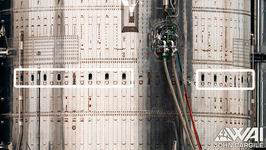
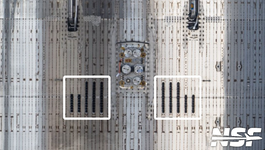
OK, I see what is happening. I misinterpreted the video from the Scott Manley post as being the forward body flap, not the aft flap. This makes more sense.It's this:
So there's a "floor" enclosing the space from about the top of the Vacuum bells up to the aft dome. The booster was prone to this trapped atmosphere issue too, so they started purging its cavity with CO2 throughout the flight, but the ship never seemed, now confirmed, to get the same treatment. The ship's cavity has a set of vents on the leeward side which curiously were one of the changes with V2: there used to be more of them more spread out around the whole leeward side, of a different size and shape but not concentrated in one spot (old vs new):
View attachment 41757View attachment 41758
Which begs the question, did the venting capacity significantly change such that previous ships could or might have already dealt with it, or is it equivalent and it was just "bad luck" they happened to get a fire on this one, and it could have taken out any other so far.

SpaceX demonstrating the capability of doing truly spectacular funerals if they ever go manned with this thing, I guess...At least it dies in beauty.

Which begs the question, did the venting capacity significantly change such that previous ships could or might have already dealt with it, or is it equivalent and it was just "bad luck" they happened to get a fire on this one, and it could have taken out any other so far.


