
-
ORBITER-FORUM will be temporarily closed at 2026-07-23 18:00 UTC while we complete some OF maintenance tasks. The amount of downtime is expected to take up to one hour, but probably less.
You are using an out of date browser. It may not display this or other websites correctly.
You should upgrade or use an alternative browser.
You should upgrade or use an alternative browser.
News Chandrayaan-3
- Thread starter MaxBuzz
- Start date
Sbb1413
Well-known member
- Joined
- Aug 14, 2018
- Messages
- 1,012
- Reaction score
- 401
- Points
- 98
- Location
- West Bengal, India
- Preferred Pronouns
- he/his/him
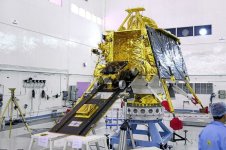
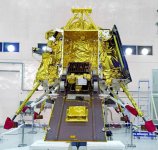
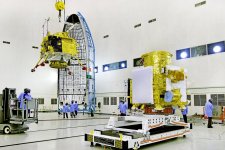
I have already talked about this at the Chandrayaan-2 thread. The gist is that Chandrayaan-3 is a repeat of the landing part of Chandrayaan-2 and a demonstration of India's space capability. I'm very excited about this.
Last edited:

MarkWatney2015
The Desktop Orbinaut
- Joined
- Oct 14, 2016
- Messages
- 1,276
- Reaction score
- 1,632
- Points
- 128
- Location
- San Jose Del Monte, Bulacan
- Preferred Pronouns
- He/him
So that means retroactively there's a Chandrayaan-3 addon is nearing completion faster than Chandrayaan-2? Cool
Sbb1413
Well-known member
- Joined
- Aug 14, 2018
- Messages
- 1,012
- Reaction score
- 401
- Points
- 98
- Location
- West Bengal, India
- Preferred Pronouns
- he/his/him
Nothing to do with Chandrayaan, but I've just heard that the Chandra X-ray Observatory is one of the few non-Indian spacecraft with Indian name (it is named after S Chandrasekhar). Cygnus NG-14 Kalpana Chawla is another one (Kalpana Chawla was born in India in 1962 and she flew on Shuttle missions as an American citizen).
Last edited:

- Joined
- Mar 23, 2008
- Messages
- 1,326
- Reaction score
- 1,656
- Points
- 128
- Website
- francisdrakex.deviantart.com
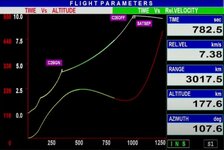
It comes to my mind, how close the online display of ISRO resembles a typical Orbiter MFD.

They are giving more information than most other launch displays, like the Azimuth direction.
Hope all goes well and Chandrayaan-3 reaches its proper trajectory.

Piorun
Well-known member
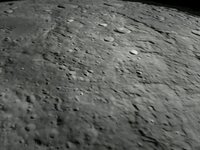
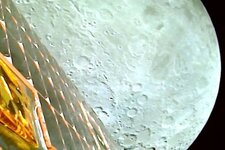
Chandrayaan-3 has recently successfully performed the LOI manoeuvre:
If everything goes okay, the anticipated landing should occur around August 23rd-24th.
If everything goes okay, the anticipated landing should occur around August 23rd-24th.

Not sure I understand the plot... does it mean that the orbit will still be "highly" elliptical? (150 perilune to 550+ km apolune....)... or does it read from right to left in remaining time?It comes to my mind, how close the online display of ISRO resembles a typical Orbiter MFD.
They are giving more information than most other launch displays, like the Azimuth direction.
Hope all goes well and Chandrayaan-3 reaches its proper trajectory.
Last edited:

- Joined
- Jan 7, 2008
- Messages
- 5,813
- Reaction score
- 869
- Points
- 203
- Location
- Earth
- Website
- orbides.org
- Preferred Pronouns
- she/her
30 minutes till landing.


Wasn't that mostly just an orbiter joke, because there's a bug that leads to weird behaviour in the sim? Or maybe your post is just a reference to that joke. Difficult to tell without any emojis...See, you doubters who said it is impossible to land at the poles.
Piorun
Well-known member
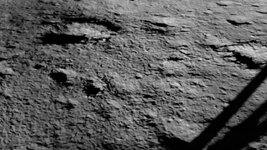
ISRO has managed to establish communication with the lunar lander:
We already have the first photo from the landing site!
We already have the first photo from the landing site!
- Joined
- Mar 23, 2008
- Messages
- 1,326
- Reaction score
- 1,656
- Points
- 128
- Website
- francisdrakex.deviantart.com
This was a plot during launch. The upper line is the speed, with the white figures in km/s. The kinks in the curve are the stage separation events, when acceleration shortly dropped, before the next stage engine started.Not sure I understand the plot.
The lower line is the altitude with red figures in km. The third stage shows a significant drop from 220 to 130 km, before climbing again. This is quite typical for high-ISP but low thrust optimized upper stage engines.
Sbb1413
Well-known member
- Joined
- Aug 14, 2018
- Messages
- 1,012
- Reaction score
- 401
- Points
- 98
- Location
- West Bengal, India
- Preferred Pronouns
- he/his/him
India becomes the fourth country to land on the moon after USSR (now Russia), US, and China. I'm proud of my country.

Piorun
Well-known member
We can see the rover moving on the ground - sincere congrats to the People of India!

MaxBuzz
Well-known member
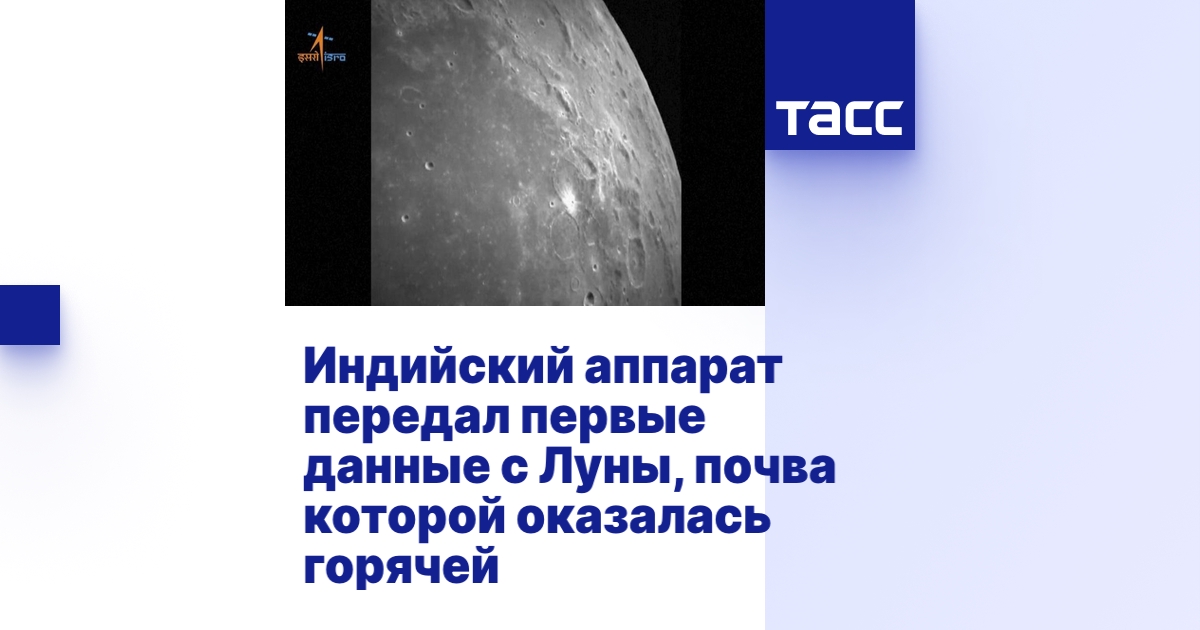
The Indian apparatus transmitted the first data from the moon, the soil of which turned out to be hot (it was assumed that the temperature of the lunar soil around the pole was 20°, but it turned out to be 70°)
this fact will affect the search for water
 tass.ru
this fact will affect the search for water
Индийский аппарат передал первые данные с Луны, почва которой оказалась горячей
Температура на ее поверхности составила 70 градусов по Цельсию
tass.ru
Last edited:
Similar threads


- Replies
- 0
- Views
- 380

- Replies
- 2
- Views
- 1K
