
indeed i doJust a complete shot in the dark here, but do you have a plug-in called "Attachment Manager" active? If so, try disabling it.

ORBITER-FORUM will be temporarily closed at 2026-07-23 18:00 UTC while we complete some OF maintenance tasks. The amount of downtime is expected to take up to one hour, but probably less.
indeed i doJust a complete shot in the dark here, but do you have a plug-in called "Attachment Manager" active? If so, try disabling it.


Thank you very much! Much appreciated.Each daily launch window for STS-49 was a maximum of 53 minutes long with the shortest being 47 minutes long.

7 May: 7:06-7:52 pm EDT, and also 7:53-7:55 pm EDT (these final 3 minutes would probably target a rendezvous at a different time)Quick question. I'm trying to find the launch window for STS-49, Endeavors first launch. I found that the window supposedly opened at 19:06 EDT, and the launch was delayed 34 minutes, with a lift off at 19:40 EDT.
I thought this was an instantaneous launch window, but maybe not?
Does anyone know the actual launch window? I have searched high and low, but no joy.
From the manual:For the ODS capture ring, where is the docking port location-wise on the ring (IE the mating face or somewhere else)? Using SSV with the most recent BetterISS version and the capture ring goes deep into the PMA before docking.
For vessels intending to dock to the ODS, the vessel's docking port position should be in-plane with the top surface of the structural ring of the APDS.
i dont think so. It has a config option to remove the IDAs and thats worked fine with previous versions of the mod. ill do some more looking and talking with Max about it.From the manual:
Could there be a mix-up with IDS ports (or whatever they are called... the new ports in-front of the PMAs)?
ive also started working some on this mission. i got a mission file all setup and i have started working on the payloads.Quick question. I'm trying to find the launch window for STS-49, Endeavors first launch. I found that the window supposedly opened at 19:06 EDT, and the launch was delayed 34 minutes, with a lift off at 19:40 EDT.
I thought this was an instantaneous launch window, but maybe not?
Does anyone know the actual launch window? I have searched high and low, but no joy.

 ), and it describes the ALT system, which had a severe diet for the orbital flights, so even this "simple" version without the major functions, although still far from done and perfect, but already a good first win! I'm also able to show a DISP display, but I still can't resume to the display below. There are also questions to answer about display numbers: the documentation implies that "display 0" means "no display", and the OPS 0 control segment calls display 1 "GPC MEMORY"... but later they added a SPEC 1, and it would make sense for it to call display 1, but that is already taken... was the GPC MEMORY display relabeled "display 0", or does the DPS UTILITY display have another id? BTW: what exactly is shown at the top left of the displays: control segment id, display id, or something else? That is another example of variables that don't seem to be written anywhere . Maybe this display id thing is irrelevant as the user actually calls control segments and not displays, but it would be nice to settle these questions now to avoid re-labelling in the future.
Looking at the OI-7 CRT Reference Summary from '85, it has both SPECs and DISPs judging by the display identification (The XXXX/XXX/XXX line in the top left corner, not sure what it is actually called) having the spots for both SPECs and DISPs. OI-7 is the earliest we have that I can find.DISPs are display-only, I'm not sure if they existed from the beginning, or if they just added later as a cheap display without the need for a control segment program
Nah, when I said "from the begining" I meant the begining of the software development, in the early 70s. Enterprise had at least one DISP: 51, a.k.a. "FAULT", later changed to DISP 99.Looking at the OI-7 CRT Reference Summary from '85, it has both SPECs and DISPs judging by the display identification (The XXXX/XXX/XXX line in the top left corner, not sure what it is actually called) having the spots for both SPECs and DISPs. OI-7 is the earliest we have that I can find.
old topic on here, but on 135 they had a keel camera at Xo1125.59, didn't see that option in the mission editorI think it is the SCOM that says there are only 4 camera positions... and maybe originally there were only 4, but that document seemed recent enough, so I went with it.
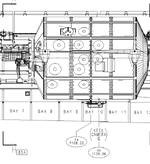
Oh boy...old topic on here, but on 135 they had a keel camera at Xo1125.59, didn't see that option in the mission editor
View attachment 47963
Well.....I'm not actually working on a scenario. At the risk of sounding ancient, I've seen 4 shuttle launches in person total, but the Endeavour launch is the one that myself and my brother were lucky enough to get out to the non-VIP viewing area for, but was fuzzy on the timing of that launch. The more I thought about it, the more it was driving me up a wall when I couldn't find the details. I knew the launch was delayed, and it lifted off just before the close of the window, but just couldn't remember. My brother had a nice camera with him, and he's been looking for the pics he took that day.ive also started working some on this mission. i got a mission file all setup and i have started working on the payloads.


