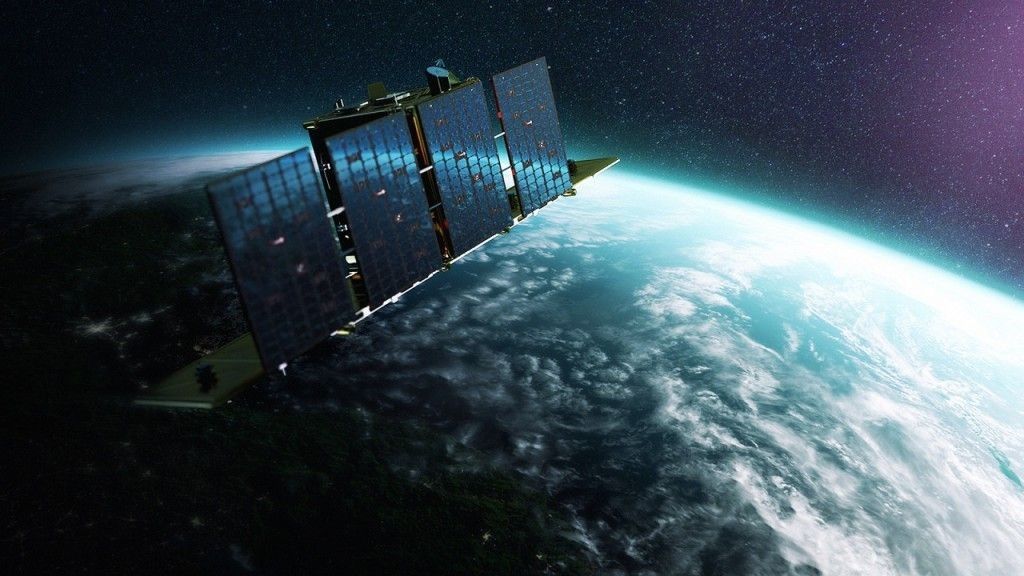
News Poland's presence in the space

Piorun

Well-known member
Joined
Dec 3, 2013
Messages
208
Reaction score
428
Points
78
Location
Poland
This thread is intended to focus on news about space flight research currently conducted in Poland, as well as on the development of domestic rocket and satellite projects.


Historical timeline:

1852/1853
— Ignacy Łukasiewicz, the inventor of kerosene lamp, distills kerosene — an essential propellant of future space launchers (in its perfected form known as RP-1).

1883, April 5th — Two scientists of the Jagiellonian University — Zygmunt Wróblewski and Karol Olszewski, manage to produce liquid oxygen (LOX) for the first time in the history. LOX later becomes one of the most important oxidizers in astronautics.

1903 — A Polish-Russian academician, Konstanty Ciołkowski ("Konstantin Tsiolkovsky" in Russian) publishes his pioneering theoretical work titled "Exploration of Outer Space by Means of Rocket Devices", which lays the groundwork for future space rocket designs. According to Ciołkowski’s work, composition of certain chemicals shall be sufficient to accelerate a spacecraft to the orbital speed (ca. 8 km/s).

1918 — A Polish catholic friar (and later — a saint martyr of the catholic church), father Maksymilian M. Kolbe during his studies in Italy publishes a proposal of the "Etereoplan" — an early concept of an interplanetary spacecraft. Kolbe presented his work with computations and drawings in the Italian magazine Scienza per Tutti. Despite his German ancestry (his father was a polonized German), Kolbe dies in 1941 as a prisoner of the Auschwitz Nazi German Death Camp, as he volunteered to take place of another prisoner, a former Polish POW, designated to execution.

1932 — Ary Sternfeld, a Polish Jewish engineer finishes his monograph titled "Introduction to Cosmonautics”, coining the term "cosmonautics". Two years later, Sternfeld invents the bi-ellpitic transfer.

May — July 1944 — Polish resistance movement recovers remnants of a Nazi German V2 missile and delivers them to the United Kingdom for further examination. It should be noted that during the second world war, hundreds of forced laborers from Poland, as well as Czechoslovakia, France and the USSR worked on the assembly of the Rocket Baron’s missiles. Many of them sabotaged von Braun's tools of destruction, in result paying the highest price as a violent punishment by the occupants.

1950s—1960s — Numerous technological tests of various rocket designs (incl. e.g. RD-42, RM-2, "RASKO” series).

1961—1973 — With the Meteor Program, Poland becomes the sixth country in the world conducting atmospheric research with domestically made strato- and mesospheric sounding rockets.

1970, October 7th — The 3rd Meteor 2K sounding rocket achieves the Kármán Line.

1970s — Participation in the Interkosmos Program (esp. in satellite researches and sounding rocketry).

1973, April 19th — Launch of the Polish-Soviet scientific satellite Interkosmos 9 (a.k.a. Kopernik 500), for commemoration of the 500th anniversary of birth of Mikołaj Kopernik (better known in the rest of the world under his latinised name "Nicolaus Copernicus").

1970s—1980s — Participation in the USSR-led Bion Program.

1978 June 26th — July 5th — Cosmonaut Mirosław Hermaszewski together with Soviet Belorussian cosmonaut Pyotr Klimuk aboard of Soyuz 30 visits Salyut 6 space station. Poland becomes the 4th country of the world, whose citizen flew into space.

1980s — The Space Research Centre of Polish Academy of Sciences provides a part of scientific payload for the Soviet Fobos probes.

1990s — Commencement of cooperation with Western countries in space exploration of the Solar System. The Space Research Centre of Polish Academy of Sciences provides its first contribution to a Western space mission (temperature and thermal conductivity sensor for the Huygens lander and designs layouts of electronic systems for sensors measuring physical properties of Titan). After Cassini-Huygens, contributions take place in relation to other deep space missions follow (including, but not limited to, InSight and JUICE).

2012, November 19th — Accession to the European Space Agency.

2014, September 26th — Establishment of the Polish Space Agency (POLSA).

2017 — Commencement of flight trials of the ILR-33 suborbital sounding rocket. As of 2023, development of the ILR-33 is still ongoing.

June 2022 — May 2023 — Concept works on the first national lunar mission take place. According to the statement of the Director of POLSA on summarising the aforementioned feasibility study, preparations to the lunar mission shall commence in 2023.

2023, July 21st — The Perun commercial suborbital launcher performs its final test prior to crossing the Kármán line scheduled for autumn 2023.
 
Last edited:
August 9th, 2023: Today, the Ministry of Development and Technology has announced that a Polish astronaut will participate in a 2024 mission to the ISS. The mission is a result of an agreement between the Republic of Poland, ESA and Axiom Space. Most likely, the astronaut to be selected for the mission will be Mr. Sławosz Uznański — an engineer at CERN, who had been qualified as an ESA reserve astronaut in autumn 2022 (official biography here). However at this moment the final designation of the astronaut is awaiting for confirmation by the other sides of the agreement. The astronaut will conduct scientific and technological experiments to be provided by the nation’s industries, as well as educational activities.

News on the Polish Radio site here

 
Also, Boris Chertok was born in (what is now) Poland.
A.N. Yablontsev, one of Russian pilots selected to the Buran program, too.

On the other hand, there was also a certain number of Polish Americans in the space, for example J. Pawelczyk (STS-90).
 
Sergei Korolev was born in Zhytomyr, in all documents he indicated that his nationality was Russian

Vladimir Chelomey was born in the Polish city of Siedlce
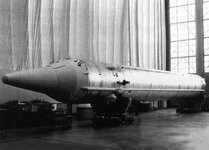
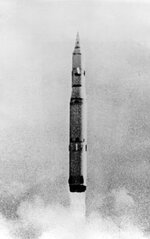
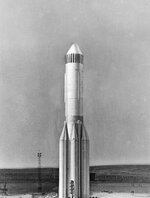
62cc65b5efda0193a39200a4-preview.jpg1591822_original.jpgzemlya_ballisticheskie_raketi_zemlya-zemlya_mezhkontinentalnie_ballisticheskie_raketi_ur-200_8...jpgzemlya_ballisticheskie_raketi_zemlya-zemlya_mezhkontinentalnie_ballisticheskie_raketi_ur-500_8...jpgfig7-2.jpg
 
Last edited:
Sergei Korolev was born in Zhytomyr, in all documents he indicated that his nationality was Russian

Korolev identified himself as Ukrainian early in life (For example, when he entered university in Kyiv in 1925), so no, not all documents said he was Russian, at least before Gulag. His diploma thesis in 1930 was mentored by none less than Andrei Tupolev - with whom a shared the same fate during the Great Terror: В круге первом.
 
Sooo... Poland can into space after all?
It depends naturally on how we define the ability of going into space ;)
  1. Crossing of the Kármán line — This has already been done more than 50 years ago, and in the coming months or even weeks it will be doable again (the Perun, under development by the company SpaceForest).
  2. Orbital rockets — That idea had been under consideration as early as in the 1960s by the Meteor Program team, but economical and political limitations of that era prevented such plans from realisation. The ongoing projects (ILR-33, Perun, PTR-1) give an impression of acquiring know-how regarding the construction of larger and more complex rockets through evolution, which may eventually lead to construction of a lightweight launch vehicle.
  3. Construction of satellites — The country’s companies are already capable of designing and manufacturing satellites entirely in Poland. The first designs were basically cubesats (Pw-Sat, Kraksat, Światowid), more recent ones are going to be somehow larger and more complex (the astronomical UVSat and the military PIAST).
  4. Deep space missions — The first steps have been already done: (a) the country’s scientists and engineers has got decades of experience in designing and manufacturing scientific payloads for deep space missions (Mars, Jupiter, Saturn’s Titan); (b) Our industry has already mastered the construction of complete satellites and therefore construction of a probe seems to be feasible in a near future; (c) POLSA and the country's spacecraft manufacturers have already discussed the issue, with the intention of realizing a national lunar mission by the end of this decade (5-6 years according to POLSA director's estimates).
Vladimir Chelomey was born in the Polish city of Siedlce
This year I drove through the city without the awareness that Chelomey had been born there.
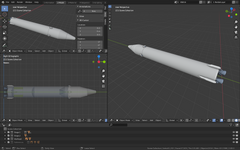
Offtopic: Currently I’m working on Chelomey's UR-100 which represents the basic version (8K84), so one day or another we will see it in Orbiter:
UR-100.png
 
On August 17th, the Military Institute of Armament Technology conducted a test firing of a scaled-down technology demonstrator for the Three Stage Suborbital Rocket (TRS - Trójstopniowa Rakieta Suborbitalna) in the Central Air Force Training Area in Ustka. The TRS is under development by a state-owned consortium consisting of the Military Aviation Works No. 1, the Military Institute of Armament Technology and the company Special Production Works "Gamrat" Ltd. (ZPS „Gamrat” Sp. z o.o.). The purpose of the Triple Stage Suborbital Rocket will be to launch research- and peaceful payloads above the Kármán line.

https://www.facebook.com/PolskaAgen...sdnuUuXQDNpvbfPuHjbEioeroEssg5RNhdp6c6VCnZMKl

The TRS is expected to perform its first suborbital flight within this year, regardless of other designs being concurrently developed in Poland.
 
March 21, 2024

”EagleEye”, the first satellite utilising the HyperSat platform under development by the company Creotech Instruments S.A. has been announced to be launched within 2024.


EagleEye is a 50 kg Earth imaging satellite. It will orbit the Earth on a LEO, reaching altitudes of approx. 300-350 km in order to provide resolution of the imagery up to 1 meter.

The launch is expected to took place in 2024, with a Falcon 9 launcher by SpaceX. The satellite is currently undergoing final examination relation to its integration with the launch vehicle.

EagleEye has been developed by a consortium that includes:
  • Creotech Instruments S.A. (the leader of the consortium, the space bus design and manufacturing);
  • Scanway S.A. (optical instrumentation);
  • Space Research Center of the Polish Academy of Sciences (scientific partner, the telescope’s computer, environmental trials).

Further, the HyperSat platform will find inter alia following applications:
  • the spacecraft bus for a future lunar orbiter detecting natural resources on the Moon, to be launched by the European Space Agency;
  • technology demonstrator ordered by the ESA for space refuelling operations as a part of the ESA Future Space Transportation Systems program - currently under development by the German company OHB System AG (with the launch scheduled for the second half of 2026);
  • PIAST military reconnaissance satellite constellation for the Armed Forces of the Republic of Poland (with the launch scheduled for 2025).

The manufacturer plans further development of HyperSat, which will result in substantially heavier (200 kg) and technically more advanced satellites within upcoming years.
 
Does it already exist in the Orbiter multiverse?
 
April 12, 2024

Intuition-1 and AI-augmented hyperpectral imagery


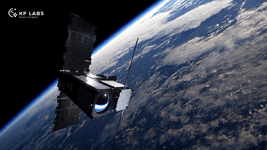
The Intuition-1 satellite developed by the company KP Labs Sp. z o.o. (from Gliwice, Silesian Voivodeship) has delivered to the Earth the first land imagery since its launch, which took place on November 11, 2023 with a Falcon 9 launch vehicle (Transporter-9 mission).

Intuition-1.png
Image: KP Labs


Unlike traditional RGB imagery that uses only 3 wide color channels (red, green, blue), Intuition-1 obtains the imagery with so called hyperspectral technology. The electromagnetic sensor with which Intuition-1 is equipped is able to distinguish as many as 192 narrow channels in total, including wavelengths invisible to the human eye. This ability allows the satellite to detect and identify various minerals, types of vegetation, environmental pollution, and ground-based structures easier than conventional satellites of comparable size.

The imagery was processed already on the orbit with the use of AI by the satellite itself. Data processing on board Intuition-1 reduces the time and resources required to analyze satellite imagery, therefore the obtained data can reach analysts faster.

The hyperspectral technology used in Intuition-1 may be used in a variety of applications, such as mineral exploration, forestry, agriculture, and environmental protection.
 
June 18, 2024

News #1: A new subcontractor to ESA’s Rosalind Franklin Mission to Mars

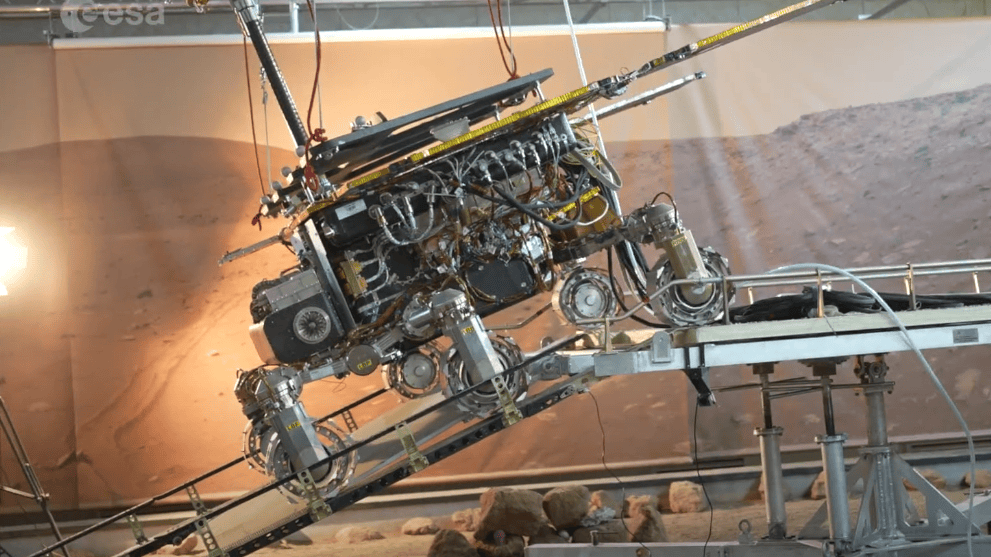
The company Astronika Sp. z o.o. from Warsaw has been awarded a contract by ESA to design a system of four ramps (EGRESS) to be installed on the ExoMars lander, carrying the Rosalind Franklin martian rover. The rover will be launched aboard the ExoMars spacecraft to Mars, and is expected to arrive to the Red Planet in 2028. Astronika has previous experience as a subcontractor to ESA’s JUICE mission to Jupiter and NASA’s InSight martian mission.

Initially, the whole landing platform had to be designed and delivered by Russia’s Roscosmos (the Kazachok lander). However, due to commonly known circumstances, mutual cooperation between ESA and Roscosmos regarding the ExoMars project had been cancelled, and another subcontractors had to be appointed.

Accordingly to the technical specification, the weight of the ramp cannot exceed 59 kg, and on the other hand, the whole mechanism has to be stable in order to prevent the rover from falling over during descent. Whats is more, the ramp has to be operable under martian weather conditions (wind, dust, low temperatures) and has to fulfil strict requirements regarding planetary protection (the ramp cannot be contaminated by bacteria originating from Earth), as the mission will be specifically focused on searching of extraterrestrial forms of life. Such mechanism will be the first of its kind to be designed in Europe.

The new subcontractor has to deliver a finished engineering model of EGRESS within summer 2024, and the ultimate trials of this component have to be completed until the end of spring 2025, in order to fit within the timeframe of the mission schedule. The design works on EGRESS will be also supported by other parties, including the Warsaw University of Technology, Space Research Centre of Polish Academy of Sciences and Łukasiewicz Research Network — Institute of Aviation.


News #2: Another successful test of a solid rocket motor for a prospective suborbital launcher

The consortium led by Military Aircraft Works No. 1 (a subsidiary of Polish Armament Group) has conducted a subsequent successful test of a solid rocket motor (diameter: 610 mm), following previous test in November 2023. The rocket motor is planned to be used in a three stage suborbital rocket. In comparison with the previous version (which had been tested in autumn 2023), the current variant used lighter and more durable structural materials. The development of the rocket motor is a part of a larger program, called Triple Stage Suborbital Rocket (TRS - Trójstopniowa Rakieta Suborbitalna).

 
June 12, 2024

SpaceX’s Falcon 9 selected as the launch vehicle for the PIAST military satellites


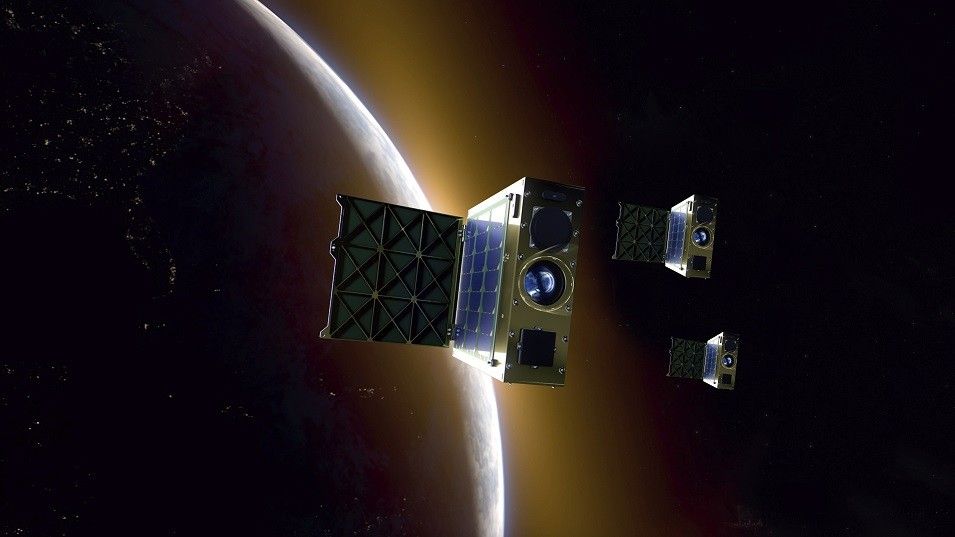
creotech-hypersat-notka-scaled.jpg
Image: Creotech Instruments S.A.

The microconstellation of the PIAST optoelectronic reconnaissance satellites for the Armed Forces of the Republic of Poland will be launched atop of a Falcon 9 rocket - the selection of the launch vehicle is a result of an agreement freshly concluded between Creotech Instruments S.A. (the manufacturer of the satellites) with Berlin-based Exolaunch GmbH - an integrator of services for SpaceX.

The constellation will be consisting of three satellites based on the HyperSat 1HU spacecraft bus. Their launch is expected to took place in the first half of 2025 (until the end May 2025).

Source:
 
June 27, 2024

The next test campaign of a suborbital rocket scheduled for July this summer


baner-1200x1200_pl-1024x1022.png
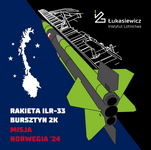
Image: Łukasiewicz - Instytut Lotnictwa via Polish Space Agency

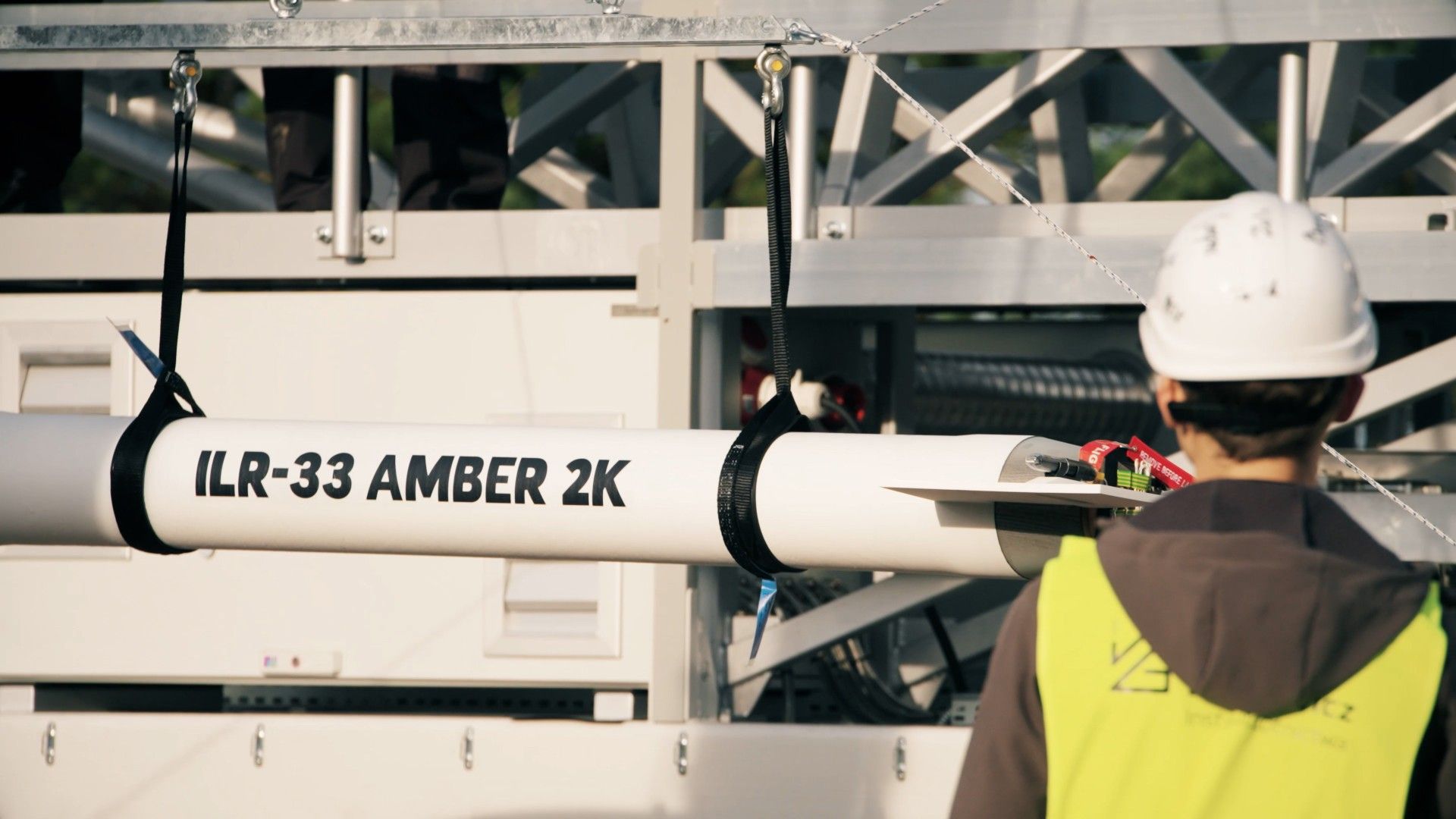
Poland’s Institute of Aviation (which is a part of a larger organisation, called Łukasiewicz Research Network - a union of national scientific institutes) has announced that the ILR-33 Bursztyn 2K (a.k.a. ILR-33 Amber 2K) suborbital rocket will be tested in Norway 🇳🇴, in July 2024, from a rocket launch center. It will be the next, fifth test campaign of the rocket, and the first to take place overseas. Polish Cosmic Agency is also taking part in the project.

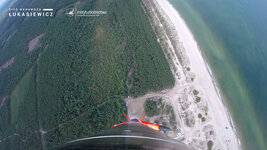

The Scandinavian country was selected due to to the fact, that it provides large impact zone of the rocket stages after their burnout compared to Poland. Factors, which limit opportunities of rocket tests in Poland, include inter alia regular and frequent air traffic, unfavorable weather conditions over the Baltic Sea coastline, significant population density, large number of buildings and towns — we remember the recent accident involving China’s Long March 2C’s first stage during the Space Variable Objects Monitor mission.

The ILR-33 Bursztyn 2K is a hybrid rocket (solid fuel, liquid oxidizer) designed for scientific applications, as well as for collection of know-how necessary for building more advanced designs. Noteworthy is the fact, that the ILR-33 Bursztyn 2K is the first rocket in the world, that uses highly concentrated hydrogen peroxide (98%) as oxidizer.

Along with the ILR-33 Bursztyn 2K, also other suborbital rocket projects are currently being constructed in Poland — these include the Three Stage Suborbital Rocket (under development by military industry) and the Perun (under development by the private company Space Forest).

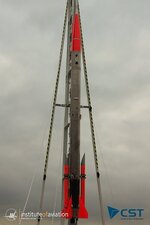
The photos below depict the ILR-33 Bursztyn 2K during an earlier test campaign in September 2019 (credit: Łukasiewicz Research Network / Institute of Aviation):

bursztyn_2019_700x400_.jpg

bursztyn_2019_03.jpg

bursztyn_2019_05_.jpg

Source: Polish Space Agency
https://polsa.gov.pl/en/news/polsa-supports-development-of-polish-suborbital-rockets/
 
July 3, 2024

[Unoficially]
Amber made it to space!


According to an unofficial report by the news portal Space24.pl, an ILR-33 Bursztyn 2K ("Amber" in Polish) experimental rocket has just crossed the Kármán line (i.e. the altitude of 100 km above the sea level, commonly accepted as the boundary of space). The launch is said to have taken place on Wednesday, July 3, from Andøya Space Center, Norway.

5-1.jpg
Image: ILR-33 Bursztyn 2K (Credit: Łukasiewicz Research Network / Institute of Aviation) - Please note that it is not the particular rocket described in this entry.

If this news is confirmed, it will mean that the ILR-33 Bursztyn 2K became the second Polish rocket to achieve the boundary of space (following the Meteor 2K sounding rocket from 1970):

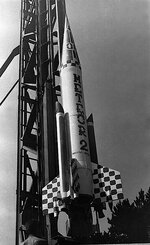
r_rakieta-meteorologiczna-meteor-2-na-wyrzutni-w-lebie.jpg
Image: The first Meteor 2K sounding rocket prior to its launch that took place on July 10, 1970.

More information will be available soon.

Source: Space24.pl
 
July 5, 2024

[Officially Confirmed] Amber reaches space!


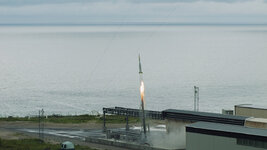
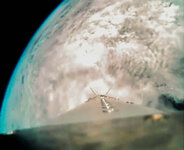
Today, Poland’s Institute of Aviation and Polish Space Agency officially announced that on July 3 (Wednesday), at 1:09 PM the ILR-33 Bursztyn 2K experimental rocket had successfully crossed the Kármán line. The altitude achieved was 101 kilometers. The launch took place from Andøya Space Center, Norway. Thus, earlier media reports on Wednesday of a successful suborbital flight were finally confirmed.

GRuFK66WIAAeHwC.jpeg
Image: The ILR-33 Bursztyn 2K take-off from Andøya Space Center (Norway), July 3, 2024 (Credit: Łukasiewicz Research Network / Institute of Aviation via Polish Space Agency).

Fot_Lukasiewicz-Instytut-Lotnictwa_kosmos-1024x838.jpg
Image: View from the ILR-33 Bursztyn 2K during the flight on July 3, 2024 (Credit: Łukasiewicz Research Network / Institute of Aviation via Polish Space Agency).

This successful flight was the first time the rocket was in its final configuration. The ILR-33 Bursztyn will be used by the Polish company Thorium Space in 2025-2027 for a research project titled “Satellite remote sensing and communication system for suborbital research rockets – PHASE II”. The rocket might be used to conduct atmospheric research and carry out scientific experiments. Noteworthy is also the fact, that the ILR-33 Bursztyn 2K is the first rocket in the world, that uses highly concentrated hydrogen peroxide (98%) as oxidizer, making it a prospective, ecological, enviromentally friendly solution, much more cleaner than toxic hypergolic propellants and safer than LOX.


Source: Polish Space Agency
 
July 8, 2024

The cooperation between the world's largest SAR satellite operator and Ukraine's MOD strengthens


ICEYE constellation.png
Image: ICEYE

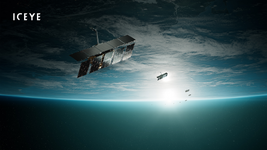
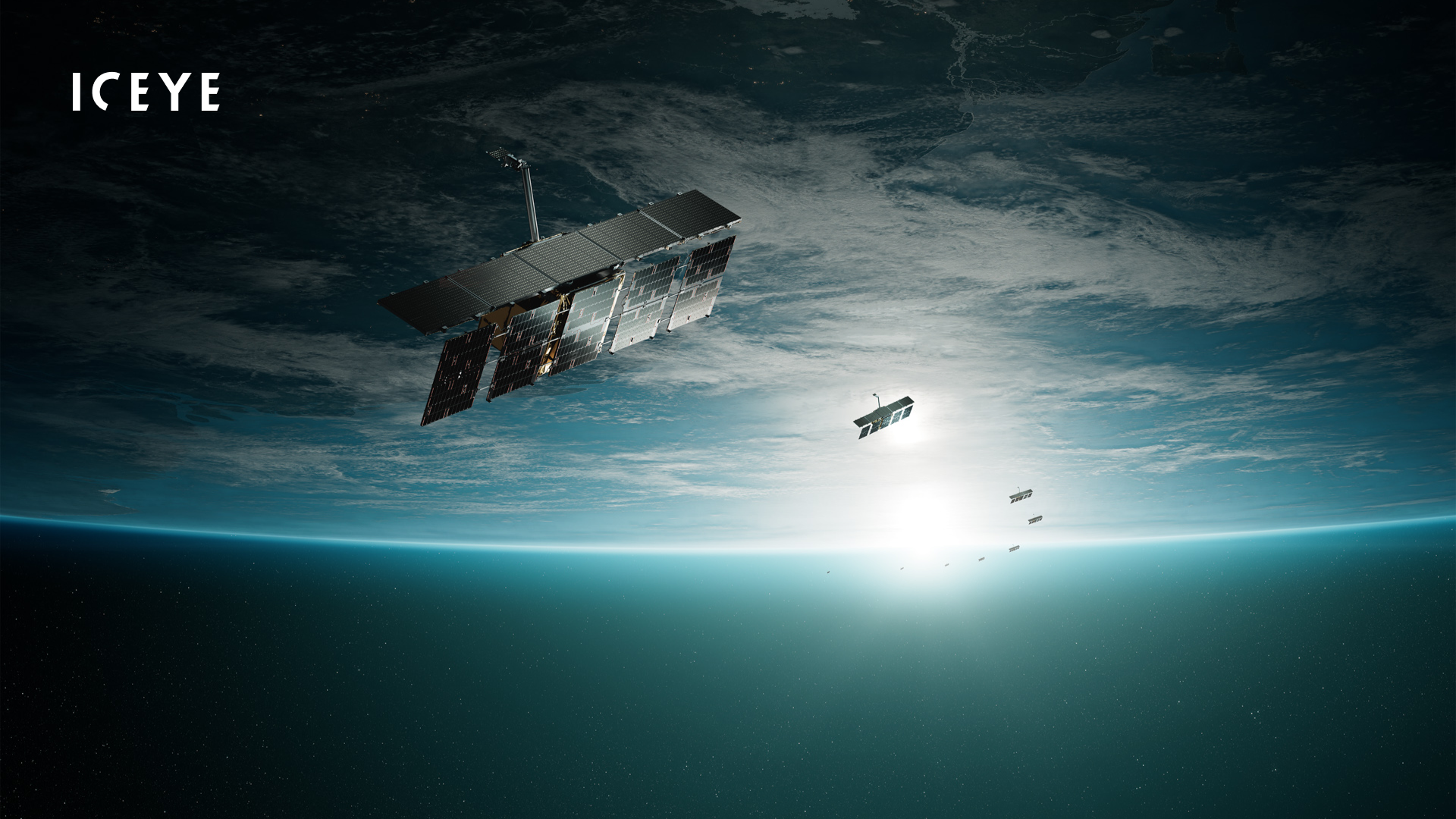
Today, the Polish-Finnish company ICEYE 🇵🇱🇫🇮 - the owner and operator of the world’s largest SAR (Synthetic Aperture Radar) satellite constellation - and Ukraine’s Ministry of Defence 🇺🇦 signed a Memorandum of Cooperation. The Memorandum reinforces and specifies the cooperation between the company and Ukraine’s MOD, which has been developed since 2022. The Memorandum focuses on advancing remote sensing technology, improving data use for security, and supporting Ukraine’s integration into the global space economy.
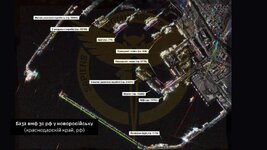
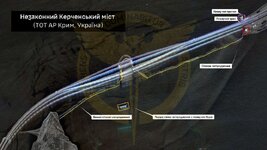

The Polish-Finnish company delivers currently more than 50% of satellite imagery of Ukraine. ICEYE owns a constellation of more than 30 satellites, with more satellites to join them in the near future. Imaging resolution of ICEYE's satellites is as high as 25 centimeters per pixel.

So far, the cooperation has been based on an agreement between ICEYE and the Serhiy Prytula Charity Foundation, under which the company provided the Ukraine's MOD with a single SAR satellite for use in the region. Under the Memorandum that was signed today, Ukraine's MOD will gain even more access to ICEYE's constellation. Moreover, on the basis of the Memorandum, the operator continues to constantly ensure that the imagery captured pertinent to Ukraine’s territory is used in the interests of ensuring the security and defence of Ukraine in conditions of armed aggression and not shared in any circumstance with hostile countries or entities.

Ukrainian intelligence revealed one month ago, that as part of the cooperation so far, and in relation to the ongoing defensive warfare it has managed to take 4173 radar images of enemy facilities, covering, among others:
  • 270 airfields;
  • 238 air defense and radio reconnaissance sites;
  • 153 oil depots and fuel depots;
  • 147 missile, air weapons and ammunition depots;
  • 17 naval bases.

Imagery obtained from the ICEYE’s SAR satellite proved to be helpful in September 2023, when the Armed Forces of Ukraine successfully managed to sink the Russian submarine B-237 Rostov-na-Donu and the landing ship Minsk in the Sevastopol Shipyard:

D1nNwUyPaiMBWVYRZVaQv6qaF9CX0Xn44z0QOanj.eymc.jpg
Credit: The Main Directorate of Intelligence of the Ministry of Defence of Ukraine

Examples of satellite imagery from ICEYE satellites (Credit: The Main Directorate of Intelligence of the Ministry of Defence of Ukraine, ICEYE):

4XqQVSogCvDsVYP9iiiyJU4aMS6bnM9fykrvWsTU.e2sv.jpg

WZiFRKXASKjfaDWGd9KFbHY9HsDlyNxdh1btobNh.x97k.jpg

ZtWr3x0KOM2J9hEl17jIi0yEG83Vu0zlqb27ZhVX.aefe.jpg

Source: Space24.pl
 
Back
Top