Centaur G/G Prime High Energy Upper Stage

Another thing we probably are going to need for the adapter is its mass. I'll add a ADAPTER_MASS scenario line for the Centaur and associated code next week.

 
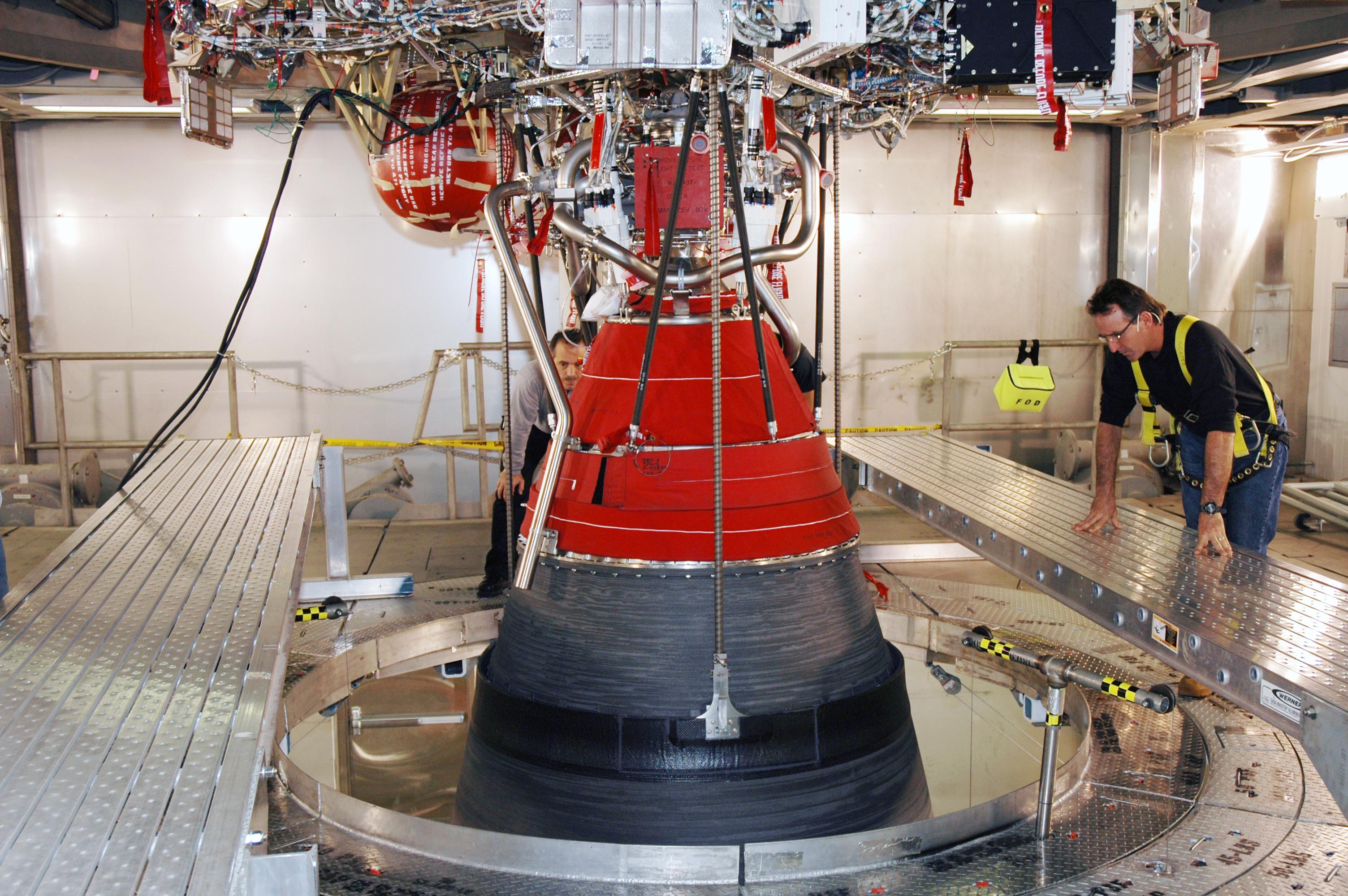
It seems that RL-10 had 2 different types of transducer box used. Which one should I model? Top or bottom?

question.jpg


---------- Post added at 05:00 PM ---------- Previous post was at 03:41 PM ----------

One more question - do we need extended nozzle for that?
 
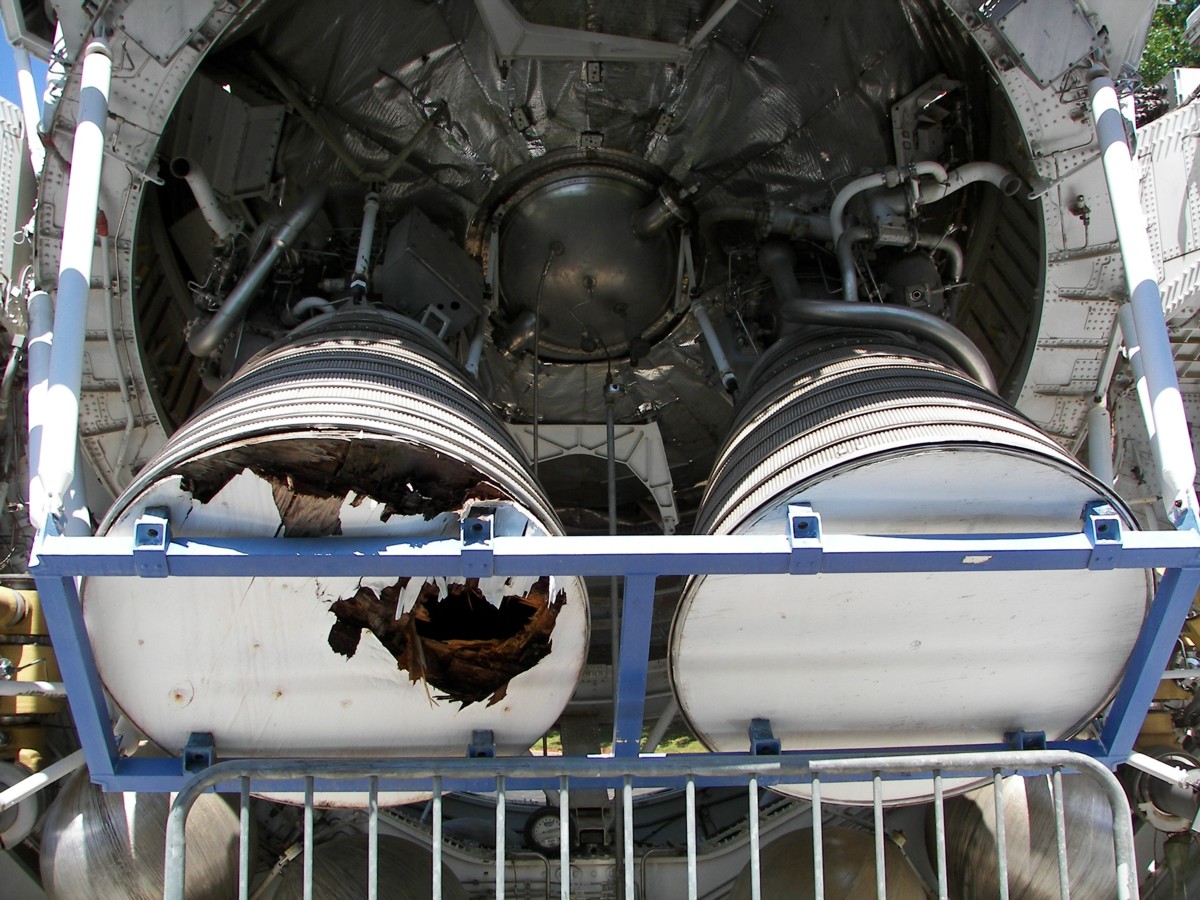
Looking at this picture, from a Centaur G Prime display somewhere, I'd say the top box (with a flat front) is the correct.
Centaur_USSRC_RK_2008_11.jpg
 
Loru: Go with the top and no nozzle extension. The nozzle extension came later, during the 90's and only on the Atlas Centaur. The Centaur G Prime used the Titan IV had no nozzle extensions.
 
How's that?

Currently around 4500 polys but I may reduce that a bit.

rl10_001.jpg
 
Last edited:
Thanks. I think, I'll simplyfy top of turbopump assembly a bit. It's not visible from any point outside.

Next question: D3d9 allow specular maps so I can pretty much make it as single meshgroup. Inline compatibility would require splitting it into 2-3 groups depending on shine strenght.

What's your take on that?
 
Thanks. I think, I'll simplyfy top of turbopump assembly a bit. It's not visible from any point outside.

Next question: D3d9 allow specular maps so I can pretty much make it as single meshgroup. Inline compatibility would require splitting it into 2-3 groups depending on shine strenght.

What's your take on that?
I think keeping it all one group is the best. Some visual enhancement is lost, but I still think that this is the right way to go.
 
Ok - I've taken some creative liberty for turbopump. Also noticed that on Centaur there is no this second box on the nozzle - do we keep it or throw it?

rl10_002.jpg
 
Ok - I've taken some creative liberty for turbopump. Also noticed that on Centaur there is no this second box on the nozzle - do we keep it or throw it?

If we don't know if it's there, I say delete it.
 
Ok - I've taken some creative liberty for turbopump. Also noticed that on Centaur there is no this second box on the nozzle - do we keep it or throw it?
Keep it. I'm pretty sure it's flight hardware.
 
Hmm - some progress. I think I'll call it a day.

rl1-_render002.jpg
 
and bit more shiny:
rl10-render003.jpg
 
and bit more shiny:
Even better. Could you add the raised edges to the nozzle bands? The photo GPN-2000-000698.jpg shows them very well. Also, the nozzle interior should be identical to the exterior minus the nozzle bands.
 
Last edited:
Sure

Raised edges on the nozzle bands and nozzle interior will be done same as cooling tubes on the outside (normal map). All I UVW unwrapped so far is engine.

BTW - can you put msh or 3ds of centaur itself for download so I can grab relative positions of fuel tubes?
 
Sure

Raised edges on the nozzle bands and nozzle interior will be done same as cooling tubes on the outside (normal map). All I UVW unwrapped so far is engine.

BTW - can you put msh or 3ds of centaur itself for download so I can grab relative positions of fuel tubes?
These images show the feedlines. Top Y manifold is LH2 while the bottom is LOX. Diameter of the bulkhead is 120" (3.048 m)

Centaur%20aft.jpg


Centaur%20aft%202.jpg
 
Looks great! Seems like all that is missing the Gas Generator (GG) exhaust duct.

Which GG exhaust duct? The RL-10A is closed expander cycle engine and does not have a gas generator, not even for engine start.

(Interesting reading there about the variations possible for rocket engines:

https://blogs.nasa.gov/J2X/tag/rl10-rocket-engine/

)

Another interesting reading about the RL-10 engine used here:

http://www.ecosimpro.com/download/articles/SpacePropulsion2012_2355411.pdf

The engine starts by "bootstrap cycle": It uses the difference between tank pressure and space to push the propellant through the lines and evaporate a small bit of it by the heat stored in the combustion chamber walls.

No gas generator involved.

What you have are really tiny bleed lines connected to the FCV-1 and FCV-2 valves, which dump some fuel overboard during pre-start for thermal conditioning or during shutdown for reducing pump stress. Both valves are normally open but close if pressure exceeds a fixed threshold.
 
Which GG exhaust duct? The RL-10A is closed expander cycle engine and does not have a gas generator, not even for engine start.

(Interesting reading there about the variations possible for rocket engines:

https://blogs.nasa.gov/J2X/tag/rl10-rocket-engine/

)

Another interesting reading about the RL-10 engine used here:

http://www.ecosimpro.com/download/articles/SpacePropulsion2012_2355411.pdf

The engine starts by "bootstrap cycle": It uses the difference between tank pressure and space to push the propellant through the lines and evaporate a small bit of it by the heat stored in the combustion chamber walls.

No gas generator involved.

What you have are really tiny bleed lines connected to the FCV-1 and FCV-2 valves, which dump some fuel overboard during pre-start for thermal conditioning or during shutdown for reducing pump stress. Both valves are normally open but close if pressure exceeds a fixed threshold.
Then what is this:

Centaur_aft_MUOS1_RockeCam.jpg
 
Then what is this:

First of all it looks very Atlas-V Centaur specific, because it seems to be designed to interface with the stage structure and ends at a structural support.

Centaur_upper_stage_of_Atlas_V_rocket.jpg


possibly a single vent for both FCVs. this part looks different one a DEC.

on a Delta-IV, RL-10B:

Delta_IV_rocket_second_stage.jpg
 
Back
Top