An SSTO as "God and Robert Heinlein intended".

1. I can't verify the numbers, the site is down again for everyone.
2. What I remember from that page was, that it ignored happily everything that matters for the ascent equation, except launch latitude, ISP and burn time.
 
The benefit of the SSTO would be for smaller payloads where the upper stage is not needed.

Like ?

Why pay $54 million, for wasted payload capability, when you only need the $40 million single stage launcher?

AFAIK, the "old" R-7 can deliver 7,5 tons payloads to LEO (10 tons with the new Arianespace Soyuz facility at Kourou), light payloads to GTO, and is much cheaper than that.
 
Last edited:
Why pay $54 million, for wasted payload capability, when you only need the $40 million single stage launcher?

Why pay $40 million for a single-stage launcher when a two-stager a fraction of the cost could do the same job just as well, if not better?
 
Why pay $40 million for a single-stage launcher when a two-stager a fraction of the cost could do the same job just as well, if not better?

If you're referring to Russian launchers, they are always cheaper than Western launchers. But still you have commercial and government satellites using Western launchers. This is especially true of U.S. government satellites, perhaps not as much so for European government satellites.

NASA and Air Force satellites of course make up a big market for U.S. launchers. In that case you would have to use an American launcher. So if you have a small satellite for one of these agencies, it would be cheaper to pay $40 million, rather than the $54 million of the full launcher. Note that $40 million for 5,000 kg, if it is that, is still less than the going rate for Western launchers of $10,000 per kilo.

That is the expendable case but of course SpaceX wants to transition to reusables. This will reduce the payload as it does for the full launcher. However, the savings are more dramatic in this case when you compare to the partially reusable case of only the first stage being reused.

Suppose you have a small satellite that can be launched on the reusable SSTO. Say the first stage is reusable 10 times and it reduces the cost by a factor of 10 to $4 million. For the partially reusable case of the full launcher, the upper stage is still an additional $14 million, bringing the total cost to $18 million. That's four and a half times the cost of just the SSTO. The full launcher would have greater capacity but as far as the owner of the small satellite is concerned that's wasted capacity that he doesn't need.


Bob Clark
 
Suppose you have a small satellite that can be launched on the reusable SSTO.


Problem 1: The market for small satellites is extremely fierce. Just look at the large number of launchers that work in the <2 tons to LEO market. The VEGA rocket for reference costs $42 million per launch (32 million €) - and that is a competitive price even compared to Russian launchers - the prices inflated a lot in Russia, that also has effect on the rocket despite them being pretty cheap since they have only minimal R&D costs now on their back.

25 million € of the VEGA is the actual launcher, 7 million € are launch services provided by Arianespace. The launcher price can drop to 22 million €, should the projected flightrates be reached, the Arianespace costs are rather fixed. Then the VEGA will be at 17,000 € / kg

If there would be a market for SSTOs, we would already have one.

Problem 2: Reusing a rocket engine ten times. There is only one existing engine, that ever did the ten times to Orbit: The SSME. Costs $65 million. Means already $6.5 million per launch for the rocket engine. Of course there can be a cheaper reusable engine running for the needed 100 minutes total runtime. But there is none yet, you need to develop a new one and add the R&D costs to the number of flights of the full system.

If it would be more economic to fly an SSTO, we would already have one

Problem 3: A SSTO will NOT have 4-5% construction mass. Simply because a parachute will alone weight 4% of the landing mass, a heat shield around 20% of the landing mass. Landing gear adds around 8% of the landing mass, alternative landing systems are between 2% (crushable structure, no reuse possible) and 5% (airbags, no powered landing possible). So at landing, even if you avoid using a parachute: More than 28% of your landing mass will be reserved. And you can't just make the rocket bigger for compensating this, like you could do on expendable rockets. The whole system has to grow to a point that the numbers work out again - and might never work out for some missions.

If it would be easy to build an SSTO we would already have one.


So, please: Stop telling engineers what they should be able to do. They know what they are able to do. It would be possible to build an SSTO, that is something that we know since 1950. But it would not be possible to build a reusable SSTO, that can compete with expendable TSTOs currently.

WAY before a reusable SSTO would be competitive, a reusable TSTO will be competitive - and by the pure mathematics, any TSTO will have to be encrusted with diamonds and studded with adamantine (And get exceptional images of travelling dwarves by forgotten beast bone), before a SSTO with the same technology will be more cost-effective.
 
Last edited:
Though in the first test flight of the new version of the Falcon 9, the F9 v1.1, they did not stably "land" the first stage, SpaceX is optimistic they can solve the problem to get a reusable first stage:

SpaceX Hit Huge Reusable Rocket Milestone with Falcon 9 Test Flight (Video)
By Mike Wall, Senior Writer | October 17, 2013 02:01pm ET
http://www.space.com/23230-spacex-falcon9-reusable-rocket-milestone.html

SpaceX also plans to transition the half-scale Grasshopper VTVL test vehicle to a full scale Falcon 9 first stage:

Final flight of Grasshopper v1.0 sets new record.
By Brian Dodson
October 14, 2013
http://www.gizmag.com/grasshopper-retires-altitude-record/29384/

This article says this "Grasshopper 2", as it were, would have all 9 engines of the regular F9 first stage. However, discussions on other forums have said it would only have 3 engines. That would make sense since on stage return, you are using at most 3 engines, and moreover this way, you would not be risking an expensive loss of 9 copies of the Merlins during these Grasshopper test flights.
Still, in point of fact there would be an advantage of using all 9 engines on this first stage Grasshopper, and with a full propellant load. In November, 2012 Elon Musk gave a lecture in London at the Royal Aeronautical Society.

Elon Musk lecture at the Royal Aeronautical Society - YouTube

About 30 minutes in, he gave the propellant fraction of the new Falcon 9 v1.1 as around 96%, or perhaps 95.5%. The 96% propellant fraction number gives a 25 to 1 mass ratio. But at an Isp of 311 s for the Merlin 1D, the rocket equation gives a delta-v of 311*9.81ln(25) = 9,800 m/s. Since the delta-v to orbit is only about 9,100 m/s, this would allow a significant amount of payload.
Then using the 9 engines and the full propellant load on the F9 first stage would allow in fact not just a VTVL test vehicle, but in fact a fully reusable and fully orbital vehicle.
Amusingly, about 36 minutes into Elon's lecture someone asks a question about what he sees as the next big breakthrough in rockets after full reusability. Elon thinks for awhile and can't come up with an answer. He finally jokes maybe warp drive. Ironically, he already has the next big advance: a reusable SSTO.

SpaceX has given the propellant amounts for both the first and second stages in the required Environmental Impact report for the Falcon 9 v1.1. These propellant amounts have been much speculated about on the internet. The amount for the first stage is about what has been estimated. However, the propellant load for the second stage is about 50% higher than the estimates.

Given this and the propellant fraction for the first stage given by Elon in the Royal Aeronautical Society lecture, you can calculate the dry mass at least for the first stage. Plugging these values into the rocket equation you see it can carry quite a significant amount of payload as an SSTO.

However, an SSTO achieves its best performance when altitude compensation such as aerospike is used. Then the payload in fact becomes surprisingly high. So high in fact that the cost per kilo of the expendable SSTO F9 is better than that of the standard expendable two stage without altitude compensation.

In other words by investing in altitude compensation, the F9 first stage SSTO is a more efficient launcher than the standard two stage F9 if you don't invest in altitude compensation. Surprisingly, this superiority of the SSTO on the cost per kilo metric, is still true for the reusable launcher case, even when you make an apples-to-apples comparison of also giving the two stage an altitude compensating first stage.

Discussion here:

The Coming SSTO's: Falcon 9 v1.1 first stage as SSTO, Page 2.
http://exoscientist.blogspot.com/2013/11/the-coming-sstos-falcon-9-v11-first.html


Bob Clark
 
Last edited:
What leads you to conclude that the F9 first stage is SSTO capable. Or that it would be more efficient than a complete F9?

Show your work.
 
...
...
Problem 3: A SSTO will NOT have 4-5% construction mass. Simply because a parachute will alone weight 4% of the landing mass, a heat shield around 20% of the landing mass. Landing gear adds around 8% of the landing mass, alternative landing systems are between 2% (crushable structure, no reuse possible) and 5% (airbags, no powered landing possible). So at landing, even if you avoid using a parachute: More than 28% of your landing mass will be reserved. And you can't just make the rocket bigger for compensating this, like you could do on expendable rockets. The whole system has to grow to a point that the numbers work out again - and might never work out for some missions.

If it would be easy to build an SSTO we would already have one.

The masses for the extra structures needed for reusability are far less than those. And SpaceX has already shown reusability of the engines with the Grasshopper. I admit though this has to be shown with rapid reuse.
A key reason SSTO has not been used is lack of altitude compensating engines. Techniques for doing this however have been tested for decades, such as the aerospike. IF altitude compensation is used on a SSTO the payload increases dramatically.

Bob Clark

---------- Post added at 10:45 AM ---------- Previous post was at 10:40 AM ----------

What leads you to conclude that the F9 first stage is SSTO capable. Or that it would be more efficient than a complete F9?

Show your work.

Use Dr. John Schilling's Launch Performance Calculator:

http://www.silverbirdastronautics.com/LVperform.html

The results I got are in the blog post.

Bob Clark
 
The masses for the extra structures needed for reusability are far less than those.

wikipedian_protester.png


You are right if you claim that the real masses for all this stuff is likely lower - it is first order estimates. But the reality is not "4% will mean 1% eventually". The numbers are more like "From 4% initial estimate, you can cut it down to 3.5%"
 
I repeat, show your work.

What are your masses for the stage and fuel. What allowances were made for maneuvering and contingencies. How does your thrust at sea-level compare to thrust in vacuum, what does your dynamic pressure curve look like? How heavy is your recovery equipment and landing reserve and what did you base that estimate? How much do your altitude compensating engines and their associated thrust structure weigh in comparison to the existing Merlins?

Its easy to make a first order estimate and say that something should be possible. Making it actually work is much much harder.

That and the assertion that the F9 first stage would be a more efficient launch vehicle than a complete F9 sounds suspiciously like homeopathic rocketry.
 
If first stage can do SSTO then adding cheap and crude second stage will probably double the payload capacity and allow to launch payloads to higher orbits which SSTO could not do.
 
If first stage can do SSTO then adding cheap and crude second stage will probably double the payload capacity and allow to launch payloads to higher orbits which SSTO could not do.

Which is exactly why a reusable TSTO is much better than an SSTO in my opinion.
 
If first stage can do SSTO then adding cheap and crude second stage will probably double the payload capacity and allow to launch payloads to higher orbits which SSTO could not do.

to be fair, however, I wouldn't attach MY payload to ANY crude and cheap rockets :lol:

"crude" and "cheap" are adjectives that make me cringe when applied to the subject of spaceflight.
 
If first stage can do SSTO then adding cheap and crude second stage will probably double the payload capacity and allow to launch payloads to higher orbits which SSTO could not do.

The two stage can indeed carry more payload than the single stage. However, SpaceX wants to transition to reusables. Elon has stated this will result in a surprisingly high loss of payload of 40% for the fully reusable case. A big part of this is due to the need to return the first stage, which doesn't reach orbit, to the launch site.
This doesn't hold for the single stage case, resulting in a much smaller loss of payload. The result is the increase in payload of a fully reusable two stage is not nearly as large over a reusable single stage. In fact on a cost per kilo basis the reusable single stage is more efficient.

Bob Clark

---------- Post added at 11:56 PM ---------- Previous post was at 11:41 PM ----------

On the Spaceflight News forum in the "ESA's future" thread, the question was will a reusable Falcon 9 make a solid-fueled Ariane 6 obsolete? SpaceX believes they are close to solving at least the case of the reusable first stage. This will require them to solve the problem of the spin of the vehicle on return.

This was a spin around the longitudinal axis. They believe they can solve this by adding landing legs to the first stage which can be deployed like an ice skater extending her arms to slow down the spin. They plan to try this with landing legs on the first stage on their next delivery flight to the ISS in February of next year.
 
Last edited:
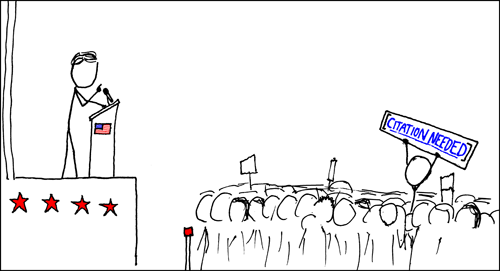
However, SpaceX wants to transition to reusables.

Citation needed.

---------- Post added at 09:43 AM ---------- Previous post was at 09:41 AM ----------

This was a spin around the longitudinal axis. They believe they can solve this by adding landing legs to the first stage which can be deployed like an ice skater extending her arms to slow down the spin.

That was no simple spin, that was a tumbling including vortexing and sloshing of the liquid propellants. You can damp this by thrusters, but these consume fuel. You can add heavy gyroscopes. Or make the tanks heavier by including more anti-slosh and anti-vortex baffles.

Also about your reuse calculations: Do you know why the Ariane 5 does not recover its boosters, like the Space Shuttle did?
 
That was no simple spin, that was a tumbling including vortexing and sloshing of the liquid propellants. You can damp this by thrusters, but these consume fuel. You can add heavy gyroscopes. Or make the tanks heavier by including more anti-slosh and anti-vortex baffles.
Also about your reuse calculations: Do you know why the Ariane 5 does not recover its boosters, like the Space Shuttle did?

Elon has said numerous times that the cost to space will be cut multiple times by reusables. Doing a internet search on "Elon Musk" and "reusable" will turn up numerous cites where he has said this on numerous occasions.

That SpaceX has described the descent as "controlled" and that they believe the spin can be curtailed by extending the landing legs and that the picture released shows the stage just above the ocean in a vertical position suggests the spin was around the longitudinal axis. A spin, or roll, around the longitudinal axis can still prevent the fuel from getting to the engines if the fuel drain from the tanks is under the center of the tank.

BTW, during this NASA news conference "The Path Toward Humans to Mars" , it was mentioned discussing with SpaceX the effects of retro propulsion at hypersonic speeds on the Falcon 9 booster stage:


Bob Clark
 
That SpaceX has described the descent as "controlled" and that they believe the spin can be curtailed by extending the landing legs and that the picture released shows the stage just above the ocean in a vertical position suggests the spin was around the longitudinal axis. A spin, or roll, around the longitudinal axis can still prevent the fuel from getting to the engines if the fuel drain from the tanks is under the center of the tank.

Controlled has many meanings, as you can imagine when somebody can also talk about a controlled destructive reentry.

The stage was not just spinning around its longitudinal axis fast enough to create a strong vortex. It was also tumbling from separation on. It was not controlled in enough constraints to permit an intact landing.

Even if the ignition of the last burn was initiated at the right time and altitude, even the trajectory was controlled in the sense of people tracking it.

The rocket stage was at no point capable of controlled flight.

That flight of the spent rocket stage failed so many test objectives, that it is more than doubtful that the next test can progress in the test schedule, the next test will be a retry of the first set of objectives with improvements to finally complete them.

Also "discussing with SpaceX" ... where was THAT said there?
 
50,000 dollars per launch.... "100 fold reduction" to the Falcon 9, which then costs 5 million per launch - instead of the 50-60 million that he says in the beginning (which is still damn low - the older Delta 2 costs the same - bit the 60 million )...

They should really get a guy to step on Elons feet when ever he starts talking about something involving numbers or math...

That number would be enough money to just pay 10 engineers for one week , without any spare parts or transportation costs. Ten times more would still be very low, 5 million would be a more realistic value if you have a good reuse ratio. If he would let Volkswagen of America assembly line workers handle the job, the $50,000 would be enough for 30 workers in a week.
 
Last edited:
Back
Top