The Landlubbers Battleship Thread - Now with 50% less cordite

More realistically, if Enterprise was sunk ad Midway, the honor to obliterate the Kido Butai would fall to another carrier... let's say the Essex, the Intrepid, the Saratoga or another one. USA still won WWII and CVN-65 would have named consequently. And then the Kirk ship.

USS ESSEX NCC-1701? :hmm:
 
Last edited:
That image along with others is taken from a very, very weird internet game and anime show called Kancolle: young girls with the soul of old WWII warships, that fight a mysterious enemy emerged from the sea...

It don't make much sense, but for curiosity I've watched the anime show (it was only twelve episodes) and besides of all the nonsense it was really full of accurate historical links and homages (one of the funniest: a girl called Yamato that work as maitresse of an hotel... the Hotel Yamato). I've learned some of them just from the show. Surely the autors knew the matter.
That sounds remarkably like another anime featuring WWII ships given young female human forms:
[ame="http://en.wikipedia.org/wiki/Arpeggio_of_Blue_Steel"]Arpeggio of Blue Steel - Wikipedia[/ame]

I first heard about it through the World of Warships promotions and looked up the anime for the sake of curiosity. It was...okay, I guess. I never did find a place to watch the followup movie(s) in the US.
 
I've seen a couple of episodes of Arpeggio of Blue Steel. Visually impressive, but very different stuff than Kancolle.
Apart the fact that I don't even understand the plot, I think that Arpeggio takes itself too seriously and thus lacks a fundamental thing: the fun. :cool:

For example, an episode of Kancolle is all about a cooking competition. The contenders:

1) Battleships Kongo and Hiei
2) Destroyer Shimakaze
3) Carrier Group 1: Kaga and Akagi
4) Carrier Group 5: Shokaku and Zuikaku
5) Heavy Cruisers Ashigara and Haguro
6) Destroyers Division Six: Hibiki, Akatsuki, Inazuma, Ikazuchi.

This IS ABSOLUTELY NO SENSE, but was hilarious!

---------- Post added at 11:43 PM ---------- Previous post was at 11:34 PM ----------

Speaking of cruisers.

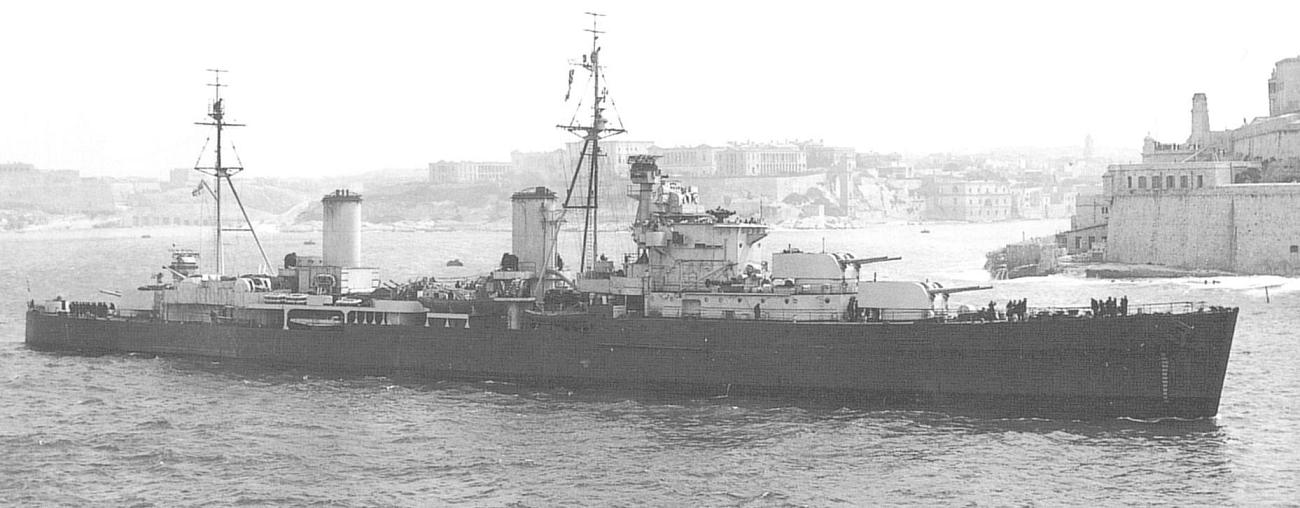
A favourite of mine is the light cruiser, Arethusa class, HMS Penelope. Small, simple, fast, tough. I like also the name.

Photo06clPenelope.JPG


Another interesting light cruiser is our Giovanni Delle Bande Nere, one of the fastest cruisers in the world at that time (around 40 knots in the sea trials, if I recall correctly).

093.jpg
 
The other Kongou does not appear amused.

210px-Kongou_s2.png
 
Hardly we can talk about "battleships" but the Deutschland-class was and interesting concept, at least for the pre-war standards.

The most famous of the three ships, the Admiral Graf Spee, at the beginning of the war seemed the perfect raider ship: reasonably fast, powerful and with long range.

agraf-spee.jpg


His ruin at the Battle of the River Plate was the main battery composed by only two main turrets: difficult to divide the fire among different targets.
 
His ruin at the Battle of the River Plate was the main battery composed by only two main turrets: difficult to divide the fire among different targets.

Getting into the River Plate was the big error already. Without another fleet nearby to equalize the odds, it was clear that this was turning into a classic coup de grace by the British.

I am not sure if I would have done the same in that situation. It likely saved many lives of the crew, but turned a likely defeat into an inevitable defeat.
 
Probably Langsdorff thought that allied reinforcements was nearby, and that soon he would face some battleships instead of mere light cruisers.

If Graf Spee had continued the battle, probably he would defeated the allied cruisers: the most powerful of the three, the Exeter, was already badly damaged and pratically reduced to impotence.
 
Probably Langsdorff thought that allied reinforcements was nearby, and that soon he would face some battleships instead of mere light cruisers.

If Graf Spee had continued the battle, probably he would defeated the allied cruisers: the most powerful of the three, the Exeter, was already badly damaged and pratically reduced to impotence.

Exactly, but then, the Graf Spee would likely have been unable to continue its mission as well and would have been forced to return to Germany, in very dangerous way.
 
His ruin at the Battle of the River Plate was the main battery composed by only two main turrets: difficult to divide the fire among different targets.

AFAIK, most ships only had two directors anyways, so other than firing in local control, where spray would interfere with your rangefinder and you wouldn't have access to the ship's fire control table, you would never engage more than two targets with the main battery whatever your number of turrets.
 
Scharnhorst and Bismarck classes had three main fire directors.
 
Scharnhorst and Bismarck classes had three main fire directors.

Not exactly true. It had two 10.5m fire directors, but the 7 meter fire director was also able to direct fire for the main artillery. But this fire director was also the only non-local fire director for the secondary artillery. If you used this one for attacking one additional main artillery target, your secondary artillery had to attack this one as well (not always recommendable) or use local control (again, not recommendable, but better than the first option)
 
Exactly, but then, the Graf Spee would likely have been unable to continue its mission as well and would have been forced to return to Germany, in very dangerous way.

There are some good books around that go in to the demise of the Graf Spee. After the main engagement the Graf Spee had a serious problem (damage to the fuel system, and he was leaking oil), The Royal Navy ships could easily track her and that is all they needed to do after the battle, as the Royal navy would have sent a battle cruiser after her or let the home fleet deal with her in the north.

Langsdorff had two options, sail for the port of Montevideo and make repairs in a neutral port or head out to the South Atlantic and hope that the fuel system could be fixed, before he ran out of fuel/could not make it to his next supply ship. He made the only realistic choice, that was also the one that sealed the ships fate (with the help of a huge and highly aimed miss-information campaign).
 
Not exactly true. It had two 10.5m fire directors, but the 7 meter fire director was also able to direct fire for the main artillery. But this fire director was also the only non-local fire director for the secondary artillery. If you used this one for attacking one additional main artillery target, your secondary artillery had to attack this one as well (not always recommendable) or use local control (again, not recommendable, but better than the first option)

Well, giving all the limitations, you can attack three different targets with the main battery, right?

Anyway... the meaning of my previous statement is not that you should attack *numerous* main targets at the same time, but that with only two main turrets your punch is too much weakened when you divide the big guns between two targets. With Graf Spee you loose 50% of your guns (three at one target, the remaining three at the other) or, conversely, you loose one target if concentrate the fire on the other. With... let's say, a Scharnshorst, if the geometry of the battle allows it, you can choose to stay with two of the three main turrets on the most dangerous target without losing contact with the other.
 
Last edited:
Well, giving all the limitations, you can attack three different targets with the main battery, right?

Anyway... the meaning of my previous statement is not that you should attack *numerous* main targets at the same time, but that with only two main turrets your punch is too much weakened when you divide the main guns between two targets. With Graf Spee you lose 50% of your guns (three at one target, the remaining three at the other). With... let's say, a Scharnshorst, if the geometry of the battle allows it, you can chose to stay with two of the three main turrets on the most dangerous target.

Yes, but more realistically would be placing your main fire directors at the same target and concentrating fire on it. Your fire directors are poorly armored, sensitive and as historic evidence shows, among the first components of your ship that are destroyed during a battle. Its easier to have both fire directors track the same target, and when you lost track with one director, quickly switched main fire control to use the second fire director.
 
There are some good books around that go in to the demise of the Graf Spee. After the main engagement the Graf Spee had a serious problem (damage to the fuel system, and he was leaking oil), The Royal Navy ships could easily track her and that is all they needed to do after the battle, as the Royal navy would have sent a battle cruiser after her or let the home fleet deal with her in the north.

Langsdorff had two options, sail for the port of Montevideo and make repairs in a neutral port or head out to the South Atlantic and hope that the fuel system could be fixed, before he ran out of fuel/could not make it to his next supply ship. He made the only realistic choice, that was also the one that sealed the ships fate (with the help of a huge and highly aimed miss-information campaign).

Surely in the aftermath, Langsdorff seems to have made the right choice. The ship probably was already doomed. The only other choice could be to force the block of the three cruisers and attempt to disappear without a trace before the arrival of the reinforcements. Unlikely, but maybe another captain would attempt instead to go to Montevideo. Germans was tenacious combatants.

---------- Post added at 11:40 PM ---------- Previous post was at 11:32 PM ----------

Yes, but more realistically would be placing your main fire directors at the same target and concentrating fire on it. Your fire directors are poorly armored, sensitive and as historic evidence shows, among the first components of your ship that are destroyed during a battle. Its easier to have both fire directors track the same target, and when you lost track with one director, quickly switched main fire control to use the second fire director.

Another limitation is that a single lucky shot can knock out half of your main armament. That was a concern in the design of the french Dunkerque class (in that case, the concern was that a lucky salvo can knock out the entire main battery. This is why the two quadruple turrets are so spaced).

With the main guns distributed on more turrets, this event is less likely.
 
With the main guns distributed on more turrets, this event is less likely.

Also, squeezing too many guns into a single turret was also not easy, AFAIR, the quad turrets on some ships had big mechanical problems, which is why triple turrets turned out to be the practical maximum. And the Yamato guns had such a strong blast, that it disturbed the trajectory of projectiles fired by the same turret within milliseconds, AFAIR. Which is why they had to be fired with some short delay to prevent blast effects.
 
Last edited:
Yeah in fact the quadruple on the Dunkerque was something like two double turret flanked. They had big problems (I don't recall if they were resolved in the subsequent Richelieu class... I think not)

Aesthetically, a good ship, though.

---------- Post added 02-27-17 at 12:14 AM ---------- Previous post was 02-26-17 at 11:47 PM ----------

uhm... Urwumpe... being you German, I'm waiting anxiously a word about the Bismarck... :lol:
 
Last edited:

uhm... Urwumpe... being you German, I'm waiting anxiously a word about the Bismarck... :lol:

What do you expect? Something like: I wouldn't have designed this one? :lol:

Or: Hitler was really nuts, wasn't he?

Or: German admirals can be found in wikipedia, when you search for "Incompetence".

I am not really defending the Bismarck here, it was a greatly overrated ship with many stupid design flaws, build at a time when aircraft carriers should have had a higher priority because Germany had NONE.
 
Back
Top