

- Joined
- Oct 30, 2009
- Messages
- 14,019
- Reaction score
- 4
- Points
- 0
A new U.S. Air Force satellite built to track space junk and other spacecraft orbiting Earth is set to launch from Vandenberg Air Force Base in California.
Orbital Sciences Corporation Minotaur 4 rocket will launch the first satellite of the Space-Based Surveillance System for the Air Force. SBSS will join a network of ground sensors that track satellites in orbit around Earth. The launch will be the second flight of the Minotaur 4 rocket, which is partially comprised of retired Peacekeeper motors.
Launch window:|
Launch site:|
{colsp=2}
There is O-F's calendar event created for this launch, for which you can request a reminder, that will be sent via e-mail on set time before the launch.
After lifting off from Vandenberg, the Minotaur's flight path will head southward over the Pacific Ocean. The Peacekeeper stages perform their sequential firings within three-and-a-half minutes, each dropping away as the next one lights.
Once that third stage burns out 120 miles in altitude, the rocket begins a brief a ballistic coast and soars away from the planet to reach a point 330 miles high. That's when the fourth stage ignites to provide the boost needed to circularize the orbit at 336 miles.
SBSS separates from the rocket 14 minutes and 41 seconds after liftoff to start its seven-year life.
Later maneuvers during the early on-orbit testing and commissioning activities will raise the orbit by more than 50 miles to the intended operational perch.
Boeing leads the SBSS project and Ball Aerospace built the satellite.


Payload:
Launch Vehicle:
Live Launch Coverage:
Links:
Boeing Media Releases:
---------- Post added at 21:40 ---------- Previous post was at 19:33 ----------
Photos from Ball Aerospace's Flickr SBSS photo gallery:
Weather forecast for the launch:
---------- Post added at 23:09 ---------- Previous post was at 21:40 ----------
NASASpaceFlight:
Spaceflight Now:
Launch Timeline:
Orbital Sciences Corporation Minotaur 4 rocket will launch the first satellite of the Space-Based Surveillance System for the Air Force. SBSS will join a network of ground sensors that track satellites in orbit around Earth. The launch will be the second flight of the Minotaur 4 rocket, which is partially comprised of retired Peacekeeper motors.
- September 25, 2010 9:41-9:55 p.m. PDT
- September 26, 2010 12:41-12:55 a.m. EDT
- September 26, 2010 04:41-04:55 UTC
Launch site:|
- Vandenberg AFB SLC-8, California
{colsp=2}
[highlight]L[eventtimer]2010-9-26 4:41;%c%%ddd%/%hh%:%mm%:%ss%[/eventtimer][/highlight]
There is O-F's calendar event created for this launch, for which you can request a reminder, that will be sent via e-mail on set time before the launch.
After lifting off from Vandenberg, the Minotaur's flight path will head southward over the Pacific Ocean. The Peacekeeper stages perform their sequential firings within three-and-a-half minutes, each dropping away as the next one lights.
Once that third stage burns out 120 miles in altitude, the rocket begins a brief a ballistic coast and soars away from the planet to reach a point 330 miles high. That's when the fourth stage ignites to provide the boost needed to circularize the orbit at 336 miles.
SBSS separates from the rocket 14 minutes and 41 seconds after liftoff to start its seven-year life.
Later maneuvers during the early on-orbit testing and commissioning activities will raise the orbit by more than 50 miles to the intended operational perch.
Boeing leads the SBSS project and Ball Aerospace built the satellite.
Payload:
The U.S. Space Surveillance Network relies on ground-based radars and optical telescopes around the world to track thousands of objects in space. But their monitoring abilities are limited by weather, the atmosphere and, in the case of telescopes, daylight. Plus, these instruments can only get intermittent glimpses of orbiting objects as they pass overhead.
In orbit, SBSS sensors are not affected by weather, atmosphere or time of day, and it has a much wider field of view than sensors on the ground.
The Space Based Space Surveillance (SBSS) System provides the only space-based sensor in the U.S. Air Force Space Surveillance Network with the ability to detect debris, spacecraft or other distant space objects without interference from weather, atmosphere or time of day.
SBSS spacecraft features a visible sensor mounted on an agile, two-axis gimbal. That allows ground controllers to quickly move the camera between targets without having to expend the time and fuel to reposition the entire spacecraft.
This agile sensor mount enables SBSS to find and track objects in space -- even new spacecraft launches and maneuvers -- with significantly greater speed, capacity and sensitivity than previous space sensors, including:
The satellite also has an onboard image-processing payload and software developed by Boeing that is reprogrammable to enhance mission flexibility and upgrades. The SBSS Satellite Operations Center has an open, flexible ground architecture with the ability to add additional satellites and sensors.
{colsp=2}


In orbit, SBSS sensors are not affected by weather, atmosphere or time of day, and it has a much wider field of view than sensors on the ground.
The Space Based Space Surveillance (SBSS) System provides the only space-based sensor in the U.S. Air Force Space Surveillance Network with the ability to detect debris, spacecraft or other distant space objects without interference from weather, atmosphere or time of day.
SBSS spacecraft features a visible sensor mounted on an agile, two-axis gimbal. That allows ground controllers to quickly move the camera between targets without having to expend the time and fuel to reposition the entire spacecraft.
This agile sensor mount enables SBSS to find and track objects in space -- even new spacecraft launches and maneuvers -- with significantly greater speed, capacity and sensitivity than previous space sensors, including:
- twice the sensitivity
- twice as fast at detecting threats
- three times improvement in the probability of detecting threats, and
- ten times improvement in capacity
The satellite also has an onboard image-processing payload and software developed by Boeing that is reprogrammable to enhance mission flexibility and upgrades. The SBSS Satellite Operations Center has an open, flexible ground architecture with the ability to add additional satellites and sensors.
Customer:
|
- United States Strategic Command, Joint Functional Component Command for Space.
Spacecraft:
|
- Launch Mass: 1031 kg (2277 lb.)
- Solar Arrays: Fixed with ITJ cells, 840 W (EOL)
- Stabilization: 3-axis
Payload:
|
- Visible Sensor
- Large aperture with wide field of view.
- Very low noise payload electronics.
- Highly-agile 2-axis gimbal.
- Reprogrammable on-board processor.
Ground:
|
- Satellite Operations Center located at Schriever AFB.
- SBSS Depot located at Boeing Colorado Springs, CO.
Mission Data Products:
|
- Metric (positional data on Earth orbiting objects).
- Space Object Identification (SOI).
Quantity:
|
- 1
Orbit:
|
- 630 km, sun sync
Mission Life:
|
- 5.5 yrs mean mission duration;
- 7 yrs design life
{colsp=2}
Launch Vehicle:
Minotaur IV, also known as Peacekeeper SLV and OSP-2 PK is an active expendable launch system derived from the Peacekeeper missile. It is operated by Orbital Sciences Corporation, and made its maiden flight on 22 April 2010, carrying the HTV-2a Hypersonic Test Vehicle.
The Minotaur IV vehicle consists of four stages and is capable of placing 1,735 kilograms (3,830 lb) of payload into a Low Earth orbit (LEO). It uses the first three stages of the Peacekeeper missile, combined with a new upper stage. On the baseline version, the fourth stage is an Orion-38, however a higher performance variant, designated Minotaur IV+, uses a Star-48V instead. A three stage configuration (no Orion-38), designated the Minotaur IV Lite, is available for Suborbital trajectories.
The Minotaur IV SLV incorporates a standard 92-inch fairing from our Taurus booster and supports dedicated or shared launch missions. Capable of boosting payloads more than 1,750 kg into orbit, the vehicle is compatible with multiple U.S. government and commercial launch sites. The Minotaur IV is designed to provide 18-month mission response including payload integration and launch by Orbital's experienced launch crews.
Orbital Sciences Corporation:

The Minotaur IV vehicle consists of four stages and is capable of placing 1,735 kilograms (3,830 lb) of payload into a Low Earth orbit (LEO). It uses the first three stages of the Peacekeeper missile, combined with a new upper stage. On the baseline version, the fourth stage is an Orion-38, however a higher performance variant, designated Minotaur IV+, uses a Star-48V instead. A three stage configuration (no Orion-38), designated the Minotaur IV Lite, is available for Suborbital trajectories.
The Minotaur IV SLV incorporates a standard 92-inch fairing from our Taurus booster and supports dedicated or shared launch missions. Capable of boosting payloads more than 1,750 kg into orbit, the vehicle is compatible with multiple U.S. government and commercial launch sites. The Minotaur IV is designed to provide 18-month mission response including payload integration and launch by Orbital's experienced launch crews.
Orbital Sciences Corporation:
 Minotaur IV Space Launch Vehicle Fact Sheet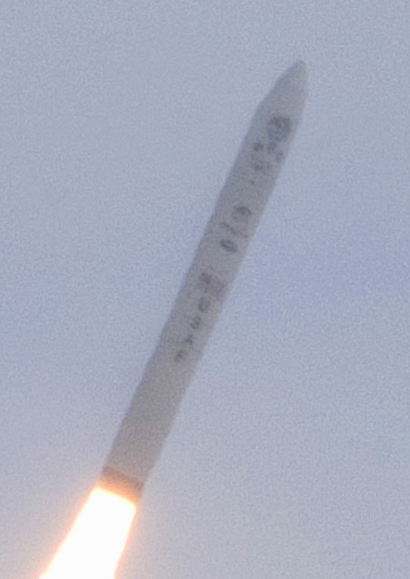
Live Launch Coverage:
Live launch coverage will be provided by Orbital Sciences Corporation (details here).
You can watch the Minotaur IV/SBSS mission webcast here (Silverlight or Windows Media). The webcast featuring launch commentary and information about the SBSS mission will begin at 9:10 p.m. Pacific Daylight Time on 25th / 12:10 a.m. EDT / 04:10 UTC on 26th, approximately 30 minutes prior to launch, i.e. it [eventtimer]2010-9-26 4:10?will start in|started;%c% %h% hours, %m%[/eventtimer] minutes[eventtimer]2010-9-26 4:10?.| ago.;%c%[/eventtimer]
You can watch the Minotaur IV/SBSS mission webcast here (Silverlight or Windows Media). The webcast featuring launch commentary and information about the SBSS mission will begin at 9:10 p.m. Pacific Daylight Time on 25th / 12:10 a.m. EDT / 04:10 UTC on 26th, approximately 30 minutes prior to launch, i.e. it [eventtimer]2010-9-26 4:10?will start in|started;%c% %h% hours, %m%[/eventtimer] minutes[eventtimer]2010-9-26 4:10?.| ago.;%c%[/eventtimer]
Links:
- Orbital:
- Ball Aerospace:
- Boeing:
- GlobalSecurity.org:
- Spaceflight Now:
- SPACE.com:
- Space Daily:
- PHYSORG.com:
Boeing Media Releases:
- 2008-04-21: Boeing and Ball Aerospace Achieve New Milestone for SBSS Program.
- 2008-04-24: Boeing Completes Hardware Installation for SBSS Satellite Operations Center.
- 2009-02-05: Boeing SBSS System Progressing Toward 1st Launch.
- 2009-06-16: Boeing Team Completes Segment Testing of Space Surveillance Satellite System.
- 2010-06-01: Boeing Team Ships 1st SBSS Spacecraft to Launch Site.
- 2010-09-21: Boeing Space Based Space Surveillance Satellite Ready for Launch.
---------- Post added at 21:40 ---------- Previous post was at 19:33 ----------
Photos from Ball Aerospace's Flickr SBSS photo gallery:
[table="head;width=600px"]{colsp=6}
{colsp=3}
{colsp=3} |{colsp=3}
{colsp=2}
{colsp=2} |{colsp=2}
 |{colsp=2}
{colsp=6}
{colsp=3} |{colsp=3}
 [/table]
Photo Thumbnails - Click on an image to view its larger size.
{colsp=3}
The SBSS space vehicle bus structure upon completion.
|{colsp=3}The SBSS payload undergoing Electromagnetic Interference and Compatibility(EMI/C) testing in a Ball Aerospace test facility.
{colsp=3}


{colsp=2}
The SBSS space vehicle undergoing Electromagnetic Interference and Compatibility (EMI/C) testing in a Ball Aerospace test facility.
|{colsp=2}The SBSS space vehicle in a Ball Aerospace thermal vacuum chamber undergoing lifecycle thermal vacuum testing.
|{colsp=2}The SBSS space vehicle in its final configuration.
{colsp=2}


{colsp=6}
The SBSS space vehicle being loaded into the shipping container on its way to Vandenberg Air Force Base.
{colsp=3}


Weather forecast for the launch:
SFN MSC said:The launch time outlook calls for clear skies, good visibility, northerly winds of 8 to 12 knots, a temperature in the mid-60s F and no concerns for violating any of the weather rules.
"High pressure moves into the Vandenberg area and will bring warm, summer weather today through Sunday," the forecast issued Thursday says. "As the high pressure pushes in from the south, our normal cooling sea breeze will switch to a warm, offshore flow increasing temperatures and pushing the marine layer offshore."
---------- Post added at 23:09 ---------- Previous post was at 21:40 ----------
NASASpaceFlight:
Spaceflight Now:
Launch Timeline:
[table="head;width=500"]T [MM:SS]|Event
-00:00.0|Liftoff
{colsp=2}
+00:38.1|Max Q
{colsp=2}
+00:57.9|Stage 1 separation / Stage 2 Ignition
{colsp=2}
+01:57.4|Stage 2 Burnout
{colsp=2}
+02:12.4|Stage 2 Separation / Stage 3 Ignition
{colsp=2}
+02:36.4|Fairing Jettison
{colsp=2}
+03:27.0|Stage 3 Burnout
{colsp=2}
+11:34.6|Stage 4 Ignition
{colsp=2}
+12:41.2|Stage 4 Burnout
{colsp=2}
+14:40.9|SBSS Separation
{colsp=2}
-00:00.0|Liftoff
{colsp=2}
The first stage, a Peacekeeper SR118 solid rocket motor, ignites to begin the Minotaur 4 rocket's mission from Vandenberg Air Force Base, California.
+00:38.1|Max Q
{colsp=2}
Aerodynamic pressure on the vehicle reaches its peak as the Minotaur 4 accelerates through the lower atmosphere at an altitude of 6.7 miles.
+00:57.9|Stage 1 separation / Stage 2 Ignition
{colsp=2}
At an altitude of 15 miles and 14 miles downrange, the rocket's first stage exhausts its supply of solid fuel and separates. The second stage's Peacekeeper SR119 motor ignites to continue the flight toward space.
+01:57.4|Stage 2 Burnout
{colsp=2}
After a 60-second burn, the Minotaur rocket's second stage burns out at an altitude of 55 miles and downrange distance of 95 miles.
+02:12.4|Stage 2 Separation / Stage 3 Ignition
{colsp=2}
The spent second stage separates and the Peacekeeper SR120 third stage ignites at an altitude of 66 miles.
+02:36.4|Fairing Jettison
{colsp=2}
The 92-inch payload fairing that protected the satellite during the ride through the lower atmosphere is jettisoned as the rocket ascends into space at an altitude of 83 miles.
+03:27.0|Stage 3 Burnout
{colsp=2}
The third stage completes its burn and the Minotaur 4 enters a coast period lasting more than eight minutes, during which time the vehicle's soar on its ballistic trajectory from 119 miles to 332 miles.
+11:34.6|Stage 4 Ignition
{colsp=2}
The Minotaur's third stage is jettisoned and the commercial Orion 38 solid rocket motor is ignited to complete the job of delivering the payload into orbit.
+12:41.2|Stage 4 Burnout
{colsp=2}
The fourth stage uses up its propellant and burns out as it enters the targeted circular injection orbit at an altitude of 336 miles and an orbital inclination of 98.0 degrees.
+14:40.9|SBSS Separation
{colsp=2}
The Air Force's Space Base Space Surveillance satellite is deployed from the Minotaur 4 rocket's fourth stage while traveling 336 miles in altitude and over 3,100 miles downrange from Vandenberg.
[/table]


