News Roscosmos News

Does anyone know the diameter of the lander pressure vessel, and if it was meant to be gas-tight on Venus? I am wondering if the density of the lander is low enough for it to float should it fall into the ocean. Terminal velocity is something like 160 mph, but the thing was designed to survive on Venus. Would be interesting to get a relic of the Soviet space program.
 
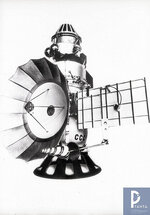
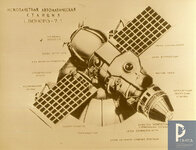
🤦‍♂️ "Venera-8" is designed to "dive" into the planet's dense atmosphere. maximum temperature value 493°C
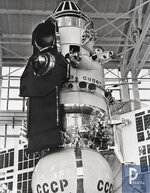
 
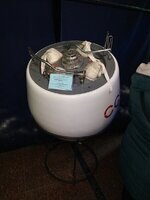
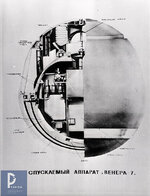
It should be similar to the landers of Venera 7 and 8, about 500 kg (landing mass) and can withstand up to 180 atmospheres of pressure. They overstrengthened the hull since at the time no one knew the actual surface pressure on Venus wasView attachment 43467
Hmm, going off this image and estimating roughly 1 meter diameter and 500 kg mass, the mean density works out to be slightly less than the density of water or seawater. But it's not exactly spherical and my diameter estimate is probably not correct, so it is difficult to say whether it will float or not.

It would be quite something if it survived re-entry and landed in an ocean and was positively buoyant.

It would be quite something else if it happened to be denser than warm surface sea water, but less dense than cold sea water. The whales and squid could have a close encounter of the communist kind.
 
The fall of the Soviet automatic station "Cosmos-482" to Earth is expected on May 9-10
Five objects fall to Earth every day, every seventh one weighing more than 500 kg.
scale_2400.jpgscale_2400 (1).jpgscale_2400 (2).jpgscale_2400 (3).jpgscale_2400 (4).jpg
scale_2400 (6).jpgscale_2400 (5).jpg
 
Five objects fall to Earth every day, every seventh one weighing more than 500 kg.
And none of them is designed to survive the Venusian atmosphere.
 
And none of them is designed to survive the Venusian atmosphere.

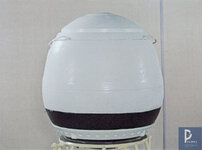
More specifically, it was designed to withstand 300 g and 100 atm of total pressure. Unless it aged really badly in those decades in space, it could survive the reentry, the near spherical capsule should be self-stabilizing. The outer layers of the heatshield might have become a little more brittle than usual though, but that shouldn't harm it. If the parachute is deployed or not should be more important for its survival, since the parachute container is a possible weak spot during reentry.
 
Gqi029SXcAA11KU

 
Cosmos-482 spacecraft left orbit and fell into the ocean
According to calculations by specialists from JSC TsNIIMash (part of Roscosmos), the device entered the dense layers of the atmosphere at 9:24 Moscow time, 560 km west of Middle Andaman Island, and fell in the Indian Ocean west of Jakarta.
691d844966655b11ff5327dcf1412341.jpg
 
  • Like
Reactions: GLS
It likely landed somewhere between eastern Europe and India, a German radar had a final contact with the ex-probe at 6:04 UTC.

 
Back
Top