Pluto is an important planet.

I'd very much like to see where you got the idea that a planet needs to sustain fusion to be a planet.

I think being able to sustain fusion is a classifying factor in not being a planet. In other words, if you are large enough to sustain fusion, you are not longer a 'planet' and are now a stellar object- such as a brown dwarf.

There are no binary planets in our solar system. The definition of a binary planet would only make sense if the barycenter was roughly half way between the bodies, +-20%

Where did that definition originate?
 
I'm old school, so, to me, there are still NINE planets.
"I'm a Luddite and choose to always believe the first thing I learnt rather than correcting my knowledge as better data becomes available. So, to me, there are only FOUR elements (earth, wind, fire and water) eclipses are dragons eating the sun and if a woman floats she is obviously a witch and should be burned"
 
My Very Energetic Maiden (Aunt) Just Swam Under Northampton Pier.

So there. :lol:

Seriously though, how about an honorary planet status? "Dwarf planet" sounds so... sub-standard :(

16800-think_consider_pluto_planet.jpg
 
Last edited:
What's certain is that space is far to be empty. The Oort cloud extends to roughly 2 light-years, halfway to Alpha Centauri, which certainly has a lot of orbiting rocks too, maybe not so spreaded, since it is a small star. However, those billions of minors planets and asteroïds could be a way to travel between "near" stars, building colonies on the way.


Seriously though, how about an honorary planet status? "Dwarf planet" sounds so... sub-standard

Mars seems especially evil ! Excellent pic ! :rofl:
 
Last edited:
Certain people are wrong, but you're magnitudes of order more wrong.

I was actually dead on correct. The accepted definition of a planet as posted on Wikipedia is:

A planet is a celestial body orbiting a star or stellar remnant that is massive enough to be rounded by its own gravity, is not massive enough to cause thermonuclear fusion, and has cleared its neighbouring region of planetesimals.

This definition is drawn from two separate IAU declarations; a formal definition agreed by the Union in 2006, and an informal working definition established by the Union in 2003. The 2006 definition, while official, applies only to the Solar System, while the 2003 definition applies to planets around other stars. The extrasolar planet issue was deemed too complex to resolve at the 2006 IAU conference.

What you are referring to is the 2006 declaration which is limited in scope to ONLY OUR SOLAR SYSTEM.

Ergo...it was not me who was "magnatiudes of order more wrong" :lol:

As far as moons go...I know what the definition of a moon is but you completely missed my point. Why be so selective and exclusive in the definition of a planet but be so wide open in the definition of a moon? Would it not make sense to be more consistent? If it is necessary to draw a distinction between planets and dwarf planets, would it not make sense to make a similar distinction with regards to moons?
 
Last edited:
I was actually dead on correct. The accepted definition of a planet as posted on Wikipedia is:

A planet is a celestial body orbiting a star or stellar remnant that is massive enough to be rounded by its own gravity, is not massive enough to cause thermonuclear fusion, and has cleared its neighbouring region of planetesimals.


From the context of your post, you implied that the definition of planet required fusion.

---------- Post added at 13:03 ---------- Previous post was at 13:00 ----------

As far as moons go...I know what the definition of a moon is but you completely missed my point. Why be so selective and exclusive in the definition of a planet but be so wide open in the definition of a moon? Would it not make sense to be more consistent? If it is necessary to draw a distinction between planets and dwarf planets, would it not make sense to make a similar distinction with regards to moons?


The only place where there are problems with what is a 'moon' is in the Saturn system. Even so, there haven't been big problems so far.

---------- Post added at 13:08 ---------- Previous post was at 13:03 ----------

Asteroid Discovery From 1980 - 2010 - YouTube

EDIT: This is the Main belt, disregard. :facepalm:

You can be pretty sure that we'll find lot of such 'trash' in the Kuiper belt. We just can't detect them yet...
 
The only place where there are problems with what is a 'moon' is in the Saturn system. Even so, there haven't been big problems so far.

Other planets have ring systems though, they're just not that extensive.

There could be all sorts of minor objects in orbits around planet... ejected after collisions, captured solar system debris. Not just around gas giants, but around all planets. Such debris can even be artificial- there are many Delta and Proton and Atlas upper stages orbiting around the Earth... are those moons? Or particles in a very tenuous and irregular ring system? :P
 
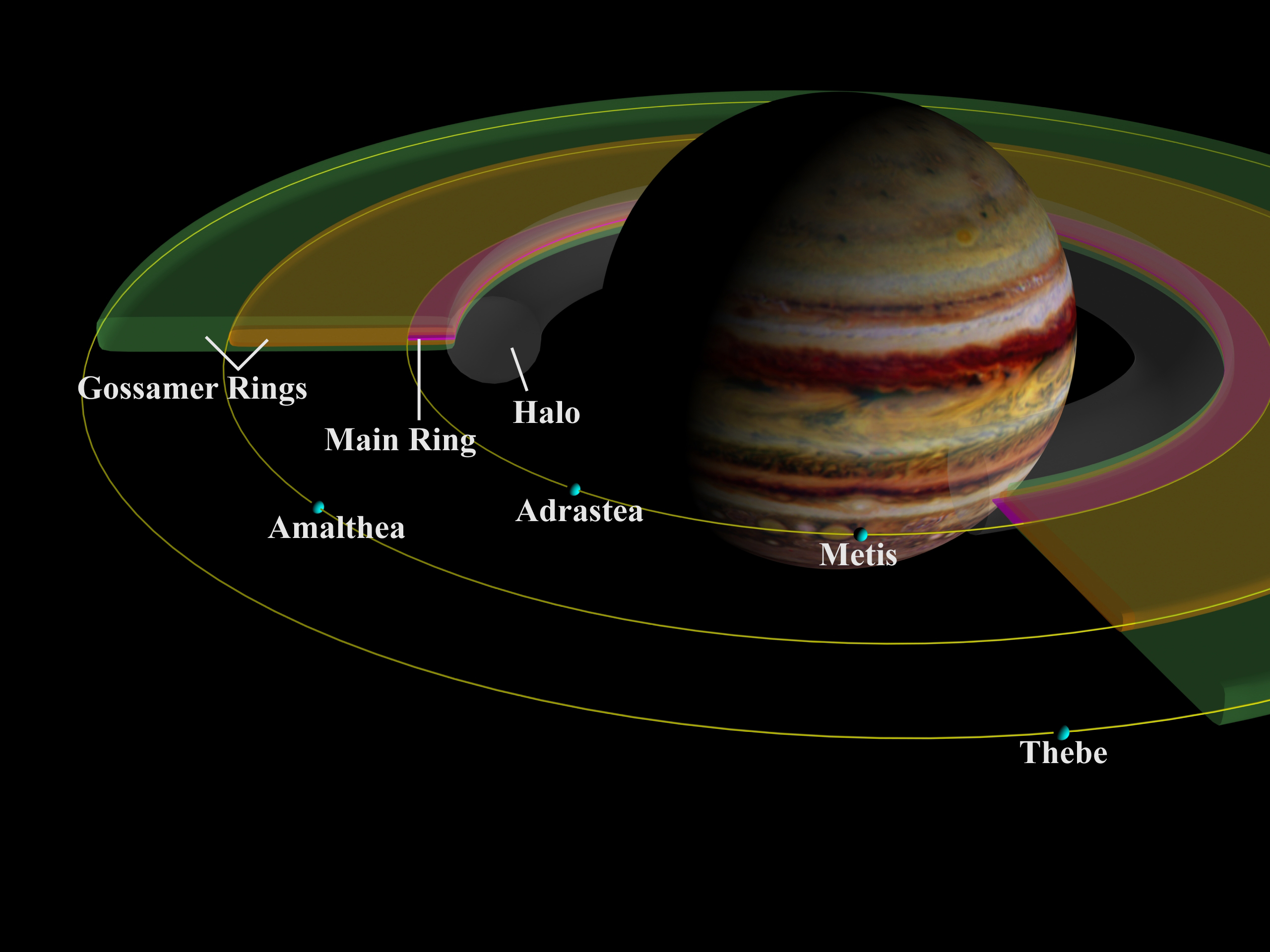
Yeah, for exemple Jupiter has rings. But this is mostly dust/ice ejected by the moons. Now we can't call each grain of dust a moon. So there must be a limit somewhere ?

PIA01627_Ringe.jpg
 
From the context of your post, you implied that the definition of planet required fusion.

No. Go back and read all of my posts - at no time did I ever say that. In all posts that I made, I posted that definition that said that fusion MUST NOT BE TAKING PLACE.

The only place where there are problems with what is a 'moon' is in the Saturn system. Even so, there haven't been big problems so far.

Saturn is kind of what I had in mind. Regardless, the point still stands - why be overly exclusive and selective with planets but wide open with moons? Why is having 10 or 15 planets a problem but having hundreds of moons is not?

---------- Post added at 10:33 AM ---------- Previous post was at 10:29 AM ----------

Yeah, for exemple Jupiter has rings. But this is mostly dust/ice ejected by the moons. Now we can't call each grain of dust a moon. So there must be a limit somewhere ?

There should be. But there isn't presently. They should apply similar logic to moons that they did with planets - require, as a minimum a moon should be define as a celestial body orbiting a planet that is massive enough to be rounded by its own gravity. They should then classify smaller irregular rocks (down to a certain minimum size) as minor moons or something similar otherwise planets like Saturn could have potentially astronomical numbers of moons.
 
Saturn is kind of what I had in mind. Regardless, the point still stands - why be overly exclusive and selective with planets but wide open with moons? Why is having 10 or 15 planets a problem but having hundreds of moons is not?

Because teaching kids in kindergarten about 15+ planets is difficult, and a little silly if more than 5 of them are regarded as "small and insignificant".

When teaching about Moons, all you need to say is the impressive "this planet has over sixty moons!" and/or go over the famous ones- the Galilean moons of Jupiter, Titan, etc.
 
There should be. But there isn't presently. They should apply similar logic to moons that they did with planets - require, as a minimum a moon should be define as a celestial body orbiting a planet that is massive enough to be rounded by its own gravity. They should then classify smaller irregular rocks (down to a certain minimum size) as minor moons or something similar otherwise planets like Saturn could have potentially astronomical numbers of moons.

Agreed. The criteria for the moon/dwarf moon division should either be some cutoff mass, or the simple requirement that it be rounded by its own gravity.
 
Dwarf moon? :uhh:

If we choose the gigantic "has to be in hydrostatic equilibrium" definition, most moons would cease to be moons.
 
The new classification is more accurate, clearly defined and logical. "Because we used to think of it as a planet back when we had no clear definition of what a planet is" just doesn't make sense.

I agree on the classification, but think that Pluto should be grandfathered into the Family of Nine.
 
Dwarf moon? :uhh:

If we choose the gigantic "has to be in hydrostatic equilibrium" definition, most moons would cease to be moons.

As it should be. We really don't need to call every little rock orbiting a gas giant a moon. Otherwise, the number will just keep increasing and increasing as we get better detection techniques. Jupiter and Saturn probably have hundreds each, or trillions each if you include the ring systems.
 
I agree on the classification, but think that Pluto should be grandfathered into the Family of Nine.

If you do so, we should not forget Ceres, the first ninth planet of the solar system. :lol:
 
If you do so, we should not forget Ceres, the first ninth planet of the solar system. :lol:

Or this:
luna-1.jpg


If Pluto is a planet, surely this is a planet too?
 
Back
Top