
You are using an out of date browser. It may not display this or other websites correctly.
You should upgrade or use an alternative browser.
You should upgrade or use an alternative browser.
Mars first or Moon first?
- Thread starter anemazoso
- Start date


I'm not sure everyone here understands just how hard and dangerous a manned mission to Mars really is. It's already been mentioned that in the best-case scenario, an emergency return from Mars would take at least 60 days. Anyone on such a trip is truly on their own for months on end. Nobody has ever done this before; even the longest duration spaceflights have taken place in LEO, within protection of the magnetoshpere and less than an hour away from a de-orbit.
Even Apollo was hair-raisingly dangerous; almost zero protection from solar flares, and many single-point failure modes that could've led to loss of the crew. As soon as lunar orbit insertion occurred, Apollo's risk level went through the roof.
Before sending people off to almost certain doom, we'd better find a way to reduce risk and gain confidence in cislunar and near-Earth space first. We simply don't have the tech to provide an adequate safety margin for long-distance interplanetary flight, yet. It's be like riding a home-made barrel over Niagra Falls: spectacular and dangerous, with a large chance of failure.
Of course, if you can come up with the money to try something yourself, I'll be happy to join the project.
Even Apollo was hair-raisingly dangerous; almost zero protection from solar flares, and many single-point failure modes that could've led to loss of the crew. As soon as lunar orbit insertion occurred, Apollo's risk level went through the roof.
Before sending people off to almost certain doom, we'd better find a way to reduce risk and gain confidence in cislunar and near-Earth space first. We simply don't have the tech to provide an adequate safety margin for long-distance interplanetary flight, yet. It's be like riding a home-made barrel over Niagra Falls: spectacular and dangerous, with a large chance of failure.
Of course, if you can come up with the money to try something yourself, I'll be happy to join the project.
- Joined
- Jun 22, 2008
- Messages
- 6,368
- Reaction score
- 0
- Points
- 0
Apollo was IMO a HUGE gamble at the time.
Yes, spaceflight is dangerous, yes, spaceflight is expensive. Deal with it.
It is completely pointless to spend billions of dollars on a program advertised to find out things that could be done in a far cheaper environment back home.
What is worse, is it seems we have to revise what we've already done first- send "sortie" missions to the Moon, which will be little more of an achievment over Apollo.
The sad fact is, that without proper funding and interest, neither a Moon or Mars program is possible. The population just doesn't care.
Well, I already have the barrel, but I'm encountering problems getting enough funding to travel to a suitable waterfall. :lol:
Yes, spaceflight is dangerous, yes, spaceflight is expensive. Deal with it.
It is completely pointless to spend billions of dollars on a program advertised to find out things that could be done in a far cheaper environment back home.
What is worse, is it seems we have to revise what we've already done first- send "sortie" missions to the Moon, which will be little more of an achievment over Apollo.
The sad fact is, that without proper funding and interest, neither a Moon or Mars program is possible. The population just doesn't care.
Of course, if you can come up with the money to try something yourself, I'll be happy to join the project.
Well, I already have the barrel, but I'm encountering problems getting enough funding to travel to a suitable waterfall. :lol:

n72.75
Seize the means of computation
Orbiter Contributor
Addon Developer
Tutorial Publisher
Donator
- Joined
- Mar 21, 2008
- Messages
- 2,872
- Reaction score
- 1,714
- Points
- 128
- Location
- Saco, ME
- Website
- mwhume.space
- Preferred Pronouns
- he/him
Well, we have a clear leader on the polls.

- Joined
- Feb 16, 2008
- Messages
- 3,606
- Reaction score
- 2
- Points
- 78
- Location
- Right behind you - don't look!
The sad fact is, that without proper funding and interest, neither a Moon or Mars program is possible. The population just doesn't care.
The population's opinion is vastly overrated: if the PTBs want something done, they will do it and the public opinion will not be allowed to stand in the way.

Interceptor
Well-known member
Space is very hostile,we should use the moon first to study the effects on man,or animal,then attempt a visit to mars,when we have a good grasp of the Technology needed.

Yeah, but we sent manned missions to the Moon without any experience or "tried and tested equipment".
Actually, no.
Even if we forget about Mercury and Gemini, there were SEVERAL tests done both in LEO and on the way to the Moon, before landing occured.
Even so, the Apollo missions came within a hair's width of a disaster on several occasions, culminating with Apollo 13. Luckily, those guys weren't on the way to Mars. If the were, they'd be dead.
So... wait, we're supposed to spend billions of dollars on a program to help us figure out rocket propulsion (using essentially 60s tech, that we know works well), deep-space communications (in use for the MER rovers and voyager probes anyway, manned comms is just different data), water recycling (which you can't do in an isolated environment on Earth or even in a lab?), food production (again, will a lab not suffice?), fuel production (simple chemistry; something we've been doing on Earth for a few hundred years. Surely a lab test and good engineering would make this easy as pie), air purification (done on submarines and to some extent ISS and Mir) and radiation shielding (polythene blocks, which if thick enough should do the job fine)?
If lab tests were every good enough, the ISS would not have been build.
Besides, we have NO idea whatsoever if food production on a large scale is even possible in microgravity / reduced gravity. All systems vital to the mission must survive years of harsh conditions in space environment and must not break down. A lab test is usually done under controlled situtations, taking out the element of the un-expected.
Also, air purification on ISS and Mir isn't good enough. Air is regularly brought up to the ISS. There's no way in hell we can leave the ISS on it's own for 3 years with the systems it has. Also, submarines use electrolysis to produce fresh O2.
The deep space communications from the Mars rovers and other probes is far too slow for the purposes of manned expeditions... unless you're willing to wait for 10 minutes to transmit your 10 seconds of audio. Never mind just that... the signal needs to be strong enough that it can survive serious degradation from solar interference, and at the same time be strong enough that we don't need the most powerful deep space antennas to pick them up. Those systems are too busy as is and latelly missions have started implementing a carrier signal for easier tracking - I'm sure you've heard the one on the Phoenix lander.
Fuel production needs to be perfected in space. That means setting up infrastructure to mine ice on the Moon, melt it, purify it and produce fuel. Furthermore, long term space based storage needs to be developped. It's reasonable to expect that the output from the fuel factories will be relativelly small, which means the fuell will be accumulated over several week or months.
Concerning "60's technologies":
Why don't you use a Comodore 64?
Introduced in 1982, it had an 8 bit processor capable of 1 MHz processing, with 64 kB of RAM and a graphics card capable of impressive 320x200, 16 color output!
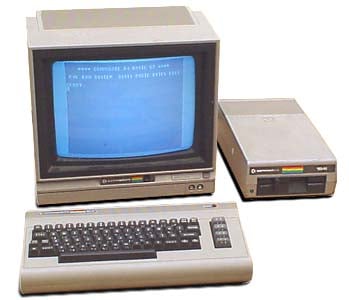
We know this thing works well, so why, for the love of God, would we possibly want to spend money developping better stuff?
I honestly do not see the point behind a committed lunar program due to things which we could sort out in a lab (or sometimes, as is the case with propulsion technology, stuff we already know).
Ok, so why don't you present to us your own vision of space exploration? We send a ship to Mars and land there... and then what?
I won't even comment further on the concept of actually building spacecraft on or around the Moon. Well it is a very viable (and IMO, very good) concept, the time and cost needed to develop the infrastructure to do so would be prohibitive.
An underground facility would provide shelter and and pressurized environment, where crews could quickly assemble ships, made of modules built on Earth. Such an environment would protect the crews and give them the ability to double check every system before launch, as well as giving the ship protection from possible micrometeorite damage.
Also, since you can now produce fuel right on the spot, you don't need to launch several loads of it to the Moon, for every ship that departs.
True, the initial cost of the Lunar outposts would be large, but it would quickly pay for itself - in a matter of several expeditions to Mars - which can reasonably be expected, if you wanna have a continue pressence there.
- Joined
- Jun 22, 2008
- Messages
- 6,368
- Reaction score
- 0
- Points
- 0
Actually, no.
They still had far less experience with spaceflight in general then we do now.
Besides, we have NO idea whatsoever if food production on a large scale is even possible in microgravity / reduced gravity.
So, use the aformention ISS, and actually put it to good use. Why do we need to grow food on the way, anyway? Most of the Mars mission proposals I've seen neglect that concept entirely.
Also, air purification on ISS and Mir isn't good enough. Air is regularly brought up to the ISS.
Of course it isn't. But experience from the ISS and Mir show that such systems can work.
The deep space communications from the Mars rovers and other probes is far too slow for the purposes of manned expeditions...
Yes, but they're slow for a very good reason; the laws of physics. Unless you want to somehow circumvent those, you're always going to have a 8-20 minute delay depending on the positions of the planets.
The Moon is only 3 light-seconds away, as opposed to 20 or even 8. And we've done lunar communications before, 40 years ago- they worked fine.
Fuel production needs to be perfected in space. That means setting up infrastructure to mine ice on the Moon, melt it, purify it and produce fuel. Furthermore, long term space based storage needs to be developped. It's reasonable to expect that the output from the fuel factories will be relativelly small, which means the fuell will be accumulated over several week or months.
Yes. But we need none of that for a mission to Mars. Sure, if the infrastructure was well developed it would make things easier, but in the forseeable future it is simple irrelevant to space exploration, anywhere.
Why don't you use a Comodore 64?
We know this thing works well, so why, for the love of God, would we possibly want to spend money developping better stuff?
Because unlike the Commodore 64, 60's rocket technology works, and it works well. Why waste money on newer (and probably costlier to operate) systems when existing ones can do the job? Many rockets today use "60s technology"; both the Atlas and Delta families use the RL-10, and the overall design of the Soyuz system itself is pretty old.
We send a ship to Mars and land there... and then what?
No. We must commit ourselves to developing a means of permanant or semi-permanant settlement on Mars.
An underground facility would provide shelter and and pressurized environment, where crews could quickly assemble ships, made of modules built on Earth. Such an environment would protect the crews and give them the ability to double check every system before launch, as well as giving the ship protection from possible micrometeorite damage.
So you need people to assemble modules... that is very unlogical, IMO. Such things should be setup for minimum effort assembly; upkeeping a human presence is very expensive.
That sort of thing can be done via automation, or in LEO for that matter. If so then it'd marginally make more sense to assemble them under manned supervision.
Morover, the ship now has to resist the force of 1/6th G and launch from the Moon, so it has to mass more.

- Joined
- Feb 6, 2008
- Messages
- 38,965
- Reaction score
- 3,937
- Points
- 203
- Location
- Wolfsburg
- Preferred Pronouns
- Sire
T.Neo: A car from 1900 does still drive. Why build a better one? The technology did, in your scales, not change at all. Still pistons, still gasoline.
That we get about 25 times more power out of the same bore is sure no sign of progress.
And just compare the RD-170 and the F-1 engine... no progress?
That we get about 25 times more power out of the same bore is sure no sign of progress.
And just compare the RD-170 and the F-1 engine... no progress?
Last edited:
- Joined
- Jun 26, 2009
- Messages
- 1,045
- Reaction score
- 0
- Points
- 36
I would like to see a Moon programme too, because now that we have had 40 years to analyse the findings of previous expeditions, and plan and prepare for further missions, we would probably be able to exploit the resources like the water, and possibly Helium III like never before. If we suddenly decided to go to Mars, we would only be able to make baby steps which would definitely not yield like the Moon would, where we already have time and experience.
Plus I would really like to see a manned landing in my lifetime (as soon as I can), and that would be a while with Mars.
Plus I would really like to see a manned landing in my lifetime (as soon as I can), and that would be a while with Mars.
Last edited:

Sky Captain
New member
- Joined
- Jan 29, 2009
- Messages
- 945
- Reaction score
- 0
- Points
- 0
Well, after giving the whole thing a second thought now I think we should first go to NEO`s and then to Moon. If we want long term sustainable manned space presence spaceflight has to be made from money eater into money producer and NEO`s which could be potentially rich in rare earth metals could do that. Also if Helium 3 turns out to be economically viable to mine from lunar soil it also could potentially generate profit. NEO`s are easier to reach because visiting them don`t recquire a dedicated lander so while moon lander is still being developed first missions could go to NEO`s and while doing so also test advanced electric propulsion systems which will be a must for deep space missions.
- Joined
- Jun 22, 2008
- Messages
- 6,368
- Reaction score
- 0
- Points
- 0
T.Neo: A car from 1900 does still drive. Why build a better one? The technology did, in your scales, not change at all. Still pistons, still gasoline.
That we get about 25 times more power out of the same bore is sure no sign of progress.
And just compare the RD-170 and the F-1 engine... no progress?
Oh no, I'm not denying progress, just saying that existing technologies, which have their roots 40 years ago, should support manned lunar or Mars missions just fine.
We don't need to spend billions of dollars on a lunar program for engines, of all things.
- Joined
- Jun 22, 2008
- Messages
- 6,368
- Reaction score
- 0
- Points
- 0
Because they just don't. There is no such thing as existing technology, if this technology has not been build for 10 years.
But it is in use- engines such as the RL-10 are used EELVs regularly, as are several other engines on other LVs. It is well known technology.
- Joined
- Feb 6, 2008
- Messages
- 38,965
- Reaction score
- 3,937
- Points
- 203
- Location
- Wolfsburg
- Preferred Pronouns
- Sire
But it is in use- engines such as the RL-10 are used EELVs regularly, as are several other engines on other LVs. It is well known technology.
If you look closer, you will find out that NASA paid a few million already for giving the RL-10 exactly the needed missing capabilities, that have never been added since the RL-10 was designed, but which are needed for using the RL-10 as engine for a lunar lander.
For a lunar upper stage, the RL-10 is far too weak.

Lucy
in the sky, with diamonds.
Administrator
Moderator
Orbiter Contributor
Addon Developer
Webmaster
GFX Staff
Beta Tester
- Joined
- Aug 9, 2009
- Messages
- 7,110
- Reaction score
- 1,303
- Points
- 203
- Location
- 10.0.0.1
- Website
- www.orbiter-radio.co.uk
- Preferred Pronouns
- she/her
Wait; are we discussing the plausibilities of Lunar and Martian exploration missions and which would be better for us to do as a priority, or are we debating about technology here? I can't tell.
- Joined
- Jun 22, 2008
- Messages
- 6,368
- Reaction score
- 0
- Points
- 0
For a lunar upper stage, the RL-10 is far too weak.
Yes. Then add a J-2 (again, 60s technology).
A stage for LTI should be fine enough for MTI, providing that extra propellant is provided for the extra needed Dv.
Again, no dedicated program costing millions of dollars. You just need to build a working engine. The testing doesn't require a lunar program.
They still had far less experience with spaceflight in general then we do now.
Yes... and orbiting Earth is exactly like getting to Mars. [/sarcasm]
So, use the aformention ISS, and actually put it to good use. Why do we need to grow food on the way, anyway? Most of the Mars mission proposals I've seen neglect that concept entirely.
Because just getting to Mars, planting flags and getting back is not the end of the story.
If you're gonna go to Mars, you're gonna go there to stay there for extended periods of time. If you're not there for a long time, it's better to send rovers, cos they'd do the same science.
Of course it isn't. But experience from the ISS and Mir show that such systems can work.
Can work, but we don't HAVE them yet. And testing them on the way to Mars is suicide.
Yes, but they're slow for a very good reason; the laws of physics. Unless you want to somehow circumvent those, you're always going to have a 8-20 minute delay depending on the positions of the planets.
The Moon is only 3 light-seconds away, as opposed to 20 or even 8. And we've done lunar communications before, 40 years ago- they worked fine.
For the love of............................
I'm talking about bandwidth. A manned mission will require large bandwidth transmissions of images, audio and other data. The MER don't care if it takes 15 minutes to transmit a single photo, but humans do.
There's a damn good reason that images are compressed to 1 bit per pixel before being sent. As an example, the New Horizons probe had a bandwidth of 38 kbit/s at Jupiter and is expected to drop to around 1kbit/s at Pluto. I'd love to see you do a "live" (yes, with a delay) television broadcast with that.
Yes. But we need none of that for a mission to Mars. Sure, if the infrastructure was well developed it would make things easier, but in the forseeable future it is simple irrelevant to space exploration, anywhere.
But then, space exploration isn't just about Mars and planting a flag there.
Because unlike the Commodore 64, 60's rocket technology works, and it works well. Why waste money on newer (and probably costlier to operate) systems when existing ones can do the job? Many rockets today use "60s technology"; both the Atlas and Delta families use the RL-10, and the overall design of the Soyuz system itself is pretty old.
Wow, so Commodore 64 didn't work well? Why did it dominate the PC market at the time then?
No, the reason we still have engines from the 60's is the lack of development by the people who think flying 50 year old rockets is just fine...
No. We must commit ourselves to developing a means of permanant or semi-permanant settlement on Mars.
How are you possibly gonna do that without testing your equipment? My guess is that you wouldn't give a damn to see people die as long as a flag was there.
So you need people to assemble modules... that is very unlogical, IMO. Such things should be setup for minimum effort assembly; upkeeping a human presence is very expensive.
And you just said you wanna do it on Mars. Then you call me unreasonable... :rofl:
That sort of thing can be done via automation, or in LEO for that matter. If so then it'd marginally make more sense to assemble them under manned supervision.
Morover, the ship now has to resist the force of 1/6th G and launch from the Moon, so it has to mass more.
Whatever the final design might be, it's far safer to test things on the Moon, then sending people on a suicidal mission to Mars.
If you want proof, why don't you go climb Mount Everest... well, you've climbed a hill walking to school or back home, haven't you? According to your logic, that makes you ready for it.
Like I said, playing with Orbiter does not make you a rocket scientist. Thankfully these top level decisions are made by the people who spent year in school and their entire lives in the field of space flight.
Of course you can do lots of science on the Moon.
For starters, until a few days ago most of us thought it was totally arid and had no water.
Only 12 men have been there and they've spent only a few man-hours exploring a tiny equatorial region of what is basically a small planet.
Right. The Moon's surface area is four times that of the 48 States. Could you say that you have "been there, done that" in exploring North America if you only went there six times with two men at a time, none of whom stayed for more than three days?

- Joined
- Mar 27, 2010
- Messages
- 271
- Reaction score
- 1
- Points
- 0
- Location
- Benton
- Website
- fsxpilots.webs.com
We need to learn to live on other planets, and the best way to do that is to go to the moon. After all, it's close, if you mess up to bad you can come home in three days, on Mars it's over for you.
Similar threads


- Replies
- 32
- Views
- 11K
