How much nuclear power does the UK use and is it safe?.

Notebook

Addon Developer
Addon Developer
News Reporter
Donator
Joined
Nov 20, 2007
Messages
11,962
Reaction score
765
Points
188

I knew the UK was generating less power from nuclear as it's de-commissioning old stations and not building new ones.
Surprised how little though.
Very surprised by how much the USA is generating, twice as much as China and France.
 
in Russia the opposite problem is geographically the winds are not blowing correctly and the sun does not shine the question of how to create renewable energy
 
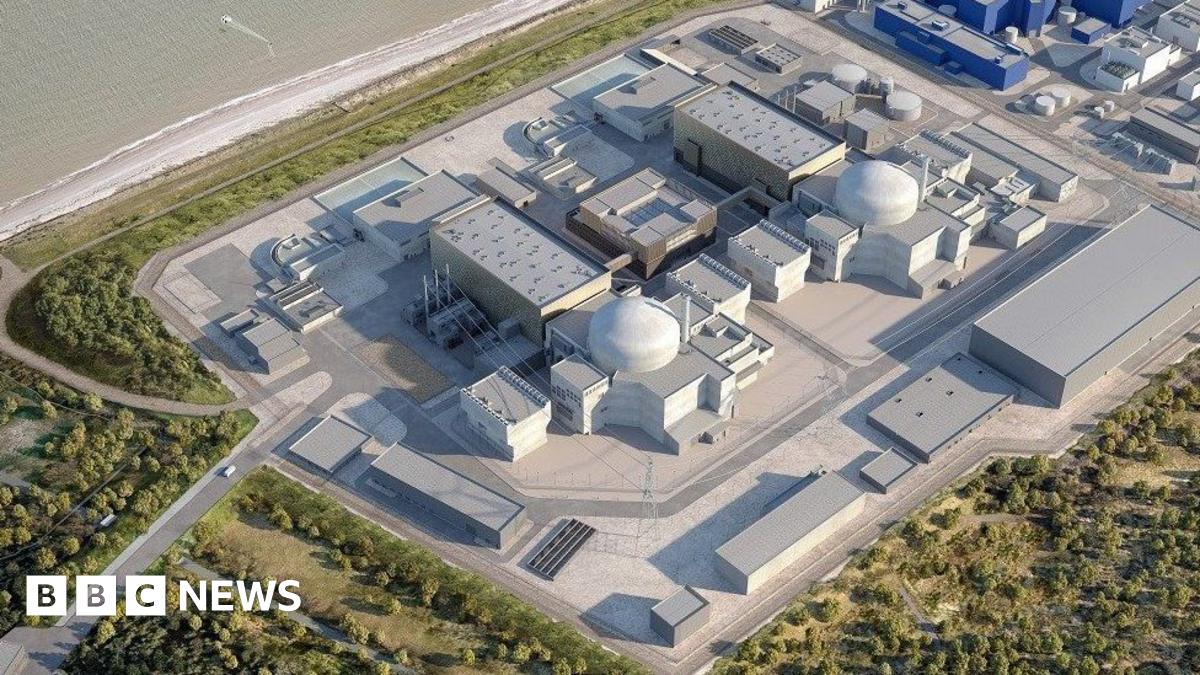
The UK is apparently going to build some "mini" reactors - https://www.bbc.co.uk/news/business-59212983

I've no idea how much power that'll generate but knowing the UK's safety standards we will have a melt down before the decade is out.
 
in Russia the opposite problem is geographically the winds are not blowing correctly and the sun does not shine the question of how to create renewable energy

On the other hand, you have a really large land area with a low population density. You have over 6000 TWh of economically viable wind power sites alone, for a country that consumes 900 TWh electricity. Also, despite being a rather poor place for solar power, you have 2000 TWh of potential PV sites, especially in the south.

So, even if you would keep your current nuclear power at this level, you should have enough wind and solar to retire the gas and coal powerplants. And that is then where politics start. Also the plan to save energy by Medvedev back then did not last long - you are back to the same per capita consumption of electrical power as Germany.
 
There seems to be a backlash against wind-power, especially land based. Probably down to land owners being given grants to allow them to be built.
Of course the majority of land owners are from the old aristocracy, who are wealthy anyway.

Nuclear fell out of favour, but hopefully it will get going again.
I live on the other side of the country(and was five year old at the time), but this is still remembered.

 
I have no idea about the energy situation in the UK to be honest. But I have to admit that IMHO wind-power is not a solution in any case. It might be from the engineering point of view. But it really ruins the nature, visually. It's so shocking to see all those towers and propellers in certain regions here in Germany. It seems we need a very different approach for the future. Especially for a modern country with 83 million people. In the media they often say that almost 50% of electrical power already comes from renewable sources. But one has to look at the primary energy consumption, because renewable sources is only about 15% currently. I'm no expert, I don't know all the numbers, and I have no idea yet. But it just seems to me that there is a gap between the fiction of renewable energy and reality.
 
I have no idea about the energy situation in the UK to be honest. But I have to admit that IMHO wind-power is not a solution in any case. It might be from the engineering point of view. But it really ruins the nature, visually. It's so shocking to see all those towers and propellers in certain regions here in Germany. It seems we need a very different approach for the future. Especially for a modern country with 83 million people. In the media they often say that almost 50% of electrical power already comes from renewable sources. But one has to look at the primary energy consumption, because renewable sources is only about 15% currently. I'm no expert, I don't know all the numbers, and I have no idea yet. But it just seems to me that there is a gap between the fiction of renewable energy and reality.

Remember that primary energy only made sense in a time, when most energy was produced by oil and coal and allowed a good representation of the imports. But now, you should pay more attention to the usable energy.

The most modern and efficient coal powerplant only turns about 27-28% of the primary energy it consumes into electricity, the rest is waste heat that has to be dissipated by the cooling towers. Presenting graphics with primary energy of old steam engines vs renewables is a common fraud in the anti-renewable movement. For example, if you correct the nuclear primary energy of france to show the usable electrical energy, the available power generation looks far less impressive. All renewables are operating at nearly 100% efficiency there, even old hydropower plants reach well over 95% efficiency, they have no huge waste heat production that wastes the available primary energy.

Theoretically, our 100% renewable primary energy case should be 20% of what we consume today, by plain efficiency difference (Thats 730 TWh electricity, the estimate of the German goverment for 2030 is only slightly higher at 800 TWh). Even heating houses with heatpumps is way more effective than using a oil or gas burner. It isn't really about "Can 100% renewable be done?", the real challenge is: How can we do this? How to invest for maximum ROI? What powerplant should be replaced next, how much replacement production is needed for this region? Can the powergrid handle uneven distribution of loads or should a more effective powerplant be replaced first for the sake of minimizing costs for powerlines? How to motivate people to replace old stuff in their basements with something better?

Also, without renewables, we would need to build 85 nuclear reactors in a short time (And get the needed number of operators). So, even if you would like a nuclear option, without using the available renewable potential, it would be really unaffordable. (Thats 3.5 trillion Euros at the current price tag)

 
But it just seems to me that there is a gap between the fiction of renewable energy and reality.
Agreed. The "renewable" concept is misleading because you always spend something. A dam, a solar panel, or a wind generator, must be built, transported, and require maintenance. And they occupy space. In the case of solar panels, they need to cover a large area, with obvious impacts on soil erosion.
These things require careful study and not pseudoscience - real Ecology is real science, quantified and with published papers.
 
In the case of renewables, we don’t need to transport the ‘fuel’, the sun or nature brings it. Non-renewables, the fuel has to be obtained, processed, and transported to site. That cost, including cost to the environment, must be taken into account.
 
In the case of solar panels, they need to cover a large area, with obvious impacts on soil erosion.

According to research done in Germany and India about agrivoltaics, there are more positive than negative impacts about installing solar arrays on crop fields. Including less damage by strong rains and hail. It is sure not "obvious".
 
You are all missing an important fact about the use of nuclear. We still have not solved what to do with nuclear fuel waste. Currently, all we do with it is physically store it. There is no good solution.
 
You are all missing an important fact about the use of nuclear. We still have not solved what to do with nuclear fuel waste. Currently, all we do with it is physically store it. There is no good solution.

We are also not really good at avoiding nuclear waste. We irradiate a lot of stuff with neutrons there, that then keeps on decaying or is absorbing other neutrons... especially U236 is a huge problem for current reactors.
 
a large number of US nuclear power plants are associated with the Cold War, therefore they were all made in the 70s-90s
usa tried to become a monopoly in the field of nuclear energy but failed and nuclear power plants remain, also excess energy (actually where did Elon Musk with Tesla come from)

USA nuclear power plants are very old
 
a large number of US nuclear power plants are associated with the Cold War, therefore they were all made in the 70s-90s
usa tried to become a monopoly in the field of nuclear energy but failed and nuclear power plants remain, also excess energy (actually where did Elon Musk with Tesla come from)

USA nuclear power plants are very old

Not all, they also build new plants (One came online in 2020). Also compared to what you have in the Russian reactor park, they are pretty young. You even have 9 RBMK reactors running, only one of them built to the design specs of 1988...
 
Not all, they also build new plants (One came online in 2020). Also compared to what you have in the Russian reactor park, they are pretty young. You even have 9 RBMK reactors running, only one of them built to the design specs of 1988...
as a person who commutes to work every day passing by RBMK, :) I know that a modern nuclear power plant is being built nearby (VVER-TOI)
 
USA nuclear power plants are very old
Yeah, that's true of most nuclear powerplants in the world, which is kind of the problem. They have made profit so far, but if they're decommissioned, they suddenly drop into the red...
 
Nuclear waste is a huge problem, or let's say it could become one in the future. But I am still with Elon Musk and others in that area. Like for example former ESA astronaut and physicist Ulrich Walter (STS-55). Nuclear power is something that we already have, on site it does not emit Co2 and it is relatively safe if done properly.
 
Last edited:
You are all missing an important fact about the use of nuclear. We still have not solved what to do with nuclear fuel waste. Currently, all we do with it is physically store it. There is no good solution.

I'm not sure that is strictly true any more, some types of modern Gen IV reactors produce vastly reduced amounts of waste. The type of nuclear plants which produce large amounts of waste are typically those who also produce materials suitable for weapons production as a 'by-product' which is probably the main reason such plants have continued to exist in certain countries for so long when alternatives might be available.
 
I'm not sure that is strictly true any more, some types of modern Gen IV reactors produce vastly reduced amounts of waste. The type of nuclear plants which produce large amounts of waste are typically those who also produce materials suitable for weapons production as a 'by-product' which is probably the main reason such plants have continued to exist in certain countries for so long when alternatives might be available.

Important: They do so on the powerpoint presentation. In reality though, nobody really knows. Even Russia is using their "3.5 Gen" lead-cooled fast breeder reactor mostly for burning away excess stores of Plutonium (breeding ratio < 1) for some years now. The limited experiments with a breeding ratio > 1 seem to have been as expected: Riding the redline. Too much plutonium and other atoms inside the reactor (not just fuel) is bad, especially when relying on fast, unmoderated neutrons. They give off only a small number of delayed neutrons during decay, that permit the operators to react to power transients.

For getting to the numbers, that the nuclear technology fanboys post around (without any scientific paper to build upon), you need to violate physics. One German powerpoint design (Dual fluid reactor) has claimed efficiencies that can't be achieved without vaporizing the power plant compound. It even exceeds the Carnot limit. Others aim at operating so close to the full dollar reactivity, that the information processing in a large reactor has to exceed the speed of light: The distance between neutron flux sensor, controller and control rod actuators has to be less than a meter, even when you assume instantly moving control rods.
 
Back
Top