"У Сергея Павловича Цыбина редчайшая профессия: он руководил полетами пилотируемых космических кораблей. Даже более редкая, чем профессия космонавта, потому что космонавтов в Советском Союзе десятки, а руководителей куда меньше. Например, во время экспериментального полета «Союз» - «Аполлон» - ЭПАС - с советской стороны руководителем полета был космонавт, доктор технических наук Алексей Елисеев, а у него было три заместителя - сменных руководителя: Виктор Благов, Вадим Кравец и Сергей Цыбин.
Сейчас, отодвинувшись во времени от собственных репортажей из ЦУПа - Центра управления полетом,- я понимаю, что мы, журналисты, об этих людях почти ничего не рассказали. Разумеется, летать в космосе и труднее, и опаснее, чем сидеть в ЦУПе. Но - да простят меня космонавты - работа в ЦУПе ответственнее. Космонавт может сделать ошибку, ему простится, ведь те, кто делал ошибки, и очень грубые, все-таки Герои. Сменному руководителю прощения не будет. Космонавт может не разобраться в сложившейся ситуации, сменный руководитель не может. Наконец, космонавт может спросить у сменного руководителя: «Что мне делать? Как поступить?», а сменный руководитель у космонавта так спросить не может. Да и, по правде сказать, вообще не у кого ему спрашивать. Сменному руководителю мало все знать и все уметь. Практика показала: прекрасно знающие свою область ученые часто не могут работать руководителями полетов. Нужно обладать определенным устройством мозга, чтобы употреблять полученную информацию не для изучения, а для управления, а это очень трудно. Надо не только знать, как работают те или иные системы, но представлять себе динамику их поведения и их взаимное влияние. Мало понять, что происходит сейчас. Требуется мгновенно представить себе, во что это может вылиться в будущем.".(Ярослав Голованов
"Капля нашего мира"; глава: "Династия Цыбиных").
..................................................................
Цит.по: Ярослав Кириллович ГОЛОВАНОВ
КАПЛЯ НАШЕГО МИРА
БИБЛИОТЕКА ЖУРНАЛА "ЗНАМЯ
На обложке рисунок
А. И. Когановского
Редактор «Библиотеки» В.Ф.Кравченко
Оформление художника А. И. Неровного
Художественный редактор В. В.Масленников Технический редактор Т.С.Трошина Sergey Pavlovich Tsybin had one of the rarest professions imaginable: he directed the flights of crewed spacecraft. In fact, it was even rarer than the profession of a cosmonaut, because there were dozens of cosmonauts in the Soviet Union, while flight directors were far fewer. For example, during the experimental Apollo–Soyuz Test Project (ASTP), the Soviet flight director was cosmonaut and Doctor of Technical Sciences Alexei Yeliseyev, who had three deputies serving as shift flight directors: Viktor Blagov, Vadim Kravets, and Sergey Tsybin.
Now, looking back on my own reports from the Mission Control Center (TsUP), I realize that we journalists told almost nothing about these people. Of course, flying in space is more difficult and more dangerous than sitting in Mission Control. But—may the cosmonauts forgive me—the work in Mission Control is more responsible.
A cosmonaut may make a mistake and be forgiven; after all, even those who made serious mistakes remained Heroes. A shift flight director, however, will not be forgiven. A cosmonaut may fail to understand a situation; a shift flight director cannot afford to. Finally, a cosmonaut can ask the flight director, “What should I do? How should I proceed?” But a shift flight director cannot ask the cosmonaut the same question. To tell the truth, there is no one he can ask.
A shift flight director must not only know everything and be capable of everything. Practice has shown that scientists who are outstanding experts in their own fields often cannot work as flight directors. One must possess a special cast of mind to use information not merely for study, but for control—and that is extremely difficult.
It is not enough to know how particular systems operate; one must understand the dynamics of their behavior and their interactions with one another. It is not enough to grasp what is happening at the present moment. One must instantly foresee what it may develop into in the future.
Source: Yaroslav Kirillovich Golovanov, A Drop of Our World
Chapter: The Tsybin Dynasty
Library of the journal Znamya Photo: Book cover illustrated by artist A. I. Koganovsky. Serguéi Pávlovich Tsybin tenía una de las profesiones más raras que existen: dirigía los vuelos de naves espaciales tripuladas. Era una profesión incluso más excepcional que la de cosmonauta, porque en la Unión Soviética había decenas de cosmonautas, mientras que los directores de vuelo eran muchos menos.
Por ejemplo, durante el vuelo experimental Apolo-Soyuz (ASTP), el director de vuelo por parte soviética fue el cosmonauta y doctor en ciencias técnicas Alexéi Yeliséyev, quien tenía tres adjuntos que actuaban como directores de vuelo de turno: Víktor Blagov, Vadim Krávets y Serguéi Tsybin.
Ahora, al mirar hacia atrás y recordar mis propios reportajes desde el Centro de Control de Vuelos (TsUP), comprendo que nosotros, los periodistas, prácticamente no contamos nada sobre estas personas. Por supuesto, volar al espacio es más difícil y más peligroso que permanecer sentado en el Centro de Control. Pero —que me perdonen los cosmonautas— el trabajo en el Centro de Control implica una responsabilidad aún mayor.
Un cosmonauta puede cometer un error y ser perdonado; después de todo, incluso quienes cometieron errores graves siguieron siendo Héroes. Pero a un director de vuelo de turno no se le perdonará nada. Un cosmonauta puede no comprender una situación complicada; un director de vuelo no puede permitirse eso. Finalmente, un cosmonauta puede preguntar al director de vuelo: «¿Qué debo hacer? ¿Cómo debo actuar?». Pero un director de vuelo no puede hacerle esa misma pregunta al cosmonauta. Y, para decir la verdad, no tiene a nadie a quien preguntárselo.
A un director de vuelo no le basta con saberlo todo y ser capaz de hacerlo todo. La práctica ha demostrado que científicos excelentes en sus respectivos campos a menudo no pueden desempeñarse como directores de vuelo. Es necesario poseer una forma especial de pensar para utilizar la información no solo con fines de estudio, sino también para el control y la toma de decisiones, y eso es extremadamente difícil.
No basta con saber cómo funcionan determinados sistemas; es necesario comprender la dinámica de su comportamiento y la influencia mutua entre ellos. No basta con entender lo que está ocurriendo en este momento. Hay que ser capaz de prever instantáneamente en qué puede convertirse en el futuro.
Fuente: Yaroslav Kiríllovich Golovanov, Una gota de nuestro mundo
Capítulo: La dinastía Tsybin
Biblioteca de la revista Znamya Fotografía: portada del libro con ilustración del artista A. I. Koganovski.
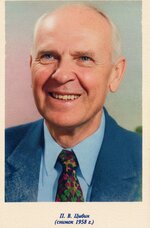
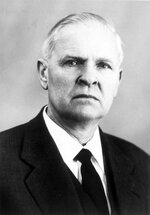
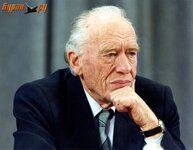
Павел Владимирович Цыбин (1905 —1992) — советский конструктор авиационной и ракетно-космической техники. Занимался разработками беспилотной модификации космического коpабля "Восток", спутника связи "Молния", пилотируемых космических кораблей "Союз"
и "Союз Т", долговременныхорбитальных станций "Салют", В 1980-х годах П.В. Цыбин в качестве научного консультанта принимал участие в создании многоразовой транспортной-космической системы "Энергия"-"Буран". Pavel Vladimirovich Tsybin (1905-1992) was a Soviet designer of aircraft and rocket-space technology. He developed the unmanned version of the Vostok spacecraft, the Molniya communications satellite, the Soyuz and Soyuz-T manned spacecraft, and the Salyut long-duration orbital stations. In the 1980s, P.V. Tsybin served as a scientific consultant on the development of the Energia-Buran reusable space transport system. Pavel Vladimirovich Tsybin (1905-1992) fue un diseñador soviético de tecnología aeronáutica y espacial. Desarrolló la versión no tripulada de la nave espacial Vostok, el satélite de comunicaciones Molniya, las naves espaciales tripuladas Soyuz y Soyuz-T, y las estaciones orbitales de larga duración Salyut. En la década de 1980, P.V. Tsybin trabajó como consultor científico en el desarrollo del sistema de transporte espacial reutilizable Energia-Buran.
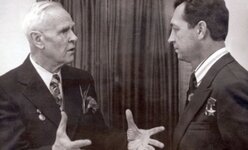
На фото слева направо: Павел Цыбин и космонавт Виталий Севастьянов. In the photo, from left to right: Pavel Tsybin and cosmonaut Vitaly Sevastyanov. En la foto, de izquierda a derecha: Pavel Tsybin y el cosmonauta Vitaly Sevastyanov.
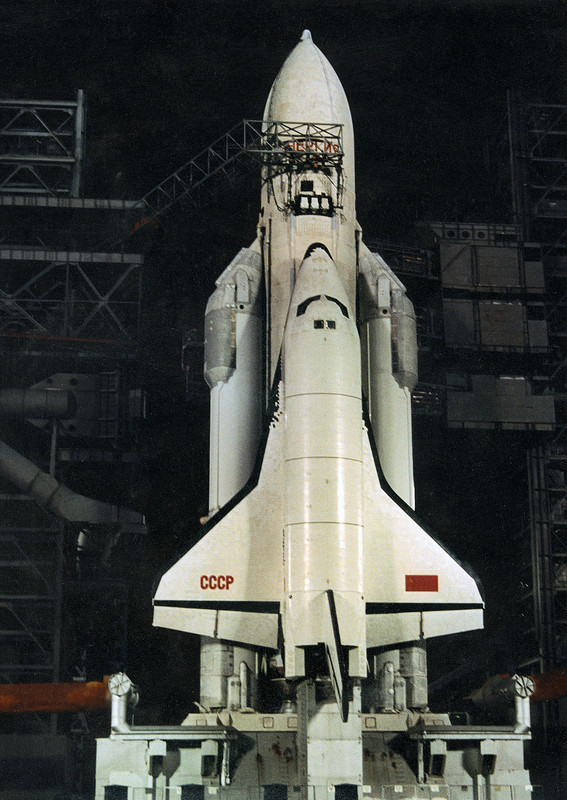
Орбитальный самолет “Буран” (изделие 11Ф35) был разработан научно-производственными объединениями “Молния” (планер/конструкция и все авиационные системы и оборудование, обеспечивающие полет ниже 100 км, включая самолетную посадку на аэродром), и “Энергия” (системы и оборудование, работающие на участке выведения и в космическом полете), в период 1976–1988 гг.
Генеральный конструктор многоразовой космической системы 11Ф36 “Энергия-Буран” – академик Валентин Глушко,
главные конструкторы “Бурана” – Глеб Лозино-Лозинский (НПО “Молния”) и Юрий Семенов (НПО “Энергия”).
Орбитальный самолет “Буран” выполнил единственный беспилотный полет 15 ноября 1988 г. с автоматической посадкой на аэродром Юбилейный (Байконур). The Buran orbital spaceplane (article 11F35) was developed by the scientific-production associations Molniya (airframe/structure and all aviation systems and equipment ensuring flight below 100 km, including aircraft-style landing on an airfield) and Energia (systems and equipment operating during launch and in spaceflight) during the period 1976–1988.
The General Designer of the reusable space transportation system 11F36 Energia–Buran was Academician Valentin Glushko.
The chief designers of Buran were Gleb Lozino-Lozinsky (NPO Molniya) and Yuri Semenov (NPO Energia).
The Buran orbital spaceplane carried out its only unmanned flight on November 15, 1988, with a fully automatic landing at the Yubileiny Airfield (Baikonur). El transbordador orbital Burán (artículo 11F35) fue desarrollado por las asociaciones científico-industriales Mólniya (planeador/estructura y todos los sistemas y equipos aeronáuticos que garantizaban el vuelo por debajo de los 100 km, incluido el aterrizaje tipo avión en un aeródromo) y Energía (sistemas y equipos que operaban durante la fase de lanzamiento y en el vuelo espacial) entre 1976 y 1988.
El diseñador general del sistema espacial reutilizable 11F36 Energía-Burán fue el académico Valentín Glushkó.
Los diseñadores principales del Burán fueron Gleb Lozino-Lozinski (NPO Mólniya) y Yuri Semiónov (NPO Energía).
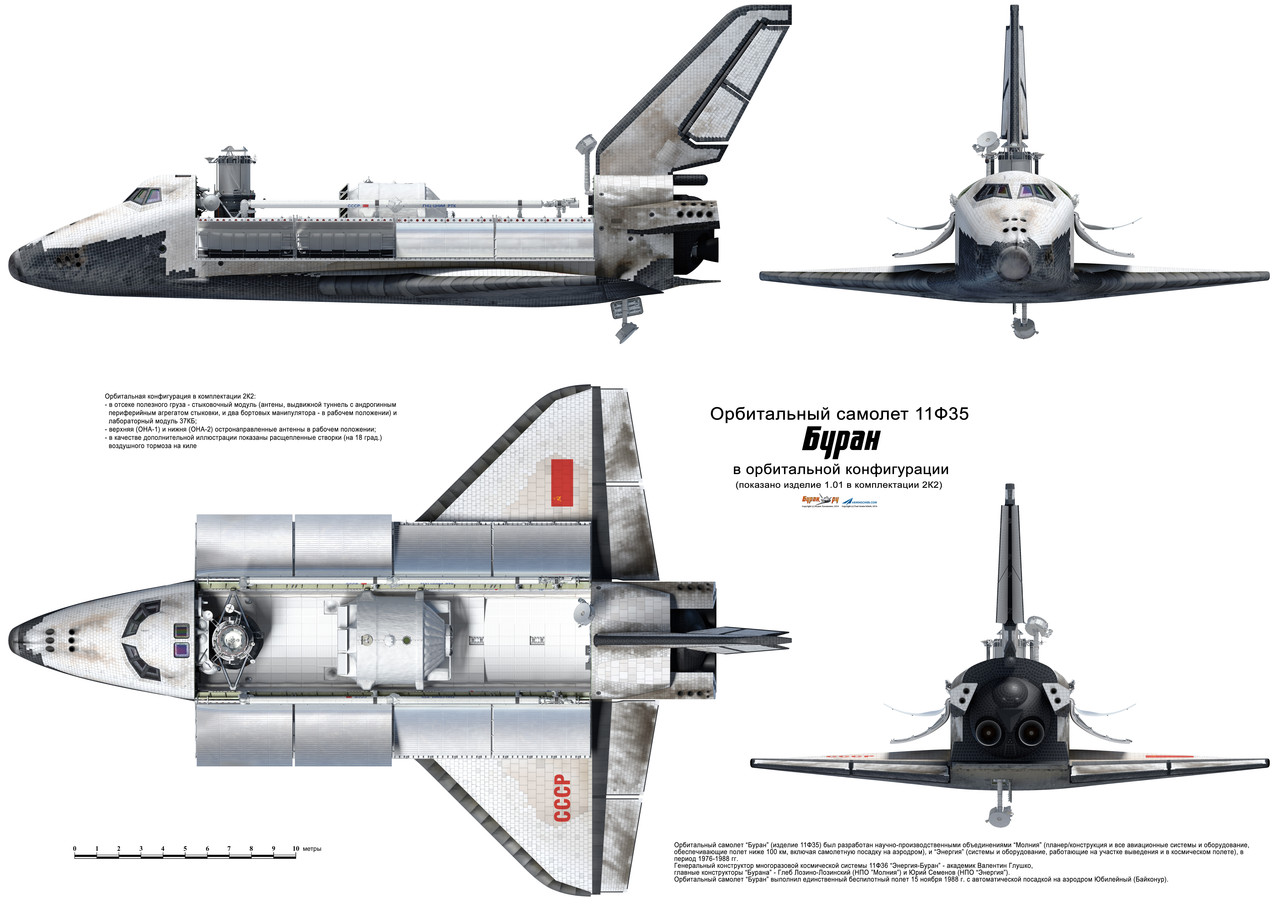
El transbordador orbital Burán realizó su único vuelo no tripulado el 15 de noviembre de 1988, efectuando un aterrizaje completamente automático en el aeródromo Yubiléiny (Baikonur). Орбитальная конфигурация в комплектации 2К2: - в отсеке полезного груза — стыковочный модуль (антенны, выдвижной туннель с андрогинным периферийным агрегатом стыковки, и два бортовых манипулятора — в рабочем положении) и лабораторный модуль 37КБ;
- верхняя (ОНА-1) и нижняя (ОНА-2) остронаправленные антенны в рабочем положении; - в качестве дополнительной иллюстрации показаны расщепленные створки (на 18 градусов) воздушного тормоза на киле. Orbital configuration in the 2K2 configuration:
- In the payload bay: a docking module (antennas, an extendable tunnel with an androgynous peripheral docking mechanism, and two onboard manipulators in the operational position) and the 37KB laboratory module;
- Upper (ONA-1) and lower (ONA-2) high-gain directional antennas in the operational position;
- As an additional illustration, the split rudder speed brake on the vertical stabilizer is shown opened to 18 degrees. Configuración orbital en la versión 2K2:
- En el compartimento de carga útil: un módulo de acoplamiento (antenas, un túnel extensible con un mecanismo periférico de acoplamiento andrógino y dos manipuladores de a bordo en posición de trabajo) y el módulo de laboratorio 37KB;
- Antenas direccionales de alta ganancia superior (ONA-1) e inferior (ONA-2) en posición de trabajo;
- Como ilustración adicional, se muestran abiertas a 18 grados las compuertas divididas del freno aerodinámico situadas en la deriva.
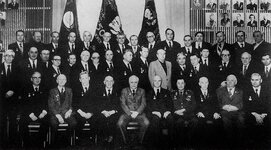
Руководящий состав головного конструкторского бюро в начале работ по комплексу "Энергия - Буран". В первом ряду: В.М. Ключарёв, П.В. Цыбин, Г.Я. Семенов, Б.Е. Черток, В.Д. Вачнадзе,
В.П. Глушко, М.Г. Борисенко, А.Д. Гулько, М.И. Самохин, В.Ф. Клинов;
во втором ряду: К.П. Феоктистов, B.C. Овчинников, В.А. Калашников, Б.А. Соколов,
Б.А. Дорофеев, А.П. Педан, Б.Е. Гуцков, А.А. Борисенко, А.П. Собко, А.П. Абрамов,
И.Н. Садовский, Б.Г. Пензин, Э.И. Корженевский, В.В. Рюмин, Е.В. Шабаров,
А.Н. Вольцифер, Г.М. Стрекалов;
в третьем ряду: В.П. Легостаев, В.М. Караштин, Я.П. Коляко, Г.Н. Дегтяренко, В.А. Ветрук,
И.И. Райков, Б.А. Родионов, В.А. Саприкин, И.С. Прудников, А.А. Северов, М.С. Хомяков, А.Л. Мартыновский, А.С. Елисеев, А.Н. Иванников, Г.М. Пауков. The management team of the head design bureau at the beginning of work on the Energia-Buran complex. In the first row: V.M. Klyucharyov, P.V. Tsybin, G.Ya. Semenov, B.E. Chertok, V.D. Vachnadze, V.P. Glushko, M.G. Borisenko, A.D. Gulko, M.I. Samokhin, V.F. Klinov;
in the second row: K.P. Feoktistov, B.S. Ovchinnikov, V.A. Kalashnikov, B.A. Sokolov,
B.A. Dorofeev, A.P. Pedan, B.E. Gutskov, A.A. Borisenko, A.P. Sobko, A.P. Abramov,
I.N. Sadovsky, B.G. Penzin, E.I. Korzhenevsky, V.V. Ryumin, E.V. Shabarov,
A.N. Volcifer, G.M. Strekalov;
in the third row: V.P. Legostaev, V.M. Karashtin, Ya.P. Kolyako, G.N. Degtyarenko, V.A. Vetruk,
I.I. Raikov, B.A. Rodionov, V.A. Saprikin, I.S. Prudnikov, A.A. Severov, M.S. Khomyakov, A.L. Martynovsky, A.S. Eliseev, A.N. Ivannikov, G.M. Spiders. El equipo directivo de la oficina principal de proyectos al inicio de los trabajos en el complejo Energia-Buran. En la primera fila: V.M. Klyucharyov, P.V. Tsybin, G.Ya. Semenov, B.E. Chertok, V.D. Vacnadze, vicepresidente Glushko, M.G. Borisenko, A.D. Gulko, M.I. Samokhin, V.F. Klínov;
en la segunda fila: K.P. Feoktistov, B.S. Ovchinnikov, V.A. Kalashnikov, B.A. Sokolov,
LICENCIADO EN LETRAS. Dorofeev, A.P. Pedan, B.E. Gutskov, A.A. Borisenko, A.P. Sobko, A.P. Abramov,
EN. Sadovsky, B.G. Penzin, E.I. Korzhenevsky, V.V. Ryumin, E.V. Shabarov,
UN. Volcifer, G.M. Strekálov;
en la tercera fila: V.P. Legostaev, V.M. Karashtin, Ya.P. Kolyako, G.N. Degtyarenko, V.A. Vetruk,
I.I. Raikov, B.A. Rodionov, V.A. Saprikin, I.S. Prudnikov, A.A. Severov, M.S. Khomyakov, A. L. Martynovsky, A. S. Eliseev, A.N. Ivánnikov, G.M. Arañas.
Глеб Евгеньевич Лозино-Лозинский (1909-2001) - доктор технических наук (1985г.), Генеральный конструктор НПО "Молния" (с 1976г.), Генеральный директор НПО "Молния" (1976-1994гг.).Руководитель разработки планера орбитального корабля "Буран". При создании планера и бортовых систем орбитального корабля "Буран" был использован весь накопленный опыт советской промышленности в области разработок авиационной и космической техники.
В процессе работы над "Бураном" была создана мощная производственно-технологическая, лабораторно-испытательная и стендовая база, многоотраслевая кооперация насчитывала более 1200 предприятий и научных центров страны, над программой "Энергия-Буран" работало в общей сложности более полутора миллионов человек.
И главным результатом напряженных многолетних усилий стал триумфальный двухвитковый беспилотный полет "Бурана" с автоматической посадкой 15 ноября 1988 года. Полет продолжительностью 206 минут начался с сигнала "Контакт подъема", которую телеметрия зафиксировала в 6 час 00 мин 1,25 сек по московскому времени. После завершения в 6 час 08 мин 03 сек работы РН и отделения ОК было проведено два включения двигателя орбитального маневрирования (ДОМ), в результате чего корабль вышел на рабочую орбиту высотой 263/251 км. Затем, после двухвиткового полета, после включения ДОМ на торможение, ОК со скоростью 27330 км/ч вошел в атмосферу над Атлантикой на расстоянии 8270 км от ВПП посадочного комплекса Байконура. В 9 час 11 мин, на высоте 50 км, ОК вышел на связь со станциями слежения в районе посадочного комплекса, а в 9 час 24 мин 42 сек, опережая всего на секунду расчетное время, "Буран", преодолевая штормовые порывы бокового ветра (15...18 м/с), на скорости 263 км/ч изящно коснулся ВПП и через 42 сек, пробежав 1620 м, замер в ее центре с отклонением от осевой линии всего на 3 м!
Это был звездный час Главного конструктора "Бурана", доктора технических наук Глеба Евгеньевича Лозино-Лозинского. Вот как он сам спустя десять лет вспоминал эти события:
"...для меня два витка орбитального полета протекали как-то спокойно - пока корабль в космосе, особых тревог не должно быть. Но, естественно, уже с момента подачи команды на торможение, это происходило за 22000 километров до точки посадки в Байконуре, началось большое напряженное внимание - "как будет проходить полет по траектории движения в атмосфере?". Вот чуть западнее африканского побережья, на расстоянии более 8000 км от точки посадки, начался атмосферный участок спуска корабля. На высоте 100 км корабль вошел в атмосферу. Если до сих пор мы аккуратно получали информацию о том, где находится корабль и как протекает полет, то после входа в плотные слои атмосферы из-за сильного нагрева атмосферы корабль был окружен плазмой, экранирующей любую радиосвязь. Поэтому мы в течение 20 минут с напряжением ждали, когда же корабль затормозится до такой скорости, при которой опять появится радиосвязь, и мы сможем узнать, как же он прошел самый ответственный участок пути. На этом участке траектории корабль преодолел температурный барьер, передние кромки крыла нагрелись до температуры более 1500°С и светились так ярко, что корабль можно было бы видеть с земли как светящийся движущийся предмет. Нижняя поверхность нагревалась до температуры примерно 1250°С. Зная это, мы понимали, что сдаем экзамен на доказательство того, в какой мере нам удалось решить все задачи, связанные с такими условиями полета корабля.
Но вот прошли двадцать минут, и было получено известие, что примерно в заданной точке пространства на высоте 50 км корабль появился, а раз появился - значит все прошло более или менее удовлетворительно. Мы поняли, что первый, наиболее серьезный экзамен как будто бы сдали неплохо. Еще нельзя было сказать, хорошо ли, но что неплохо, уже было ясно.
Дальше начался следующий важный участок полета, заставивший нас поволноваться. Этот участок должен заканчиваться посадкой в заданной точке взлетно-посадочной полосы. Траектория спуска в атмосфере выбиралась таким образом, чтобы корабль затормозился от 27000 до 300 км/ч, то есть до скорости, с которой он должен был коснуться колесами поверхности аэродрома. В процессе спуска решались две основные задачи: гашения до заданной величины огромной начальной скорости полета орбитального корабля и точного его приведения в точку с заданными координатами и с заданным направлением вектора скорости.
Первую информацию о состоянии корабля мы получили уже на этом участке с самолета МиГ-25, который встретил наш корабль на высоте чуть больше 10 км и летчик сообщил, что внешне вроде все в порядке. На душе стало легче, полет продолжался успешно, и это подкрепляло нашу уверенность, что и дальше все будет хорошо. Участок траектории при заходе на посадку заставил поволноваться летчика самолета сопровождения, так как, прилетев (в связи с восточным ветром) с запада, наш орбитальный корабль должен был, как ожидал летчик, развернуться на полосу, но вместо этого он развернулся на 90 градусов и начал вроде бы уходить в сторону. Но корабль наш был умница: он делал так, как это ему требовалось в сложившихся условиях полета - он немножко удлинил траекторию движения, чтобы рассеять избыток энергии и обеспечить заданную скорость 300 км/ч в момент касания поверхности аэродрома.
Ну а эффект, который произвела на всех нас безукоризненная автоматическая посадка, сложно передать: трудно переоценить значение этого события, которое мы наблюдали, испытывая большое эмоциональное волнение. Эта посадка показала, что огромная выполненная работа с первого раза увенчалась успехом - вы ведь знаете, что далеко не всегда первые космические творения так легко и просто обеспечивают успех в первом полете." Gleb Evgenievich Lozino-Lozinsky (1909–2001) was a Doctor of Technical Sciences (1985), General Designer of the NPO Molniya (since 1976), and General Director of NPO Molniya (1976–1994). He led the development of the airframe of the Buran orbital spacecraft.
During the development of Buran, a powerful production, technological, laboratory, testing, and experimental infrastructure was created. The multi-industry cooperation involved more than 1,200 enterprises and scientific centers across the country, and in total more than one and a half million people worked on the Energia–Buran program.
The crowning achievement of many years of intensive effort was the triumphant two-orbit unmanned flight of Buran with a fully automatic landing on November 15, 1988. The 206-minute mission began with the “Liftoff Contact” signal, recorded by telemetry at 06:00:01.25 Moscow time. After the launch vehicle completed its operation at 06:08:03 and the orbiter separated, two burns of the Orbital Maneuvering Engine (OME) were performed, placing the spacecraft into its operational orbit of 263 × 251 km.
After completing two orbits and performing a braking maneuver, the orbiter entered the atmosphere over the Atlantic Ocean at a distance of 8,270 km from the runway of the Baikonur landing complex, traveling at 27,330 km/h. At 09:11, at an altitude of 50 km, Buran established contact with tracking stations near the landing complex. At 09:24:42, arriving only one second ahead of the planned schedule, Buran gracefully touched down on the runway at a speed of 263 km/h, overcoming strong crosswinds of 15–18 m/s. Forty-two seconds later, after rolling 1,620 meters, it came to a stop at the center of the runway, deviating from the centerline by only 3 meters.
This was the finest hour of Buran’s Chief Designer, Doctor of Technical Sciences Gleb Evgenievich Lozino-Lozinsky. Ten years later, he recalled these events as follows:
“For me, the two orbits in space passed rather calmly—while the spacecraft is in orbit, there should be no special concerns. However, naturally, from the moment the braking command was issued, which occurred 22,000 kilometers before the landing point at Baikonur, our attention became intensely focused on one question: ‘How will the flight through the atmosphere proceed?’
Slightly west of the African coast, more than 8,000 kilometers from the landing point, the atmospheric phase of descent began. At an altitude of 100 kilometers, the spacecraft entered the atmosphere. Until then, we had been receiving accurate information about the spacecraft’s location and flight status. But once it entered the dense layers of the atmosphere, a plasma sheath formed around it due to intense heating, blocking all radio communications.
For twenty minutes we waited anxiously for the spacecraft to slow down enough for communications to be restored and for us to learn how it had passed the most critical stage of the journey. During this phase, the spacecraft overcame the thermal barrier. The leading edges of its wings heated to over 1,500°C and glowed so brightly that the spacecraft could have been seen from Earth as a luminous object moving across the sky. The lower surface heated to approximately 1,250°C.
Knowing this, we understood that we were taking an exam that would prove how successfully we had solved all the problems associated with such extreme flight conditions.
Then the twenty minutes passed, and we received confirmation that the spacecraft had appeared at approximately the planned point in space at an altitude of 50 kilometers. The very fact that it appeared meant that everything had gone more or less satisfactorily. We realized that we had passed the first and most serious test reasonably well. It was still too early to say it had gone perfectly, but it was clear that things were proceeding successfully.
Then came the next crucial phase of the flight, one that caused us considerable concern. This phase was to conclude with a landing at a precisely defined point on the runway. The descent trajectory had been designed so that the spacecraft would decelerate from 27,000 km/h to about 300 km/h—the speed at which it would touch down.
During descent, two major tasks had to be accomplished: reducing the enormous initial velocity of the orbital spacecraft to the required level and guiding it precisely to a point with predetermined coordinates and velocity vector orientation.
We received the first information about the spacecraft’s condition during this phase from a MiG-25 aircraft that intercepted it at an altitude slightly above 10 km. The pilot reported that everything appeared normal externally. That news greatly reassured us. The flight was continuing successfully, strengthening our confidence that all would end well.
The final approach trajectory caused some concern for the escort pilot because, arriving from the west due to an easterly wind, the orbiter was expected to turn directly toward the runway. Instead, it turned ninety degrees and appeared to be flying away. But our spacecraft was intelligent: it was doing exactly what the situation required. It slightly lengthened its flight path to dissipate excess energy and ensure the target landing speed of 300 km/h at touchdown.
The effect produced by the flawless automatic landing is difficult to describe. It is impossible to overestimate the significance of what we witnessed. That landing demonstrated that the enormous amount of work we had done succeeded on the very first attempt. As you know, first flights of new spacecraft do not always achieve success so easily. We observed it all with tremendous emotional excitement.” Gleb Evguénievich Lozino-Lozinski (1909–2001) fue Doctor en Ciencias Técnicas (1985), Diseñador General de la NPO Molniya (desde 1976) y Director General de la NPO Molniya (1976–1994). Dirigió el desarrollo del planeador orbital de la nave espacial Buran.
Durante el desarrollo del Buran se creó una poderosa base de producción, tecnología, laboratorios, ensayos y pruebas. La cooperación multidisciplinaria involucró a más de 1.200 empresas y centros científicos del país, y en total más de un millón y medio de personas trabajaron en el programa Energía-Buran.
El resultado culminante de muchos años de intensos esfuerzos fue el triunfal vuelo no tripulado de dos órbitas del Buran con aterrizaje totalmente automático el 15 de noviembre de 1988. La misión, de 206 minutos de duración, comenzó con la señal de «Contacto de despegue», registrada por la telemetría a las 06:00:01,25 hora de Moscú. Después de que el cohete portador finalizara su funcionamiento a las 06:08:03 y el orbitador se separara, se realizaron dos encendidos del Motor de Maniobra Orbital, colocando la nave en una órbita operativa de 263 × 251 km.
Tras completar dos órbitas y ejecutar la maniobra de frenado, el orbitador entró en la atmósfera sobre el océano Atlántico, a 8.270 km de la pista de aterrizaje del complejo de Baikonur, viajando a 27.330 km/h. A las 09:11, a una altitud de 50 km, el Buran estableció contacto con las estaciones de seguimiento situadas cerca del complejo de aterrizaje. A las 09:24:42, adelantándose tan solo un segundo al horario previsto, el Buran tocó elegantemente la pista a una velocidad de 263 km/h, superando fuertes ráfagas de viento lateral de 15 a 18 m/s. Cuarenta y dos segundos después, tras recorrer 1.620 metros, se detuvo en el centro de la pista con una desviación de apenas 3 metros respecto al eje central.
Este fue el momento culminante del Diseñador General del Buran, Doctor en Ciencias Técnicas Gleb Evguénievich Lozino-Lozinski. Diez años después recordó aquellos acontecimientos de la siguiente manera:
«Para mí, las dos órbitas del vuelo transcurrieron con bastante calma: mientras la nave está en el espacio no debería haber motivos especiales de preocupación. Sin embargo, naturalmente, desde el momento en que se dio la orden de frenado, que tuvo lugar a 22.000 kilómetros del punto de aterrizaje en Baikonur, toda nuestra atención se concentró intensamente en una sola cuestión: “¿Cómo se desarrollará el vuelo a través de la atmósfera?”.
Un poco al oeste de la costa africana, a más de 8.000 kilómetros del punto de aterrizaje, comenzó la fase atmosférica del descenso. A una altitud de 100 kilómetros, la nave entró en la atmósfera. Hasta ese momento habíamos recibido información precisa sobre la posición de la nave y el desarrollo del vuelo. Pero al penetrar en las capas densas de la atmósfera, debido al intenso calentamiento, quedó rodeada por una envoltura de plasma que bloqueó todas las comunicaciones por radio.
Durante veinte minutos esperamos con enorme tensión a que la nave redujera su velocidad lo suficiente como para restablecer las comunicaciones y saber cómo había superado la fase más crítica del viaje. Durante este tramo de la trayectoria, la nave atravesó la barrera térmica. Los bordes de ataque de las alas se calentaron por encima de los 1.500 °C y brillaban con tal intensidad que la nave podría haberse visto desde la Tierra como un objeto luminoso desplazándose por el cielo. La superficie inferior alcanzó aproximadamente los 1.250 °C.
Sabiendo esto, comprendíamos que estábamos rindiendo un examen que demostraría hasta qué punto habíamos resuelto correctamente todos los problemas asociados a unas condiciones de vuelo tan extremas.
Finalmente transcurrieron los veinte minutos y recibimos la noticia de que la nave había reaparecido aproximadamente en el punto previsto del espacio, a una altitud de 50 kilómetros. El simple hecho de que hubiera reaparecido significaba que todo había transcurrido más o menos satisfactoriamente. Comprendimos que habíamos superado bastante bien la primera y más importante prueba. Aún era pronto para decir que todo había sido perfecto, pero estaba claro que las cosas marchaban correctamente.
Después comenzó la siguiente fase importante del vuelo, que también nos hizo preocuparnos. Esta fase debía concluir con un aterrizaje en un punto exactamente determinado de la pista. La trayectoria de descenso se había diseñado para que la nave redujera su velocidad desde 27.000 km/h hasta aproximadamente 300 km/h, es decir, la velocidad con la que debía tocar el suelo.
Durante el descenso debían resolverse dos tareas principales: reducir la enorme velocidad inicial de la nave orbital hasta el valor requerido y llevarla con precisión a un punto con coordenadas y dirección de velocidad predeterminadas.
La primera información sobre el estado de la nave la recibimos durante esta fase desde un avión MiG-25 que la interceptó a una altitud ligeramente superior a los 10 kilómetros. El piloto informó que externamente todo parecía normal. Aquella noticia nos tranquilizó enormemente. El vuelo continuaba con éxito y reforzaba nuestra confianza en que todo terminaría bien.
La trayectoria final de aproximación preocupó un poco al piloto de escolta porque, al llegar desde el oeste debido a un viento del este, esperaba que el orbitador girara directamente hacia la pista. En lugar de ello giró noventa grados y pareció alejarse. Pero nuestra nave era inteligente: estaba haciendo exactamente lo que la situación exigía. Alargó ligeramente su trayectoria para disipar el exceso de energía y garantizar una velocidad de aterrizaje de 300 km/h en el momento del contacto con la pista.
El efecto que produjo aquel aterrizaje automático impecable es difícil de describir. Resulta imposible sobrevalorar la importancia de lo que presenciamos. Ese aterrizaje demostró que el enorme trabajo realizado había dado resultado desde el primer intento. Como saben, los primeros vuelos de nuevos sistemas espaciales no siempre logran el éxito de manera tan sencilla. Observamos todo aquello con una emoción enorme.»
"Всю деятельность Сергея Павловича отличает четкая последовательность и постоянная нацеленность на непрерывное движение вперед.
Сентябрь 1962 года. В мире насчитывается всего шесть человек, облетевших Землю в космическом корабле, а Королев для себя уже намечает план работы и круг вопросов, которые надо решать для создания тяжелого межпланетного корабля (ТМК) и тяжелой орбитальной станции (ТОС), других аппаратов. Свои мысли он записывает в отдельную тетрадь. Вот некоторые из этих записей:
«...Надо, очевидно, положительно решить вопрос о возможности выхода из аппарата человека в космическое пространство.
Основное здесь — скафандр и его системы автономного питания для жизнеобеспечения...
Вопросы, связанные с невесомостью,— основные!
Видимо, здесь опыты на «Союзе> и на ТОС дадут возможность получить большие и очень большие длительности (до 1 года) пребывания в условиях невесомости (что при 1 годе решает проблему полета к ближним планетам, так как сроки 3—5 лет будут уже примерно того же порядка).
В условиях длительного космического полета можно будет основательно проверить:
влияние невесомости на разных людях и на достаточно большом числе людей,
разные медико-биологические средства,
разные механические средства временного и постоянного искусственного тяготения.
Можно будет впервые развернуть в космическом пространстве настоящие медико-биологические исследования и наблюдения в действительных условиях и т. д.
Тут же будет проверяться и вся вообще техника для более длительных полетов.
Видимо, создание ТОС есть необходимый этап для длительных полетов в космическом пространстве, так как здесь будут отрабатываться у Земли (т. е. легко доступны с Земли) люди и вся техника.
Это важный методический шаг!, без которого не пройти.
Ему предшествовать должна тщательная и длительная подготовка на Земле, в земных условиях людей и техники, хотя это будет во многих случаях и не совсем то, что нужно...
Для ТОС... дублирование не нужно, так как ТОС должна иметь всегда возможность с помощью кораблей «Союз> получать все необходимое и спускать, что надо, на Землю. Но все продумать для ТОС тоже надо!
Приборное бортовое оборудование следует делать:
а) со световыми разноцветными шкалами, стрелками, полем отсчета, цифрами и т. д. Цвет систематизировать по группам приборов;
б) со звуковым оформлением (негромко), и тона разбить по группам приборов (особо важные — аварийные, контрольные, посадочные, тепло, жизненные условия и т. д.), должен быть ручной регулятор громкости (среднего уровня) — он же выключатель;
в) надо, чтобы при резком изменении параметров на приборе менялся звук и яркость света. На особо важных приборах должен появляться аварийный свет и звук;
г) надо продумать особую систему для регистрации нужных параметров на пленку (учитывая очень большую длительность полета и записи), но главное, это создать бортовое автоматическое малогабаритное устройство для расшифровки этих пленок и для удобного просмотра и анализа как полученных в итоге обработки материалов, так и просмотра любого места на пленке для микроанализа и т. д.
Конечно, важна типизация кабин, ракетных блоков, спускаемых аппаратов, танкеров, основных систем на борту и аппаратуры, вообще разного бортового оборудования и т. д.
Надо разработать рациональную и стандартизовать схему и конструкцию стыковки, причаливания, креплений, шлюзования и т. д...»
Не все планы были воплощены при жизни Королева, многие из них еще не реализованы, но сама постановка вопросов, их содержание не потеряли своей актуальности и сейчас, хотя со времени записей-раздумий прошло почти четверть века. Постоянная нацеленность на будущее, стремление быть впереди своего века, пожалуй, самая яркая отличительная черта Королева".("Звездный путь".Составители М. И. Герасимова, А. Г. Иванов.— Москва.Издательство: Политиздат, 1986). "The entire activity of Sergey Pavlovich was distinguished by a clear sense of purpose and a constant focus on continuous progress.
September 1962. There were only six people in the world who had orbited the Earth in a spacecraft, yet Korolev was already outlining for himself a work plan and a range of issues that needed to be solved in order to create a Heavy Interplanetary Spacecraft (TMK), a Heavy Orbital Station (TOS), and other vehicles. He recorded these thoughts in a separate notebook. Here are some excerpts from those notes:
'...It is apparently necessary to make a positive decision regarding the possibility of a human leaving the spacecraft and entering outer space.
The main issue here is the spacesuit and its autonomous life-support systems...
Questions related to weightlessness are fundamental!
It seems that experiments on the Soyuz spacecraft and on the TOS will make it possible to obtain long and very long durations of stay in conditions of weightlessness (up to one year), which, in the case of a one-year period, would solve the problem of flights to nearby planets, since periods of three to five years would already be of approximately the same order.
Under conditions of long-duration spaceflight, it will be possible to thoroughly test:
the effects of weightlessness on different people and on a sufficiently large number of people,
various biomedical methods,
various mechanical means of temporary and permanent artificial gravity.
For the first time, it will be possible to conduct genuine biomedical research and observations in outer space under real conditions, etc.
At the same time, all technology intended for longer-duration flights will also be tested.
Apparently, the creation of a TOS is a necessary stage for long-duration space missions, since both people and technology can be developed near Earth (that is, easily accessible from Earth).
This is an important methodological step that cannot be bypassed.
It must be preceded by thorough and lengthy preparation of both people and technology on Earth under terrestrial conditions, although in many cases these conditions will not be exactly what is needed...
For the TOS... duplication is unnecessary, since the station must always be able to receive everything necessary from Earth via Soyuz spacecraft and return whatever is required to Earth. Nevertheless, everything for the TOS must be carefully thought through!
The onboard instrumentation should be designed:
a) with multicolored illuminated scales, pointers, display fields, numbers, etc. The colors should be standardized according to groups of instruments;
b) with sound signaling (not loud), with tones divided into groups of instruments (especially important—emergency, monitoring, landing, thermal, life-support conditions, etc.); there should be a manual volume control (for the average level), which should also function as an on/off switch;
c) in such a way that abrupt parameter changes cause corresponding changes in sound and light intensity. Particularly important instruments should trigger emergency lights and sounds;
d) it is necessary to devise a special system for recording required parameters onto film (taking into account the very long duration of flights and recordings), but most importantly, to create a compact onboard automatic device for decoding these films and enabling convenient viewing and analysis of both the processed materials and any section of the film for detailed microanalysis, etc.
Of course, standardization of cabins, rocket stages, reentry vehicles, tankers, major onboard systems, instruments, and various onboard equipment is important.
A rational and standardized system and design for docking, berthing, attachment mechanisms, airlocks, etc., must be developed...'
Not all of these plans were realized during Korolev’s lifetime, and many have still not been implemented. However, the questions he posed and their content have not lost their relevance, even though nearly a quarter of a century has passed since these notes and reflections were written.
A constant focus on the future and a determination to stay ahead of his era were perhaps Korolev’s most striking characteristics".("Star Trek". Compiled by M. I. Gerasimova, A. G. Ivanov. - Moscow. Publisher: Politizdat, 1986). "Toda la actividad de Serguéi Pávlovich se distinguió por una clara coherencia y una orientación constante hacia el avance continuo.
Septiembre de 1962. En el mundo había solamente seis personas que habían orbitado la Tierra en una nave espacial, y Koroliov ya estaba elaborando para sí mismo un plan de trabajo y una lista de cuestiones que debían resolverse para crear una Nave Interplanetaria Pesada (TMK), una Estación Orbital Pesada (TOS) y otros vehículos. Anotó estas ideas en un cuaderno aparte. He aquí algunos fragmentos de esas notas:
'...Es necesario, al parecer, resolver positivamente la cuestión de la posibilidad de que una persona salga de la nave y acceda al espacio exterior.
Lo principal aquí es el traje espacial y sus sistemas autónomos de soporte vital...
¡Las cuestiones relacionadas con la ingravidez son fundamentales!
Parece que los experimentos realizados en la nave Soyuz y en la TOS permitirán obtener períodos largos y muy largos de permanencia en condiciones de ingravidez (hasta un año), lo que, en el caso de un año, resolvería el problema de los vuelos a los planetas cercanos, ya que los plazos de tres a cinco años serían ya aproximadamente del mismo orden.
En condiciones de vuelos espaciales de larga duración será posible comprobar a fondo:
la influencia de la ingravidez en diferentes personas y en un número suficientemente grande de ellas,
diversos métodos biomédicos,
diversos medios mecánicos para crear gravedad artificial temporal o permanente.
Por primera vez será posible realizar auténticas investigaciones y observaciones biomédicas en el espacio exterior, en condiciones reales, etc.
Al mismo tiempo se probará toda la tecnología destinada a vuelos de larga duración.
Parece que la creación de una TOS constituye una etapa necesaria para los vuelos espaciales prolongados, ya que en ella se desarrollarán, cerca de la Tierra (es decir, fácilmente accesibles desde ella), tanto las personas como la tecnología.
Se trata de un paso metodológico importante que no puede omitirse.
Debe ir precedido de una preparación minuciosa y prolongada de las personas y de la tecnología en la Tierra, en condiciones terrestres, aunque en muchos casos estas condiciones no serán exactamente las necesarias...
Para la TOS... no será necesario un sistema de duplicación, ya que la estación deberá tener siempre la posibilidad de recibir todo lo necesario desde la Tierra mediante naves Soyuz y devolver a la Tierra lo que sea preciso. Pero aun así, todo para la TOS debe estar cuidadosamente pensado.
El equipamiento instrumental de a bordo deberá diseñarse:
a) con escalas luminosas multicolores, indicadores, campos de lectura, cifras, etc. Los colores deberán estar sistematizados por grupos de instrumentos;
b) con señales acústicas (de volumen moderado), cuyos tonos estén divididos por grupos de instrumentos (especialmente importantes: emergencia, control, aterrizaje, temperatura, soporte vital, etc.); deberá existir un regulador manual de volumen (nivel medio), que también actuará como interruptor;
c) de forma que, cuando un parámetro cambie bruscamente, cambien también el sonido y la intensidad luminosa. Los instrumentos especialmente importantes deberán activar señales luminosas y acústicas de emergencia;
d) es necesario diseñar un sistema especial para registrar los parámetros requeridos en película (teniendo en cuenta la enorme duración de los vuelos y de las grabaciones), pero lo más importante es crear un dispositivo automático compacto a bordo para descifrar esas películas y permitir una visualización y análisis cómodos tanto de los materiales procesados como de cualquier segmento de la película para un microanálisis detallado, etc.
Por supuesto, es importante la estandarización de las cabinas, etapas de cohetes, vehículos de descenso, naves cisterna, sistemas principales de a bordo, instrumentos y demás equipamiento.
Es necesario desarrollar y estandarizar un sistema racional para el acoplamiento, atraque, fijaciones, esclusas, etc...'
No todos estos planes llegaron a hacerse realidad durante la vida de Koroliov, y muchos de ellos aún no se han materializado. Sin embargo, los problemas planteados y su contenido no han perdido vigencia, aunque ha transcurrido casi un cuarto de siglo desde que se escribieron estas reflexiones.
La constante orientación hacia el futuro y el deseo de adelantarse a su tiempo fueron, quizás, las características más destacadas de Koroliov." Fuente: "Zvezdny Put" ("El Camino Estelar"). Compiladores: M. I. Gerasimova y A. G. Ivanov. Moscú: Editorial Politizdat, 1986.
This site uses cookies to help personalise content, tailor your experience and to keep you logged in if you register.
By continuing to use this site, you are consenting to our use of cookies.