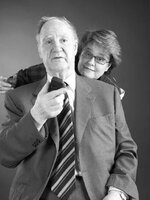
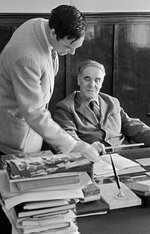
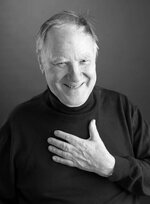
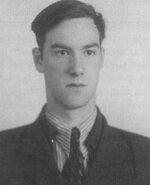
СЕРГЕЙ ПЕТРОВИЧ КАПИЦА
(1928–2012)
Сергей Петрович Капица — советский и российский физик, исследователь, педагог, популяризатор науки и телеведущий, посвятивший свою жизнь распространению научных знаний и развитию научного мировоззрения.
Он родился 14 февраля 1928 года в Кембридже (Великобритания) в семье выдающихся представителей российской науки. Его отец, Пётр Леонидович Капица, был одним из крупнейших физиков XX века и лауреатом Нобелевской премии по физике 1978 года за фундаментальные исследования в области низких температур и открытие явления сверхтекучести жидкого гелия. Его дед по материнской линии, Алексей Николаевич Крылов, был всемирно известным математиком, механиком и кораблестроителем, оказавшим большое влияние на развитие отечественной науки и техники.
В 1949 году Сергей Капица окончил Московский авиационный институт и начал научную деятельность. Его исследования охватывали широкий круг направлений современной физики: сверхзвуковую аэродинамику, земной магнетизм, прикладную электродинамику и физику элементарных частиц.
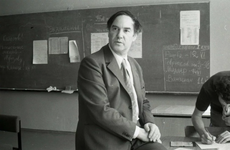
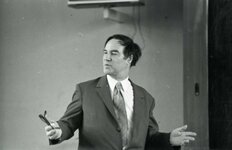
В 1961 году он стал доктором физико-математических наук, а в 1965 году получил звание профессора. Многие десятилетия Капица преподавал в Московском физико-техническом институте, где воспитал несколько поколений студентов и учёных. Он возглавлял кафедру общей физики и пользовался огромным уважением как талантливый педагог и блестящий лектор.
Сергей Капица является автором научных монографий, десятков научных статей, многочисленных изобретений и открытий. Одним из наиболее значимых результатов его научной деятельности стало участие в открытии квадрупольного фотоделения тяжёлых атомных ядер. Его исследования внесли заметный вклад в развитие ядерной физики и понимание процессов, происходящих в атомном ядре.
Помимо физики, Сергей Капица проявлял большой интерес к вопросам развития человеческой цивилизации. Он разработал феноменологическую математическую модель гиперболического роста населения Земли и одним из первых исследовал глобальные демографические процессы с использованием методов физики и математики. Многие специалисты считают его одним из основоположников клиодинамики — междисциплинарного направления, изучающего исторические процессы с помощью математических моделей.
Широкую известность Сергей Капица получил как выдающийся популяризатор науки. В 1973 году вышла его книга «Жизнь науки», а в том же году он стал ведущим научно-популярной телевизионной программы «Очевидное — невероятное». Эта передача на протяжении десятилетий знакомила миллионы зрителей с новейшими достижениями науки, техники и космонавтики. Благодаря таланту рассказчика, глубоким знаниям и уважительному отношению к аудитории Капица стал одним из самых узнаваемых просветителей в истории отечественного телевидения.
Он также являлся основателем и главным редактором российского издания журнала «В мире науки», способствовавшего распространению современных научных знаний среди широкого круга читателей.
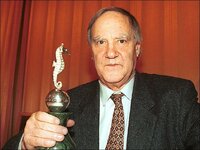
За свою деятельность Сергей Капица был удостоен многочисленных наград, среди которых Премия Калинги ЮНЕСКО за выдающиеся достижения в популяризации науки, Государственная премия СССР, премия Правительства Российской Федерации в области образования, телевизионная премия ТЭФИ и Золотая медаль Российской академии наук за выдающиеся достижения в области пропаганды научных знаний.
Сергей Петрович Капица принадлежал к числу тех учёных, которые рассматривали науку не только как инструмент познания природы, но и как важнейшую часть человеческой культуры. Он неоднократно подчёркивал, что будущее цивилизации зависит не только от технического прогресса, но и от уровня образования, культуры и ответственности людей.
Скончался Сергей Петрович Капица 14 августа 2012 года в Москве на 85-м году жизни. Его научные труды, книги, лекции и телевизионные программы продолжают вдохновлять новые поколения исследователей, преподавателей и любителей науки во многих странах мира.
SERGEY PETROVICH KAPITSA
(1928–2012)
Sergey Petrovich Kapitsa was a Soviet and Russian physicist, researcher, educator, science communicator, and television presenter who devoted his life to the dissemination of scientific knowledge and the promotion of scientific thinking.
He was born on February 14, 1928, in Cambridge, England, into a family of distinguished scientists. His father, Pyotr Leonidovich Kapitsa, was one of the most prominent physicists of the twentieth century and was awarded the Nobel Prize in Physics in 1978 for his fundamental research in low-temperature physics and the discovery of the phenomenon of superfluidity in liquid helium. His maternal grandfather, Alexey Nikolaevich Krylov, was a world-renowned mathematician, mechanician, and naval engineer whose work made a significant contribution to the development of science and technology.
In 1949, Sergey Kapitsa graduated from the Moscow Aviation Institute and began his scientific career. His research covered a wide range of fields in modern physics, including supersonic aerodynamics, terrestrial magnetism, applied electrodynamics, and elementary particle physics.
In 1961, he earned the degree of Doctor of Physical and Mathematical Sciences, and in 1965 he became a professor. For many decades, Kapitsa taught at the Moscow Institute of Physics and Technology, where he educated several generations of students and scientists. He headed the Department of General Physics and was widely respected as a gifted teacher and an outstanding lecturer.
Sergey Kapitsa was the author of scientific monographs, dozens of research papers, numerous inventions, and scientific discoveries. One of the most significant achievements of his scientific career was his participation in the discovery of quadrupole photofission in heavy atomic nuclei. His research contributed significantly to the advancement of nuclear physics and to the understanding of processes occurring within the atomic nucleus.
In addition to physics, Sergey Kapitsa showed a deep interest in the development of human civilization. He developed a phenomenological mathematical model describing the hyperbolic growth of the Earth's population and was among the first researchers to study global demographic processes using the methods of physics and mathematics. Many scholars regard him as one of the pioneers of cliodynamics, an interdisciplinary field that applies mathematical models to the study of historical processes.
Sergey Kapitsa became widely known as an outstanding science communicator. In 1973, he published his book “The Life of Science,” and in the same year he became the host of the popular science television program “The Obvious and the Incredible.” For decades, the program introduced millions of viewers to the latest achievements in science, technology, and space exploration. Thanks to his talent as a storyteller, his profound knowledge, and his respectful attitude toward his audience, Kapitsa became one of the most recognizable science educators in the history of Russian television.
He was also the founder and editor-in-chief of the Russian edition of the magazine “Scientific World” (“V Mire Nauki”), which played an important role in bringing modern scientific knowledge to a broad readership.
For his achievements, Sergey Kapitsa received numerous honors and awards, including the UNESCO Kalinga Prize for the Popularization of Science, the USSR State Prize, the Prize of the Government of the Russian Federation in Education, the TEFI Television Award, and the Gold Medal of the Russian Academy of Sciences for outstanding achievements in the promotion of scientific knowledge.
Sergey Kapitsa belonged to that rare group of scientists who regarded science not only as a tool for understanding nature but also as an essential part of human culture. He repeatedly emphasized that the future of civilization depends not only on technological progress but also on education, culture, and human responsibility.
Sergey Petrovich Kapitsa passed away in Moscow on August 14, 2012, at the age of eighty-four. His scientific works, books, lectures, and television programs continue to inspire new generations of researchers, educators, and science enthusiasts around the world.
SERGUÉI PETRÓVICH KAPITSA
(1928–2012)
Serguéi Petróvich Kapitsa fue un físico, investigador, educador, divulgador científico y presentador de televisión soviético y ruso que dedicó su vida a la difusión del conocimiento científico y al desarrollo del pensamiento científico.
Nació el 14 de febrero de 1928 en Cambridge, Inglaterra, en el seno de una destacada familia de científicos. Su padre, Piotr Leonídovich Kapitsa, fue uno de los físicos más importantes del siglo XX y recibió el Premio Nobel de Física en 1978 por sus investigaciones fundamentales en física de bajas temperaturas y por el descubrimiento del fenómeno de la superfluidez del helio líquido. Su abuelo materno, Alexéi Nikoláievich Krylov, fue un matemático, mecánico e ingeniero naval de fama mundial que realizó importantes contribuciones al desarrollo de la ciencia y la tecnología.
En 1949, Serguéi Kapitsa se graduó en el Instituto de Aviación de Moscú e inició su carrera científica. Sus investigaciones abarcaron diversos campos de la física moderna, entre ellos la aerodinámica supersónica, el magnetismo terrestre, la electrodinámica aplicada y la física de partículas elementales.
En 1961 obtuvo el grado de Doctor en Ciencias Físicas y Matemáticas y, en 1965, recibió el título de profesor. Durante muchas décadas impartió clases en el Instituto de Física y Tecnología de Moscú, donde formó a varias generaciones de estudiantes e investigadores. Dirigió el Departamento de Física General y fue ampliamente respetado como un profesor talentoso y un brillante conferenciante.
Serguéi Kapitsa fue autor de monografías científicas, decenas de artículos de investigación, numerosas invenciones y descubrimientos científicos. Uno de los logros más importantes de su carrera fue su participación en el descubrimiento de la fotofisión cuadrupolar de núcleos atómicos pesados. Sus investigaciones contribuyeron significativamente al desarrollo de la física nuclear y a la comprensión de los procesos que tienen lugar en el núcleo atómico.
Además de la física, Serguéi Kapitsa mostró un profundo interés por el desarrollo de la civilización humana. Elaboró un modelo matemático fenomenológico del crecimiento hiperbólico de la población mundial y fue uno de los primeros investigadores en estudiar los procesos demográficos globales utilizando métodos de la física y las matemáticas. Muchos especialistas lo consideran uno de los pioneros de la cliodinámica, una disciplina interdisciplinaria que aplica modelos matemáticos al estudio de los procesos históricos.
Serguéi Kapitsa alcanzó gran notoriedad como destacado divulgador científico. En 1973 publicó su libro «La vida de la ciencia» y ese mismo año comenzó a presentar el programa televisivo de divulgación científica «Lo evidente y lo increíble». Durante décadas, este programa acercó a millones de espectadores los avances más recientes en ciencia, tecnología y exploración espacial. Gracias a su talento como narrador, sus profundos conocimientos y su actitud respetuosa hacia la audiencia, Kapitsa se convirtió en uno de los divulgadores científicos más reconocidos de la historia de la televisión rusa.
También fue fundador y redactor jefe de la edición rusa de la revista «En el mundo de la ciencia» («V Mire Nauki»), que desempeñó un importante papel en la difusión del conocimiento científico moderno entre el público general.
Por sus logros recibió numerosos premios y distinciones, entre ellos el Premio Kalinga de la UNESCO para la Divulgación Científica, el Premio Estatal de la URSS, el Premio del Gobierno de la Federación de Rusia en el ámbito de la educación, el premio televisivo TEFI y la Medalla de Oro de la Academia de Ciencias de Rusia por sus destacados méritos en la promoción del conocimiento científico.
Serguéi Kapitsa perteneció a ese reducido grupo de científicos que consideraban la ciencia no solo como una herramienta para comprender la naturaleza, sino también como una parte esencial de la cultura humana. Reiteró en numerosas ocasiones que el futuro de la civilización depende no solo del progreso tecnológico, sino también de la educación, la cultura y la responsabilidad de las personas.
Serguéi Petróvich Kapitsa falleció en Moscú el 14 de agosto de 2012, a los ochenta y cuatro años de edad. Sus trabajos científicos, libros, conferencias y programas de televisión continúan inspirando a nuevas generaciones de investigadores, educadores y amantes de la ciencia en todo el mundo.
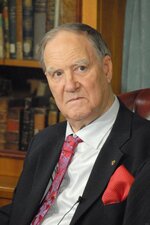
(1928–2012)
Сергей Петрович Капица — советский и российский физик, исследователь, педагог, популяризатор науки и телеведущий, посвятивший свою жизнь распространению научных знаний и развитию научного мировоззрения.
Он родился 14 февраля 1928 года в Кембридже (Великобритания) в семье выдающихся представителей российской науки. Его отец, Пётр Леонидович Капица, был одним из крупнейших физиков XX века и лауреатом Нобелевской премии по физике 1978 года за фундаментальные исследования в области низких температур и открытие явления сверхтекучести жидкого гелия. Его дед по материнской линии, Алексей Николаевич Крылов, был всемирно известным математиком, механиком и кораблестроителем, оказавшим большое влияние на развитие отечественной науки и техники.
В 1949 году Сергей Капица окончил Московский авиационный институт и начал научную деятельность. Его исследования охватывали широкий круг направлений современной физики: сверхзвуковую аэродинамику, земной магнетизм, прикладную электродинамику и физику элементарных частиц.
В 1961 году он стал доктором физико-математических наук, а в 1965 году получил звание профессора. Многие десятилетия Капица преподавал в Московском физико-техническом институте, где воспитал несколько поколений студентов и учёных. Он возглавлял кафедру общей физики и пользовался огромным уважением как талантливый педагог и блестящий лектор.
Сергей Капица является автором научных монографий, десятков научных статей, многочисленных изобретений и открытий. Одним из наиболее значимых результатов его научной деятельности стало участие в открытии квадрупольного фотоделения тяжёлых атомных ядер. Его исследования внесли заметный вклад в развитие ядерной физики и понимание процессов, происходящих в атомном ядре.
Помимо физики, Сергей Капица проявлял большой интерес к вопросам развития человеческой цивилизации. Он разработал феноменологическую математическую модель гиперболического роста населения Земли и одним из первых исследовал глобальные демографические процессы с использованием методов физики и математики. Многие специалисты считают его одним из основоположников клиодинамики — междисциплинарного направления, изучающего исторические процессы с помощью математических моделей.
Широкую известность Сергей Капица получил как выдающийся популяризатор науки. В 1973 году вышла его книга «Жизнь науки», а в том же году он стал ведущим научно-популярной телевизионной программы «Очевидное — невероятное». Эта передача на протяжении десятилетий знакомила миллионы зрителей с новейшими достижениями науки, техники и космонавтики. Благодаря таланту рассказчика, глубоким знаниям и уважительному отношению к аудитории Капица стал одним из самых узнаваемых просветителей в истории отечественного телевидения.
Он также являлся основателем и главным редактором российского издания журнала «В мире науки», способствовавшего распространению современных научных знаний среди широкого круга читателей.
За свою деятельность Сергей Капица был удостоен многочисленных наград, среди которых Премия Калинги ЮНЕСКО за выдающиеся достижения в популяризации науки, Государственная премия СССР, премия Правительства Российской Федерации в области образования, телевизионная премия ТЭФИ и Золотая медаль Российской академии наук за выдающиеся достижения в области пропаганды научных знаний.
Сергей Петрович Капица принадлежал к числу тех учёных, которые рассматривали науку не только как инструмент познания природы, но и как важнейшую часть человеческой культуры. Он неоднократно подчёркивал, что будущее цивилизации зависит не только от технического прогресса, но и от уровня образования, культуры и ответственности людей.
Скончался Сергей Петрович Капица 14 августа 2012 года в Москве на 85-м году жизни. Его научные труды, книги, лекции и телевизионные программы продолжают вдохновлять новые поколения исследователей, преподавателей и любителей науки во многих странах мира.
SERGEY PETROVICH KAPITSA
(1928–2012)
Sergey Petrovich Kapitsa was a Soviet and Russian physicist, researcher, educator, science communicator, and television presenter who devoted his life to the dissemination of scientific knowledge and the promotion of scientific thinking.
He was born on February 14, 1928, in Cambridge, England, into a family of distinguished scientists. His father, Pyotr Leonidovich Kapitsa, was one of the most prominent physicists of the twentieth century and was awarded the Nobel Prize in Physics in 1978 for his fundamental research in low-temperature physics and the discovery of the phenomenon of superfluidity in liquid helium. His maternal grandfather, Alexey Nikolaevich Krylov, was a world-renowned mathematician, mechanician, and naval engineer whose work made a significant contribution to the development of science and technology.
In 1949, Sergey Kapitsa graduated from the Moscow Aviation Institute and began his scientific career. His research covered a wide range of fields in modern physics, including supersonic aerodynamics, terrestrial magnetism, applied electrodynamics, and elementary particle physics.
In 1961, he earned the degree of Doctor of Physical and Mathematical Sciences, and in 1965 he became a professor. For many decades, Kapitsa taught at the Moscow Institute of Physics and Technology, where he educated several generations of students and scientists. He headed the Department of General Physics and was widely respected as a gifted teacher and an outstanding lecturer.
Sergey Kapitsa was the author of scientific monographs, dozens of research papers, numerous inventions, and scientific discoveries. One of the most significant achievements of his scientific career was his participation in the discovery of quadrupole photofission in heavy atomic nuclei. His research contributed significantly to the advancement of nuclear physics and to the understanding of processes occurring within the atomic nucleus.
In addition to physics, Sergey Kapitsa showed a deep interest in the development of human civilization. He developed a phenomenological mathematical model describing the hyperbolic growth of the Earth's population and was among the first researchers to study global demographic processes using the methods of physics and mathematics. Many scholars regard him as one of the pioneers of cliodynamics, an interdisciplinary field that applies mathematical models to the study of historical processes.
Sergey Kapitsa became widely known as an outstanding science communicator. In 1973, he published his book “The Life of Science,” and in the same year he became the host of the popular science television program “The Obvious and the Incredible.” For decades, the program introduced millions of viewers to the latest achievements in science, technology, and space exploration. Thanks to his talent as a storyteller, his profound knowledge, and his respectful attitude toward his audience, Kapitsa became one of the most recognizable science educators in the history of Russian television.
He was also the founder and editor-in-chief of the Russian edition of the magazine “Scientific World” (“V Mire Nauki”), which played an important role in bringing modern scientific knowledge to a broad readership.
For his achievements, Sergey Kapitsa received numerous honors and awards, including the UNESCO Kalinga Prize for the Popularization of Science, the USSR State Prize, the Prize of the Government of the Russian Federation in Education, the TEFI Television Award, and the Gold Medal of the Russian Academy of Sciences for outstanding achievements in the promotion of scientific knowledge.
Sergey Kapitsa belonged to that rare group of scientists who regarded science not only as a tool for understanding nature but also as an essential part of human culture. He repeatedly emphasized that the future of civilization depends not only on technological progress but also on education, culture, and human responsibility.
Sergey Petrovich Kapitsa passed away in Moscow on August 14, 2012, at the age of eighty-four. His scientific works, books, lectures, and television programs continue to inspire new generations of researchers, educators, and science enthusiasts around the world.
SERGUÉI PETRÓVICH KAPITSA
(1928–2012)
Serguéi Petróvich Kapitsa fue un físico, investigador, educador, divulgador científico y presentador de televisión soviético y ruso que dedicó su vida a la difusión del conocimiento científico y al desarrollo del pensamiento científico.
Nació el 14 de febrero de 1928 en Cambridge, Inglaterra, en el seno de una destacada familia de científicos. Su padre, Piotr Leonídovich Kapitsa, fue uno de los físicos más importantes del siglo XX y recibió el Premio Nobel de Física en 1978 por sus investigaciones fundamentales en física de bajas temperaturas y por el descubrimiento del fenómeno de la superfluidez del helio líquido. Su abuelo materno, Alexéi Nikoláievich Krylov, fue un matemático, mecánico e ingeniero naval de fama mundial que realizó importantes contribuciones al desarrollo de la ciencia y la tecnología.
En 1949, Serguéi Kapitsa se graduó en el Instituto de Aviación de Moscú e inició su carrera científica. Sus investigaciones abarcaron diversos campos de la física moderna, entre ellos la aerodinámica supersónica, el magnetismo terrestre, la electrodinámica aplicada y la física de partículas elementales.
En 1961 obtuvo el grado de Doctor en Ciencias Físicas y Matemáticas y, en 1965, recibió el título de profesor. Durante muchas décadas impartió clases en el Instituto de Física y Tecnología de Moscú, donde formó a varias generaciones de estudiantes e investigadores. Dirigió el Departamento de Física General y fue ampliamente respetado como un profesor talentoso y un brillante conferenciante.
Serguéi Kapitsa fue autor de monografías científicas, decenas de artículos de investigación, numerosas invenciones y descubrimientos científicos. Uno de los logros más importantes de su carrera fue su participación en el descubrimiento de la fotofisión cuadrupolar de núcleos atómicos pesados. Sus investigaciones contribuyeron significativamente al desarrollo de la física nuclear y a la comprensión de los procesos que tienen lugar en el núcleo atómico.
Además de la física, Serguéi Kapitsa mostró un profundo interés por el desarrollo de la civilización humana. Elaboró un modelo matemático fenomenológico del crecimiento hiperbólico de la población mundial y fue uno de los primeros investigadores en estudiar los procesos demográficos globales utilizando métodos de la física y las matemáticas. Muchos especialistas lo consideran uno de los pioneros de la cliodinámica, una disciplina interdisciplinaria que aplica modelos matemáticos al estudio de los procesos históricos.
Serguéi Kapitsa alcanzó gran notoriedad como destacado divulgador científico. En 1973 publicó su libro «La vida de la ciencia» y ese mismo año comenzó a presentar el programa televisivo de divulgación científica «Lo evidente y lo increíble». Durante décadas, este programa acercó a millones de espectadores los avances más recientes en ciencia, tecnología y exploración espacial. Gracias a su talento como narrador, sus profundos conocimientos y su actitud respetuosa hacia la audiencia, Kapitsa se convirtió en uno de los divulgadores científicos más reconocidos de la historia de la televisión rusa.
También fue fundador y redactor jefe de la edición rusa de la revista «En el mundo de la ciencia» («V Mire Nauki»), que desempeñó un importante papel en la difusión del conocimiento científico moderno entre el público general.
Por sus logros recibió numerosos premios y distinciones, entre ellos el Premio Kalinga de la UNESCO para la Divulgación Científica, el Premio Estatal de la URSS, el Premio del Gobierno de la Federación de Rusia en el ámbito de la educación, el premio televisivo TEFI y la Medalla de Oro de la Academia de Ciencias de Rusia por sus destacados méritos en la promoción del conocimiento científico.
Serguéi Kapitsa perteneció a ese reducido grupo de científicos que consideraban la ciencia no solo como una herramienta para comprender la naturaleza, sino también como una parte esencial de la cultura humana. Reiteró en numerosas ocasiones que el futuro de la civilización depende no solo del progreso tecnológico, sino también de la educación, la cultura y la responsabilidad de las personas.
Serguéi Petróvich Kapitsa falleció en Moscú el 14 de agosto de 2012, a los ochenta y cuatro años de edad. Sus trabajos científicos, libros, conferencias y programas de televisión continúan inspirando a nuevas generaciones de investigadores, educadores y amantes de la ciencia en todo el mundo.