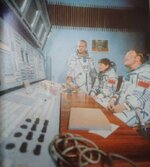
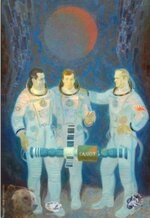
История советской космонавтики в фотографиях. Экипаж корабля "Союз Т-12" готовится к полету. На переднем плане фото - космонавт Игорь Волк, в центре космонавт Светлана Савицкая, у стены космонавт Владимир Джанибеков. The history of Soviet cosmonautics in photographs.
The crew of the Soyuz T-12 spacecraft prepares for flight. Cosmonaut Igor Volk is in the foreground, cosmonaut Svetlana Savitskaya is in the center, and cosmonaut Vladimir Dzhanibekov is against the wall. La historia de la cosmonáutica soviética en fotografías.
La tripulación de la nave espacial Soyuz T-12 se prepara para el vuelo. El cosmonauta Igor Volk está en primer plano, la cosmonauta Svetlana Savitskaya en el centro y el cosmonauta Vladimir Dzhanibekov al lado de la pared.
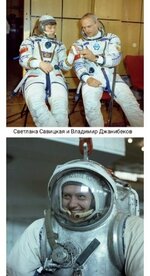
"Ни Джанибеков, ни я не имели опыта работы в открытом космосе, и нам предстояло серьезно подготовиться. На это отвели всего около семи месяцев, но сроки считались реальными, потому что мы с Владимиром Александровичем летали на аналогичных "Союзу Т-12" кораблях, пребывали в хорошей форме, могли без раскачки приступить к интенсивным тренировкам. Правда, в первом полете у меня были функции космонавта-исследователя, но я тогда не ограничивалась узкими рамками этой должности, изучала технику и работу с ней в том же объеме, что и командир с бортинженером. Поэтому, пересев с правого в левое кресло кабины нашего корабля, растерянности не испытала. Основную сложность представляла, конечно, подготовка к выходу в открытый космос. Прежде всего нам примерили и подогнали скафандры, потом мы с Джаном, как ласково называют в отряде Владимира Александровича, прошли курс специальных тренировок в барокамере, где создается глубокий вакуум. Там мы привыкли к нашей новой "одежде", которая по сути представляла собой маленький космический корабль со всеми системами поддержания нормальной жизнедеятельности человека в течение нескольких часов, и учились управлять своими "персональными кораблями". А создатели скафандров строго проверяли нашу готовность к действиям в любой нештатной ситуации.
Потом наступил черед гидроневесомости. В огромном наполненном водой бассейне стоял макет орбитальной станции. Мы с Джанибековым надевали скафандры, приспособленные для работы под водой, специальный кран подхватывал нас крюком буквально за шиворот и медленно опускал на глубину. Благодаря целой системе балансировочных грузов нас вывешивали под водой. Мы могли свободно плавать в станции и вокруг нее, не борясь с силой, выталкивающей вверх раздутые воздухом скафандры. Тренировки в такой гидроневесомости больше всего помогли мне в подготовке к работе в открытом космосе. За каждым "купанием" в гидробассейне пристально, даже придирчиво следили врачи и методисты, стараясь не упустить ни малейшей оплошности в наших действиях, вовремя подсказать, исправить ошибку. Такие тренировки требовали хорошей выносливости. Достаточно сказать, что за один раз мы сгоняли порой больше килограмма веса. Не так просто и сразу приспособиться к перемещениям внутри станции, но со временем все наладилось, тем более что Владимир Александрович всегда готов был оказать дружескую помощь, особенно при работе с большим контейнером, в котором помещался наш инструмент. Постепенно мы отладили совместную работу, наиболее рациональным образом распределили роли в предстоящем выходе".
(Светлана Савицкая. "Вчера и всегда").
.........................................................................
Цит.по: Светлана Евгеньевна Савицкая
ВЧЕРА И ВСЕГДА
Издательство агентства печати НОВОСТИ. 1988.
"Neither Vladimir Dzhanibekov nor I had any experience working in open space, so we had to prepare very seriously. Only about seven months were allocated for this, but the timeframe was considered realistic because Vladimir Alexandrovich and I had already flown spacecraft similar to Soyuz T-12, we were in good physical condition, and we could begin intensive training without delay. It is true that during my first flight I served as a research cosmonaut, but even then I did not limit myself to the narrow framework of that position. I studied the spacecraft and its systems to the same extent as the commander and the flight engineer. Therefore, when I moved from the right seat to the left seat of our spacecraft’s cabin, I did not feel any confusion. The main difficulty, of course, was preparing for the spacewalk.
First of all, we were fitted with our spacesuits and had them adjusted. Then Dzhanibekov and I—whom everyone in the cosmonaut corps affectionately calls Dzhan—went through a course of special training in a pressure chamber where a deep vacuum is created. There we became accustomed to our new “clothes,” which in essence were small spacecraft equipped with all the systems needed to support human life for several hours, and we learned how to operate our “personal spacecraft.” Meanwhile, the designers of the spacesuits carefully tested our readiness to act in any emergency situation.
Then came the stage of hydro-weightlessness training. In a huge water-filled pool there stood a mock-up of an orbital station. Dzhanibekov and I put on spacesuits adapted for underwater work. A special crane picked us up by a hook almost by the collar and slowly lowered us into the depth. Thanks to an entire system of balancing weights we were suspended in the water. We could freely move inside the station model and around it without struggling against the force that pushed the air-filled suits upward.
These hydro-weightlessness training sessions helped me the most in preparing for work in open space. Every “swim” in the hydro-pool was closely—even meticulously—observed by doctors and instructors who tried not to miss the slightest mistake in our actions, offering timely advice and correcting errors.
Such training required considerable endurance. Suffice it to say that in a single session we sometimes lost more than a kilogram of body weight. It was not easy at first to adapt to moving inside the station, but with time everything fell into place. Moreover, Vladimir Alexandrovich was always ready to lend a friendly helping hand, especially when working with the large container that held our tool.
Gradually we coordinated our teamwork and distributed our roles in the upcoming spacewalk in the most rational way".
(Svetlana Savitskaya. Yesterday and Always)
.................................................................................
Quoted from:
Yesterday and Always
by Svetlana Savitskaya Publishing House of the Novosti Press Agency Publishing House, 1988. "Ni Vladimir Dzhanibekov ni yo teníamos experiencia de trabajo en el espacio abierto, y teníamos que prepararnos muy seriamente. Para ello se asignaron solo unos siete meses, pero el plazo se consideraba realista porque Vladimir Aleksándrovich y yo habíamos volado en naves similares a Soyuz T-12, estábamos en buena forma física y podíamos comenzar de inmediato un entrenamiento intensivo. Es cierto que en mi primer vuelo desempeñé las funciones de cosmonauta investigadora, pero incluso entonces no me limité a los estrechos marcos de ese cargo: estudié la técnica y el trabajo con ella en el mismo volumen que el comandante y el ingeniero de a bordo. Por eso, cuando pasé del asiento derecho al izquierdo en la cabina de nuestra nave, no sentí ninguna confusión. La principal dificultad era, por supuesto, la preparación para la caminata espacial.
En primer lugar nos probaron y ajustaron los trajes espaciales. Después Dzhanibekov y yo —a quien en el destacamento llaman cariñosamente Dzhan— pasamos un curso de entrenamientos especiales en una cámara de presión donde se crea un profundo vacío. Allí nos acostumbramos a nuestra nueva “ropa”, que en esencia representaba una pequeña nave espacial con todos los sistemas de soporte vital necesarios para mantener la vida humana durante varias horas, y aprendimos a manejar nuestras “naves personales”. Mientras tanto, los creadores de los trajes espaciales comprobaban rigurosamente nuestra preparación para actuar en cualquier situación de emergencia.
Luego llegó el turno de la hidroingravidez. En una enorme piscina llena de agua se encontraba una maqueta de una estación orbital. Dzhanibekov y yo nos poníamos trajes espaciales adaptados para el trabajo bajo el agua; una grúa especial nos sujetaba con un gancho prácticamente por el cuello y nos bajaba lentamente a la profundidad. Gracias a todo un sistema de pesos de equilibrio quedábamos suspendidos bajo el agua. Podíamos movernos libremente dentro de la estación y alrededor de ella sin luchar contra la fuerza que empujaba hacia arriba los trajes inflados de aire.
Estos entrenamientos en hidroingravidez fueron los que más me ayudaron en la preparación para trabajar en el espacio abierto. Cada “baño” en la piscina era observado con gran atención —incluso con exigencia— por médicos e instructores, que trataban de no dejar pasar ni el más mínimo error en nuestras acciones, aconsejando a tiempo y corrigiendo cualquier fallo.
Tales entrenamientos exigían una buena resistencia. Basta decir que en una sola sesión a veces perdíamos más de un kilogramo de peso. No era fácil adaptarse de inmediato a los desplazamientos dentro de la estación, pero con el tiempo todo se normalizó, sobre todo porque Vladimir Aleksándrovich siempre estaba dispuesto a prestar ayuda amistosa, especialmente al trabajar con el gran contenedor que contenía nuestra herramienta.
Poco a poco coordinamos nuestro trabajo conjunto y distribuimos de la manera más racional los papeles en la futura salida al espacio".
(Svetlana Savitskaya. Ayer y siempre)
..............................................................................
Citado según:
Ayer y siempre
de Svetlana Savitskaya Editorial de la agencia de prensa Novosti, 1988.
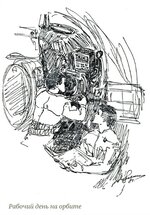
"Выдающийся космонавт является и талантливым художником-графиком, работы которого неоднократно экспонировались на выставках. Им оформлено несколько книг. Каждый разговор с Джанибековым — встреча с человеком высокой культуры, чья напряженная духовная жизнь накладывает отпечаток на все его дела и поступки. Привлекает спокойствие его уверенной и мужественной личности. Джанибеков недаром выходил победителем из самых трудных ситуаций. Еще в юности ему пришлось преодолеть много препятствий на пути в авиацию. Вначале Владимир поступил на физико-математический факультет Ленинградского университета, затем, поняв, что его призвание — авиация, идет учиться и успешно заканчивает Ейское высшее военное авиационное училище. Работал летчиком-инструктором в Военно-Воздушных Силах. С 1970 года — в Звездном городке. Джанибекову подвластны и труд космонавта и орбиты художественного творчества. — Владимир Александрович, какой смысл вы вкладываете в понятие «творчество»?
На мой взгляд, творить — означает прежде всего работать на совесть.
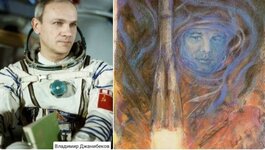
Каждодневные кропотливые поиски, иногда долгие, иногда даже монотонные, изнурительный труд, помогающий достичь результата,— это ведь тоже творчество. А рисунки рождаются как результат раздумий над главным делом моей жизни — космонавтикой. Я будто рассказываю языком графики об экспериментах, которые проводятся на борту корабля, о своих коллегах, товарищах, друзьях. Так, в раздумьях над сегодняшним днем, возникла у меня идея нарисовать портрет Гагарина — основателя нашей профессии. Я вспоминал его знакомое, всегда улыбчивое лицо, ясный взгляд, живость движений. Я вспоминал этого очень молодого человека, ставшего легендой. И радость от того, что он был, и невозвратимую горечь потери – все это хотелось передать в рисунке. Портрет Гагарина стал скорее моим представлением о нем, чем портретом реального человека, памятью сердца, согревающей будни негасимым светом доброты. Мы все продолжили дело Гагарина и за это благодарны ему".(Наталия Архангельская."Орбиты творчества").
................................................................
Фрагмент книги: НА ДОРОГАХ ВСЕЛЕННОЙ
СБОРНИК
Составитель Архангельская Наталия Владимировна
Художник Джанибеков Владимир Александрович
Редактор О. В. Крекотень
Художественное оформление
Кононова А. Е.
Художественный редактор С. П. Савицкий
Технический редактор Л. И. Ильченко
Корректоры В. П. Иванченко,
О. С. Зинченко
Киев/ Издательство художественной литературы "Днiпро"/1988 год
“The outstanding cosmonaut is also a talented graphic artist whose works have been exhibited at numerous exhibitions. He has designed several books. Every conversation with Vladimir Dzhanibekov is a meeting with a person of high culture, whose intense spiritual life leaves its mark on all his deeds and actions. One is impressed by the calmness of his confident and courageous personality. It is no coincidence that Dzhanibekov emerged victorious from the most difficult situations. Even in his youth he had to overcome many obstacles on his path to aviation. At first Vladimir entered the Faculty of Physics and Mathematics at Saint Petersburg State University. Later, realizing that aviation was his true calling, he went on to study and successfully graduated from the Yeisk Higher Military Aviation School. He worked as a flight instructor in the Air Force. Since 1970 he has been working at Star City. Dzhanibekov masters both the work of a cosmonaut and the orbit of artistic creativity.
— Vladimir Alexandrovich, what meaning do you put into the concept of “creativity”?
“In my opinion, to create means first of all to work conscientiously.
Daily painstaking searches—sometimes long, sometimes even monotonous—exhausting work that helps achieve results—this too is creativity. My drawings are born as the result of reflections on the main work of my life—cosmonautics. Through the language of graphics I seem to tell about the experiments carried out on board a spacecraft, about my colleagues, comrades, and friends.
Thus, while reflecting on the present day, I came up with the idea of drawing a portrait of Yuri Gagarin, the founder of our profession. I recalled his familiar, always smiling face, his clear gaze, the liveliness of his movements. I remembered this very young man who became a legend. And the joy that he existed, and the irretrievable bitterness of loss—all this I wanted to convey in the drawing.
The portrait of Gagarin became rather my own vision of him than a portrait of a real person—a memory of the heart that warms everyday life with the unfading light of kindness. We have all continued Gagarin’s work, and for that we are grateful to him.”
(Natalia Arkhangelskaya, “Orbits of Creativity”)
Fragment from the book: “On the Roads of the Universe”
Compiler: Natalia Arkhangelskaya
Artist: Vladimir Dzhanibekov
Editor: O. V. Krekoten
Art design: A. E. Kononova
Art editor: S. P. Savitsky
Technical editor: L. I. Ilchenko
Proofreaders: V. P. Ivanchenko, O. S. Zinchenko
Kyiv — Dnipro Publishing House, 1988. «El destacado cosmonauta es también un talentoso artista gráfico cuyas obras se han exhibido en numerosas exposiciones. Ha ilustrado varios libros. Cada conversación con Vladimir Dzhanibekov es un encuentro con una persona de gran cultura, cuya intensa vida espiritual deja huella en todos sus actos y acciones. Atrae la serenidad de su personalidad segura y valiente. No es casualidad que Dzhanibekov haya salido vencedor de las situaciones más difíciles. Incluso en su juventud tuvo que superar muchos obstáculos en su camino hacia la aviación. Al principio Vladímir ingresó en la Facultad de Física y Matemáticas de la Saint Petersburg State University. Más tarde, al comprender que su verdadera vocación era la aviación, fue a estudiar y se graduó con éxito en la Yeisk Higher Military Aviation School. Trabajó como piloto instructor en las Fuerzas Aéreas. Desde 1970 trabaja en Star City. Dzhanibekov domina tanto el trabajo del cosmonauta como la órbita de la creación artística.
— Vladímir Aleksándrovich, ¿qué significado atribuye usted al concepto de “creatividad”?
«En mi opinión, crear significa ante todo trabajar con conciencia.
Las búsquedas cotidianas y minuciosas —a veces largas, a veces incluso monótonas— el trabajo agotador que ayuda a alcanzar el resultado, también es creatividad. Mis dibujos nacen como resultado de reflexiones sobre la principal obra de mi vida: la cosmonáutica. Con el lenguaje del dibujo gráfico cuento sobre los experimentos que se realizan a bordo de la nave, sobre mis colegas, camaradas y amigos.
Así, reflexionando sobre el presente, surgió en mí la idea de dibujar un retrato de Yuri Gagarin, el fundador de nuestra profesión. Recordaba su rostro conocido y siempre sonriente, su mirada clara, la vivacidad de sus movimientos. Recordaba a aquel hombre muy joven que se convirtió en una leyenda. Y la alegría de que él haya existido, y la irreparable amargura de su pérdida —todo esto quería transmitirlo en el dibujo.
El retrato de Gagarin resultó ser más bien mi propia visión de él que el retrato de una persona real: un recuerdo del corazón que ilumina la vida cotidiana con la luz inextinguible de la bondad. Todos nosotros continuamos la obra de Gagarin y por ello le estamos agradecidos».
(Natalia Arkhangelskaya, «Órbitas de la creatividad»)
Fragmento del libro: «En los caminos del universo»
Compiladora: Natalia Arkhangelskaya
Artista: Vladimir Dzhanibekov
Editor: O. V. Krekoten
Diseño artístico: A. E. Kononova
Editor artístico: S. P. Savitsky
Editor técnico: L. I. Ilchenko
Correctores: V. P. Ivanchenko, O. S. Zinchenko Kiev — Dnipro Publishing House, 1988.
"Научно-фантастическая литература воздействует на наши представления о мире, обществе и о самих себе столь же разнообразно и противоречиво, как и научно-технический прогресс. Нередко она возвышает нас до статуса владык космических пространств и самой вечности, а бывает, что писатель-фантаст передает нам свой ужас перед трагическими коллизиями жизни и смерти, перед безднами мирового зла... Научное «фантазирование» и научное «гипотезирование» идут рука об руку в познании бытия, и свободная фантазия, отбросив вериги логических формул, зачастую опережает научную интуицию и указывает путь из «очевидного» в неведомое, готовит к восприятию «невероятного».
Если художник слова или художник кисти, вдохновившись достижениями науки и техники, начинает прозревать новые формы и даже измерения реальности, он создает научно-фантастическое произведение, способное потрясти, возбудить массу ассоциаций и приоткрыть ряд неожиданных и перспективных ходов мысли...
...Рэй Брэдбери сам признавался, что «никогда не летал на самолете и не лежал под автомобилем». Герои его произведений не занимаются добычей информации об устройстве небесных тел, элементарных частиц или самовоспроизводящихся генов. И тем не менее влияние этого писателя на современную научно-техническую революцию не отрицает никто.
Человек в мире Рэя Брэдбери сталкивается не столько с породившей его природой, сколько со своим собственным отчужденным Другим. Столкновение бывает до такой степени драматичным, что люди иногда не выдерживают. Порабощенные страхом и иллюзиями, они капитулируют перед Другим и шаг за шагом утрачивают экономическую, политическую и духовную свободу, коренным образом изменяя исходное непосредственное («детское») отношение к бытию, к своему ближнему, к самому себе.
Сотворенному чудовищу, все больше забирающему власть над своим творцом, способна противостоять, по убеждению Рэя Брэдбери, лишь абсолютная и, к счастью, неистребимая сила человеческого достоинства. Да, Машина опасна, но Человек должен и может найти достойные формы сосуществования и сотрудничества с ней, не подчиняться холодному и злому эгоизму мыслящего робота, а преодолеть неминуемые извращения цивилизации своей ответственностью за торжество добра в мире, своей любовью к ближнему и дальнему. «Тирания головы», доходящая до тотального подавления свободного нравственного выбора, в конечном счете оказывается менее жизнеспособной, чем «демократия сердца». Пусть неизбежно и закономерно родившиеся творения человеческого гения буйствуют в просторах космоса, недрах социума и в душе «микрокосмоса» — человека, лишь бы они способствовали исполнению человеческой миссии, возвышению достоинства людей".(Владимир Джанибеков. "Верить будущему").
...........................................................
Цит.по: Рэй Брэдбери
О скитаньях вечных и о Земле
авторский сборник
Составитель: Валерий Скурлатов
Вступительное слово В. А. Джанибекова
Москва/ Издательство "Правда"/ 1988 г.
Тираж: 200000 экз.
Тип обложки: твёрдая
Формат: 84x108/32 (130x200 мм)
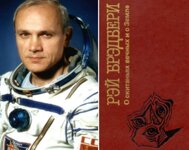
Страниц: 656 Иллюстрации Г. Бойко, И. Шалито. На фото советский космонавт Владимир Джанибеков и обложка советского издания книги Рэя Бредбери "О скитаниях вечных и о земле".
“Science fiction influences our ideas about the world, society, and ourselves as variously and as contradictorily as scientific and technological progress itself. At times it elevates us to the status of rulers of cosmic spaces and even of eternity itself; at other times a science fiction writer conveys to us his horror before the tragic collisions of life and death, before the abysses of universal evil. Scientific ‘fantasizing’ and scientific ‘hypothesizing’ go hand in hand in the understanding of existence, and free imagination, casting aside the chains of logical formulas, often outstrips scientific intuition and points the way from the ‘obvious’ toward the unknown, preparing us to perceive the ‘incredible’.
If a master of the written word or a painter, inspired by the achievements of science and technology, begins to foresee new forms and even new dimensions of reality, he creates a work of science fiction capable of astonishing us, awakening countless associations, and opening unexpected and promising paths of thought.
… Ray Bradbury himself admitted that he had “never flown in an airplane and had never lain beneath an automobile.” The heroes of his works are not engaged in gathering information about the structure of celestial bodies, elementary particles, or self-reproducing genes. And yet no one denies the influence of this writer on the modern scientific and technological revolution.
In the world of Ray Bradbury, a human being encounters not so much the nature that gave birth to him as his own alienated Other. This confrontation can become so dramatic that people sometimes cannot endure it. Enslaved by fear and illusions, they capitulate before this Other and step by step lose their economic, political, and spiritual freedom, radically transforming their original, immediate (“childlike”) attitude toward existence, toward their fellow human beings, and toward themselves.
According to Bradbury, the monster created by humanity—one that increasingly takes power over its creator—can be opposed only by the absolute and, fortunately, indestructible force of human dignity. Yes, the Machine is dangerous, but Humanity must and can find worthy forms of coexistence and cooperation with it—not submit to the cold and evil egoism of the thinking robot, but overcome the inevitable distortions of civilization through responsibility for the triumph of good in the world, through love for both near and distant neighbors.
The “tyranny of the head,” reaching the point of total suppression of free moral choice, ultimately proves less viable than the “democracy of the heart.” Let the creations of human genius—inevitably and naturally born—rage in the expanses of space, in the depths of society, and in the soul of the human “microcosm,” so long as they contribute to the fulfillment of the human mission and to the elevation of human dignity.”
(Vladimir Dzhanibekov, “To Believe in the Future”)
Source: Ray Bradbury, “Of Eternal Wanderings and of Earth”
Compiler: Valery Skurlatov
Introductory article by Vladimir Dzhanibekov
Moscow — Pravda Publishing House, 1988
Print run: 200,000 copies
Format: 130 × 200 mm
Pages: 656
Illustrations by G. Boyko and I. Shalito Photo: Soviet cosmonaut Vladimir Dzhanibekov and the cover of the Soviet edition of the book by Ray Bradbury “Of Eternal Wanderings and of Earth”.
«La literatura de ciencia ficción influye en nuestras ideas sobre el mundo, la sociedad y sobre nosotros mismos de una manera tan diversa y contradictoria como el propio progreso científico y tecnológico. A veces nos eleva al estatus de señores de los espacios cósmicos e incluso de la eternidad; otras veces el escritor de ciencia ficción nos transmite su horror ante las colisiones trágicas de la vida y la muerte, ante los abismos del mal universal. La “fantasía científica” y la “hipótesis científica” avanzan de la mano en el conocimiento del ser, y la imaginación libre, al arrojar las cadenas de las fórmulas lógicas, a menudo se adelanta a la intuición científica y señala el camino desde lo “evidente” hacia lo desconocido, preparándonos para percibir lo “increíble”.
Si un artista de la palabra o de la pintura, inspirado por los logros de la ciencia y la tecnología, comienza a vislumbrar nuevas formas e incluso nuevas dimensiones de la realidad, crea una obra de ciencia ficción capaz de conmovernos, despertar numerosas asociaciones y abrir caminos inesperados y prometedores del pensamiento.
… Ray Bradbury confesaba que «nunca había volado en avión ni se había metido debajo de un automóvil». Los héroes de sus obras no se dedican a obtener información sobre la estructura de los cuerpos celestes, las partículas elementales o los genes autorreplicantes. Y, sin embargo, nadie niega la influencia de este escritor en la revolución científico-técnica contemporánea.
En el mundo de Ray Bradbury, el ser humano se enfrenta no tanto a la naturaleza que lo engendró como a su propio Otro alienado. Ese choque puede llegar a ser tan dramático que las personas a veces no lo soportan. Dominados por el miedo y las ilusiones, capitulan ante ese Otro y, paso a paso, pierden su libertad económica, política y espiritual, transformando radicalmente su actitud inicial e inmediata (“infantil”) hacia el ser, hacia su prójimo y hacia sí mismos.
Según la convicción de Bradbury, el monstruo creado por el ser humano, que cada vez arrebata más poder a su propio creador, solo puede ser enfrentado por la fuerza absoluta y, afortunadamente, indestructible de la dignidad humana. Sí, la Máquina es peligrosa, pero el ser humano debe y puede encontrar formas dignas de coexistencia y cooperación con ella; no someterse al frío y malvado egoísmo del robot pensante, sino superar las inevitables deformaciones de la civilización mediante su responsabilidad por el triunfo del bien en el mundo, mediante su amor por el prójimo cercano y lejano.
La “tiranía de la cabeza”, que llega a la supresión total de la libre elección moral, resulta finalmente menos viable que la “democracia del corazón”. Que las creaciones del genio humano, nacidas de manera inevitable y natural, se agiten en los espacios del cosmos, en las profundidades de la sociedad y en el alma del “microcosmos” humano, con tal de que contribuyan al cumplimiento de la misión humana y a la elevación de la dignidad de las personas.»
(Vladimir Dzhanibekov, «Creer en el futuro»)
Fuente: Ray Bradbury, «Sobre las eternas peregrinaciones y la Tierra»
Compilador: Valery Skurlatov
Palabras introductorias de Vladimir Dzhanibekov
Moscú — Pravda Publishing House, 1988
Tirada: 200 000 ejemplares
656 páginas
Ilustraciones de G. Boyko e I. Shalito Foto: el cosmonauta soviético Vladimir Dzhanibekov y la portada de la edición soviética del libro de Ray Bradbury «Sobre las eternas peregrinaciones y la Tierra».
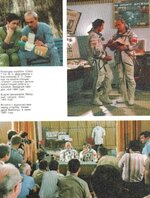
История советской космонавтики в фотографиях. Телерепортаж о прибытии экспедиции на станцию «Салют-7».
Встреча: В. Васютин, Г. Гречко, В. Савиных, А. Волков, В. Джанибеков. The history of Soviet cosmonautics in photographs. TV report on the expedition's arrival at the Salyut-7 station.
Meeting: V. Vasyutin, G. Grechko, V. Savinykh, A. Volkov, V. Dzhanibekov. La historia de la cosmonáutica soviética en fotografías. Reportaje televisivo sobre la llegada de la expedición a la estación Salyut-7. Reunión: V. Vasyutin, G. Grechko, V. Savinykh, A. Volkov, V. Dzhanibekov.
"В 11 часов мы, наконец, увидели станцию, в которой нам предстояло прожить довольно долго. Мы увидели ее сразу после выхода из тени. Она загорелась в лучах Солнца, еще только пробивающегося сквозь атмосферу. Точка, не точка, но намного ярче всех звезд, она росла по мере сближения. Запись в журнале так передает эту встречу:
В. Джанибеков: “Станция очень яркая. Сначала ее не было видно, но потом она начала разгораться. Красная-красная, в десяток раз ярче, чем Юпитер. Она отходит в сторону, дальность 7,2 км, скорость 12,8 м/сек... Дальность 4,4 км, скорость 7,8 м/сек... Расхождение 1,5 км."
В. Савиных: “Мы идем не в графике... Станция уже в стороне, далеко... Нам надо переходить в ручной режим..."
В Центре управления полетом согласились с нашим предложением. Отключили программу сближения, выполняемую компьютером, перевели в ручной режим.
Замер дальности, второй замер через фиксированное время, вычисляю скорость. Володя непрерывно гасит боковую скорость и непрерывно докладывает о дальности.
С виду спокойнее, чем на тренировках, Володя действовал ручками управления корабля. Наша задача идти в графике движения, который позволит догнать станцию и не врезаться в нее. Командир каждые тридцать секунд по дальномеру должен замерять расстояние до станции, а я делал расчет скорости, сравнивая с графиком. В руке - секундомер, перед глазами - панель управления, контроль расхода топлива. Очень хочется посмотреть на станцию, но ее заслоняет в иллюминаторе плечо Володи. Станция ориентирована на нас боком. Очень ярко высвечена, как будто она высечена из алюминия с желтой добавкой. Панели крутятся? Подойдем поближе, посмотрим. Дальность 3,170 км, скорость 4,5 м/сек... Сближение идет устойчиво... Все время видим Солнце сбоку... Расстояние 2240 метров, скорость 6 м/сек. Идем в графике. Какая же она яркая!.. Расстояние 1865 метров, 1640 метров. Цвет станции до сих пор остается серебряным... 1280 метров. Пока трудно сказать по панелям, вращаются они или нет, потому, что Солнце все время подсвечивает с нашей стороны. Идем на сближение. 980 метров, скорость 5 м/сек. В этот момент я не выдержал: “Начинай, гаси скорость”.
В. Джанибеков спокойно передает на Землю: “Гашу скорость”.
Нетерпение нарастает. И я, словно не слыша его ответ, продолжаю твердить: “Гаси, гаси скорость”.
Слаженность в действиях была отработана до такой степени, что мы понимали друг друга с полуслова. Земля не мешала, и мы, шаг за шагом, включая двигатели на торможение, приближались к станции.
На расстоянии 200 метров выполнили “зависание”, сократив скорость сближения до нуля. Вот так и летели мы рядом со станцией, но немного выше. Она была видна на фоне Земли. Сейчас нужно было подойти к нужному стыковочному узлу, выровнять скорости и причалить. Земля несколько раз напомнила нам о времени, оставшемся до начала тени, но не настаивала на немедленном начале стыковки.
Присмотрелись к станции. Володя повел корабль в облет к стыковочному узлу, контролируя дальность по визиру, и, чувствуя скорость сближения “кончиками пальцев”, выдавал импульсы на ручку.
В. Джанибеков: “Расстояние 200 метров, включаем двигатели на разгон. Сближение идет с небольшой скоростью, в пределах 1,5 м/сек. Скорость вращения станции в пределах нормы, она практически застабилизировалась. Вот мы зависаем над ней, разворачиваемся... Ну вот, сейчас мы будем немножко мучиться потому, что по солнышку у нас не все хорошо... Вот изображение улучшилось. Кресты совмещены. Рассогласование корабля и станции в допуске... Нормально идет управление, гашу скорость... ждем касания..."
В. Савиных: “Есть касание. Есть мехзахват”.
Земля: “Молодцы, ребята. Все вас поздравляют... Работайте по своей документации... После стягивания проверьте давление..."
Мы могли посмотреть друг на друга. Не радовались, потому что этому чувству в наших душах уже не было места. Напряжение, усталость, боязнь сделать что-то не так, когда уже ничего нельзя исправить - все смешалось. Мы молча сидели в своих креслах, а соленый пот стекал по разгоряченным лицам.
Это была победа! Пусть еще не полная, но уже победа". (В. Савиных. "Записки с мертвой станции"). Издательство “Издательский Дом Системы Алиса”. Москва/1999 год.
Vladimir Dzhanibekov: “The station is very bright. At first it was not visible, but then it began to light up. Red, very red—ten times brighter than Jupiter. It is moving aside, distance 7.2 km, speed 12.8 m/s… Distance 4.4 km, speed 7.8 m/s… Separation 1.5 km.”
Viktor Savinykh:
“We are not following the planned profile… The station is already off to the side, far away… We need to switch to manual mode…”
At the Mission Control Center Russia they agreed with our proposal. The rendezvous program executed by the computer was turned off, and we switched to manual control.
I measured the distance, then took a second measurement after a fixed time and calculated the speed. Volodya continuously damped the lateral velocity and constantly reported the distance.
He appeared calmer than during training as he operated the spacecraft’s manual controls. Our task was to follow the flight profile that would allow us to catch up with the station without colliding with it. Every thirty seconds the commander had to measure the distance to the station with the rangefinder, while I calculated the speed and compared it with the profile.
In my hand was a stopwatch; before my eyes—the control panel and the monitoring of fuel consumption. I really wanted to look at the station, but Volodya’s shoulder blocked it in the window. The station was oriented sideways toward us. It was brightly illuminated, as if carved from aluminum with a yellow tint.
Are the panels rotating? We will get closer and see.
Distance 3.170 km, speed 4.5 m/s… The approach is stable… We constantly see the Sun from the side… Distance 2240 meters, speed 6 m/s. We are following the profile. How bright it is! Distance 1865 meters, 1640 meters. The station’s color still remains silver… 1280 meters. It is still difficult to say whether the panels are rotating, because the Sun keeps illuminating it from our side.
We continue the approach.
980 meters, speed 5 m/s.
At that moment I could not hold back:
“Start reducing the speed.”
Vladimir Dzhanibekov calmly reports to Earth:
“Reducing speed.”
Impatience grows. And I, as if not hearing his reply, keep repeating:
“Reduce it, reduce the speed.”
Our coordination had been trained to such a degree that we understood each other with half a word. Earth did not interfere, and step by step, firing the braking engines, we approached the station.
At a distance of 200 meters we performed a “hover,” reducing the closing speed to zero. Thus we flew alongside the station, but slightly above it. It was visible against the background of Earth.
Now we needed to approach the required docking port, match the velocities, and dock. From Earth they reminded us several times about the time remaining before entering Earth’s shadow, but they did not insist on starting the docking immediately.
We carefully observed the station. Volodya guided the spacecraft around toward the docking port, controlling the distance through the sight and, feeling the closing speed “with the tips of his fingers,” applying impulses to the control stick.
Vladimir Dzhanibekov:
“Distance 200 meters, we are turning on the acceleration engines. The approach is proceeding with a small speed, within 1.5 m/s. The station’s rotation rate is within normal limits; it has practically stabilized. Now we are hovering above it, turning… Well, now we will struggle a bit because the sunlight is not ideal… Now the image has improved. The crosses are aligned. The misalignment between the spacecraft and the station is within tolerance… Control is normal, reducing speed… waiting for contact…”
Viktor Savinykh:
“Contact confirmed. Mechanical capture confirmed.”
Earth:
“Well done, guys. Everyone congratulates you… Work according to your procedures… After the tightening, check the pressure…”
We could finally look at each other. We did not rejoice, because there was no place left in our souls for that feeling. Tension, fatigue, fear of making a mistake when nothing could be corrected anymore—all of it mixed together. We sat silently in our seats while salty sweat ran down our heated faces.
It was a victory. Perhaps not yet a complete one, but already a victory.
Quoted from:
Viktor Savinykh — Notes from a Dead Station
Publisher: Izdatelskiy Dom Sistemy Alisa,
Moscow, 1999. Vladimir Dzhanibekov: «La estación es muy brillante. Al principio no se veía, pero luego empezó a encenderse. Roja, muy roja, diez veces más brillante que Jupiter. Se está desplazando hacia un lado, distancia 7,2 km, velocidad 12,8 m/s… Distancia 4,4 km, velocidad 7,8 m/s… Separación 1,5 km».
Viktor Savinykh:
«No vamos según el gráfico… La estación ya está a un lado, lejos… Tenemos que pasar al modo manual…»
En el Mission Control Center Russia aceptaron nuestra propuesta. Se desconectó el programa de aproximación ejecutado por la computadora y pasamos al control manual.
Mido la distancia, hago una segunda medición después de un tiempo fijo y calculo la velocidad. Volodia reduce continuamente la velocidad lateral y al mismo tiempo informa constantemente de la distancia.
Aparentemente más tranquilo que durante los entrenamientos, Volodia manejaba los controles manuales de la nave. Nuestra tarea era seguir el gráfico de movimiento que nos permitiría alcanzar la estación sin chocar contra ella. El comandante debía medir cada treinta segundos la distancia hasta la estación con el telémetro, y yo calculaba la velocidad comparándola con el gráfico.
En la mano tenía un cronómetro; delante de los ojos, el panel de control y el control del consumo de combustible. Tenía muchas ganas de mirar la estación, pero el hombro de Volodia la tapaba en la ventanilla. La estación estaba orientada de lado hacia nosotros. Brillaba intensamente, como si estuviera tallada en aluminio con un matiz amarillento.
¿Están girando los paneles? Nos acercaremos más y veremos.
Distancia 3,170 km, velocidad 4,5 m/s… La aproximación es estable… Todo el tiempo vemos el Sol a un lado… Distancia 2240 metros, velocidad 6 m/s. Vamos según el gráfico. ¡Qué brillante es! Distancia 1865 metros, 1640 metros. El color de la estación sigue siendo plateado… 1280 metros. Todavía es difícil decir si los paneles giran o no, porque el Sol la ilumina constantemente desde nuestro lado.
Seguimos acercándonos.
980 metros, velocidad 5 m/s.
En ese momento no pude resistirme:
—«Empieza, reduce la velocidad».
Vladimir Dzhanibekov transmite tranquilamente a la Tierra:
—«Reduciendo la velocidad».
La impaciencia crecía. Y yo, como si no hubiera oído su respuesta, seguía repitiendo:
—«Reduce, reduce la velocidad».
Nuestra coordinación estaba tan bien ensayada que nos entendíamos con media palabra. La Tierra no interfería y nosotros, paso a paso, encendiendo los motores de frenado, nos acercábamos a la estación.
A una distancia de 200 metros realizamos un “estacionamiento”, reduciendo la velocidad de aproximación a cero. Así volábamos junto a la estación, pero un poco más arriba. Se veía sobre el fondo de la Tierra.
Ahora había que acercarse al puerto de acoplamiento necesario, igualar las velocidades y acoplarse. Desde la Tierra nos recordaron varias veces el tiempo que quedaba antes de entrar en la sombra, pero no insistieron en comenzar el acoplamiento de inmediato.
Observamos atentamente la estación. Volodia condujo la nave alrededor hacia el puerto de acoplamiento, controlando la distancia con la mira y, sintiendo la velocidad de aproximación “con las puntas de los dedos”, daba impulsos a la palanca.
Vladimir Dzhanibekov:
«Distancia 200 metros, encendemos los motores de aceleración. La aproximación se realiza con una pequeña velocidad, dentro de 1,5 m/s. La velocidad de rotación de la estación está dentro de la norma, prácticamente se ha estabilizado. Aquí estamos flotando sobre ella, girando… Bueno, ahora vamos a sufrir un poco porque con el Sol no todo está bien… Ahora la imagen ha mejorado. Las cruces están alineadas. La desalineación entre la nave y la estación está dentro del margen permitido… El control va normalmente, reduzco la velocidad… esperamos el contacto…»
Viktor Savinykh:
«Contacto confirmado. Captura mecánica confirmada».
La Tierra:
«Bien hecho, muchachos. Todos los felicitan… Trabajen según su documentación… Después del cierre verifiquen la presión…»
Por fin pudimos mirarnos el uno al otro. No sentíamos alegría, porque ya no había lugar para ese sentimiento en nuestras almas. La tensión, el cansancio, el miedo a hacer algo mal cuando ya nada podía corregirse —todo se mezcló. Permanecimos en silencio en nuestros asientos mientras el sudor salado corría por nuestros rostros acalorados.
Era una victoria. Tal vez aún no completa, pero ya una victoria.
Citado según:
Viktor Savinykh — Notes from a Dead Station
Editorial Izdatelskiy Dom Sistemy Alisa, Moscow, 1999.
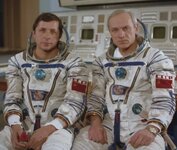
История советской космонавтики в фотографиях. Космонавты Виктор Савиных (слева) и Владимир Джанибеков с макетом станции "Салют-7".
The history of Soviet cosmonautics in photographs. Cosmonauts Viktor Savinykh (left) and Vladimir Dzhanibekov with a model of the Salyut 7 space station.
La historia de la cosmonáutica soviética en fotografías. Los cosmonautas Viktor Savinykh (izquierda) y Vladimir Dzhanibekov con una maqueta de la estación espacial Salyut 7.
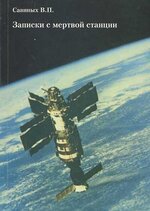
Савиных В.П. "Записки с мертвой станции". В книге летчика-космонавта СССР, дважды Героя Советского Союза, доктора технических наук, профессора В. П. Савиных, трижды побывавшего в космосе, опубликованы дневниковые записи, которые он вел на протяжении всего полета на станции «Салют-7», а также страницы стенограммы переговоров с Центром управления полетом, отражающие наиболее сложные периоды, связанные с восстановлением «мертвой» станции. Для широкого круга читателей. Издательство “Издательский Дом Системы Алиса”. Москва/1999 год
Первое издание.
V.P. Savinykh, "Notes from a Dead Station."
This book by V.P. Savinykh, a Soviet pilot-cosmonaut, twice Hero of the Soviet Union, Doctor of Technical Sciences, and professor who traveled to space three times, contains diary entries he kept throughout his flight on the Salyut 7 station, as well as transcripts of conversations with Mission Control, reflecting the most difficult periods associated with the restoration of the "dead" station. For a general readership. Published by Alisa Systems Publishing House, Moscow, 1999. First edition V.P. Savinykh, «Notas desde una estación muerta».
Este libro de V.P. Savinykh, piloto cosmonauta soviético, dos veces Héroe de la Unión Soviética, Doctor en Ciencias Técnicas y profesor que viajó al espacio en tres ocasiones, contiene anotaciones de su diario durante su vuelo en la estación Salyut 7, así como transcripciones de conversaciones con el Control de Misión, que reflejan los momentos más difíciles relacionados con la restauración de la estación «muerta». Dirigido al público general. Publicado por Alisa Systems Publishing House, Moscú, 1999. Primera edición.
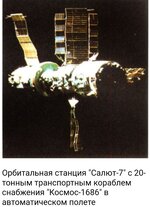
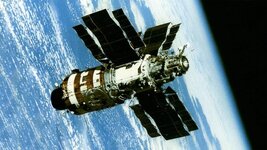
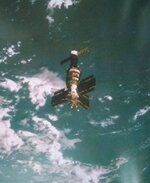
История советской космонавтики в фотографиях. Орбитальная станция "Салют - 7" с 20-ти тонным транспортным кораблем снабжения "Космос - 1686" в автоматическом полете.
History of Soviet Cosmonautics in Photographs. The orbital station Salyut 7 with the 20-ton supply transport spacecraft Kosmos 1686 in automatic flight.
Historia de la cosmonáutica soviética en fotografías. La estación orbital Salyut 7 con la nave de transporte de suministro de 20 toneladas Kosmos 1686 en vuelo automático.
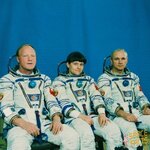
История советской космонавтики в фотографиях. Советские космонавты(слева направо): Игорь Волк, Светлана Савицкая, Владимир Джанибеков.
The history of Soviet cosmonautics in photographs.
Soviet cosmonauts (left to right): Igor Volk, Svetlana Savitskaya, Vladimir Dzhanibekov.
La historia de la cosmonáutica soviética en fotografías. Cosmonautas soviéticos (de izquierda a derecha): Igor Volk, Svetlana Savitskaya, Vladimir Dzhanibekov.
"11 февраля 1985 года на беспилотном участке полета из-за выхода из строя системы командного управления и ошибки оператора ЦУП была потеряна связь со станцией, в результате чего из-за невозможности вмешаться с Земли в работу автоматики нарушился режим подзаряда буферных батарей, система обесточилась и станция полностью вышла из строя. Возникла серьезная ситуация. Полная потеря станции стала очень реальной. В НПО "Энергия" начали прорабатывать вопрос: можно ли стыковаться с полностью неуправляемой станцией. Чтобы его решить, нужно было знать, с какой угловой скоростью она вращается. Пришлось привлекать различные ведомства, в том числе средства противоракетной обороны. Для обеспечения предстоящей стыковки, как тогда говорили, к "некооперируемому объекту" проводилась тщательная отработка предстоящей работы и тренировки будущего экипажа. Такая операция не имела еще аналогов. На заседании Военно-промышленной комиссии при Президиуме Совета Министров СССР специалисты, оценив вероятность успешного выполнения стыковки, доложили, что она составляет 0,7-0,8. И, несмотря на это, было принято решение о стыковке: слишком велико было желание сохранить станцию. Большое внимание этим вопросам уделял министр общего машиностроения О.Д. Бакланов.
И вот началась беспрецедентная работа по восстановлению станции. 6 июня 1985 года на орбиту была направлена специальная экспедиция — космонавты В.А. Джанибеков и В.П. Савиных на корабле "Союз Т-13". "Союз Т-13" с помощью целеуказаний с Земли и ручного управления с использованием лазерного дальномера и БЦВМ сблизился со станцией, состыковался с ней как с "некооперируемым объектом". Космонавты провели ремонтно-восстановительные работы, и станция была введена в строй. В процессе этих работ случались довольно драматичные моменты. Например, на станции не работала в числе других и система терморегулирования. Вода на станции превратилась в лед. С собой космонавты могли взять только ограниченное количество воды. И до самого последнего момента было неизвестно, успеют ли космонавты отогреть станцию, чтобы воспользоваться ее запасами воды, или им придется вернуться на Землю, не выполнив работы из-за отсутствия питьевой воды.
17 сентября 1985 года на станцию направилась экспедиция посещения — космонавты В.В. Васютин, Г.М. Гречко и А.А. Волков на корабле "Союз Т-14". В.В. Васютин, В.П. Савиных и А.А. Волков остались на станции, а В.А. Джанибеков и Г.М. Гречко вернулись на Землю, но 21 ноября из-за болезни В.В. Васютина четвертая экспедиция закончилась досрочно. В связи с началом эксплуатации станции "Мир" 25 июня 1986 года работы со станцией "Салют-7" прекратили. Для изучения поведения конструкции и аппаратуры при длительной эксплуатации было принято решение о переводе станции "Салют-7" на высокую орбиту с длительным сроком существования (как прогнозировалось, не менее 10 лет). Но прогноз оказался неточным из-за неожиданно высокой плотности атмосферы в годы активного Солнца, и станция начала снижаться значительно более энергично, чем предполагалось. Мировая общественность была обеспокоена вероятностью падения осколков станции на какие-нибудь густонаселенные районы. Хотя специалисты знали, насколько мала эта вероятность, волнений было достаточно. И вот 7 февраля 1991 года станция "Салют-7" вместе с пристыкованным к ней кораблем ТКС ("Космос-1686") прекратила свое существование в плотных слоях атмосферы над Южной Америкой в районе Чили".(РАКЕТНО-КОСМИЧЕСКАЯ КОРПОРАЦИЯ "ЭНЕРГИЯ" ИМЕНИ С.П. КОРОЛЕВА).
.....................................................................
Цит.по: РАКЕТНО-КОСМИЧЕСКАЯ КОРПОРАЦИЯ "ЭНЕРГИЯ" ИМЕНИ С.П. КОРОЛЕВА 1946-1996
СБОРНИК. 1996 г. On February 11, 1985, during an unmanned phase of flight, contact with the orbital station Salyut 7 was lost due to the failure of the command control system and an operator error at the Mission Control Center Russia. Because it was impossible to intervene from Earth in the operation of the automatic systems, the buffer battery charging mode was disrupted, the electrical system shut down, and the station completely ceased functioning. A serious situation arose. The total loss of the station became very real. At RKK Energia, specialists began studying whether it was possible to dock with a completely uncontrolled station. To solve this problem, it was necessary to determine the angular velocity of its rotation. Various agencies had to be involved, including missile defense tracking systems.
To ensure the upcoming docking with what was then called a “non-cooperative object,” extensive preparations and training of the future crew were carried out. Such an operation had never been attempted before. At a meeting of the Military-Industrial Commission under the Presidium of the Council of Ministers of the USSR, specialists estimated the probability of a successful docking at 0.7–0.8. Despite this, the decision to proceed with the docking was made—the desire to save the station was too great. Particular attention to these issues was given by the Minister of General Machine Building Oleg Baklanov.
An unprecedented effort to restore the station began. On June 6, 1985, a special expedition was launched into orbit: cosmonauts Vladimir Dzhanibekov and Viktor Savinykh aboard the spacecraft Soyuz T-13. Using targeting information from Earth and manual control with a laser rangefinder and onboard computer, the spacecraft approached the station and docked with it as with a “non-cooperative object.”
The cosmonauts carried out repair and recovery work, and the station was brought back into operation. During these operations there were several dramatic moments. For example, among the systems that had stopped working was the thermal control system. Water on board had turned into ice. The cosmonauts could bring only a limited amount of water with them. Until the very last moment it was unknown whether they would be able to warm up the station and use its water reserves, or whether they would have to return to Earth without completing the mission due to the lack of drinking water.
On September 17, 1985, a visiting expedition was launched to the station: cosmonauts Vladimir Vasyutin, Georgy Grechko, and Aleksandr Volkov aboard the spacecraft Soyuz T-14. Vasyutin, Savinykh, and Volkov remained on the station, while Dzhanibekov and Grechko returned to Earth. However, on November 21 the fourth expedition ended prematurely due to the illness of Vasyutin.
With the beginning of operations of the station Mir, work with Salyut-7 was discontinued on June 25, 1986. To study the behavior of the structure and equipment during long-term operation, it was decided to transfer the station to a higher orbit with a long expected lifetime (as predicted, at least ten years). However, the forecast proved inaccurate because of the unexpectedly high density of the atmosphere during years of intense solar activity, and the station began to descend much faster than expected.
The world community became concerned about the possibility that fragments of the station might fall on densely populated areas. Although specialists knew that this probability was extremely small, there was considerable public concern. Finally, on February 7, 1991, Salyut 7, together with the docked TKS spacecraft Kosmos 1686, ceased to exist in the dense layers of the atmosphere over South America in the region of Chile.
Source:
RKK Energia named after Sergei Korolev
Quoted from: RKK Energia 1946–1996, 1996. El 11 de febrero de 1985, durante la fase no tripulada del vuelo, debido a una avería en el sistema de control de comandos y a un error del operador del Mission Control Center Russia, se perdió la comunicación con la estación. Como resultado, al no poder intervenir desde la Tierra en el funcionamiento de los sistemas automáticos, se interrumpió el régimen de recarga de las baterías de reserva; el sistema quedó sin energía y la estación quedó completamente fuera de servicio. Se produjo una situación grave. La pérdida total de la estación se volvió muy real. En RSC Energia comenzaron a estudiar la cuestión de si era posible acoplarse a una estación completamente incontrolable. Para resolverlo, era necesario saber con qué velocidad angular estaba girando. Hubo que recurrir a diferentes organismos, incluidos los sistemas de defensa antimisiles.
Para garantizar el futuro acoplamiento, como se decía entonces, con un «objeto no cooperativo», se llevó a cabo una preparación muy cuidadosa del trabajo previsto y el entrenamiento de la futura tripulación. Una operación así aún no tenía precedentes. En una reunión de la Comisión Militar-Industrial del Presidium del Consejo de Ministros de la URSS, los especialistas, al evaluar la probabilidad de éxito del acoplamiento, informaron que era de 0,7–0,8. A pesar de ello, se tomó la decisión de realizar el acoplamiento: el deseo de salvar la estación era demasiado grande. El ministro de Ingeniería Mecánica General, Oleg Baklanov, prestó gran atención a estos asuntos.
Así comenzó un trabajo sin precedentes para restaurar la estación. El 6 de junio de 1985 se envió a la órbita una expedición especial: los cosmonautas Vladimir Dzhanibekov y Viktor Savinykh a bordo de la nave Soyuz T-13.
La nave, con la ayuda de indicaciones desde la Tierra y mediante control manual utilizando un telémetro láser y la computadora de a bordo, se aproximó a la estación Salyut 7 y se acopló a ella como a un «objeto no cooperativo».
Los cosmonautas realizaron trabajos de reparación y restauración, y la estación volvió a ponerse en funcionamiento. Durante estos trabajos hubo momentos bastante dramáticos. Por ejemplo, entre otros sistemas, tampoco funcionaba el sistema de regulación térmica. El agua en la estación se había convertido en hielo. Los cosmonautas solo pudieron llevar consigo una cantidad limitada de agua. Hasta el último momento se desconocía si lograrían calentar la estación para utilizar sus reservas de agua o si tendrían que regresar a la Tierra sin completar el trabajo por falta de agua potable.
El 17 de septiembre de 1985 partió hacia la estación una expedición de visita: los cosmonautas Vladimir Vasyutin, Georgy Grechko y Alexander Volkov a bordo de la nave Soyuz T-14.
V.V. Vasyutin, V.P. Savinykh y A.A. Volkov permanecieron en la estación, mientras que V.A. Dzhanibekov y G.M. Grechko regresaron a la Tierra. Sin embargo, el 21 de noviembre, debido a la enfermedad de V.V. Vasyutin, la cuarta expedición terminó antes de lo previsto.
Con el inicio de la explotación de la estación Mir, el 25 de junio de 1986 se cesaron los trabajos con Salyut 7. Para estudiar el comportamiento de la estructura y del equipo durante una explotación prolongada, se decidió trasladar la estación a una órbita más alta con una larga vida útil (como se preveía, no menos de diez años).
Sin embargo, la previsión resultó inexacta debido a una densidad inesperadamente alta de la atmósfera durante los años de actividad solar intensa, y la estación comenzó a descender mucho más rápidamente de lo previsto. La comunidad internacional se mostró preocupada por la posibilidad de que fragmentos de la estación cayeran sobre zonas densamente pobladas. Aunque los especialistas sabían que esa probabilidad era muy pequeña, hubo bastante inquietud.
Finalmente, el 7 de febrero de 1991, la estación Salyut 7, junto con la nave TKS Kosmos 1686 acoplada a ella, dejó de existir al desintegrarse en las capas densas de la atmósfera sobre South America, en la región de Chile.
Citado de: Corporación Cohetera y Espacial «Energía» S. P. Koroliov, 1946–1996. Compendio. 1996.
"Станция «Салют-7» была выведена на орбиту в апреле 1982 г. и представляла собой сложнейший космический аппарат, вобравший в себя весь опыт наших прежних полетов и исследований, всю мудрость наших ученых и конструкторов. Она была рассчитана на многие годы работы и на сложные и интересные исследования. И на ней уже проведены многие ценнейшие работы. Она приняла несколько кораблей с Земли, в том числе четыре экспедиции посещения, включая два международных экипажа – советско-французский и советско-индийский. На ней в 1984 г. совершили свой рекордный 237-суточный полет Леонид Кизим, Владимир Соловьев и Олег Атьков. На нее собирались лететь Владимир Васютин, Виктор Савиных и Александр Волков. И в это время станция, как мы говорим, «замолчала», т. е. она просто перестала посылать какие-либо сигналы. Земля лишилась информации о станции. Что с ней? Почему молчит? Отказали все радиопередатчики? Вышла по каким-то причинам из строя система электропитания? По каким? Разрушены солнечные батареи? Все сразу? А может быть, станцию пробил крупный метеорит, и теперь это – просто кусок холодного искореженного железа, без смысла и пользы летающий вокруг Земли?
Таких вопросов можно было напридумывать сотни. А правдой могло оказаться такое, чего никому и в голову не придет. Космос есть космос, и неведомое тем и грозно, что оно неведомое. Против него есть одно оружие – познание. И единственный инструмент, который может пользоваться этим оружием во всем его могуществе, творчески, изобретательно, принимая решение на месте, – это человеческий мозг. Никакой автомат здесь не в силах выполнить задачу в полном объеме. Ибо автомат умеет только то, чему его научил человек. Дуэль с неведомым человеческий мозг должен вести лично.
Короче говоря, необходимо было кому-то лететь на «Салют-7», «...чтобы там разобраться на месте», как пел Владимир Высоцкий в одной шуточной песне как раз про космонавтов.
Выбор пал на Владимира Джанибекова и Виктора Савиных. Джанибеков – один из опытнейших космических пилотов в нашем отряде. За его плечами в ту пору было уже четыре полета в космос. И, быть может, самое главное, он – один из самых опытных наших «ручников» – мастеров ручного управления кораблем. В 1982 г., будучи командиром советско-французского экипажа, он стыковал корабль с этой самой станцией, перейдя на управление вручную с расстояния почти в километр, чего никто из нас до этого не делал.
А ведь в данном случае, идя на «мертвую» станцию, предстояло и сближаться с ней, и стыковаться вручную, потому что автоматическая стыковка возможна лишь тогда, когда станция посылает кораблю «наводящие» сигналы. Дело осложнялось тем, что «мертвая» станция медленно вращалась в пространстве, и значит, пилоту предстояло «ловить» ускользающий стыковочный узел.
Не случайно был включен в этот экипаж и Виктор Савиных, Ведь он – один из конструкторов этой станции и знает ее системы, что называется, как собственную ладонь.
И вот эти два блестящих космонавта поднялись на орбиту, отыскали в безбрежном пространстве молчавшую станцию, вручную подлетели к ней и вручную состыковались. Они нашли станцию в целости и сохранности, но полностью «обесточенную» – лишенную электропитания. Неполадки возникли в одном-единственном приборчике, который контролирует подзарядку резервных аккумуляторов от солнечных батарей. Он неверно считывал данные и упрямо отключал солнечные батареи, «полагая», что аккумуляторы заряжены полностью, в результате чего они полностью разрядились.
Ребята устранили неисправность, заменили аккумуляторы, «оживили» станцию; по узлу, по кабелю, по контакту проверили все ее системы. Они работали первые дни в страшном холоде – ведь отопление на станции не действовало. «Ледниковый период», – шутили космонавты. Им трудно было дышать, потому что на обесточенной станции, естественно, не работает вентиляция, воздух неподвижен и выдыхаемая углекислота остается облаком вокруг человека, отделяя его от насыщенной кислородом атмосферы станции. У них было всего на семь дней воды, потому что таковы запасы в транспортом корабле, а вода в системах станции замерзла. Чтобы восстановить «Салют-7», им дважды пришлось принять транспортные корабли, разгрузить их и загрузить тем, что стало ненужным. Им пришлось выйти в открытый космос, чтобы произвести наружный осмотр станции и нарастить солнечные батареи. Словом, это был героический труд. Но они восстановили-таки работоспособность станции полностью, проведя на ней более 100 суток, и осенью «Салют-7» готов был принять экспедицию посещения с обширной и сложной программой. Эта экспедиция и была моим третьим полетом в космос – с Владимиром Васютиным и Александром Волковым".(Г. М. Гречко, доктор физико-математических наук, летчик-космонавт СССР.
"От первого спутника к орбитальным научным комплексам".)
..........................................................................
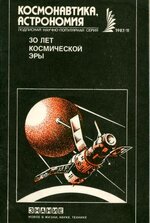
Цит. по: 30 ЛЕТ КОСМИЧЕСКОЙ ЭРЫ
Сборник статей
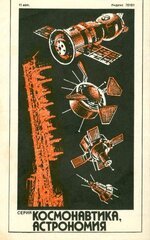
ПОДПИСНАЯ НАУЧНО-ПОПУЛЯРНАЯ СЕРИЯ
КОСМОНАВТИКА, АСТРОНОМИЯ
НОВОЕ В ЖИЗНИ, НАУКЕ, ТЕХНИКЕ №11.1987.
The Salyut 7 station was placed into orbit in April 1982 and represented an extremely complex spacecraft that embodied all the experience of our previous flights and research, as well as all the wisdom of our scientists and designers. It was designed for many years of operation and for complex and interesting research. Many valuable works had already been carried out on it. The station received several spacecraft from Earth, including four visiting expeditions, among them two international crews — Soviet-French and Soviet-Indian. In 1984 Leonid Kizim, Vladimir Solovyov, and Oleg Atkov completed their record-breaking 237-day mission aboard the station.
Another crew — Vladimir Vasyutin, Viktor Savinykh, and Alexander Volkov — was preparing to fly to it.
At that moment the station, as we say, “fell silent,” that is, it simply stopped transmitting any signals. Earth lost all information about the station. What had happened to it? Why was it silent? Had all the radio transmitters failed? Had the electrical power system malfunctioned for some reason? Had the solar panels been destroyed? All at once? Or perhaps a large meteorite had pierced the station and now it was nothing more than a piece of cold, twisted metal flying uselessly around the Earth?
Hundreds of such questions could be imagined. And the truth might turn out to be something no one could even think of. Space is space, and the unknown is threatening precisely because it is unknown. There is only one weapon against it — knowledge. And the only instrument capable of using this weapon in all its power, creatively and inventively, making decisions on the spot, is the human brain. No automatic system can fully accomplish such a task, because an automaton can do only what a human being has taught it to do. The duel with the unknown must be fought personally by the human mind.
In short, someone had to fly to Salyut 7 “...to sort things out there on the spot,” as Vladimir Vysotsky once sang in a humorous song about cosmonauts.
The choice fell on Vladimir Dzhanibekov and Viktor Savinykh. Dzhanibekov was one of the most experienced space pilots in our corps. By that time he had already completed four spaceflights. And perhaps most importantly, he was one of our most experienced specialists in manual spacecraft control. In 1982, as commander of the Soviet-French crew, he docked a spacecraft with this very station after switching to manual control at a distance of almost one kilometer — something none of us had done before.
In this case, approaching a “dead” station meant that both the rendezvous and the docking would have to be performed manually, because automatic docking is possible only when the station sends guiding signals to the spacecraft. The situation was further complicated by the fact that the “dead” station was slowly rotating in space, meaning that the pilot would have to “catch” the elusive docking port.
It was no coincidence that Viktor Savinykh was included in the crew, since he was one of the designers of the station and knew its systems, as the saying goes, like the palm of his hand.
Thus these two brilliant cosmonauts rose into orbit, located the silent station in the vastness of space, manually approached it, and manually docked with it. They found the station intact but completely without power — deprived of electrical supply. The malfunction was caused by a single small device that controlled the recharging of backup batteries from the solar panels. It was reading the data incorrectly and stubbornly disconnecting the solar panels, “believing” that the batteries were already fully charged. As a result, the batteries became completely discharged.
The cosmonauts fixed the malfunction, replaced the batteries, and “revived” the station. They checked all its systems node by node, cable by cable, contact by contact. During the first days they worked in terrible cold, because the heating system on the station was not functioning. “The Ice Age,” the cosmonauts joked.
It was difficult for them to breathe because on a powerless station the ventilation system naturally does not operate. The air remains motionless, and the carbon dioxide exhaled by a person stays as a cloud around him, separating him from the oxygen-rich atmosphere of the station.
They had water for only seven days, because that was the supply aboard the transport spacecraft, while the water in the station’s systems had frozen. In order to restore Salyut 7, they had to receive two cargo spacecraft, unload them, and reload them with equipment that was no longer needed. They also had to perform a spacewalk to inspect the outside of the station and extend its solar panels.
In short, it was truly heroic work. But they fully restored the station’s operability after spending more than 100 days aboard it. By autumn Salyut 7 was ready to receive a visiting expedition with a large and complex program. That expedition became my third spaceflight — together with Vladimir Vasyutin and Alexander Volkov.
Author: Georgy Grechko
Doctor of Physical and Mathematical Sciences, Cosmonaut of the USSR
Work: From the First Satellite to Orbital Scientific Complexes
Source: 30 Years of the Space Age Popular science series: Cosmonautics, Astronomy — New in Life, Science and Technology, No. 11. 1987
La estación Salyut 7 fue puesta en órbita en abril de 1982 y representaba un sistema espacial extremadamente complejo que incorporaba toda la experiencia de nuestros vuelos e investigaciones anteriores, así como toda la sabiduría de nuestros científicos y diseñadores. Estaba concebida para muchos años de funcionamiento y para la realización de investigaciones complejas e interesantes. En ella ya se habían llevado a cabo numerosos trabajos de gran valor. La estación recibió varias naves procedentes de la Tierra, entre ellas cuatro expediciones de visita, incluidas dos tripulaciones internacionales: una soviético-francesa y otra soviético-india. En 1984 realizaron en ella su vuelo récord de 237 días Leonid Kizim, Vladimir Solovyov y Oleg Atkov. También se preparaban para volar hacia ella Vladimir Vasyutin, Viktor Savinykh y Alexander Volkov.
Y en ese momento la estación, como decimos nosotros, «calló»; es decir, simplemente dejó de enviar cualquier señal. La Tierra perdió toda la información sobre la estación. ¿Qué había pasado? ¿Por qué guardaba silencio? ¿Habían fallado todos los transmisores de radio? ¿Se había averiado por alguna razón el sistema de alimentación eléctrica? ¿Se habían destruido los paneles solares? ¿Todos a la vez? ¿O quizá un gran meteorito había perforado la estación y ahora no era más que un pedazo de metal frío y retorcido, volando alrededor de la Tierra sin sentido ni utilidad?
Se podían imaginar cientos de preguntas como estas. Y la verdad podía resultar algo que nadie hubiera pensado. El cosmos es el cosmos, y lo desconocido es peligroso precisamente porque es desconocido. Contra él existe un solo arma: el conocimiento. Y el único instrumento capaz de utilizar esa arma en toda su fuerza, de manera creativa e inventiva, tomando decisiones en el propio lugar, es el cerebro humano. Ningún sistema automático puede resolver aquí la tarea por completo, porque un autómata solo sabe hacer aquello que el ser humano le ha enseñado. El duelo con lo desconocido debe librarlo personalmente el cerebro humano.
En resumen, alguien tenía que volar hacia Salyut 7 «…para aclarar allí mismo lo que sucede», como cantaba Vladimir Vysotsky en una canción humorística precisamente sobre cosmonautas.
La elección recayó en Vladimir Dzhanibekov y Viktor Savinykh. Dzhanibekov era uno de los pilotos espaciales más experimentados de nuestro destacamento. En aquel momento ya tenía cuatro vuelos espaciales. Y quizá lo más importante: era uno de nuestros mejores especialistas en control manual de la nave. En 1982, como comandante de la tripulación soviético-francesa, acopló la nave a esta misma estación pasando al control manual desde una distancia de casi un kilómetro, algo que ninguno de nosotros había hecho antes.
Y en esta ocasión, al dirigirse hacia una estación «muerta», sería necesario aproximarse y acoplarse manualmente, ya que el acoplamiento automático solo es posible cuando la estación envía señales de guía a la nave. La situación se complicaba porque la estación «muerta» giraba lentamente en el espacio, lo que significaba que el piloto tendría que «atrapar» el esquivo puerto de acoplamiento.
No fue casualidad que también se incluyera en la tripulación a Viktor Savinykh, pues él era uno de los diseñadores de la estación y conocía sus sistemas, como se dice, como la palma de su mano.
Y así, estos dos brillantes cosmonautas ascendieron a la órbita, encontraron en el inmenso espacio la estación silenciosa, se acercaron manualmente a ella y se acoplaron también manualmente. Encontraron la estación intacta, pero completamente «sin energía», es decir, sin suministro eléctrico. El problema se debía a un solo pequeño instrumento que controlaba la recarga de las baterías de reserva desde los paneles solares. Este dispositivo interpretaba incorrectamente los datos y desconectaba obstinadamente los paneles solares, «creyendo» que las baterías estaban completamente cargadas, lo que finalmente provocó su descarga total.
Los cosmonautas eliminaron la avería, reemplazaron las baterías y «revivieron» la estación; revisaron todos sus sistemas nodo por nodo, cable por cable, contacto por contacto. Durante los primeros días trabajaron en un frío terrible, ya que el sistema de calefacción no funcionaba. «Período glacial», bromeaban los cosmonautas. Les resultaba difícil respirar porque, en una estación sin energía, naturalmente no funciona la ventilación: el aire permanece inmóvil y el dióxido de carbono exhalado se queda como una nube alrededor de la persona, separándola de la atmósfera rica en oxígeno de la estación.
Solo tenían agua para siete días, porque esa era la reserva disponible en la nave de transporte, y el agua en los sistemas de la estación se había congelado. Para restaurar Salyut 7, tuvieron que recibir dos veces naves de carga, descargarlas y volver a cargarlas con lo que ya no era necesario. También tuvieron que realizar una caminata espacial para inspeccionar el exterior de la estación y ampliar los paneles solares.
En resumen, fue un trabajo verdaderamente heroico. Sin embargo, lograron restablecer completamente el funcionamiento de la estación tras pasar más de 100 días a bordo, y en otoño Salyut 7 estaba lista para recibir una expedición de visita con un amplio y complejo programa. Esa expedición fue mi tercer vuelo al espacio, junto con Vladimir Vasyutin y Alexander Volkov.
Autor: Georgy Grechko
Obra: Del primer satélite a los complejos científicos orbitales
Fuente: 30 años de la era espacial Serie científica-popular: Cosmonáutica, Astronomía — Novedades en la vida, la ciencia y la técnica, № 11. 1987
Я как-то спросил у жены Владимира Джанибекова Галины Мунировны, что такое космонавт с точки зрения его близких. Спросил в шутку, а услышал необычайно серьезное: — Это человек, которого надо жалеть.
— Вот те раз! «Жалеть?!»
— А что вы думаете? Ведь он себе не принадлежит. Он никогда не делает то, что ему хочется. Всегда только то, что надо. Он забывает о своем дне рождения. У него мольберт в кабинете стоит, но это скорее мечта о том несбыточном времени, когда «дойдут руки».
Кабинет у Владимира Джанибекова небольшой, за перегородкой столик с инструментами, над ним — книжная полка. Видно, что книги «обиходные», чтобы всегда были под рукой: «Высшая математика для инженеров», «Космические лучи России», «Радиоэлектронные приборы» и тут же — «Древнерусское искусство», «Фрески Рублева».
Увлечение радиоконструированием у него сочетается с увлечением цветомузыкой и музыкой вообще. В свой первый полет Владимир попросил переписать ему на кассету «Бахиану № 5» Вилла-Лобоса в исполнении Ольги Бессмертной.
Его посылали в короткие экспедиции, а он мечтал о длительных. Ему обещали, но каждый раз именно он оказывался нужным для «короткой программы».
И вот — пятый старт. Вместе с Виктором Савиных Владимир Джанибеков отправился к молчащей станции. Они еще не знали, что станция молчит потому, что там нет электроэнергии — все замерзло.
Земля такое предполагала, и в бортжурнале на этот случай было предписано: постараться снять неисправный блок радиосвязи и вернуться с ним на Землю.
После полета Джанибеков сказал журналистам: «Мы решили, что эту страницу журнала не откроем до тех пор, пока нам прямо не прикажут. Такого приказа не поступило. В них верили, потому что сами они верили в себя и друг в друга».
О том, как они вернули станцию к жизни, рассказано и написано много. Я слышал день за днем, как это происходило, и было ощущение, что в этом дуэте два голоса звучат как один.
Не было первого и второго, не было командира и подчиненного, ветерана и новичка.
Когда после возвращения Джанибекова на Землю были вопросы о его работе на станции, он не просто исправлял: «наша работа», а совершенно искренне говорил обо всем так, что порой создавалось впечатление, будто главное на станции сделал Виктор Савиных, а он, Владимир, по мере сил ему лишь помогал.
Живя одним делом, Джанибеков с уважением относится к работе других. Он считает, что если к нему обратятся, то это действительно остро необходимо, и если откажет, то пострадает дело, а это для него самый серьезный аргумент.
Вообще для него отказать в чем-то — это, как правило, мучительно трудно. Сколько раз, бывало, после аргументированного «нет» со вздохом следовало: «Ну хорошо…» — и он со всеми...
Так же, как и дружбу, нелюбовь у него «заслужить» непросто. Для Владимира все люди заведомо хорошие. И когда он сталкивается с ложью, непорядочностью, то воспринимает это как предательство. И не прощает — совсем и никогда!
О бескорыстии Джанибекова ходят легенды, и все они имеют достоверную основу.
В одном он «корыстен»: жаден до работы. Вспоминаю о его первом полете, когда Владимир вместе с Олегом Макаровым впервые полетел на станцию, где работал экипаж Ю. Романенко и Г. Гречко.
Это была первая экспедиция посещения, короткая, перегруженная заданиями и планируемой работой.
После ухода гостей Гречко, смеясь, рассказывал с орбиты:
— С Володей Джанибековым проблема была одна: отобрать у него вовремя инструмент, а то всю станцию переделает. Он даже ночью работает!
Нечто похожее было и во время его выхода вместе с С. Савицкой в открытый космос.
Из пятнадцати образцов, которые они резали, варили, паяли, «обстреливали» металлом с помощью электронной пушки, двенадцать достались на долю Джанибекова.
По циклограмме время их пребывания вне станции подходило к концу. С Земли идет предупреждение:
— Заканчивайте, пора возвращаться на станцию.
А в ответ — умоляющий голос Владимира:
— Ну дайте доварить, три образца осталось!..
Руководитель полета, космонавт В. Рюмин разрешил:
— Ладно, Володя, доваривай.
Автор: Петр ПЕЛЕХОВ
....................................................................................................................
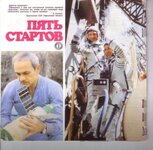
Фото слева: Космонавт Владимир Джанибеков с макетом станции "Салют - 7". Фото справа:
Члены экипажа космического корабля "Союз Т-13" летчик-космонавт СССР, дважды Герой Советского Союза, полковник Владимир Джанибеков (слева) и летчик-космонавт СССР, Герой Советского Союза Виктор Савиных. Фото А. Моклецова. Журнал "Кругозор", 1986 год, №12. I once asked Vladimir Dzhanibekov’s wife, Galina Munirovna, what a cosmonaut is from the point of view of his family. I asked jokingly, but heard a very serious answer. “A person who should be pitied.”
“What do you mean — pitied?”
“Well, he doesn’t belong to himself. He never does what he wants. Only what must be done. He even forgets his birthday. There is an easel in his office, but that is more a dream of that unlikely time when he might finally have time for it.”
Dzhanibekov’s office is small. Behind a partition there is a work table with tools, and above it a bookshelf. The books are clearly practical ones: Advanced Mathematics for Engineers, Cosmic Rays, Radio-Electronic Devices — and right next to them Old Russian Art and Andrei Rublev’s Frescoes.
His passion for radio engineering goes together with his love for color-music and music in general. For his first spaceflight Vladimir asked to have “Bachianas Brasileiras No. 5” by Heitor Villa-Lobos recorded for him on a cassette.
He was often sent on short missions, although he dreamed of long ones. He was promised such missions, yet each time he was needed for a “short program.”
Then came the fifth launch. Together with Viktor Savinykh, Dzhanibekov flew to a silent station. They did not yet know that the station was silent because it had lost electrical power — everything had frozen.
Earth had anticipated such a possibility. The onboard log instructed them, in that case, to try to remove the faulty radio communications unit and bring it back to Earth.
After the flight Dzhanibekov told journalists that they decided not to open that page of the instructions unless they received a direct order. No such order came.
Much has been written about how they brought the station back to life. Listening day after day to their reports, it felt as if in that duet two voices sounded like one.
There was no first or second, no commander or subordinate, no veteran or beginner.
When people later asked about his work on the station, Dzhanibekov always corrected them — not “my work,” but “our work.” Sometimes he spoke so sincerely that it seemed the main work had been done by Savinykh, while he himself had only helped.
Living for one cause, Dzhanibekov respects the work of others. If someone asks him for help, he believes it must be truly necessary. Refusing would harm the work — and that is the strongest argument for him.
Legends circulate about Dzhanibekov’s selflessness, and they all have real foundations.
In one thing he is “greedy”: greedy for work.
Cosmonaut Georgy Grechko once joked from orbit that the only problem with Dzhanibekov was taking tools away from him in time — otherwise he would rebuild the whole station. “He even works at night!”
Something similar happened during his spacewalk with Svetlana Savitskaya.
Out of fifteen experimental samples they processed in space — cutting, welding, soldering, and testing with an electron beam — twelve were done by Dzhanibekov.
When their scheduled time outside the station was nearly over, Earth warned them to return.
But Vladimir’s pleading voice came back over the radio:
“Just let me finish welding — only three samples left!”
Flight director Valery Ryumin finally said:
“All right, Volodya. Finish them.”
Author: Petr PELEKHOV
....................................................................................................................
Photo left: Cosmonaut Vladimir Dzhanibekov with a model of the Salyut 7 space station. Photo right:
Crew members of the Soyuz T-13 spacecraft: Soviet pilot-cosmonaut, twice Hero of the Soviet Union, Colonel Vladimir Dzhanibekov (left) and Soviet pilot-cosmonaut, Hero of the Soviet Union Viktor Savinykh. Photo by A. Mokletsov. Krugozor Magazine, 1986, No. 12. Una vez le pregunté a la esposa de Vladimir Dzhanibekov, Galina Munírovna, qué es un cosmonauta desde el punto de vista de sus familiares. Lo pregunté en broma, pero escuché una respuesta muy seria. “Es una persona a la que hay que compadecer.”
“¿Compadecer?”
“Sí. Porque no se pertenece a sí mismo. Nunca hace lo que quiere, solo lo que debe. Incluso se olvida de su cumpleaños.”
El despacho de Dzhanibekov es pequeño. Detrás de una partición hay una mesa con herramientas y, encima, una estantería con libros. Son libros prácticos: matemáticas para ingenieros, rayos cósmicos, dispositivos radioelectrónicos, junto a otros sobre arte ruso antiguo y los frescos de Andréi Rubliov.
Su afición por la electrónica se combina con el interés por la música y la música de colores. Para su primer vuelo espacial pidió que le grabaran en una cinta “Bachianas Brasileiras nº 5” de Heitor Villa-Lobos.
A menudo lo enviaban a misiones cortas, aunque él soñaba con vuelos largos.
Luego llegó el quinto lanzamiento. Junto con Viktor Savinykh voló hacia una estación silenciosa.
La Tierra suponía que podía tratarse de una avería eléctrica, por lo que el diario de a bordo indicaba que, si era posible, retiraran el bloque defectuoso de comunicaciones y lo trajeran de vuelta.
Después del vuelo, Dzhanibekov dijo que decidieron no abrir esa página de instrucciones hasta recibir una orden directa.
Mucho se ha escrito sobre cómo devolvieron la estación a la vida. Sus voces en comunicación sonaban como una sola.
No había primero ni segundo, ni comandante ni subordinado.
Las historias sobre el desinterés de Dzhanibekov son numerosas. Solo en una cosa es “codicioso”: en el trabajo.
El cosmonauta Georgy Grechko bromeaba desde la órbita diciendo que el único problema con Dzhanibekov era quitarle las herramientas a tiempo, porque si no, reconstruiría toda la estación. “¡Incluso trabaja por la noche!”
Algo parecido ocurrió durante su paseo espacial con Svetlana Savitskaya.
De quince experimentos que realizaron fuera de la estación, doce fueron realizados por Dzhanibekov.
Cuando su tiempo fuera de la estación estaba a punto de terminar, desde la Tierra les ordenaron regresar.
Pero desde el espacio se escuchó la voz suplicante de Vladimir:
“¡Déjenme terminar de soldar, solo quedan tres muestras!”
El director de vuelo Valery Ryumin finalmente respondió:
“Está bien, Volodia, termina.”
Autor: Petr Pelekhov
....................................................................................................................
Foto izquierda: El cosmonauta Vladimir Dzhanibekov con una maqueta de la estación espacial Salyut 7. Foto derecha:
Tripulantes de la nave espacial Soyuz T-13: el coronel Vladimir Dzhanibekov, piloto-cosmonauta soviético y dos veces Héroe de la Unión Soviética (izquierda), y Viktor Savinykh, piloto-cosmonauta soviético y Héroe de la Unión Soviética. Fotografía de A. Mokletsov. Revista Krugozor, 1986, n.º 12.
"Космонавты открыли люк и перешли в рабочий отсек станции. Температура в отсеке оказалась ниже нуля градусов по Цельсию. Еще в переходном отсеке В. Джанибеков проверил напряжение на одной из розеток—оно оказалось равным нулю. Подтвердились самые худшие опасения...
Подать напряжение от корабля нельзя, а вдруг в электрических цепях станции окажется неисправность, которая выведет из строя систему электропитания корабля, и спуск его, возвращение на Землю окажутся
невозможными. Нет—рисковать жизнью экипажа нельзя. Нашли и реализовали довольно сложную процедуру восстановления СЭП(Система Энерго - Питания) . По разработанным на Земле методикам экипаж разобрал схему подключения химических батарей к шинам питания. Путем прозвонок
были определены и исключены из дальнейших работ неисправные химические батареи. Их, к счастью, оказалось не так уж много—две из восьми... По инструкции
с Земли экипаж изготовил необходимые кабели для такого подключения. И 10 июня первая батарея была поставлена на заряд.
Станцию за счет работы системы управления корабля и его управляющих реактивных двигателей ориентировали таким образом, чтобы подключенные солнечные батареи были освещены. Через несколько часов первый блок был частично заряжен. Его подключили к шинам СЭП...
После заряда первой батареи в том же порядке зарядили и остальные. В процессе работы с ними выяснили и причины выхода из строя СЭП — в одной из батарей оказался неисправным датчик, указывающий на полный заряд батареи...
После заряда буферных батарей В. Джанибеков и В. Савиных восстановили нормальную электрическую схему, и начали работать: система энергопитания, система ориентации солнечных батарей, система терморегулирования, телеметрия. Экипаж установил исправную аппаратуру командной радиолинии, появились свет и тепло. 16 июня «пошла вода», начал таять лед в системе «Родник». Кризис был позади...
Было принято решение срочно подготовить к запуску грузовой корабль, главной задачей которого должна была быть доставка воды на станцию. Надо было в кратчайшие сроки испытать, заправить и подготовить к
запуску корабль и его ракету-носитель. На рассвете 23 июня «Прогресс-24» причалил к станции.
Конечно, аппаратура станции подвергалась тяжелому испытанию. Поэтому после восстановления СЭП необходимо было выполнить и другие ремонтные и профилактические работы...
Надо сказать, что Владимир Джанибеков и Виктор Савиных, проявив настоящее мужество, в очень тяжелых условиях с высокой тщательностью провели все операции по восстановлению станции. Нельзя не отметить самоотверженную работу персонала Центра управления и всех инженеров, участвовавших в анализе
ситуации, разработке программ и методик по восстановлению работоспособности станции. В ходе первого месяца полета получены уникальные данные и опыт по восстановительным работам в космосе, по возможностям выполнения таких сложных ремонтных операций".
.............................................................................................................................................................................
(«Мужество «Памиров», газета "Правда", 5 августа 1985 года)). Автор: К. П. Феоктистов, герой Советского Союза, летчик-космонавт СССР.
...............................................................
На фото : работоспособность станции "Салют-7" полностью восстановлена. Она продолжает нести свою вахту на орбите.
................................................................
Цит. по: "Первые в мире. Страницы космических стартов". Фотоальбом. Москва. Издательство "Планета"
1987 г.
The cosmonauts opened the hatch and entered the working compartment of the station. The temperature inside was below zero degrees Celsius.
Already in the transfer compartment Vladimir Dzhanibekov checked the voltage in one of the sockets — it was zero. The worst fears were confirmed.
Supplying power from the spacecraft was impossible: if there was a fault in the station’s electrical circuits, it could disable the spacecraft’s power system, making descent and return to Earth impossible. The crew’s lives could not be risked.
A rather complex procedure for restoring the power supply system was devised and carried out. Using methods developed on Earth, the crew dismantled the circuit connecting the chemical batteries to the power buses. By testing the circuits they identified and excluded the faulty batteries. Fortunately, there were not many — two out of eight.
Following instructions from Earth, the crew manufactured the necessary cables for the new configuration. On June 10 the first battery was placed on charge.
Using the spacecraft’s control system and its attitude-control thrusters, the station was oriented so that the connected solar panels were illuminated. After several hours the first battery block was partially charged and connected to the station’s power buses.
After charging the first battery, the remaining ones were charged in the same way. During the process the cause of the failure became clear — one battery had a faulty sensor that incorrectly indicated a full charge.
After charging the buffer batteries, Vladimir Dzhanibekov and Viktor Savinykh restored the normal electrical configuration. The power system, the solar-panel orientation system, thermal regulation, and telemetry began functioning again. The crew installed working command radio equipment — light and heat returned.
On June 16 water began to flow again as the ice melted in the Rodnik water system. The crisis was over.
It was decided to urgently prepare a cargo spacecraft whose main task would be to deliver water to the station. The spacecraft and its launch vehicle had to be tested, fueled, and prepared for launch in the shortest possible time.
At dawn on June 23 Progress 24 docked with Salyut 7.
The station’s equipment had undergone severe stress, so after restoring the power system additional repair and preventive work had to be carried out.
It must be said that Vladimir Dzhanibekov and Viktor Savinykh, showing true courage, carefully performed all operations to restore the station under extremely difficult conditions.
Equally noteworthy was the selfless work of the Mission Control personnel and the engineers who analyzed the situation and developed procedures to restore the station’s functionality.
During the first month of the mission, unique experience and data were obtained about repair work in space and the possibilities of carrying out such complex technical operations.
..........................................................................................................................................................................
“Courage of the ‘Pamirs’,” newspaper Pravda, August 5, 1985.
Author: Konstantin Feoktistov, Hero of the Soviet Union, pilot-cosmonaut of the USSR.
..........................................................................................................................................................................
In the photo: the operational capability of the station Salyut 7 has been fully restored. It continues to carry out its watch in orbit.
........................................................................................................................................................................
Quoted from the photo album The First in the World: Pages of Space Launches, photo album, Planeta Publishing House, Moscow, 1987.
Los cosmonautas abrieron la escotilla y pasaron al compartimento de trabajo de la estación. La temperatura allí estaba por debajo de cero grados Celsius.
Ya en el compartimento de transición Vladimir Dzhanibekov comprobó el voltaje en uno de los enchufes: era cero. Se confirmaron los peores temores.
No era posible suministrar energía desde la nave, ya que si existía una avería en los circuitos eléctricos de la estación, podría inutilizar el sistema eléctrico de la nave y hacer imposible el regreso a la Tierra. No se podía arriesgar la vida de la tripulación.
Se encontró y aplicó un procedimiento bastante complejo para restaurar el sistema de energía. Siguiendo métodos desarrollados en la Tierra, la tripulación desmontó el circuito de conexión de las baterías químicas a las barras de alimentación. Mediante comprobaciones eléctricas se identificaron y aislaron las baterías defectuosas. Afortunadamente no eran muchas: dos de ocho.
Siguiendo instrucciones desde la Tierra, la tripulación fabricó los cables necesarios para la nueva conexión. El 10 de junio la primera batería fue puesta en carga.
La estación fue orientada mediante el sistema de control de la nave y sus motores de maniobra para que los paneles solares conectados recibieran iluminación. Después de algunas horas el primer bloque de baterías estaba parcialmente cargado y fue conectado al sistema eléctrico.
Posteriormente se cargaron las demás baterías del mismo modo. Durante el proceso se descubrió la causa del fallo: uno de los sensores de una batería indicaba erróneamente que estaba completamente cargada.
Después de cargar las baterías de reserva, Vladimir Dzhanibekov y Viktor Savinykh restauraron el esquema eléctrico normal. Volvieron a funcionar el sistema de energía, el sistema de orientación de los paneles solares, la regulación térmica y la telemetría. La tripulación instaló equipos operativos de radio-comando y regresaron la luz y el calor.
El 16 de junio volvió a fluir el agua cuando comenzó a derretirse el hielo en el sistema Rodnik. La crisis había terminado.
Se decidió preparar urgentemente una nave de carga cuya tarea principal sería llevar agua a la estación. Era necesario probar, abastecer y preparar rápidamente la nave y su cohete lanzador.
Al amanecer del 23 de junio la nave Progress 24 se acopló a la estación Salyut 7.
Sin duda, los equipos de la estación habían sufrido una dura prueba, por lo que después de restaurar el sistema energético fue necesario realizar otros trabajos de reparación y mantenimiento.
Hay que decir que Vladimir Dzhanibekov y Viktor Savinykh, demostrando verdadero valor, realizaron con gran precisión todas las operaciones de recuperación de la estación en condiciones extremadamente difíciles.
También debe destacarse el trabajo abnegado del personal del Centro de Control y de los ingenieros que participaron en el análisis de la situación y en el desarrollo de los métodos para restaurar el funcionamiento de la estación.
Durante el primer mes de vuelo se obtuvieron datos y experiencia únicos sobre trabajos de reparación en el espacio y sobre la posibilidad de realizar operaciones técnicas tan complejas.
....................................................................................................................................................
«El valor de los “Pamirs”», periódico Pravda, 5 de agosto de 1985.
Autor: Konstantin Feoktistov, Héroe de la Unión Soviética, cosmonauta-piloto de la URSS.
..................................................................................................................................................
En la foto: la capacidad operativa de la estación Salyut 7 ha sido completamente restaurada. Continúa cumpliendo su misión en órbita.
.................................................................................................................................................. Citado según el álbum fotográfico: Los primeros en el mundo. Páginas de los inicios espaciales, álbum fotográfico, editorial "Planeta". Moscú, 1987.
История советской космонавтики в фотографиях. ...........................................................................................................
Командир корабля «Союз Т-13» В. А. Джанибеков и бортинженер В. П. Савиных на макете станции «Салют» уточняют детали предстоящей работы в космосе.
Звёздный городок, май 1985 года.
................................................................................................
В зале тренажёров.
Звёздный городок, июнь 1985 года.
..............................................................................................
Встреча с журналистами перед стартом.
Космодром Байконур, 6 июня 1985 года. The history of Soviet cosmonautics in photographs.
.................................................................................................
The commander of the spacecraft Soyuz T-13, Vladimir Dzhanibekov, and flight engineer Viktor Savinykh examine a model of the Salyut program station, clarifying details of the upcoming work in space. Star City, May 1985.
................................................................
In the training hall.
Star City, June 1985.
...............................................................
Meeting with journalists before launch. Baikonur Cosmodrome, June 6, 1985.
La historia de la cosmonáutica soviética en fotografías. ..................................................................................................
El comandante de la nave Soyuz T-13, Vladimir Dzhanibekov, y el ingeniero de a bordo Viktor Savinykh examinan el modelo de la estación Salyut program, уточняя los detalles del próximo trabajo en el espacio.
Ciudad de las Estrellas, mayo de 1985.
..............................................................................
En la sala de simuladores.
Ciudad de las Estrellas, junio de 1985.
...............................................................................
Encuentro con periodistas antes del lanzamiento. Cosmódromo de Baikonur Cosmodrome, 6 de junio de 1985.
История советской космонавтики в фотографиях. ...................................................................................................
Спасибо за надежность! - от всей души пишет на борту спускаемого аппарата Владимир Джанибеков. The history of Soviet cosmonautics in photographs. ................................................................................................... Thank you for your reliability! - Vladimir Dzhanibekov writes heartily aboard the descent module.
La historia de la cosmonáutica soviética en fotografías. ................................................................................................... ¡Gracias por su fiabilidad! —escribe Vladimir Dzhanibekov con entusiasmo a bordo del módulo de descenso.
Космическая живопись в СССР. ......................................................................
10-й Международный экипаж В.А.Джанибеков, А.С.Иванченков и Ж.Л.Кретьен (Франция). Холст, масло. 190х140. 1983.
Художник: Рязанов Юрий Филиппович Space painting in the USSR.
.............................................................. 10th International Crew: V.A. Dzhanibekov, A.S. Ivanchenkov, and J.L. Chrétien (France). Oil on canvas. 190x140 cm. 1983.
Artist: Yuri Filippovich Ryazanov Pintura espacial en la URSS. .........................................................
10.ª Tripulación Internacional: V.A. Dzhanibekov, A.S. Ivanchenkov y J.L. Chrétien (Francia). Óleo sobre lienzo. 190 x 140 cm. 1983. Artista: Yuri Filippovich Ryazanov
This site uses cookies to help personalise content, tailor your experience and to keep you logged in if you register.
By continuing to use this site, you are consenting to our use of cookies.