Question First sub-orbital launch

Thats wrong. 110 km (89 minutes period) would already mean reentry before the orbit is complete.
Yes. Safe Hp for the shuttle is around 82 n.mi (151.864 km). Below this altitude stable orbit is not assured for 24 hrs.

Safe Hp is the point where a de-orbit burn could be stopped for any reason and you would be assured of at least 24 hrs in a stable orbit. Once you have passed Safe Hp you are committed to entry and landing somewhere and it is better to continue the burn rather than doing an early cut-off.
 
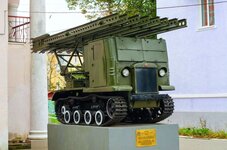
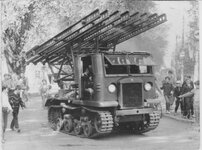
BM-13-16 rocket launcher (1938) maximum missile flight ceiling 80km
I exaggerated the maximum flight altitude of M-13 missiles 18km

In 1940, organization of mass production of rocket launchers (Katyusha) and development of new multiple rocket launchers.
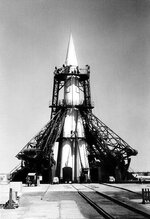
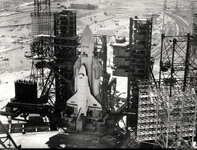
In 1946, the design bureau was transformed into the State Union Bureau of Special Machine Building. Under the leadership of Barmin, launch complexes for ballistic missiles R-1, R-2, R-5, R-12, R-14, as well as launch complexes for Soyuz, Proton, N-1 space rockets were developed. , "Energy".

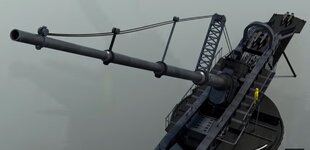
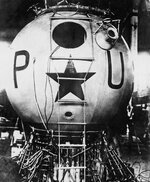
that is, the BM-13 family tree looks like this
54104405.jpg1478550098-887456808cca255532e0e744f75b6846.jpg207709.jpg
 
Last edited:
Well, an rather extended family. Also the institute is not very specific, actually it was the RNII, the former gasdynamic laboratory, while the Special Maschine Building organisation over it literally covered every that was more complex than a tractor. Also the RNII changed the organisations over it a few times: People’s Commissariat of Ammunitions, Commissariat of the Defense industry, later Commissariat of Aviation Industry.

And in that RNII, the names of the people involved would tell more of a story: Langemak, Glushko, Pobedonoszev, Korolev. It was there, where Korolev was denounced by Glushko.
 
Back
Top