Updates Blue Origin announces the New Glenn Orbital Launch Vehicle

And payload figures; 45 tons to LEO, and 13 tons to GTO. Both are for the two-stage version with booster recovery.


Then the expendable version might have comparable payload to LEO as the expendable Falcon Heavy at ca. 54 metric tons, and two launches giving 100+ metric tons.

Note that 100 metric tons is the number often cited as the payload to LEO needed to mount a manned lunar landing mission. So in the next few years we will have multiple launchers capable of returning us to the Moon.

Bob Clark
 
Then the expendable version might have comparable payload to LEO as the expendable Falcon Heavy at ca. 54 metric tons, and two launches giving 100+ metric tons.

Note that 100 metric tons is the number often cited as the payload to LEO needed to mount a manned lunar landing mission. So in the next few years we will have multiple launchers capable of returning us to the Moon.

Bob Clark
Expendable? That's not in the playbook, from what I can tell. Why design it from the ground up as a reusable launcher if you're going to throw it away?

Remember, Jeff has publicly stated that this will be the smallest orbital launcher. If they need more upmass, they'll build a bigger rocket.

---------- Post added 03-09-17 at 00:21 ---------- Previous post was 03-08-17 at 22:30 ----------

C6PUsspWYAAVu1Z.jpg

Jeff Bezos said:
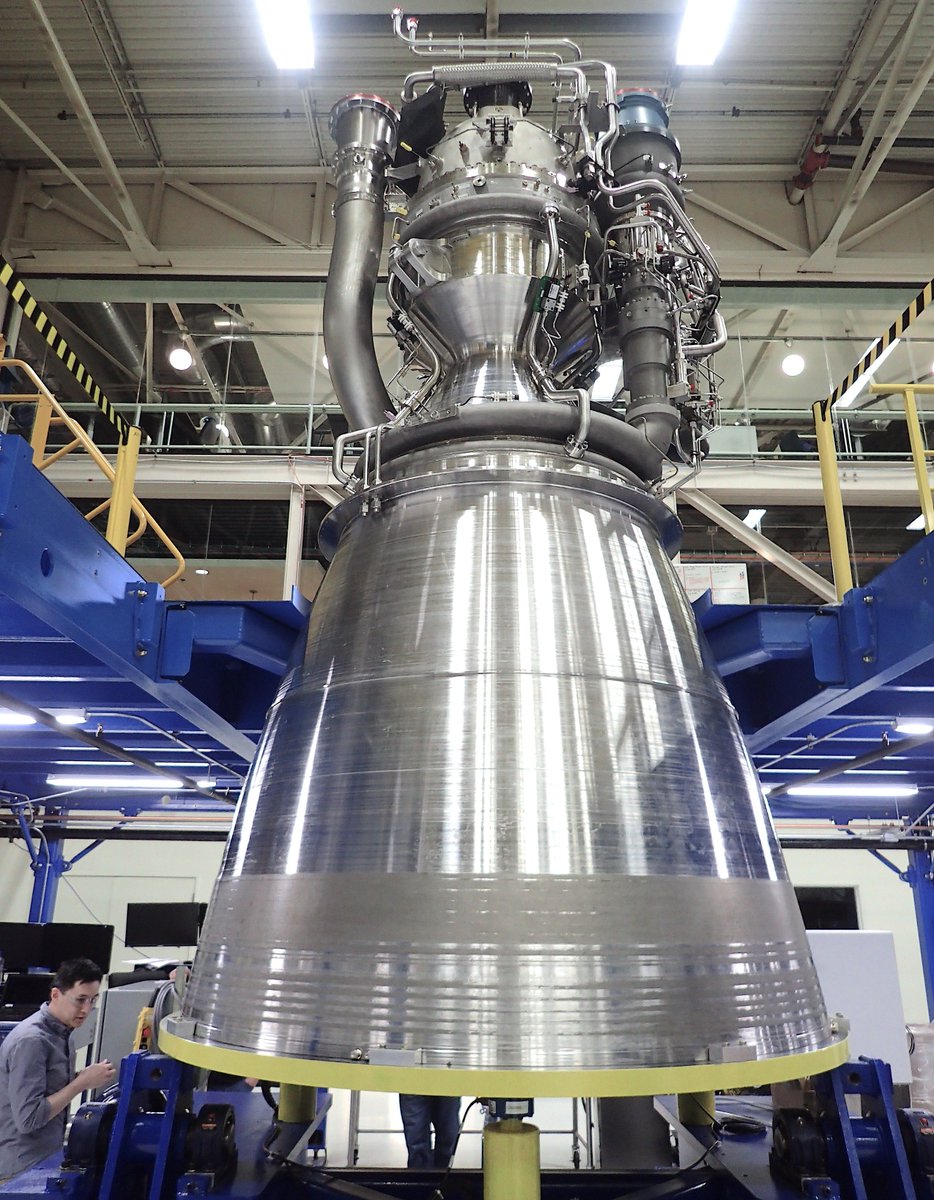
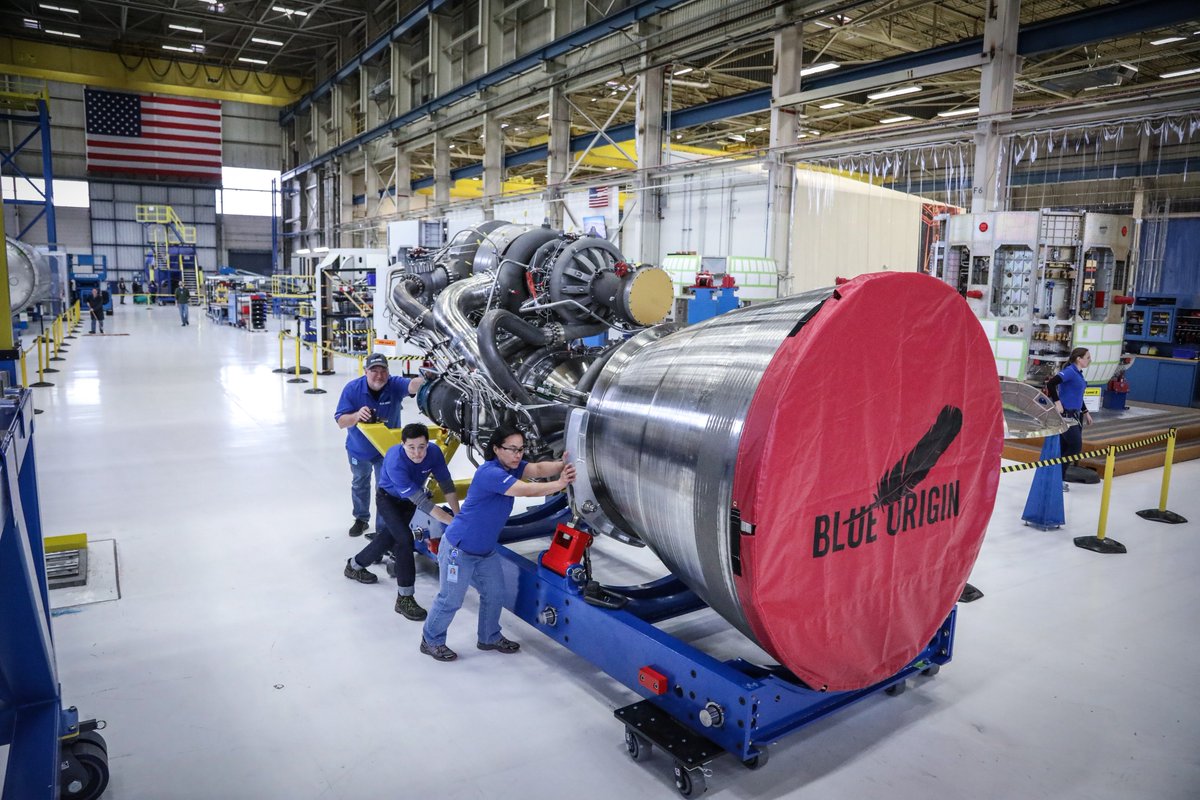
1st BE-4 engine fully assembled. 2nd and 3rd following close behind.

C6PVqvpWMAIDq4V.jpg

Here’s one more shot of BE-4 in its transport cradle.

Probably not flight-spec engines, but still... That looks awesome. That was a bunch of parts scattered around the shop when I went through a few months back. Glad to see it assembled and ready to run.
 
Then the expendable version might have comparable payload to LEO as the expendable Falcon Heavy at ca. 54 metric tons, and two launches giving 100+ metric tons.

Note that 100 metric tons is the number often cited as the payload to LEO needed to mount a manned lunar landing mission. So in the next few years we will have multiple launchers capable of returning us to the Moon.

Bob Clark
Payload capacity of SATURN V was 115 metric ton to LEO, 50 Mt to lunar
trajectory

FALCON HEAVY is rated at 16 MT to lunar trajectory - 1/3 of SATURN V
 

The planned lander is to carry a 10,000 pound payload to the lunar surface. This is about the size of the gross mass of the ascent stage of the Apollo lunar lander.

https://en.wikipedia.org/wiki/Apollo_Lunar_Module#Ascent_stage

Actually a lighter ascent stage could be formed using the, already built and tested, methane Morpheus lander:

http://en.wikipedia.org/wiki/Project_Morpheus#Hardware_specifications

Then the Blue Origin cargo lunar lander planned for 2020 could serve as the descent stage of a manned lander in 2020 also.

Bob Clark
 
Payload capacity of SATURN V was 115 metric ton to LEO

Nope
140 tons is the most recently accepted value (never exploited in full)
My Excel spreadsheet with the rocket equation says 132,700 kg :lol:
 
Last edited:
I'd wager that the lander they're pitching to NASA is as small as it is because they want to launch it as a single flight.
Slap a nozzle extension on the BE-3 and that's easily 250 tons of payload, fuel, and lander to the surface of the Moon.
 
The planned lander is to carry a 10,000 pound payload to the lunar surface. This is about the size of the gross mass of the ascent stage of the Apollo lunar lander.

https://en.wikipedia.org/wiki/Apollo_Lunar_Module#Ascent_stage

Actually a lighter ascent stage could be formed using the, already built and tested, methane Morpheus lander:

http://en.wikipedia.org/wiki/Project_Morpheus#Hardware_specifications

Then the Blue Origin cargo lunar lander planned for 2020 could serve as the descent stage of a manned lander in 2020 also.

Bob Clark

Apollo LEM weighed in at 15,000 KG (16,500 KG in later extended stay mod)

Should be possible to shave off some weight using modern materials and
electronics
 
Apollo LEM weighed in at 15,000 KG (16,500 KG in later extended stay mod)
Should be possible to shave off some weight using modern materials and
electronics

Yes. That's the total weight for both descent and ascent stages of the Apollo LEM. The article on the Blue Origin cargo lunar lander doesn't give the total weight, only the payload as 10,000 lbs. This is about the weight of the ascent stage of the Apollo lander.

So the Blue Origin cargo lunar lander could serve as the descent stage for an Apollo style manned ascent stage.

But actually the Project Morpheus lander using lighter methane fuel with also a higher ISP would provide an even lighter ascent stage for the BO descent stage.

Bob Clark
 
You still need a return to earth stage in order for an ascent stage to be of any use. Lots of different ways to tackle that problem besides the Apollo method.
 
First off, this is a CARGO lander, not a crew lander.
Second, have they announced the engine it's supposed to use, or the propellants for said engine? I know that Blue has designed four engines to date. We know a good bit about both the BE-3 and the BE-4, but what about -1 and -2?
 

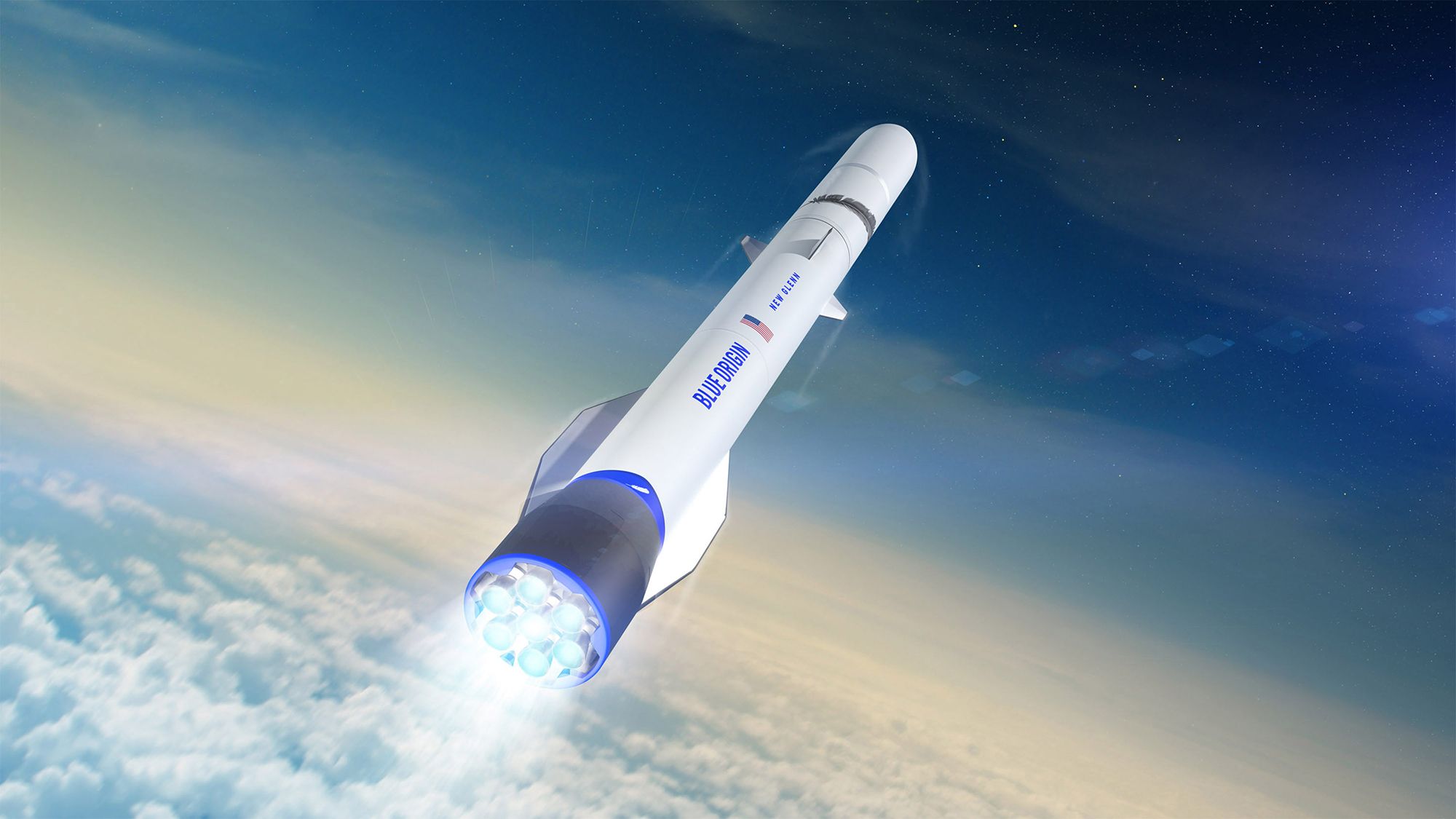
Debuting from Launch Complex 36 at Cape Canaveral, Florida in 2021, New Glenn will serve commercial, civil and national security customers from around the world. Featuring a 7 meter fairing with more than 2X the available volume of any rocket flying today and twin BE-3U engines powering the most capable upperstage in the market, New Glenn can launch the full range of satellite payloads. Seven reusable BE-4 engines generating 3.85 million pounds of thrust power the first stage designed to launch 25 times and land safely down range on a moving ship. New Glenn is beginning to take shape at our state-of-the-art rocket factory.
 
Somewhat dated, but just posting here for those who might be interested:


Gradatim ferociter isn't really cutting it. SpaceX Starship / Superheavy might actually orbit this year, and who knows what that program will be doing by 2023.
 
  • Like
Reactions: GLS
Most times than not "late <year>" is PR-lingo for "early <year+1>".
 
"Puny rocket, they should add moar boosters !"

J. K.
 
Are they making any progress building a rocket to put this fairing on? I am aware of the GS1 simulator, but last I read they were still working on settling a final design. They are stating a launch date sometime in late 2022, which seems more than ambitious based on what I have seen to date, but maybe I'm not seeing it all.
 
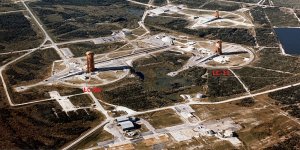
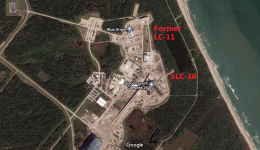
Blue Origin is doing a lot of things behind the scenes, so you can't well speculate whether New Glenn will delay further or not. Anyway, the Space Launch Complex 36 in 2022 is actually larger than the Launch Complex 36 in 1964, and in fact, the SLC-36 is a merger of the former LC-11 and LC-36.

LC-36 and LC-11 in 1964 (credit: NASA)
Aerial_View_of_Missile_Row.jpg

SLC-36 in 2022 (credit: Maxar)
SLC-36.PNG
 
Back
Top