Report on 777 crash in January


The high pressure (HP) fuel pumps from both​
engines have unusual and fresh cavitation damage to the
outlet ports consistent with operation at low inlet pressure.
The evidence to date indicates that both engines had low
fuel pressure at the inlet to the HP pump. Restrictions in
the fuel system between the aircraft fuel tanks and each​
of the engine HP pumps, resulting in reduced fuel flows,​
is suspected.
I assume the restriction they mean is frozen, or partially frozen fuel in the fuel lines? How does jet fuel behave when its cooled to these temperatures? Does it form a slush, or just rapidly go solid?
Its odd this happened at the end of the flight, when the ambient temerature is increasing.
I suppose the aircraft had been in a cruise/descent mode for some time, so fuel flow would have been low. Maybe the sudden increased demand for more thrust during the actual landing, disturbed partially frozen fuel, and this moved into the HP pumps, blocking them?
Its worrying it happened to both engines within a short period of time. Be interesting to see the final report.

N.
 
I think the problem is that the metal tubes inside the airplane don't heat up as fast as the surrounding air. Also, pressure has a big effect on the temperature fuel freezes. It is maybe -57°C at normal pressure, but can be much higher when pressurized by the low pressure pumps.

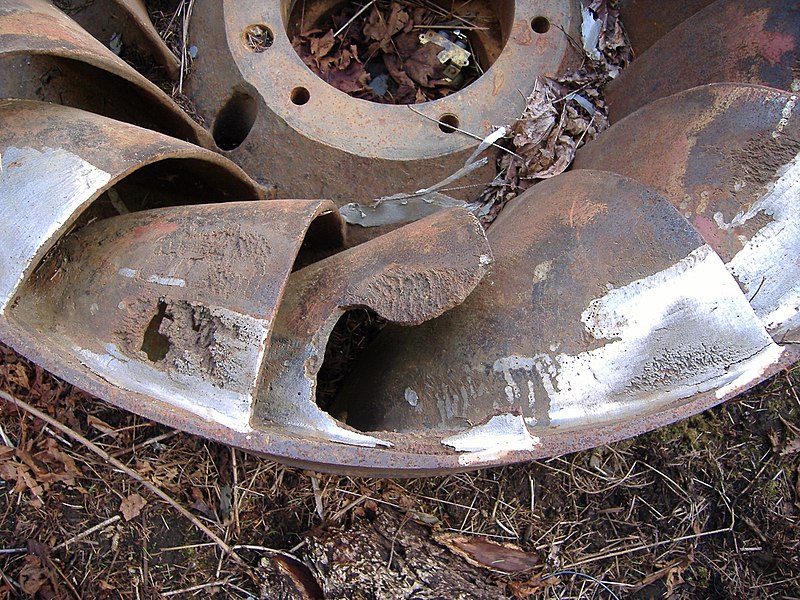
The damage to the HP pumps was caused by not enough fuel arriving at the pump inlet. Pumps can only do a limited pressure increase, so many high pressure pumps require a minimum inlet pressure to generate the output pressure. If not enough inlet pressure is there, the pump torques are lower and the pump over speeds. The pressures at the inlet drop even more and vapor bubbles create at regions of especially low pressure. The bubbles collapse again microseconds later and the collapse can do severe damage to propeller surfaces by generating tiny high pressure liquid jets. Looks at the end like that:

800px-Turbine_Francis_Worn.JPG
 
Nasty; if thats what the aircraft pumps look like, it wouldn't have done the rest of the engine downstream of that damage much good.
All that metal would go somewhere, probably somewhere you wouldn't want it!

N.
 
Nasty; if thats what the aircraft pumps look like, it wouldn't have done the rest of the engine downstream of that damage much good.
All that metal would go somewhere, probably somewhere you wouldn't want it!

I doubt it will work as bad. The picture is from a old water turbine, which had been in operation for years.

But the rough zones on the turbine propeller blades will be also on the HP propellers. It should also generate some amounts of noise.
 
I had a friend who did that, once...

N.

I have lots of funny stories about Aeroflot from a friend who flew quite often with them. Their piloting is not always for the timid. ;)
 
My friend was on a flight to Kuala Lumpur, to see his in-laws. I dropped him off at Heathrow, and assumed that was it.
Two days later I got a phone call if I fancied a beer. Odd request, but Aeoroflot were puting him up in a dodgy hotel, with various expenses paid. It seems the aircraft wasn't where it should have been. We did laugh.

N.
 
Back
Top