General Question Real world STS operations

chevelle505

Member
Joined
May 14, 2018
Messages
90
Reaction score
6
Points
8
So setting up another STS mission and it got me wondering, in real life..would nasa ALWAYS close the rss around the orbiter before a launch regardless of payload needs to protect the orbiter from weather etc or was this only don’t to load payloads? What about occasions where there was no payload, just going to the ISS for example?From what I remember it seems like they’d roll out the shuttle roughly two weeks before launch. When did they close/open the rss? Was it kept around the orbiter until right before the launch?
 
So setting up another STS mission and it got me wondering, in real life..would nasa ALWAYS close the rss around the orbiter before a launch regardless of payload needs to protect the orbiter from weather etc or was this only don’t to load payloads?

Yes, always, because the RSS has to be closed for tanking the OMS/RCS with propellant.

When did they close/open the rss? Was it kept around the orbiter until right before the launch?

I would need to check the countdown specs again, but maybe @DaveS will be faster than me to answer that question, he is quite the expert regarding the Shuttle ground operations.
 
Yes, always, because the RSS has to be closed for tanking the OMS/RCS with propellant.


I would need to check the countdown specs again, but maybe @DaveS will be faster than me to answer that question, he is quite the expert regarding the Shuttle ground operations.
After the first few launches and as they made the system operational, the RSS MOVE TO PARK operation was done during the lengthy hold at T-11 hours, somewhere around Launch-(L-)18 hours. There was a sizeable margin(around 5 hours IIRC) built into the schedule to allow the operation to be delayed without impacting downstream operations and this frequently happened.

And, yes the RSS was needed not only for servicing the orbiter OMS/RCS propellants through the Hypergolic propellant Umbilical System (HUS) but also the loading/draining of the fuel cell reactants through the Orbiter Mid-Body Umbilical Unit (OMBUU, "ohmbuh"). The RSS was usually rotated to the MATE position around the orbiter about 6-12 hours after the vehicle was harddown on the mounts at the pad and the Crawler had reached the nominal park position just outside the pad gates.

This coincided with other post-arrival operations such as extending the Orbiter Access Arm, the GOX Vent Arm and the Intertank Access Arm and connecting the MLP electrical, data and fluid lines to the pad. All part of Operational Maintenance Instruction (OMI) S0009 Launch Pad Validation. The rollout itself was OMI A5214 SSV XFR TO PAD.
 
Last edited:
Awsome guys thanks! I always wondered this, so am I correct with rollout to the pad being roughly two weeks before scheduled launch day?
 
Awsome guys thanks! I always wondered this, so am I correct with rollout to the pad being roughly two weeks before scheduled launch day?
Around that time, yes but could be longer if more operations had been added on such as on STS-114 where they added a Integrated Tanking Test (ITT, S0019) to verify that the design modifications done to the External Tank in the wake of the Columbia accident worked properly. For that rollout was on April 6 2005, with the tanking test occurring on April 14 2005 with launch scheduled for May 15 2005: https://web.archive.org/web/20060221120111/http://spaceflightnow.com/shuttle/sts114/050414tanking/
 
Gotchya 👍 Thanks for the info guys, y’all are a wealth of knowledge…much appreciated!!
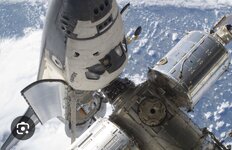

 
Hey guys, so I figured rather than start a new thread every time (or anyone else) has a silly shuttle question, I’d just keep it within this one regarding real world operations and learning how they actually did things. Anyway, something else I was wondering about is with regards to the Shuttle at the ISS. I came across this picture and noticed that it doesn’t appear she had the radiators deployed? Is there a reason for this? I was always under the impression they were vital for cooling and were deployed shortly after they opened the bay doors. I’m currently docked to ISS with Atlantis and have my radiators deployed..is this wrong?

Second, does the ISS hold the same attitude or does it free float? I had the thought much like the orbiter would usually keep the cargo bay facing the planet for better cooling..would the ISS do something similar?
 

Attachments

  • IMG_6768.jpeg
    IMG_6768.jpeg
    109.7 KB · Views: 5
  • Like
Reactions: STS
Hey guys, so I figured rather than start a new thread every time (or anyone else) has a silly shuttle question, I’d just keep it within this one regarding real world operations and learning how they actually did things. Anyway, something else I was wondering about is with regards to the Shuttle at the ISS. I came across this picture and noticed that it doesn’t appear she had the radiators deployed? Is there a reason for this? I was always under the impression they were vital for cooling and were deployed shortly after they opened the bay doors. I’m currently docked to ISS with Atlantis and have my radiators deployed..is this wrong?

Second, does the ISS hold the same attitude or does it free float? I had the thought much like the orbiter would usually keep the cargo bay facing the planet for better cooling..would the ISS do something similar?
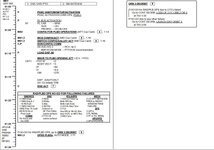
Forward radiator deployment was only done when necessary as those panels had coolant tubes on both sides, while the aft radiator panels on had them on one side. Switching from Flash Evaporator System (FES) cooling to radiator cooling is part of the Post Insertion checklist.

And ISS always maintained a stable attitude during docked operations, up to STS-113 it was US Lab forward, pitched up 20°s. Starting with STS-114, they changed it to Russian Service Module forward still pitched up 20°s to protect the tiles and RCC of the orbiter from MMOD impacts.
 

Attachments

  • STS114_PI_BLK7_RAD_ACT.jpg
    STS114_PI_BLK7_RAD_ACT.jpg
    57.2 KB · Views: 9
  • STS114_PI_BLK7_RAD_ACT_timeline.jpg
    STS114_PI_BLK7_RAD_ACT_timeline.jpg
    73.1 KB · Views: 9
They are vital for cooling. But only the forward ones can be deployed for improving the efficiency of them and increase the heat rejection power. You must not deploy them extra, opening the payload bay is enough. Also the Orbiter gets a lot of heat from Earth, even on the nightside. Positioning the radiators to face deep space, away from the sun, would be better, but its also more risky to get impacts on them. Deploying them increases the effective surface of the radiators by about 70%, but the deployable radiators are also much heavier.

If you like to read about the HARD questions of the radiators, here is a nice report about it: https://ntrs.nasa.gov/api/citations/19850008616/downloads/19850008616.pdf

And the ISS has many attitude control modes, after docking for example, it switches into a free mode to permit any oscillations of the docking to calm. It also has some kind of gravity gradient stabilized position, where the control moment gyroscopes need less power to keep the orientation stable.
 
Tried switching from FES to radiator cooling, im assuming its not modeled yet? Either way thanks for the responses guys, so basically they're not used normally unless needed? Just the cargo doors being enough makes me wonder what kind of circumstances would require the forward radiators to need to be deployed. I dont see many photos online with them actually deployed on the shuttle
 
Tried switching from FES to radiator cooling, im assuming its not modeled yet? Either way thanks for the responses guys, so basically they're not used normally unless needed? Just the cargo doors being enough makes me wonder what kind of circumstances would require the forward radiators to need to be deployed. I dont see many photos online with them actually deployed on the shuttle

Just many electrical systems being active, for example during the Spacelab or Spacehab missions... The more electrical power the shuttle consumes inside, the more heat is created inside. Also, the radiators are rarely visible from inside the Shuttle, most pictures you get of them show the Shuttle during docking, which isn't really power consuming.

For example, see here, they are deployed and visible on a photograph, its a Spacelab mission:

1280px-STS-55_Spacelab.jpg
 
Gotchya, makes perfect sense now lol. Thanks alot! I have yet to try a space lab mission, on my first to the ISS now, ill have to give it a shot!
 
Just curious, IRL How does the shuttle leave the ISS to prepare to deorbit? Does it just bump the RCS enough to start to move slower than the ISS? Curious how much this affects the shuttle’s orbit as well.
 
Just curious, IRL How does the shuttle leave the ISS to prepare to deorbit? Does it just bump the RCS enough to start to move slower than the ISS? Curious how much this affects the shuttle’s orbit as well.
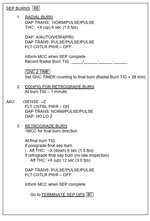
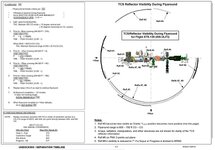
A couple of separation burns done when the orbiter has reached the -RBAR point.
 

Attachments

  • RNDZ_FDF_8B.jpg
    RNDZ_FDF_8B.jpg
    41.9 KB · Views: 7
  • RNDZ_FDF_Undock_Flyaround_timeline.jpg
    RNDZ_FDF_Undock_Flyaround_timeline.jpg
    85.6 KB · Views: 7
Ok that makes sense! Thank you. So I assume this normally occurs about two days prior to landing correct?
 
Back
Top