Launch News SpaceX's Historic First Reuse of a Falcon 9 First Stage with SES-10 - March 27, 2017

I was thinking about the fairing recovery, which we still need more news on. Apparently per this these are several $m each, so this is a non-trivial cost.

The sheer complexity of orienting for reentry, doing a fiery reentry, then parachute when subsonic, then a helo capture in mid-Atlantic just boggles the mind.

This company redefines everything we think about with space rocketry. That's why I love them!
 
I was thinking about the fairing recovery, which we still need more news on. Apparently per this these are several $m each, so this is a non-trivial cost.

The sheer complexity of orienting for reentry, doing a fiery reentry, then parachute when subsonic, then a helo capture in mid-Atlantic just boggles the mind.

This company redefines everything we think about with space rocketry. That's why I love them!

Yeah, the fairing recovery surprises me as well, didn't expect that at all!
 
LIVE Return of F9-B1021: https://www.pscp.tv/murphypak/1ypJdXgXMOoJW

Welcome Home, baby! :thumbup:

index.php


index.php


index.php


index.php


index.php


index.php


index.php


index.php


index.php


Videos:


And here is the launch simulation:


@Ripley:

Here are the images showing the reused fairings onboard the ship called Go Searcher.

index.php


https://imgur.com/gallery/qa2rB

There is another ship called Go Quest but she did not manage to find the fairings and she returned to the port with Elsbeth III.
 
Last edited:
About fairing recovery (Helo? Ship?), I found a few more infos at http://wereportspace.com/2017/04/01/spacex-recovers-fairing-reflown-booster-ses-10/

During the post-launch press conference at Kennedy Space Center, Elon received some breaking news. He had confirmation that SpaceX had recovered one-half of the payload fairing. “The fairing is a 5-meter diameter component large enough to hold a bus. It costs us six million dollars. I asked the team: if you had a pallet with six million dollars in cash speeding towards the ocean, would you try to recover that before it crashed into bits?” Musk said they used a combination of a thruster control system and steerable parachutes to guide the fairing to a soft landing. He said in the future, they would try to land the fairing on the equivalent of a high-tech bouncy house. The portion of the fairing recovered is the half with the American flag. There was no indication if they had tried to recover the half of the faring with the SES logo.

And here too: https://spaceflight101.com/falcon-9-ses-10/falcon-9-re-flight-success-with-ses-10/ (emphasys mine)
Thursday’s mission was an experimental fairing return, using thrusters to stabilize the fairing halves for re-entry before deploying auto-steering chutes to deliver them to a precise landing point. Musk said at least one half had come back intact based on photos he had been shown. Future fairing returns may use an aerial recovery...
 
Last edited:
Hm, fairing sound like just a piece of shaped metal that should cost next to nothing, and is often payload-specific in size.
Why bother recovering them?
More precisely, would it actually cost less to recover than to make new ones?
 
Hm, fairing sound like just a piece of shaped metal that should cost next to nothing, and is often payload-specific in size.
Why bother recovering them?
More precisely, would it actually cost less to recover than to make new ones?

We don't know if it's more economical to reuse or to replace a fairing. That's probably part of why they're trying it now.
 
Hm, fairing sound like just a piece of shaped metal that should cost next to nothing, and is often payload-specific in size.
Why bother recovering them?
More precisely, would it actually cost less to recover than to make new ones?

Well, a modern rocket fairing is a really complicated device, since it has to fullfill many roles, aside of protecting the payload from the air flow.

It has to be as light-weight as possible.
And still it has to be rigid enough to not damage the payload.
It has to have RF windows for communication with the payload.
It also has to protect the payload from the noise during launch and early ascent.
It needs to provide access panels for technicians.
Often it needs to have a properly defined air flow on the launch pad for keeping the payload cooled.
It often is part of the fairing separation system
 
We don't know if it's more economical to reuse or to replace a fairing. That's probably part of why they're trying it now.

It was more expensive to reuse STS SRBs than to replace them, so reusing fairings would probably make even less sense economically. I'm guessing it depends on how expensive the "re-certification" is.
 
I believe each fairing costs something on the order of $6 million, FYI.
 
But the recover must cost something.
 
But the recover must cost something.

Repairing it as well, you can be sure those "flapping" motions are not coming without fatigue. But I think the only good way to know if this could work is trying it, the fairings are really good candidates for a cheap recovery.
 
Well, a modern rocket fairing is a really complicated device, since it has to fullfill many roles, aside of protecting the payload from the air flow.

It has to be as light-weight as possible.
And still it has to be rigid enough to not damage the payload.
It has to have RF windows for communication with the payload.
It also has to protect the payload from the noise during launch and early ascent.
It needs to provide access panels for technicians.
Often it needs to have a properly defined air flow on the launch pad for keeping the payload cooled.
It often is part of the fairing separation system

Lightning protection as well.

Not to mention the cost of certifying the fairing, not just as an aero shield but also for use with pyrotechnics and separation motors. When your zillion-dollar payload only gets one chance to be launched correctly, nothing in the space business comes cheap.
 
Hm, fairing sound like just a piece of shaped metal that should cost next to nothing, and is often payload-specific in size.
Why bother recovering them?
More precisely, would it actually cost less to recover than to make new ones?

I had the amazing good fortune of actually being there (at Hawthorne) during the launch.... way at the back of the room, but I was there :jiggy:

We later got a tour of the place, and I saw the fairings being built.

They are made of carbon fiber and honeycomb aluminum, and constructing them actually takes slightly longer than putting together the rest of the rocket. There's a lot more to them than meets the eye. It makes sense that they'd want to reuse them if they could.

It seems that wasn't actually in the plans until recently, when a returned fairing washed up somewhere and they got a good look at it. They strapped cameras to a subsequent flight, and saw that it was tearing itself up due to wobbling as it reentered. Hence the plan to control their descent using small thrusters and steerable chutes.

The problem with recovery though is that seawater pretty much ruins them, and they can't (yet) be guided down with the same precision as the booster. If they touch water, they're done, so they are trying to come up with a plan to either snag them out of the sky (D-21 payload style) or possibly use what amounts to a very, very large bouncy castle on the sea.

Cheers
 
Last edited:
It was more expensive to reuse STS SRBs than to replace them, so reusing fairings would probably make even less sense economically. I'm guessing it depends on how expensive the "re-certification" is.

Maybe. Reusing the SRBs really meant tearing them completely down, sending the segments back to the factor for refueling, and rebuilding and recertifying them, with all the attendant inspections and mating seems and so on. An SRB is actually a very complicated device.

It remains to be seen if fairing reuse is economical or not.

Part of the problem is that making anything reusable that used to be expendable means making it more expensive, so you have to get to that breakeven point. The RS-25 (aka SSME) engine was very expensive because it was built to be reusable, but arguably worth it. STS as a whole was never able to break even though.
 
I had the amazing good fortune of actually being there (at Hawthorne) during the launch.... way at the back of the room, but I was there :jiggy:

We later got a tour of the place, and I saw the fairings being built.

They are made of carbon fiber and honeycomb aluminum, and constructing them actually takes slightly longer than putting together the rest of the rocket. There's a lot more to them than meets the eye. It makes sense that they'd want to reuse them if they could.

It seems that wasn't actually in the plans until recently, when a returned fairing washed up somewhere and they got a good look at it. They strapped cameras to a subsequent flight, and saw that it was tearing itself up due to wobbling as it reentered. Hence the plan to control their descent using small thrusters and steerable chutes.

The problem with recovery though is that seawater pretty much ruins them, and they can't (yet) be guided down with the same precision as the booster. If they touch water, they're done, so they are trying to come up with a plan to either snag them out of the sky (D-21 payload style) or possibly use what amounts to a very, very large bouncy castle on the sea.

Cheers

The bouncy castle item is new to me. Sounds like an inflatable ASDS. Also sounds like why they're going with the steerable parachute. It's probably more economically efficient than paying for helicopters to recover the two fairings.
 
The problem with recovery though is that seawater pretty much ruins them, and they can't (yet) be guided down with the same precision as the booster. If they touch water, they're done, so they are trying to come up with a plan to either snag them out of the sky (D-21 payload style) or possibly use what amounts to a very, very large bouncy castle on the sea.

Or option C: Use materials that don't corrode in seawater or have sacrificial anodes on the fairing.

After all, the same was necessary for the first carrier planes, since you can't construct a ships deck high enough for not letting the planes get into contact with salt water.
 
Well, a modern rocket fairing is a really complicated device, since it has to fullfill many roles, aside of protecting the payload from the air flow.

It has to be as light-weight as possible.
And still it has to be rigid enough to not damage the payload.
It has to have RF windows for communication with the payload.
It also has to protect the payload from the noise during launch and early ascent.
It needs to provide access panels for technicians.
Often it needs to have a properly defined air flow on the launch pad for keeping the payload cooled.
It often is part of the fairing separation system

Mariner 3 probe launched in 1964 failed when the fairing encasing the probe
failed to release pinning probe inside until batteries died.

Indications were that the fairing collapsed by aerodynamic stress during launch.....
 
..Indications were that the fairing collapsed by aerodynamic stress during launch.....
Would the 'auto-pilot' be able to control the unbalanced forces resulting from that ?

Most likely went out of control and crashed beyond camera view ?

---------- Post added at 12:21 AM ---------- Previous post was at 12:13 AM ----------

Erm....
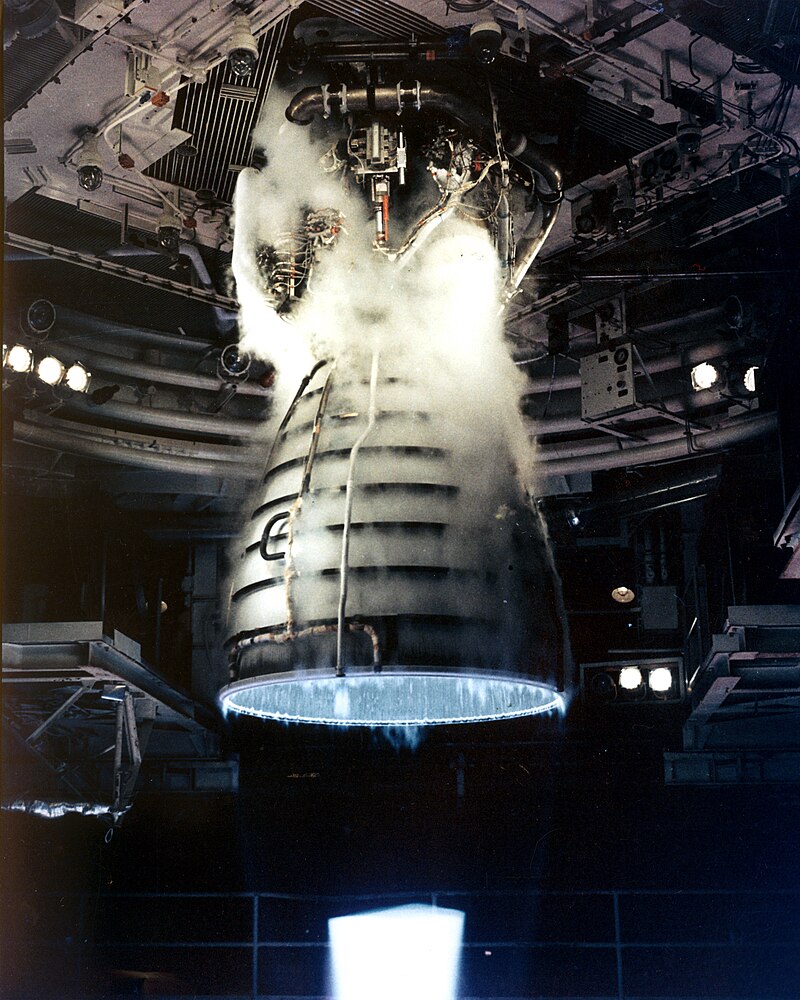
800px-Shuttle_Main_Engine_Test_Firing.jpg

:leaving:
Interesting... looks like a rigged engine test.. BUT that's just my eyesight :lol:
 
Back
Top