News First spacewalk 50 years ago today

Cosmic Penguin

Geek Penguin in GTO
News Reporter
Donator
Joined
Jan 27, 2011
Messages
3,672
Reaction score
3
Points
63
Location
Hong Kong
On March 18, 1965, Alexei Leonov floated outside the cramped Voskhod 2 spacecraft and made headlines across the world as he became the first person ever to float outside a spacecraft. The 13 minute EVA turned out to be a dangerous affair as he had difficulty in getting back into the expandable airlock and he had to get air out of his suit to do so.

Within 3 months, the opponent of the Space Race responded with Ed White making a 20 minute EVA outside Gemini 4. Since then "walking outside space" has become a routine activity (the tally up to today is 376 EVAs), and it is difficult to imagine space exploration without getting people outside a spacecraft.

Alas, there are no available add-on here in Orbiter to simulate that heroic effort that starts in 15 minutes 50 years ago. Nevertheless, here's three cheers to the golden jubilee of the first ever EVA! :cheers:

http://www.bbc.co.uk/news/world-us-canada-31927266
 
I've heard stories that Leonov had a cyanide pill with him - in case he wasn't able to get back in the capsule.

Is this just an urban myth? I've heard it mentioned a few times but haven't read a reliable source...
 
I've heard stories that Leonov had a cyanide pill with him - in case he wasn't able to get back in the capsule.

Is this just an urban myth? I've heard it mentioned a few times but haven't read a reliable source...

I strongly doubt it. There are many legends of astronauts having suicide pills on-board and every time, they turned out to be wrong.

Especially in case of Leonov: How do you take a pill, if you are inside a space suit? Much easier would be simply opening a joint for explosive decompression - and likely much less painful.
 
Lenov almost didnt get back into the Voskod capsule

In the vacuum of space his suit ballooned out so much that could not get through the hatch of the airlock.

Had to keep depressurizing his suit to get it small enough to fit through hatch - risked the bends by depressurizing his suit (Soviets used Nitrogen/Oxygen atmosphere)

All the exertion exhausted him , was barely able to hook his foot on hatch and pull himself in

Made it seem too easy, as did Ed While EVA on Gemini 4

Later on Gemini missions astronaut found just how difficult it was to move around in space
 
Lenov almost didnt get back into the Voskod capsule

In the vacuum of space his suit ballooned out so much that could not get through the hatch of the airlock.

Had to keep depressurizing his suit to get it small enough to fit through hatch - risked the bends by depressurizing his suit (Soviets used Nitrogen/Oxygen atmosphere)

All the exertion exhausted him , was barely able to hook his foot on hatch and pull himself in

Made it seem too easy, as did Ed While EVA on Gemini 4

Later on Gemini missions astronaut found just how difficult it was to move around in space

Was it the first Gemini walk that the door got stuck and they had to essentially break it to get out and almost couldn't put the door back in place?
 
ItalicsUnderlining and bolding added by me.

Lenov almost didnt get back into the Voskod capsule

In the vacuum of space his suit ballooned out so much that could not get through the hatch of the airlock.

Had to keep depressurizing his suit to get it small enough to fit through hatch - risked the bends by depressurizing his suit (Soviets used Nitrogen/Oxygen atmosphere)

All the exertion exhausted him, was barely able to hook his foot on hatch and pull himself in

Made it seem too easy, as did Ed While EVA on Gemini 4

Later on Gemini missions astronaut found just how difficult it was to move around in space


You forgot the part where the Soviets didn't breath a word about the difficulties, giving a false impression to the wider world that everything went without problems.

Lenov's seemingly unblemished success, combined with White's understandably great joy and enthusiasm during his EVA, gave credence to the idea spacewalking was no trouble at all.

Was it the first Gemini walk that the door got stuck and they had to essentially break it to get out and almost couldn't put the door back in place?

It was a certain spring in the latching mechanism, and they didn't break it to get out. It caused trouble during vacuum chamber tests on the ground and after those tests James McDivitt(commander on that flight) learned more about the latching gear to prepare himself if it got balky in space. When it started causing trouble while opening the hatch in orbit, McDivitt knew it was those springs, and he figured he could close it again after the EVA. If there was something to cause him to think it wouldn't close again, he would have called off the EVA, or at least I assume so.
 
Last edited:
Pictures

The first man ever to conduct a spacewalk, Alexei Leonov, turns 80 today
First spacewalk 50 years ago today

May 30, 10:56

Alexei Leonov was born on May 30 1934. In 1960, he was admitted to the first Soviet cosmonaut group.

On May 18-19, 1965, together with Pavel Belyayev, Leonov took part in the Voskhod 2 flight as second pilot.

During the mission, Alexei Leonov conducted extra-vehicular activity, exiting the capsule for the first ever spacewalk which lasted 12 minutes and nine seconds. He moved five meters away from the capsule.

An emergency situation occurred during the spacewalk, when Leonov's spacesuit inflated the vacuum of space and became too big to fit the airlock. Opening the valve to lower the pressure, the cosmonaut managed to get back into the capsule, though he did it the wrong way, getting in with his head first. Alexei Leonov's life in this photo gallery by ITAR-TASS.

http://tass.ru/en/non-political/734009

1043309.jpg

Alexei Leonov's family in Kaliningrad in 1950. The future cosmonaut is on the very left
1043310.jpg

Leonov (left) with a class mate at school in 1952
1043311.jpg

Alexei Leonov during training to become a pilot in 1956
1043314.jpg

Legendary pilot cosmonauts at the military research and space training facility known as Star City. Left to right: Andriyan Nikolayev, Valentina Tereshkova, Yuri Gagarin and Alexei Leonov
1043312.jpg

Leonov during his preflight training
1043313.jpg

Alexei Leonov with his daughter Oksana in 1964
1043316.jpg

The legendary spacewalk
1043391.jpg

The legendary spacewalk
1043392.jpg

Alexei Leonov in 1965
1043315.jpg

Soviet cosmonauts Valentin Bykovsky (left), Alexei Leonov, Yuri Gagarin and German Titov reading the Amerika magazine during a break in their training
1043317.jpg

Ceremony of meeting the crew of the Voskhod 2 flight. Pavel Belyayev is left and Alexei Leonov right
1043318.jpg

Members of the first crew of the Soyuz spaceship Valery Kubasov and Alexei Leonov at a training center in 1975
1043319.jpg

Alexei Leonov in 1975
1043320.jpg

The legendary cosmonaut is also an artist. He is the author of about 200 art pieces. Photo: Alexei Leonov at work in 1979
1043393.jpg

Leonov signs one of his works in France, 1966
1043321.jpg

Leonov during voluntary Saturday work at a car factory
Alexei Leonov selected as first lunar-landing mission cosmonaut of the USSR

In March 1968, the cosmonauts started training in preparation for a Moon landing at Star City, Moscow. A moonwalk simulator was installed in the gymnasium, and the cosmonauts practised lunar landings with a modified version of the Mi-8 helicopter (Pirard,1993). But they still had no L3 spacecraft to fly a year later - the constant Soyuz and L1 troubles in 1967-68 apparently had prevented the Soviet engineers from devoting their attention to the manned lunar-landing spacecraft. Consequently it was decided on 1 January 1969 to test the N1 by launching an unmanned L1 craft, to perform high-resolution photography of potential landing sites from lunar orbit. The L3 spacecraft (LOK and LK) would be tested later, for a first landing in 1970-71. The first lunar-landing mission would be commanded by the Voskhod 2 veteran, Alexei Leonov, with Oleg Makarov serving as the LOK pilot in lunar orbit.
http://fas.org/spp/eprint/lindroos_moon1.htm
lk_onmoon.jpg


Video:http://www.russianspaceweb.com/LK_landing.mov
http://www.russianspaceweb.com/lk.html

mai-1310.jpg


leonov10.jpg

Space City photo taken on October 5, 2007

sans_t14.jpg

Space City photo taken on October 5, 2007

1043322.jpg

Alexei Leonov in 2010

Alexei Leonov International Airport

In January 2013, Kemerovo International Airport was renamed after Alexei Leonov

It is one of 2 major airports in Kemerovo Oblast area, Russia, Southwestern Siberia located 10 km southeast of Kemerovo. It is a civilian airfield serving medium-sized airliners, but large enough to be used for military purposes.

aeroport-im-Alekseya-Leonova.jpg

http://praestes.ru/item20140530-15/
 
Last edited:
More Recent 2014 Pictures Taken In The Republic of Crimea, Russian Federation

5JX8q9KPSrA.jpg

HDTqiRb17ss.jpg

qazJUZhia9Q.jpg

sme4o0K8q4U.jpg

hEooSZrusW0.jpg

pTMDmkf8wLc.jpg

ca9LndRc774.jpg

hT3LAdwWtRE.jpg

JVO8sHdUZp0.jpg

:lol:
 
Last edited:
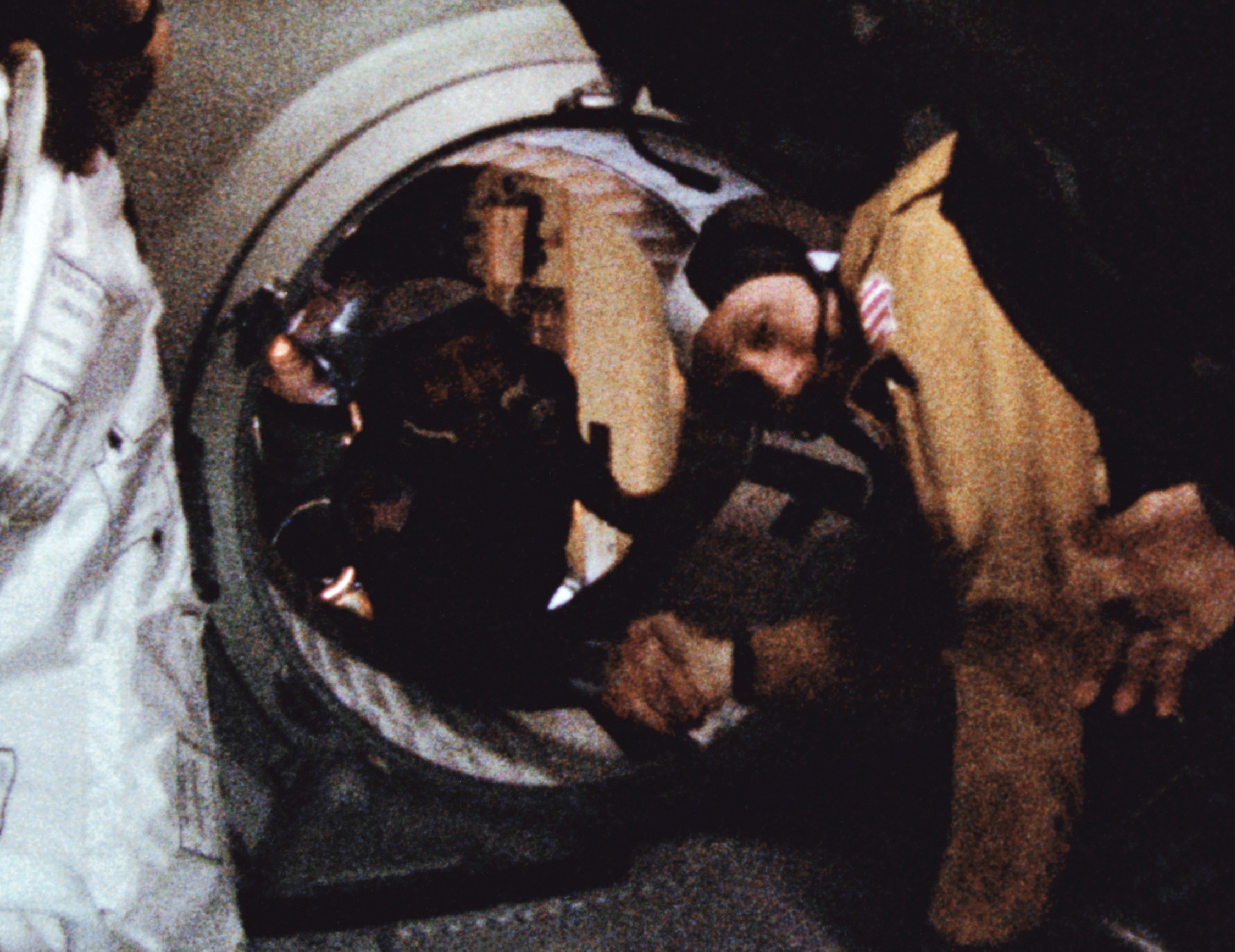
Leonov shaking hands with Tom Stafford in the airlock between Apollo CSM-111 and Soyuz 19:

ASTP_handshake_-_cropped.jpg


"This looks hi-tech, what's it do?"

"It enables a person to see in the dark."

1043310.jpg
 
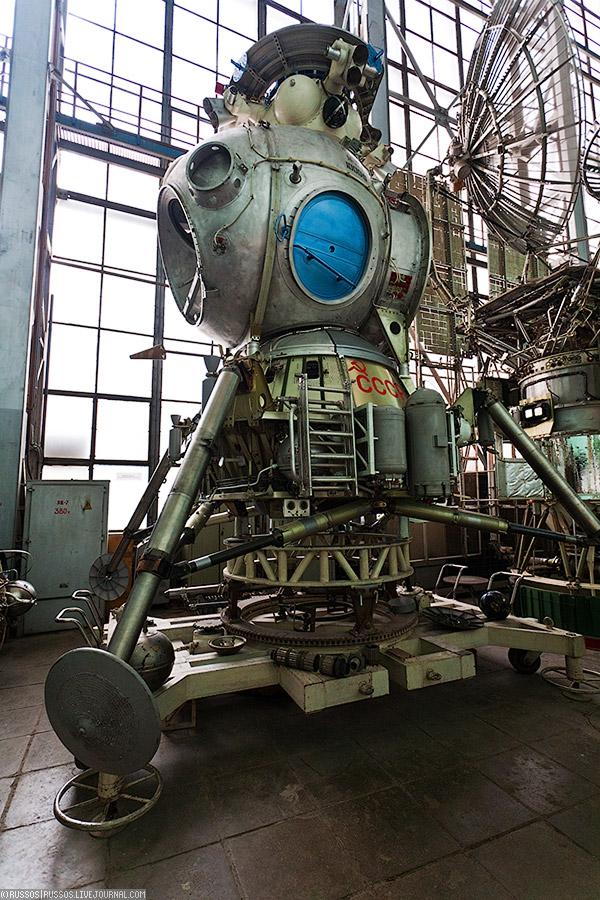
The soviet programme has always fascinated me, especially the little 1-man lander, descending using the main Earth-Moon stage and dropping it shortly before landing. Sounds even more risky than the "usual" moon landing operations...
 
United Nation to mark the 50th anniversary of Leonov's first spacewalk

06/18/2015

Cosmonaut Alexei Leonov in his speech spoke in detail about the risks associated with the first spacewalk, when running in front of the unmanned spaceship "Vostok-2", blown up as a result of unauthorized commands.

1100277108.jpg


VIENNA, June 18 - RIA Novosti (Crimea). Twice Hero of the Soviet Union, pilot-cosmonaut Alexei Leonov was honored on Thursday at the 58th session of the UN Committee on the Peaceful Uses of Outer Space (COPUOS), in commemoration of the 50th anniversary he had carried out to be the first man to float in open space in March 18, 1965 and the 40th anniversary of the 1975 joint USSR-USA Soyuz-Apollo mission, which Leonov also performed.

"During these 12 minutes and 9 seconds spent outside the spacecraft, Dr. Leonov quite literally changed the history of the space program forever. His mission not only inspired millions of people around the world, but also sent an important message that mankind can and will work in the open space. Gen. Leonov is here not only for his achievements, but also as a person, who lead the peaceful exploration of outer space, "- said UN Deputy Secretary General, Director of the Vienna branch of the Organization Yuri Fedotov, introducing Leonov.

Leonov in his speech spoke in detail about the risks associated with the first spacewalk, when running in front of the unmanned spaceship "Vostok-2", blown up as a result of unauthorized commands. "We realized that the spaceship" Voskhod-2 "had no rescue system, so that what happened at the start could lead to the death of the crew," - said Leonov. Since the ship was put into a very high orbit - 497 km - in the case of ballistic descent " we might be already dead turn into mummies at landing."

The moment of leaving the ship occurred, according to Leonov, "over the Crimea." "I saw the radius 1750 km - all the Black Sea in the west to the east, Romania, Bulgaria, Italy, his head raised - the Baltic Sea. All you can see is on the map. An unusual silence. It was so quiet, I did not notice. He added: "We all agree that the earth is round, but not everyone can see it; it is really round ".

He elaborated on all the difficulties that had to be overcome when returning to the spacecraft, Leonov unannounced to MC on Earth that he decided to depressurize the spacesuit. The spacesuit was inflated to the the point it blocked the hatch. The landing would be eventually made in the manual mode. Then the crew of Leonov and Pavel Belyaev waiting for evacuation from the snow-covered taiga, accumulated under the insulation of their spacesuits liters of sweat. "Imagine the picture: the taiga, minus 25 degrees Centigrade, and two naked man squeezing sweat from their soaked suits. It became easier," - said Leonov. They finally found the helicopter and local loggers on the following day .

After the flight, Leonov said, it was decided to create a new suit and search and rescue services - the predecessor of the modern Ministry of Emergency Situations . "This is the worst kind of human activity - the work of a man in a spacesuit in space" - said Leonov. "You opened up new horizons of space exploration ... I'm sure that your statement today inspire us for the future", - said Director of United Nations Office for Outer Space Affairs Simonetta Di Pippo to Leonov. After the ceremony, diplomats who participated in the session applauded Leonov and were photographed with him.

http://crimea.ria.ru/world/20150618/1100277145.html

Leonov: two WW2 aircrafts from the United States displayed at MAKS Aerospace Exhibition

06/18/2015

From 1941 to 1945, the USSR received some 18 297 aircraft, of which 14 126 aircraft from the US, and 4171 from the UK, accounting for about 20 percent of all aircraft who fought in the Soviet Union Air force, said Soviet cosmonaut Alexei Leonov on Thursday.

1066137938.jpg


VIENNA, June 18 - RIA Novosti. Two US aircrafts of the Second World War, took the route of the legendary aircraft Lend-Lease from Alaska across Siberia and will arrive at the International Aviation and Space Exhibition (MAKS), which will take place in late August, said Thursday the pilot- cosmonaut Alexei Leonov, speaking at the Vienna branch of the United Nations.

Leonov, who was honored at the 58th session of the UN Committee on the Peaceful Uses of Outer Space (COPUOS), in commemoration of the 50th anniversary of the first release of man in open space, dedicated the final part of his speech the remembrance of the assistance by the US and the UK to the Soviet Union during the Great Patriotic War.

"We should all acknowledge this extraordinary manifestation of international solidarity" - Leonov said, referring to an international audience. He spoke as the head of the organizing committee of the anniversary celebrations to commemorate the Alaska-Siberia aircraft assistance's 70th anniversary.

According to Leonov, from 1941 to 1945, the USSR received 18 297 aircrafts, of which 14 126 aircraft from the US, and 4171 - from the UK, accounting for about 20 percent of all aircraft equipment fought the Soviet Union. "This was of great help. It allowed to save the lives of our people. We will never forget it!" - said the cosmonaut.

"It started with air route delivery, but due to Nazi Germany Kriegsmarine U-boat's naval blockade of convoys in the Atlantic, we had to fly aircrafts from Fairbanks to Yakutsk, and then by train. The journey itself was terribly risky and, as the Americans said, only crazy suicide Russian pilots could fly this routes."- Leonov added. According to him, 205 Soviet pilots were killed during these missions.

In memory of these events and the flights, commemoration ceremonies will be held at Moscow International Aviation and Space Exhibition (MAX) from 25 to 30 August this year. "Now they have brought two C-47 from the USA, flown from Fairbanks to this Exhibition and will be transferred to the Russian Museum" - said Leonov.

http://m.ria.ru/defense_safety/20150618/1076922176.html?rubric=defense_safety

 
Last edited:
Back
Top