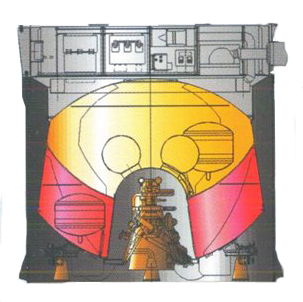
Launch News (Rest-d?) GEO-IK-2 (Mousson-2, Cosmos-2470) atop Rockot/Briz-KM on February 1st, 2011

SiberianTiger

News Sifter
News Reporter
Donator
Joined
Feb 13, 2008
Messages
5,398
Reaction score
8
Points
0
Location
Khimki
Website
tigerofsiberia.livejournal.com
geo-ik-2__1.jpg


Geo-IK-2 (Mousson-2, meaning Monsoon-2) is a Russian satellite system which will consist of two identical spacecraft for geodesic measurements.

Its purpose is determination of Earth's gravity field parameters, marking up a high precision geodesic network in geocentric coordinates, measuring of lithospherical plate movements, land tides, discrepancies in Earth's rotation and tracking of positions of Earth's poles.

Both spacecraft will work at Sun-synchronous orbits. The first Geo-IK-2 will launch on February 1st, 2011 after previous postponement from 2010 due to technical problems.

The modern Geo-IK-2 series satellites inherit to old Geo-IK spacecraft which operated back in the 80's and 90's. In total number, 12 of Geo-IK satellites were launched, last of which stopped its operation at Feb 5, 1999.

Successful launch of the Geo-IK-2 will mark reviving of Russian Space Geodesy program after a long disruption.

This is a double purpose satellite carrying out both Military and Civilian missions.

180px-Logofrs.gif
foto_logotip2.jpg


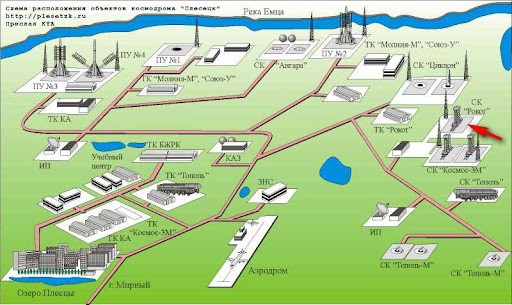
Launch location:

Plesetsk Launch pad no. 133/3 62°53'13.35"N, 40°50'48.30"E
ples-lc133-1-high.jpg


Launch dates and times:

[table="head"]{colsp=5}Launch times

Time Zone|
Australia - Sydney/AEST
|
Moscow / MSK/
|
Universal / UTC
|
Washington / EST

Launch time (Primary):
|
10:00 p.m.​
|
17:00​
|
14:00​
|
9:00 a.m.​

on:
|
Feb. 1, 2011
|
Feb. 1, 2011
|
Feb. 1, 2011
|
Feb. 1, 2011

{colsp=5}
[highlight][eventTimer]2011-02-01 14:00?before|after;%dd% Days %hh% Hours %mm% Minutes %ss% Seconds %c%[/eventTimer] GEO-IK-2 Launch[/highlight]​
[/table]

Note: the quoted launch time is an approximation, the exact planned launch time is not published.


Live Coverage Of The Launch:

None available, sorry.

PAYLOAD

Geo-IK-2 (Mousson-2, meaning Monsoon-2, 14F31 #12) geodesy satellite:

090409-1b.jpg


[table="head"]{colsp=2}Mission Summary
Parameter|Value
Working Orbit:​
|Sun-synchronous
Orbit height:​
|~1 000 km
Inc at separation:​
|99.4°
[/table]

[table="head"]Characteristics|
GEO-IK-2

Customer:​
|
  • Directorate of Military Survey of Russian General Staff; Federal Service of State Registration, Land Register and Mapping (Rosreyestr).

Prime contractor:​
|
  • JSC "Information Satellite Systems Reshetnev Company"
    0_2ef7_8b576025_orig

GRAU index:​
|
  • 14F31


Platform:​
|
  • Supposedly, Uragan-M (the same as used for GLONASS-M satellites)

Mass at Separation:​
|
  • 900 kg

Dry Mass:​
|
  • ?

Stabilization:​
|
  • 3 axis stabilized

Dimensions:​
|
  • ?

Batteries:​
|
  • ?

Primary Geodesic Payload:​
|SADKO-2 (Radio Altimeter)
  • Supplier: Thales Alenia Space
  • Mean measured altitude: 1 347 km
  • Mass: 2 x 25 kg
  • Frequency: 13.5 GHz (Ku band), 5.3 GHz (C band)
  • Bandwidth: 320 MHz (Ku), 320/100 MHz (C)
  • Pulse time: 105.6 mks
  • Pulse frequency: 1800/1680 Hz (Ku), 300/420 Hz (C)
  • Antenna dish size: 1.2 m
  • Amplification: 42 dB (Ku), 33 dB (C)
  • Beam spreading: 1.3° (Ku), 3.4° (C)
  • Consumed power: 70 W
  • Peak channel power: 7 W (Ku), 16 W (C)
  • Accumulated measurements: 128

Life time:​
|
  • ?

|
geo-ik-2__1.jpg
[/table]

Launch Vehicle:

[table="head"]{colsp=2}Characteristics

rockot.jpg
|[table="head"]{colsp=2}
Rockot / Briz-KM

Prime contractor:​
|
  • Khrunichev State Research And Production Space Centre, Moscow
    0_2ef8_6b08483e_orig

GRAU Index:​
|
  • Converted 15A35 (Common name: UR-100NUTTKh)

Height:​
| 29.15 m with upper stage and payload fairing

Diameter:​
| 2.5 m (body)

Liftoff mass:​
| 107.5 metric tonnes

Payload mass (with Briz-KM to LEO):​
| 1 950 kg max

1st stage:​
|
  • 3 x RD-0233 & 1 x RD-0234 engines
  • Length 17.2 m
  • Propellants: UDMH & N2O4
  • Thrust in vacuum 2080 kN (520 x 4)
  • Thrust at sea level 1880 kN (470 x 4)
  • ISP 310 s / 285 s
  • Burn time 121 s

2nd stage:​
|
  • 1 x RD-0235 engine & 1 x RD-0236 vernier engine
  • Length 3.9 m
  • Propellants: UDMH & N2O4
  • Thrust in vacuum 240 kN + 15.76 kN (vernier)
  • ISP 320 s (293 s vernier)
  • Burn time 183 s

Upper Stage:​
|
brizkm_2.jpg

  • GRAU Index: -
  • Common Name: Briz-KM (meaning Breeze)
  • Designer & Manufacturer: Khrunichev Space Centre
  • Dimensions: Length 2.5 m, Diameter 2.5 m
  • Empty Mass 1.42 tonnes
  • Propellants 5055 kg (UDMH + N2O4)
  • Flight time: no less than 7 hours

  • Main Engine: 1 X С5.98М
  • Thrust in vacuum 2.0 tonnes of force
  • ISP 328,6 s
  • Main engine restarts: up to 8 times

  • Correction Engine: 4 X 11D458
  • Thrust in vacuum 400 N each
  • ISP 252 s

  • RCS Engines: 12 X 17D58E
  • Thrust in vacuum 13.3 N each
  • ISP 274 s

Payload Fairing:​
|
  • Diameter 2.62 m
  • Length 6.74 m

[/table]
[/table]


The vehicle's reliability statistics according to http://www.spacelaunchreport.com/reliability2010.txt:

Code:
================================================================ 
Vehicle     Successes/Tries Realzd Pred  Consc. Last     Dates    
                             Rate  Rate* Succes Fail    
================================================================
Rokot/Briz/K(M)  14    15    .93  .88      7    10/8/05  1994-
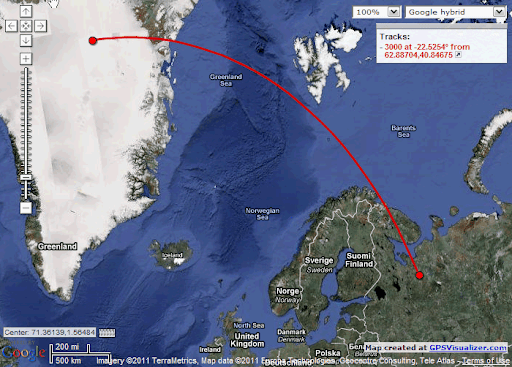
Launch Azimuth drawing (at 3000 km range)

gtrack3000.png


(Norway, watch out! ;) )

Ascent Profile

Not published for this launch. The typical Rockot ascent profile is:

[TABLE="head"]# of event|Event|Rel Time
1|End of Inertial Coercion|-0 : 00 : 14.045
2|Lift-off Contact|0 : 00 : 00.000
3|1st stage booster sep|0 : 02 : 02.225
4|Fairing sep|0 : 02 : 43.044
5|2nd stage booster sep|0 : 05 : 04.995
[/TABLE]

Weather forecast for Plesetsk, Russia on February 1st, 2011 (5 p.m.)

Time|Temps|Wind|Chill|Heat Index|UV Index|Dew Point|Relative Humidity|Precip|Snow|Clouds|Visibility|Wind|Weather
5 PM|-7°C|-12°C|-7°C|0|Low|-10°C|81%|40%|40%|80%|8KM|SW 2.68 m/s|
wx_74.png
Snow Showers
Sunrise/Sunset and associated twilight times for Plesetsk on Tuesday, February 1st, 2011

Times are local.
Event|Time
Astronomical twilight begins|06 : 06
Nautical twilight begins|06 : 59
Civil twilight begins|07 : 55
Sunrise|08 : 45
Transit (sun is at its highest)|12 : 32
Sunset|16 : 19
Civil twilight ends|17 : 09
Nautical twilight ends|18 : 05
Astronomical twilight ends|18 : 58
References
http://www.federalspace.ru
http://tvroscosmos.ru
http://www.tsenki.com
http://www.iss-reshetnev.ru
http://space.skyrocket.de
http://cosmopark.ru
http://www.khrunichev.ru
http://d33.infospace.ru/d33_conf/lebedev_osn.pdf
http://www.eurockot.com
http://www.plesetzk.ru
http://forum.nasaspaceflight.com
http://www.novosti-kosmonavtiki.ru
http://www.spacelaunchreport.com
http://www.geomidpoint.com/destination/
http://www.gpsvisualizer.com/calculators
http://www.intellicast.com/Local/Forecast.aspx
http://www.good-stuff.co.uk/suntimes/sunmap.php
 
Last edited:
http://www.rian.ru/science/20110201/329090863.html

Rockot rocket carrying a military satellite has launched from Plesetsk Cosmodrome
17:06 01/02/2011

MOSCOW, Feb 1 - RIA Novosti. This Tuesday, Russian Space Force have launched Rockot launch vehicle carrying a military payload, told RIA Novosti official miltary representative Alexey Zolotukhin.

"Today at 17:00 MSK Russian Space Force personnel under command of Commander of Space Force Gen-Lt Oleg Ostapenko commenced launch of Rokot LV with a MoD satellite" - informed the agency Zolotukhin.

The launch was nominal.

"At 17:02 Rockot was tracked by G.S.Titov Main Test and Space Systems Control Centre (the primary spacecraft control centre of Russian Space Force). The expected time of spacecraft separation is 18:35 MSK (15:35 UTC) within reach of Russian ground control stations."
 
There is a problem! Ground control stations could not establish communications with the spacecraft at the expected time. NORAD is tracking an object 37363 in a 330 x 1077 orbit, which looks like an upper stage problem to me!
 
I wonder does it have dV (fuel/engines I mean) enough to fix its orbit with its own means?
 
I wonder does it have dV (fuel/engines I mean) enough to fix its orbit with its own means?

Some "sources from rocket and space industry" say it does. Other don't support this. Howver, the satellite is classified and nobody of those who knows can tell things openly.

And there are too little facts to tell about possibilities, yet. I might not separate from the Briz, for example.
 
Aaarrggghhh...
This technology allows for significant cost savings on launch preparatory works.

Some other folks are flying formation interferometer missions (TanDEM-X)... sigh...
 
Aaarrggghhh...

Some other folks are flying formation interferometer missions (TanDEM-X)... sigh...

Oops, that actually was a copy-pasted piece from my previous post about Elektro-L... :embarrassed: Removed it now.

Let me say my summary of what's caught from the white information noise surrounding this. Thus far, it's looking to me like:

1. Briz-M has performed the first post-launch burn (about 10 minutes long) and raised apogee to operating value.

2. It then initiated the second burn, circularizing the orbit (there should have been a ~150 secs long burn), but suddenly shut down shortly after it did, raising perigee only slightly. At that moment, the spacecraft separated. NORAD can see the two objects right now:

OBJECT A, 37362, 2011-005-A:

Epoch (UTC) 2011-02-01 18:42:49
Orbit # at Epoch 3
Inclination 99.457
RA of A. Node 41.985
Eccentricity 0.0451929
Argument of Perigee 98.600
Period 1h 38m 14s (98.23 min)
Perigee x Apogee 356 x 993 km

OBJECT B, 37363, 2011-005-B:

Epoch (UTC) 2011-02-01 20:21:32
Orbit # at Epoch 3
Inclination 99.459
RA of A. Node 42.077
Eccentricity 0.0519429
Argument of Perigee 107.250
Period 1h 38m 29s (98.48 min)
Perigee x Apogee 319 x 1 053 km

3. A difference in orbits of the two pieces can be explained as result of fuel dumping activity Briz-KM performed. And if that happened, that it good, otherwise it could explode in orbit, creating another debris belt.

4. It is not clear if a contact with the satellite itself was established or not. But even if they have a contact, some people say it has only 25 kilos of hydrazine in RCS system onboard, while the delta-V cost for cirlularization from 319 x 1 053 km is about 200 m/s (didn't check that myself yet)... So it is not enough, by the figures.

I don't know if it's able to carry out its mission from a varying height orbit, I think it's not likely.
 
From the latest news, the Space Force has established communications with GEO-IK-2 spacecraft, which is now in an off-nominal orbit. A possibility of it carrying out the mission is under estimation.

(I've changed the status to "Partial Failure" because of this).
 
http://newsland.ru/news/detail/id/626202/cat/86/

According to Kommersant newspaper's information, loss of communications with the satellite evening of February, 1st, made head of Roscosmos Anatoly Perminov to leave prematurely a reception party held on occasion of the second anniversary of Patriarch of Russian Orthodox Church Kirill's enthronement.
 
Again, lol:

JimO:
Glad to hear it made it into orbit -- I've been worried for a long time that the northerly sun-sync orbits that cross the center of the US during rev 0 have the seeds of a major misunderstanding in the event of launch troubles.
 
http://www.interfax.ru/society/news.asp?id=175750

"Communications with the spacecraft are established. Downlinked telemetry confirms solar arrays opening. All onboard systems are running nominal." - said Interfax agency's source

A special investigation committee is being gathered to decide on usability and further actions involving Geo-IK-2 satellite owned by MoD. Expectations are, that after about a month spent in the current orbit, it drifts off the initial orbital plane orientation in Sun-bound coordinates, which may create problems for onboard electric and thermal systems that are supposedly built for constant sunlight conditions (and that's why Sun-synchronous terminator-trailing orbit had been chosen for it).
 
So, the Rockot and Satellite systems worked nominally, its a BrizKM engine premature shutdown ?

I hope they won't find out that someone put a wrong quantity of propellant in the BrizKM tanks...
 
So, the Rockot and Satellite systems worked nominally, its a BrizKM engine premature shutdown ?

I hope they won't find out that someone put a wrong quantity of propellant in the BrizKM tanks...

Looks like a premature shutdown and initiating a separation sequence... Also, it's possible that Briz-KM also did a nominal separation burn (some people are doing in-depth TLE analysis that can prove this). So maybe it was a program error or something, but that's as clear as mud at this point.
 
One can be at least pleased that the first two stages worked... Helps to extend the warranty...
 
I was searching for a launch video and I ended up with all kinds of theory's that America shot down the rocket -.-'
 
Last edited:
Back
Top