News Ionic shielding against solar radiation tested

jedidia

shoemaker without legs
Addon Developer
Joined
Mar 19, 2008
Messages
11,318
Reaction score
2,786
Points
203
Location
between the planets
Succesfully tested in aminiature lab experiment, they say they'll have a scaled up prototype that could work on an actual spaceship in five years. Exciting news!

http://www.universetoday.com/20671/ion-shield-for-interplanetary-spaceships-now-a-reality/

Space travel during a solar storm just became a little less risky. UK scientists working at Rutherford Appleton Laboratory near Oxford and the universities of York and Strathclyde have tested a “mini-magnetosphere” enveloping a model spacecraft in the lab. It turns out that their prototype offers almost total protection against high energy solar particles. By mimicking the natural protective environment of the Earth, the researchers have scaled the protective magnetic bubble down into an energy efficient, yet powerful deflector shield.


Edit: why is that quote so messed up? I can't get it to show right...
 
Last edited by a moderator:
I've been wondering why this kind of shielding hasn't been used in the past, actually. Even a very small amount of shielding could protect vital electronics on deep space probes.

It's not like this thing is magic or anything. The simplest way is to use a linear coil - an electromagnet. Let the current run through and you get a magnetic field. Orient the coil correctly and part of the charged particles will fly through the coil, the other part around. If you put the coil outside of your spacecraft - on the outer hull for example, you deflect most of the ions around your ship.
 
Very interesting, would be a must-have for a Mars manned mission !
 
I've been wondering why this kind of shielding hasn't been used in the past, actually. Even a very small amount of shielding could protect vital electronics on deep space probes.

It might be because not enough power available. RTGs generate only few hundred watts of power. The artice said their prototype device draws as much current as electric kettle so it is ~2kW so it is too much power for deep space probes.
 
Might be useful on the moon?

Yes, very useful. If we ever actually decide to go back in the next 100 years.

On July 20, 2019 It will bee half a century (!!!) since we first went.
And in my opinion it will be another half before we ever set a foot.
Since any reasonable plans to go back within the next 30 years where scrapped,
any new plans will be heavily hit with the Peak oil crisis, before they get off the ground.

http://upload.wikimedia.org/wikipedia/commons/8/8f/Hubbert_peak_oil_plot.svg

GrowingGap.jpg


.
 
Last edited:
Correct me if I'm wrong, but isn't space very cold?

Doesn't that mean that superconductors would be right at home on spacecraft, slicing down power consumption in magnetic field generators?

Space is cold, if you can perfectly reflect near 100% of sunlight one side of your spacecraft is exposed to. But in addition to this problem, a spacecraft usually has some internal heat sources you have to insulate from. Any power generation or internal dissipation within your spacecraft has to be dealt with through external heat radiation, and here the worst problem appear.
 
Might be useful on the moon?

On the Moon, you have the ability to cover yourself with abundant radiation shielding (regolith), so this might not be as badly needed as on, say, a spacecraft, where there are tight mass constraints.

any new plans will be heavily hit with the Peak oil crisis, before they get off the ground.

If peak oil ends up being the apocalypse so many people seem to wish for, the last thing on anyone's mind will be a moon landing...

Space is cold, if you can perfectly reflect near 100% of sunlight one side of your spacecraft is exposed to. But in addition to this problem, a spacecraft usually has some internal heat sources you have to insulate from. Any power generation or internal dissipation within your spacecraft has to be dealt with through external heat radiation, and here the worst problem appear.

Indeed, and in practice spacecraft are usually quite warm, even from sunlight (at least, close to the Sun).

I do wonder though if the superconducting ring of a magnetic sail could be kep cool by giving it a high albedo and insulating it from the rest of the spacecraft...
 
I've been wondering why this kind of shielding hasn't been used in the past, actually. Even a very small amount of shielding could protect vital electronics on deep space probes.

One word: power.

But You have to remember - it only works on charged particles.
 
Correct me if I'm wrong, but isn't space very cold?

... and remember than on Earth, the air helps greatly to dissipate the heat. Outside the atmosphere, the problem is more complex...
 
Correct me if I'm wrong, but isn't space very cold?

The problem is that space doesn't have any temperature at all... it is a vacuum, which means that there's literally nothing, and for something to have a temperature you have to have something to begin with.

A spacecraft can't pass its temperature to space, because there's nothing to give the temperature to. The only way you have to get rid of your heat is em radiation, which isn't too efficient, at least at low temperatures. The higher the temperature, the more efficient it gets, but of course the more you have to get rid off.

In a spacecraft with minimal equipement, this isn't a problem. the Apollo capsules had enough surface area to radiate the heat produced by the electronics, fuel cell and crew, but if you have something that packs the power for, say, powering an electric drive, you have a whole world of trouble on your hand to get rid of the heat. So superconductors have to be really well isolated to not heat up from external sources, and actively cooled to get rid of its own heat, even in space.

I do wonder though if the superconducting ring of a magnetic sail could be kep cool by giving it a high albedo and insulating it from the rest of the spacecraft...

If the surface area of the ring is big enough to radiate the heat produced by the conductors, it works, else, you need a cooling system. And since radiating heat at temperatures close to zero K is about as uneficient as it gets, you'll probably need one anyways. Don't forgett, a perfectly insulated superconductor has no way of getting rid of the heat generated by the current passing through it.
 
But You have to remember - it only works on charged particles.

Fortunately the biggest problem in terms of radiation from the Sun and radiation belts is charged particles.

the Apollo capsules had enough surface area to radiate the heat produced by the electronics, fuel cell and crew, but if you have something that packs the power for, say, powering an electric drive, you have a whole world of trouble on your hand to get rid of the heat.

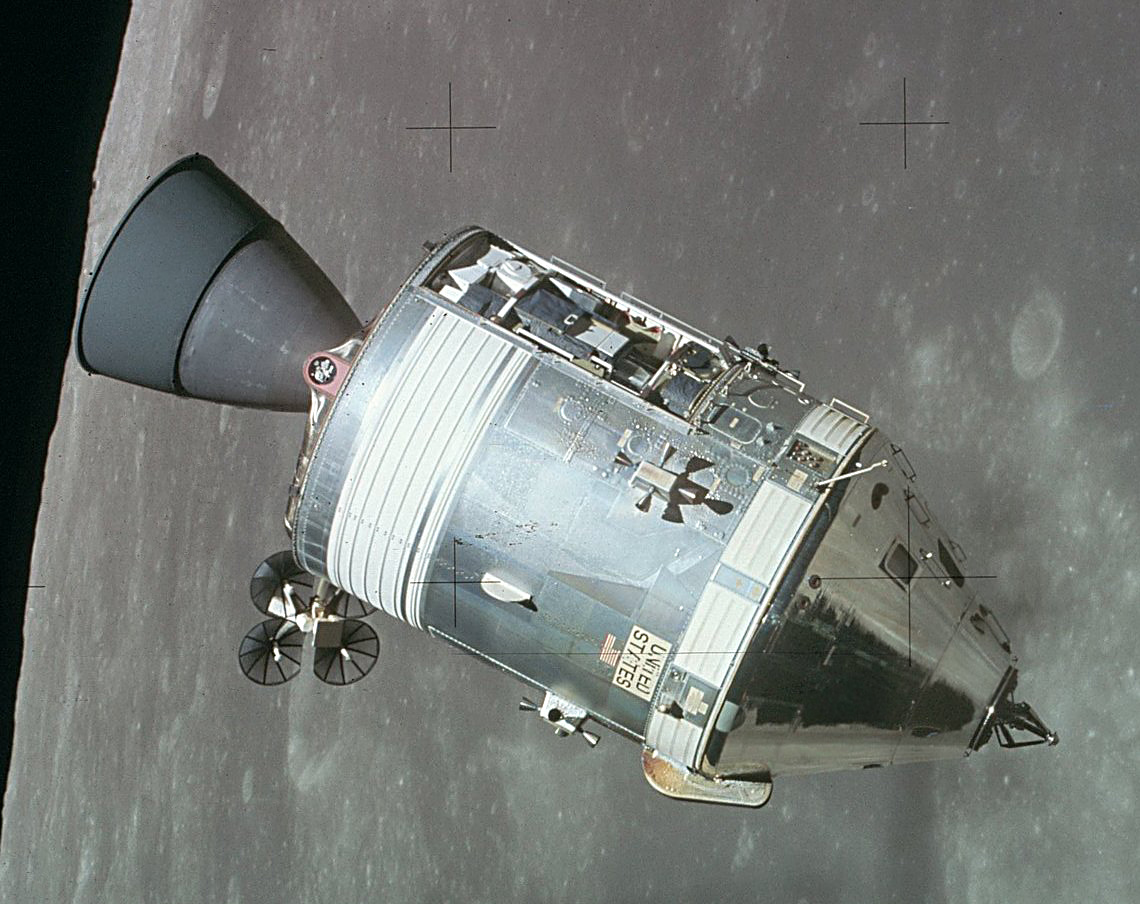
The Apollo SM had radiators, they're the very visible white patches:

Apollo_CSM_lunar_orbit.jpg


The Block I CSM was all white, after that the CSM was unpainted save for the radiators which were painted white.

Your point still stands though, a few small radiators on the CSM don't compare to the radiators that say, a VASIMR drive would require.

If the surface area of the ring is big enough to radiate the heat produced by the conductors, it works, else, you need a cooling system. And since radiating heat at temperatures close to zero K is about as uneficient as it gets, you'll probably need one anyways. Don't forgett, a perfectly insulated superconductor has no way of getting rid of the heat generated by the current passing through it.

The insulation is only to isolate the superconductor from the vehicle (which as say, people, electronics, etc onboard that are around 290 K). The high albedo is to reduce solar heating, but it also makes radiating waste heat directly to space difficult, because it has a low emissivity.

I know they still need to be cooled down to cryogenic temperatures (as yet) but why can't high temperature superconductors be used? I've heard that cooling such a superconductor down further increases efficiency, but by how much? Is it really necessary if it already superconducting?

I forgot that even superconductors will produce waste heat. :facepalm:

Won't the cooling system also have to radiate at a low temperature? Unless some sort of sublimation cooling system is used, like on Apollo? Would it be feasible, regarding the amount of coolant needed?
 
Last edited:
Won't the cooling system also have to radiate at a low temperature?

naturally, but that can be dealt with by the already existing low-temp radiators, no need to have a seperate system for the superconductor. Just get the low temperature heat to a heatsink by a heat pump, let the heatsink warm up to reasonable levels, feed it to the radiators with the rest of the low-temp cooling systems. Should work, unless I have a terrible misconception about heat pumps...


Unless some sort of sublimation cooling system is used, like on Apollo? Would it be feasible, regarding the amount of coolant needed?

Would depend majorly on the neccesary running time of the conductor, I guess... Plus finding an apropriate sublimant (is that a word?) that actually starts evaporating at such low temperatures (to keep your conductor at 10 K, you need a substance that can evaporate at that temperature). Otherwise you're back to active cooling, heat pump and sink again...
 
How about liquid helium or hydrogen? Helium only freezes at many times atmospheric pressure, surely it would evaporate in a vacuum at even those temperatures?

Maybe it would help to research the cooling methods of space telescopes such as the Spitzer telescope, that use cryogens to cool devices to low temperatures (Spitzer cooled the main mirror to 5.5 k)

Would depend majorly on the neccesary running time of the conductor, I guess...

That depends... I'd imagine the running time for a magnetic sail would range from a few months to a few years, depending on how fast it can accelerate the spacecraft, where the spacecraft is headed, and how fast the spacecraft is intended to be accelerated to.
 
@Turbinator;

+

If peak oil ends up being the apocalypse so many people seem to wish for, the last thing on anyone's mind will be a moon landing...

What happened to some of the earlier ideas floating around the internet about the moon being a source of useful 'stuff' that could 'feed' us beyond our oil-age? Helium3 was a buzz-word some time ago, or maybe Uranium?

http://www.aapg.org/explorer/2010/07jul/moon0710.cfm


Considering how 'easy' (atleast in theory) it would be to get stuff from the moon to earth...:


...it seems to me that the moon should be our prime-objective.

If launching such 'crates of super-glass', full of useful 'stuff', that could survive earth-reentry and fall into the ocean without breaking apart just to be scooped up by us and used... then we could perhaps have it 'raining money/energy from the sky' :)

If the launch-trajectory from the moon could be made precise enough to need no further corrections underway at all, then maybe we could get such glass-crates to fall down into a fairly specific area on their own? Maybe a designated area at sea?

Does that sound too sci-fi? :)


On the Moon, you have the ability to cover yourself with abundant radiation shielding (regolith), so this might not be as badly needed as on, say, a spacecraft, where there are tight mass constraints.

If we can eventually build huge and strong structures on the moon, then maybe our first human mission to Mars and beyond should begin from such a lunar rail-launcher? Then we perhaps wouldn't be so limited in what we might be able to actually launch into space.

A huge, mainly made of super-glass, spaceship with all the needed shielding and holding space :) The weight of such a thing is less relevant if we could actually launch it by simply speeding it up along a long railway on the moon using electric power harvested from the sun.

If the materials to build these things are already present in the lunar regolith, it probably isn't going to get much easier anytime soon.

 
How about liquid helium or hydrogen? Helium only freezes at many times atmospheric pressure, surely it would evaporate in a vacuum at even those temperatures?

I actually forgott for a second that vacuum helps the evaporation greatly... Now I'm more concerned with keeping the stuff stable, i.e. to get it to not evaporate all by itself.
 
...it seems to me that the moon should be our prime-objective.

If launching such 'crates of super-glass', full of useful 'stuff', that could survive earth-reentry and fall into the ocean without breaking apart just to be scooped up by us and used... then we could perhaps have it 'raining money/energy from the sky'

If the launch-trajectory from the moon could be made precise enough to need no further corrections underway at all, then maybe we could get such glass-crates to fall down into a fairly specific area on their own? Maybe a designated area at sea?

Does that sound too sci-fi?

Yes, that is sci-fi. Because mining in space has to be really special (unobtanium) to be profitable.

Apollo retrieved 382 kilograms of lunar material. Apollo cost was estimated in 2005 as 170 billion USD (at 2005 inflation rates). The cost/kg of gold at the time of posting is $43 970. If Apollo retrieved 382 kg of pure gold, it would have recouped less than a ten-thousandth of it's total cost.

Let's make it a bit better. Halve the cost, quadruple the return payload. $85 billion cost, 1528 kg of gold returned. Less than a thousandth the total cost. Again, not economically viable whatsoever.

Now, I know everyone is going to say, Apollo was 1960s, it wasn't optimised for returning materials to the moon, etc etc. But the fact is that it doesn't matter, because you're not going to find pure gold on the Moon. Or pure uranium, or pure platinum, or pure anything for that matter. You're going to have to mine and refine whatever you want, and that is going to require a huge amount of technology.

In the entire human history of spaceflight, we have only introduced about 178.8 tons of manmade material to the Moon- a good portion of which is intentionally crashed rocket stages, and low-mass unmanned probes. So much for launching the gigantic mine and refining plant.

Helium 3? It is only found in concentrations of 0.01 ppm in sunlight areas, and 0.05 ppm in shaded ones. So you again run into the mining and refining problem.

Let's say, we want to power a fourth of the world's energy needs on Helium 3 (a power production of 4 terawatts). Helium 3-deuterium fusion has an energy density of (if my math is correct) 350 877 000 MJ/kg. Let's say the fusion reactor(s) have an efficiency of 30%...

This means you need to return 1.2 million kilograms, or 1 200 tons, to Earth, every year. If the return payloads are monthly, that is 100 tons being returned to Earth. A lunar vehicle, not to mention a reentry vehicle, that can carry 100 tons, would be a major feat. And yes, glass cubes launched by a gigantic mass driver... it is a nice idea, but it has many problems.

Furthermore, since you only have 0.01 ppm in most regions, you need to sift through over 300 tons of regolith a day. Which is an absolutely huge, infrastructure. Especially on the Moon.

This and more, makes me think it isn't too economically sound... :uhh:

If we can eventually build huge and strong structures on the moon, then maybe our first human mission to Mars and beyond should begin from such a lunar rail-launcher? Then we perhaps wouldn't be so limited in what we might be able to actually launch into space.

A huge, mainly made of super-glass, spaceship with all the needed shielding and holding space The weight of such a thing is less relevant if we could actually launch it by simply speeding it up along a long railway on the moon using electric power harvested from the sun.

If the materials to build these things are already present in the lunar regolith, it probably isn't going to get much easier anytime soon.

You speak of such a railgun launching things into lunar orbit as if it is so easy. It is not. It will be many times harder to launch anything from the Moon, than it will be from the Earth. Why? Because spaceflight is not dominated by physics- surprisingly. It is dominated by economics and political pressure. And the economics and political pressure to build a lunar base, a lunar factory for building spacecraft, and a gigantic accelerator to launch it from the surface, are so bad it isn't even funny.

Economically it make so little sense, to field such a gigantic program if it is uneeded for a relatively small task.

One day we will probably mine the Moon. But it will be nowhere near economic in the forseeable future.

 
Helium 3? It is only found in concentrations of 0.01 ppm in sunlight areas, and 0.05 ppm in shaded ones. So you again run into the mining and refining problem.

And let's not forgett that we don't even know wheather or not we'll need the stuff... developement of He3 fusion doesn't look that encouraging right now. :shifty:
 
I seriously hope you do not believe that fusion power is impossible... :rolleyes:

Neither "difficult" and "doesn't look encouraging" mean "impossible", even though they are both reasons why we shouldn't be in any mad rush to start mining helium 3 on the Moon.
 
Back
Top