Launch site:
Baikonur Launch pad no. 81/24 46° 4'15.38"N, 62°59'5.11"E
Launch date:
October 14/15, 2010
The launch time is:
00:53:21 Baikonur 15.10.2010
22:53:21 Moscow Summer 14.10.2010
18:53:21 UTC Oct 14, 2010
2:53:21 p.m. EDT Oct 14, 2010
[eventTimer]2010-10-14 18:53:21?before|after;%dd% Days %hh% Hours %mm% Minutes %ss% Seconds %c%[/eventTimer] Sirius XM-5 Launch
Payload:
Sirius XM-5 broadcasting satellite
Target orbit:
GTO
Orbital slot:
85.2° W Longitude GEO
Contract Life:
15 years
Coverage:
CONUS, Canada, Mexico, Puerto Rico, U.S. Virgin Island, the Caribbean
Call sign:
S2786
Beacon(s):
2336.7R, 2334.0R, 2337.2R, 2342.5R
The Sirius XM-5 mission will be the 9th Proton launch of 2010 and the 360th Proton flight overall.
This will be the 6th Proton launch of the year for ILS and the 62nd ILS Proton mission overall since the Proton April 1996 first commercial flight. This will also be the 5th SIRIUS XM satellite launch with Proton. In addition, the Sirius XM-5 will be the 16th Space Systems/Loral satellite launched on a Proton vehicle.
Spacecraft:
Sirius XM-5
Platform: LS-1300
Manufacturer:
Space Systems / Loral
Description and Purpose:
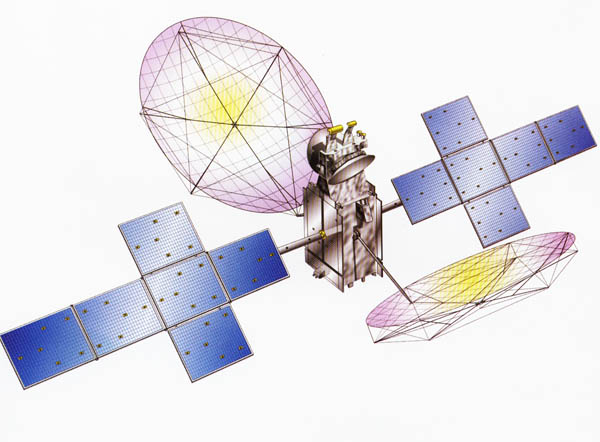
SIRIUS XM-5 is a high-power geostationary satellite from SIRIUS XM Radio, America’s satellite radio company and the leader in audio entertainment. SIRIUS XM-5 will serve as an in orbit spare for the existing fleet of SIRIUS and XM satellites. It will ensure SIRIUS XM’s array of audio and data services are received robustly by cars, mobile devices and home receivers and will play an important role in bolstering the continuity of our service for years to come. XM-5 will help with the delivery of hundreds of channels of commercial-free music, premier sports, news, talk, entertainment, traffic and weather to close to 20 million subscribers, as well as services such as XM NavTraffic®, which delivers real-time traffic information to markets across North America for vehicles with navigational systems. SIRIUS XM is installed in vehicles of every major automaker and available for sale at retail locations nationwide.
Sirius XM-5 Specifications
Applications|Radio broadcasting services
Orbit|GEO
Orbital Location|85.2 degrees West
Operator|SIRIUS XM Radio
Coverage|CONUS, Canada, Mexico, Puerto Rico, U.S. Virgin Island, the Caribbean
Prime Contractor|Space Systems/Loral
Platform|LS-1300
Power (E0L)|19,5 kW
Launch Mass|5,983 kg
Stowed Dimensions|3487.9 x 3421.1 x 8047 mm
Mission Life|15 years
Propulsion|Bipropellant (2820-kg tanks) HiPAT MST, Electric (280-kg Xe tanks)
Batteries|Four Uthium-ion packs
PAYLOAD
Frequency|
Uplink|X-band (7.052 - 7.056 GHz)
Downlink|S-band (2.3205 - 2.3320 GHz)
Antennas|
Transmit|Two deployable 9-m antennas
Receive|One global horn on earth deck
Beam footprint information
http://www.satbeams.com/!ajax/embed?beam=6406
Launcher:
Proton-M with Briz-M upper stage
Parameter|Value
Rocket Family|Proton
Designation|8K82M
Class|Heavy
Type|Expendable
Designer|Salut Design Bureau
Manufacturer|Khrunichev State Research and Production Space Center
Stages|4
Height, mm|42340
Diameter, mm|7400
Launch Mass, kg|700000
Sirius XM-5 Ascent Profile
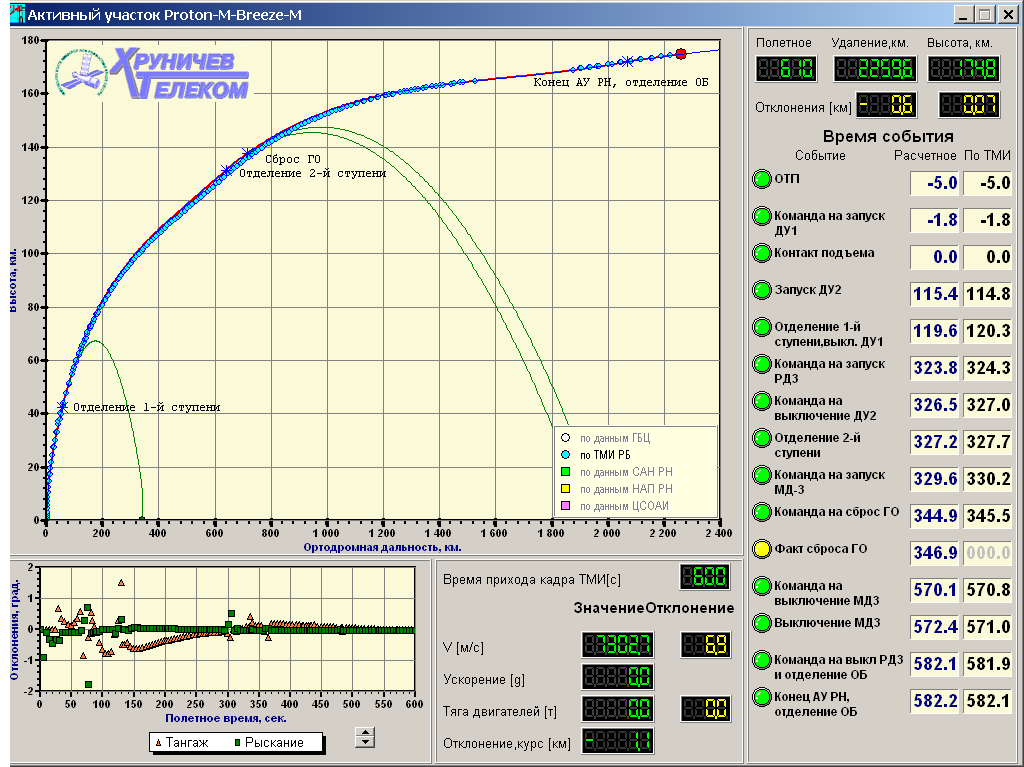
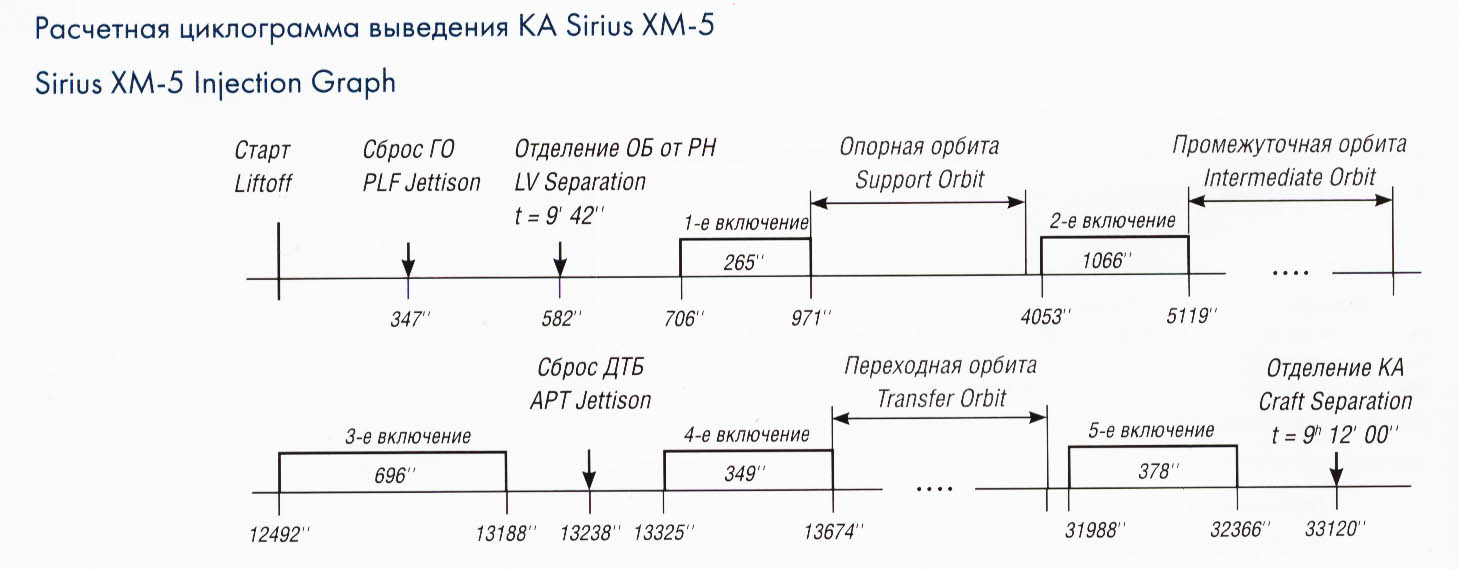
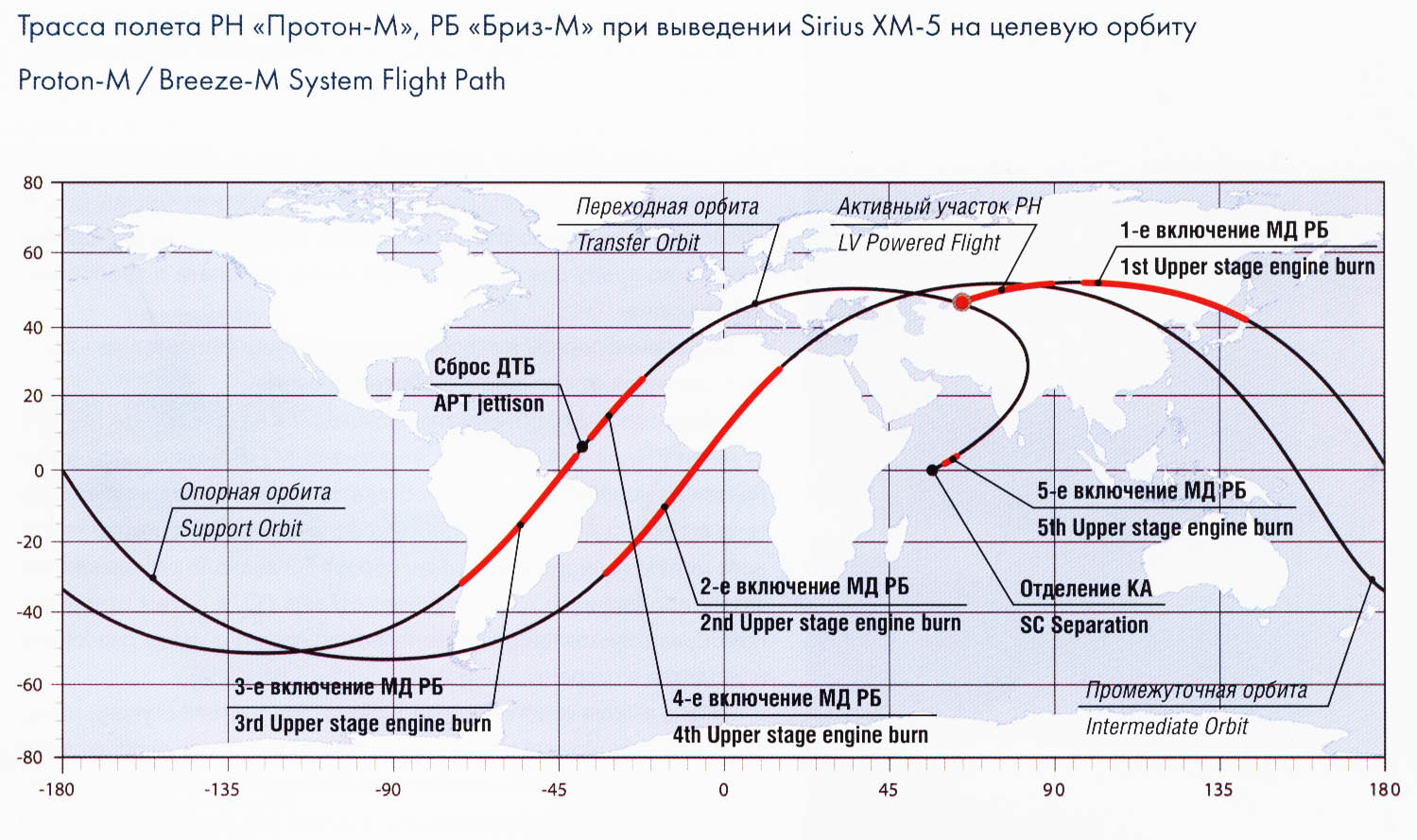
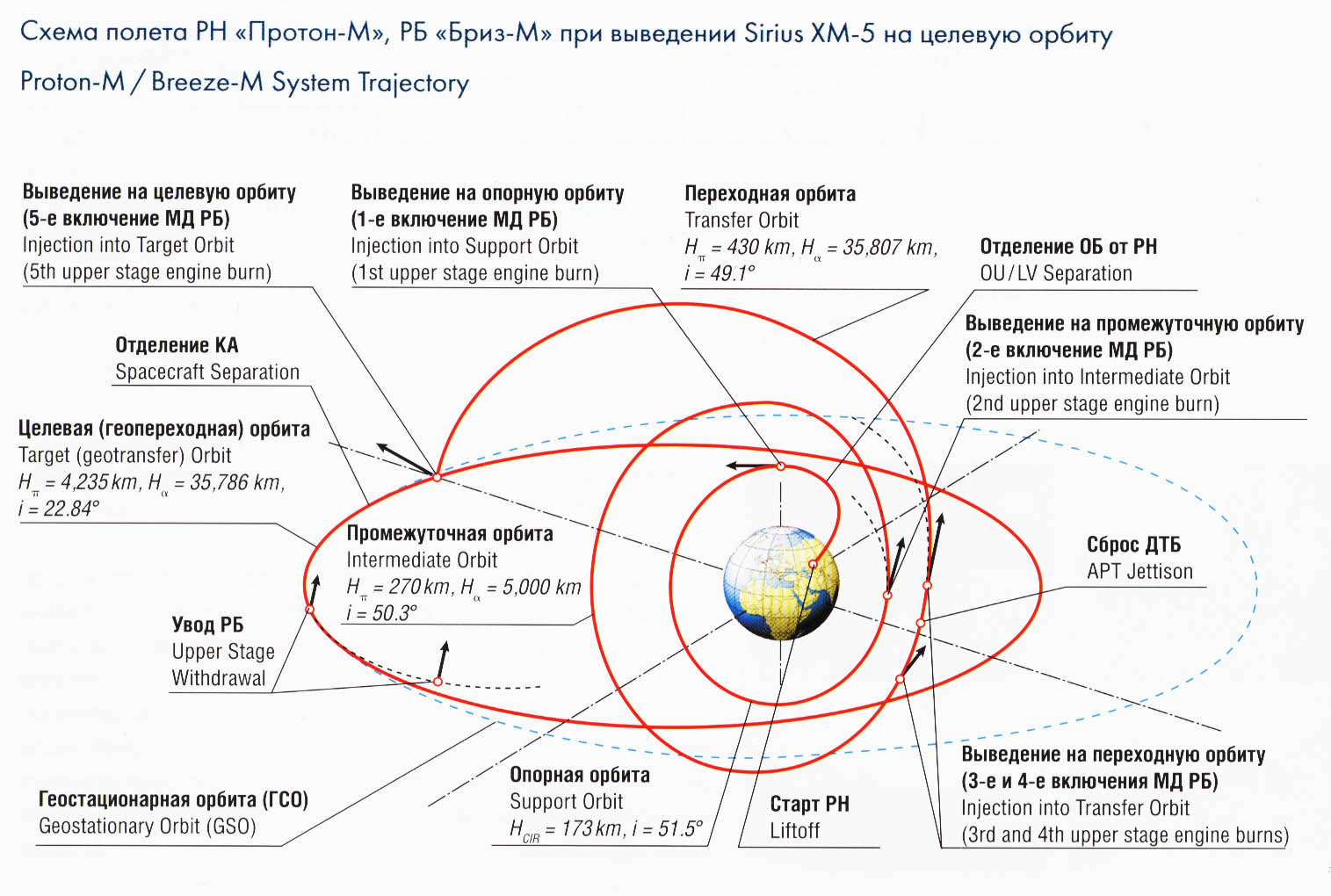
Proton-M powered flight lasts 582 seconds. The OU powered flight begins at the moment of the third stage separation.
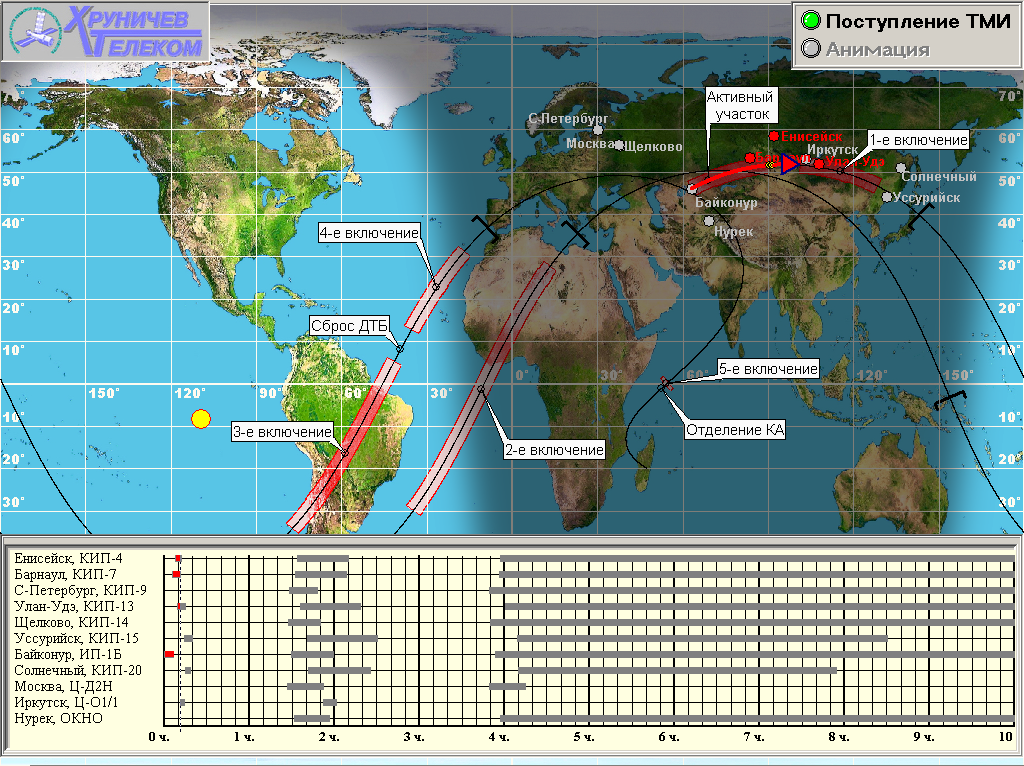
The upper stage follows a five-burn injection profile.
Ascent timeline:
Event|Time rel lift-off|Comment
Ignition Start Sequence|-00:00:02.5|
Stage 1 Ignition (40% thrust)|-00:00:01.75|
Command Stage 1 (100% thrust)|-00:00:00.9|
Maximum Dynamic Pressure|00:01:02|
1st/2nd Stage Separation|00:02:00|
2nd/3rd Stage Separation|00:05:27|
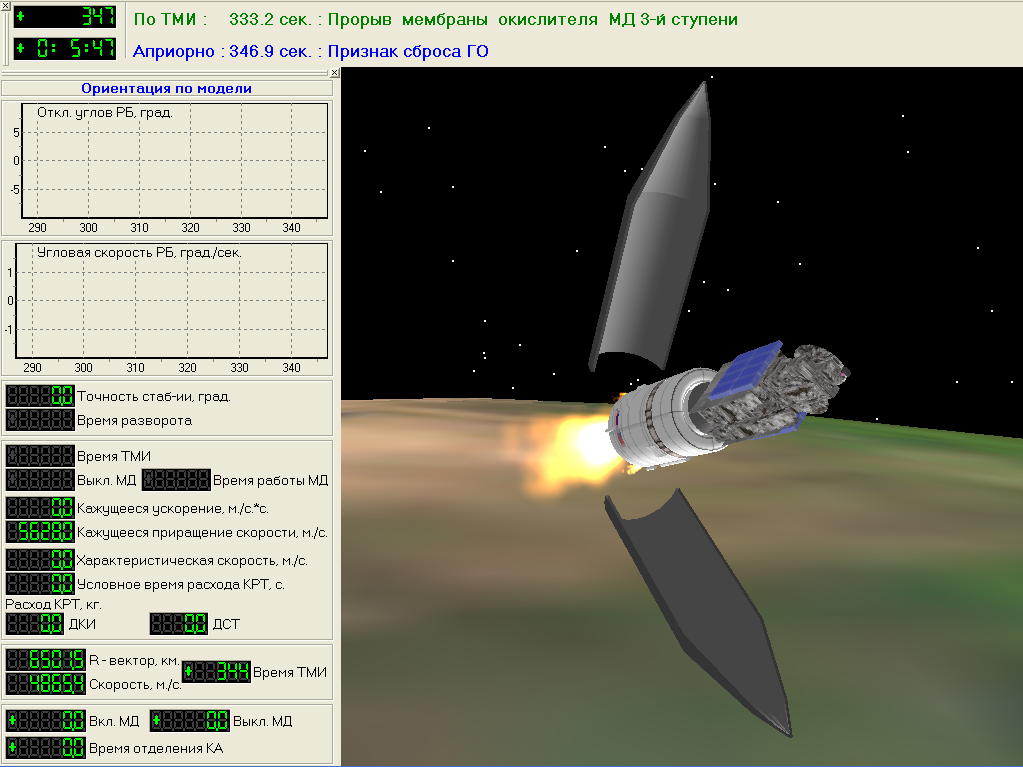
Payload Fairing Separation|00:05:47|
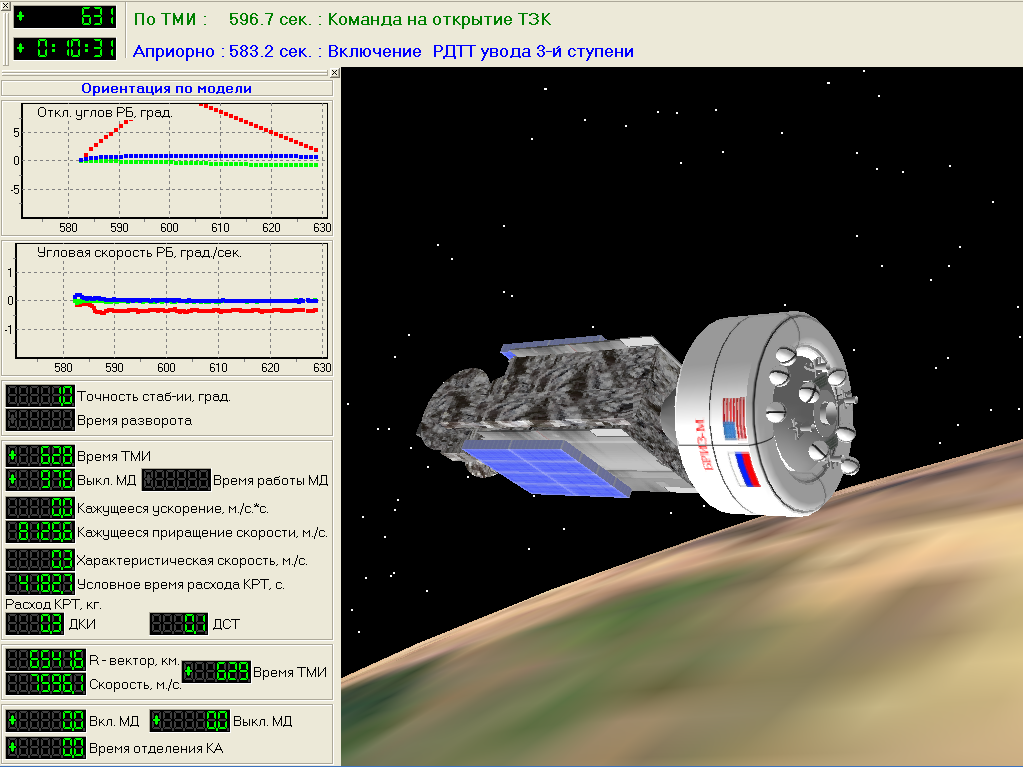
3rd Stage/Breeze M Separation|00:09:42|
1st Burn Ignition|00:11:46|
1st Burn Shutdown|00:16:16|1st Burn's Duration 00:04:30
2nd Burn Ignition|01:07:33|
2nd Burn Shutdown|01:25:18|2nd Burn's Duration 00:17:45
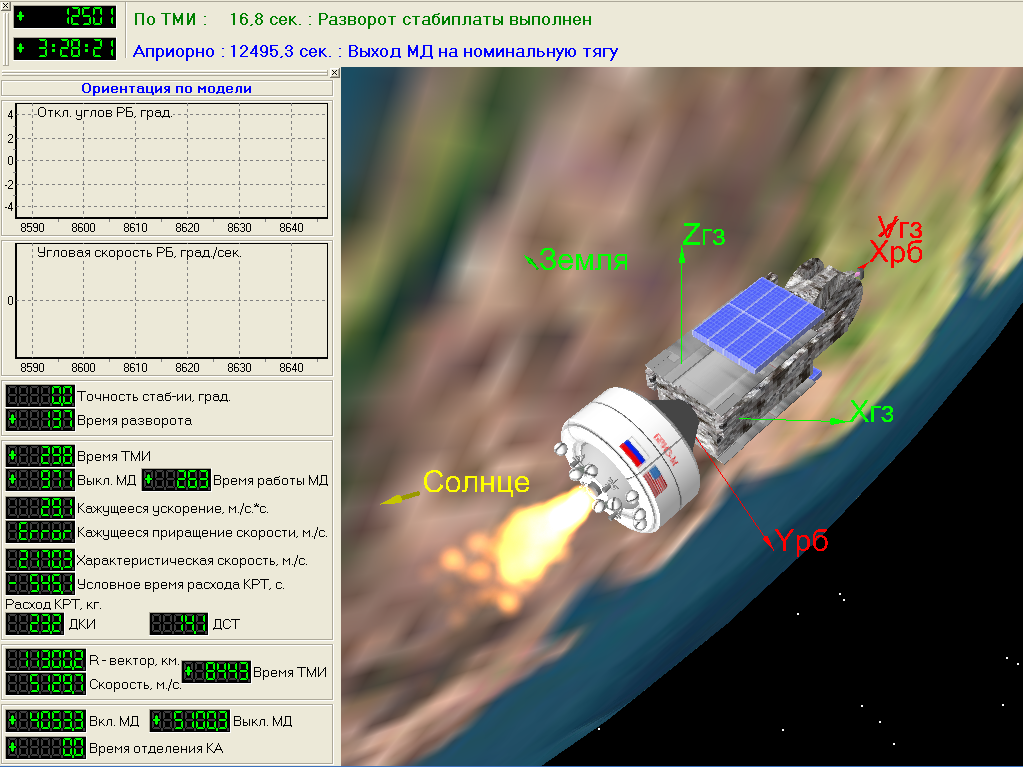
3rd Burn Ignition|03:28:12|
3rd Burn Shutdown|03:39:44|3rd Burn's Duration 00:11:32
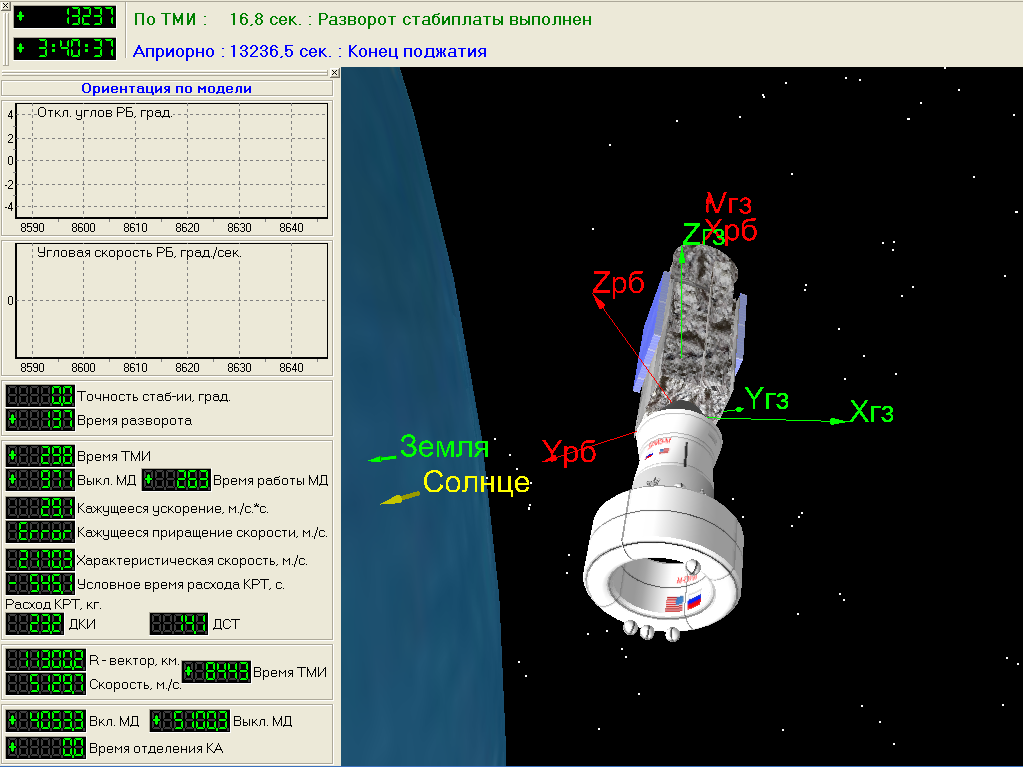
APT Jettison|03:40:34|
4th Burn Ignition|03:42:01|
4th Burn Shutdown|03:47:52|4th Burn's Duration 00:05:51
5th Burn Ignition|08:53:08|
5th Burn Shutdown|08:59:26|5th Burn's Duration 00:06:18
Spacecraft Separation|09:12:00|
The vehicle's
reliability statistics according to
http://www.spacelaunchreport.com/reliability2010.txt:
Code:
================================================================
Vehicle     Successes/Tries Realzd Pred  Consc. Last     Dates
                             Rate  Rate* Succes Fail
================================================================
Proton-M/Briz-M  37    40    .93  .90     18    03/14/08 2001-
(ranks at 15th among all rockets and 5th among GEO launchers)
Weather forecast for Baikonur, Kazakhstan on October 15, 2010 (1 a.m.)
Time|Temps|Wind|Chill|Heat Index|UV Index|Dew Point|Relative Humidity|Precip|Snow|Clouds|Visibility|Wind|Weather
1 AM|+7°C|+7°C|+7°C|0|Low|+3°C|74%|20%|0%|40%|16 km|SSW 1.34 m/s|
P Cloudy
Sunrise/Sunset and associated twilight times for Baikonur on Friday, October 15, 2010
Times are local.
Event|Time
Astronomical twilight begins|06 : 25
Nautical twilight begins|06 : 59
Civil twilight begins|07 : 34
Sunrise|08 : 02
Transit (sun is at its highest)|13 : 32
Sunset|20 : 02
Civil twilight ends|20 : 31
Nautical twilight ends|21 : 05
Astronomical twilight ends|21 : 40
Watching the launch live
ILS broadcast will begin 30 minutes before the lift-off (at 18:23 UTC).
TSENKI broadcast will begin at 20:50 MSK (16:50 UTC) and end at 23:50 (18:50 UTC)
References
http://www.federalspace.ru
http://tvroscosmos.ru
http://www.ilslaunch.com
http://www.khrunichev.ru
http://coopi.khrunichev.ru
http://www.sirius.com
http://www.satbeams.com
http://forum.nasaspaceflight.com
http://www.novosti-kosmonavtiki.ru
http://www.spacelaunchreport.com
http://www.intellicast.com/Local/Forecast.aspx
http://www.good-stuff.co.uk/suntimes/sunmap.php










 !
!


 ) :thumbup: