- Joined
- Feb 13, 2008
- Messages
- 5,398
- Reaction score
- 8
- Points
- 0
- Location
- Khimki
- Website
- tigerofsiberia.livejournal.com
I'm a little concerned by the possiblilty of radioactive particles being sent in the atmosphere by the fire. Especially when the russian "Institute for Safe Development of Nuclear Energy" says there is no danger. We remember 1986, the "local" radioactive cloud of Chernobyl spreaded over the whole globe.
Well, probably the same isotopes that were ejected during Chernobyl disaster are at risk of being lifted up in the air again, when the forests containing them burn. However, due to the amount of time passed and progressing of decay, they shouldn't be just as "hot" already.
I don't like this developement, and Saratov research institute is probably filled with thousands of barrels containing the worst radioactive isotopes possible :shifty:
That's Sarov, not Saratov. And ah, it's not the only concern: Residents evacuated after fire at UK's main nuclear weapons factory
Also I hope things will go better in Moscow, the situation looks bad there... Maybe they could distribute gas masks ? They are probably plenty of them stockpiled during the cold war...
It looks like on Venus and feels like on Venus. Too bad I'm not a native Venusian... :idk: They promise the smoke to become even thicker through the night.
Giving people masks would make little sense. The purpose of a gas mask is to provide a temporary protection until evacuation to a breathable place. They also have a limited list of agents they prevent from filtering (or are equipped with an oxygen bottle). But you can't live (eat, sleep, work) in a gas mask, when it's just there is no hiding place from the foul air.
I, for one, figured out that CO2 intoxication is less nasty than CO intoxication and decided against opening my windows this night. I don't think this night won't take a death toll here.
---------- Post added at 00:48 ---------- Previous post was at 00:41 ----------
Wondering, why there's no wildfires data from the Meteor-M. Is it still in working shape?..
---------- Post added at 21:03 ---------- Previous post was at 00:48 ----------
A little digest update on the wildfires.
How space technology is involved in firefighting this summer:
http://www.vesti.ru/doc.html?id=383708&cid=549
shortly:
Resurs-DK remote sensing satellite allows daily survey of wildfire data across the regions; Beriev-200 pilots use GLONASS navigation signals to home on fire for water dropping in zero visibility conditions.
Sergey Shoigu, the head of Russian Emergency Command, suggests that if wildfires spread to Bryansk territory, re-spreading of radioactive isotopes left over from Chernobyl disaster is a dangerous possibility
(http://top.rbc.ru/special/fires/05/08/2010/446040.shtml)
Several firefighting robots were deployed to defense of the national nuclear centre in Sarov. They can be used for putting fire off in dangerous industrial installations. Watch video by the link: (http://www.rian.ru/video/20100804/261671980.html)

Impact and benefit of wildfires on natural environment are discussed in this article in English: http://en.rian.ru/analysis/20100804/160072365.html
Forty people have been killed, while the survivors have lost their property and homes. But there are no wildlife losses statistics available now, and there may never be.
[...]
But nature is wise. It responds to each disaster, large or small, so as to compensate for the damage done. It turns out in the longer run that even wildfires can have some benefits.
New growth will cover the burnt areas within 8 to 10 years. For example, berry bushes grow, providing raspberries and cowberries. These areas, covered with bushes, young birches and asps, give animals food and shelter.
Burial services in Moscow are overworking, as death rate booms this hot summer months; the workers can't dig graves as fast as required
(http://rian.ru/hs_news/20100805/262165011.html)
Russia completely halts grain exports till the mid-December, causing commodity market panic (and for benefit of U.S. farmers).
(http://www.hurriyetdailynews.com/n....-to-russian-drought-buyers-worried-2010-08-05)
Wheat extended gains to the highest price in 23 months on concern that the worst drought in at least half a century in Russia, the world’s third-biggest grower, will wilt crops, threatening to push food inflation higher.
There’s “a little bit of panic,” said Michael Pitts, director for commodity sales at National Australia Bank. Russian officials are discussing limits to exports, according to Arkady Zlochevksy, president of the Grain Union, which represents producers and traders.
Wheat has surged about 80 percent since this year’s low on June 9 to $7.68 a bushel.
A heat wave in Russia, dry weather in Kazakhstan, Ukraine and the European Union and excess rain in Canada are draining wheat stockpiles and dragging up prices of rice, soybeans and corn. Wheat has jumped faster than in the first two months of 2008 when a 41 percent gain to a record $13.495 spurred concern over a global food crisis and sparked riots from Haiti to Egypt.
Prime importers of Russian grain are Saudi Arabia, Iran, Italy, Spain, Israel, Tunisia, Morocco, Greece, Egypt, Algeria, Libya. But not only these countries get affected, the current wheat crisis may push the worldwide economy crisis off balance, experts say.
Along stopping its own exports, Russia is dealing with Kazakhstan and Belarus, its partners by the customs union, about them stopping their exports too (http://en.rian.ru/russia/20100805/160085751.html):
MOSCOW, August 5 (RIA Novosti) - Moscow has moved to request that Kazakhstan and Belarus suspend grain exports due to the worsening drought, the Russian government said on Thursday.
The Economic Development Ministry has been instructed to submit a proposal to the relevant commission of the Russian-Belarusian-Kazakh customs union, the government press release said.
[...]
The government will distribute grain from the state intervention fund without auctions to regions suffering from the heat wave, Putin said.
"We will not auction off grain, we will distribute it according to requests from regions. The regions will have to help [farmers] in accordance with objective criteria developed by the Agriculture Ministry," he said.
Russia's grain intervention fund currently holds 9.5 million tons of grain.
During the past agricultural season (July 2009-July 2010), Russia exported 21.4 million tons of grain. It has shipped more than 1 million tons since the start of the new season.
A historical analysis of Russian grain exports is available here (but in Russian): http://rian.ru/hs_spravka/20100805/262152122.html
By the moment, many countries offered help to Russian government for overcoming the ongoing disaster. Urkaine has provided several aircraft and experiences firefighting air crews to reinforce Russian efforts, Azerbaijan did the same. Much help or offers of help comes from Germany, Italy, Poland, Lithuania, Estonia, Iran, Belarus, Armenia, Tunisia, Bulgaria, Abkhazia.


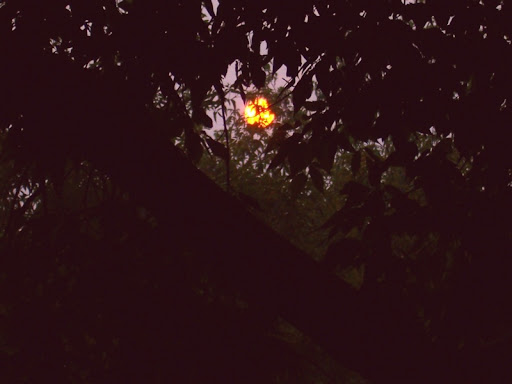



 Watching out for some zombies...