
-
ORBITER-FORUM will be temporarily closed at 2026-07-23 18:00 UTC while we complete some OF maintenance tasks. The amount of downtime is expected to take up to one hour, but probably less.
You are using an out of date browser. It may not display this or other websites correctly.
You should upgrade or use an alternative browser.
You should upgrade or use an alternative browser.
Science Art and Engineering
- Thread starter Andy44
- Start date

ar81
Active member
- Joined
- Jun 19, 2008
- Messages
- 2,355
- Reaction score
- 8
- Points
- 38
- Location
- Costa Rica
- Website
- www.orbithangar.com
Designing a city also may have some art in it.

And there is art in orbiter...

And there is art in fantasy movies

And there is art in orbiter...
And there is art in fantasy movies
Last edited:

Designing a city also may have some art in it.
Yes, but there is a difference between a planned city and one that builds up more naturally.
Washington, DC, is a planned "artificial" city that was built for the specific purpose of being a capitol and was designed by the engineer L'Enfant. It is a good-looking city, mostly, but while the street plans look neat from overhead, it makes for a bit of confusion if you're trying to navigate it. Mixing a traditional grid with traffic circles and diagonal streets was an attempt to get away from the boring grid-only plan.
New York City is an example of a beautiful city which was more "natural", in the sense that it was built by people who thought this would be a good place to settle and live, because the geography makes it a good location for a port and it has river access to the Hudson River valley. The street grid of Manhattan is artificial and planned, of course, but that came after the city was already started. Same thing with central planning of which skyscraper goes where.
NYC is certainly an example of engineering and art combined, though. Look at the bridges and skyscrapers, the rail systems and tunnels. The scale is staggering and the skyline is beautiful. It also helps that NYC saw its golden age during the time when Art Deco was the "in" thing, leading to buildings like the Empire State and Chrysler. Modern buildings like the Twin Towers or the Sears Tower in Chicago lack that style.

- Joined
- Feb 6, 2008
- Messages
- 38,938
- Reaction score
- 3,937
- Points
- 203
- Location
- Wolfsburg
- Preferred Pronouns
- Sire
My hometown is also planned, though differently and by different people... The requirements for my hometown had been defined by national socialists and had been pretty much dominated by militarism and NS doctrine. Had such harmless things like being designed for people picking up their new car right from the factory and have a summer residence for Hitler, to have the roads large enough for big military parades.
Luckily, the later decades went way past the early concept... Today Wolfsburg is more some kind of architecture show case of many different eras in history. A bit like Brasilia, but with old and new buildings as well. Especially the newer churches are pretty interesting, some of them had been designed by the star architects of their time.

The wide roads planned by the Nazis are actually making the city pretty unique now - while the actual roads had been reduced in the number of lanes to the real traffic, the wide space allows having large grass belts around the roads. Again beauty in the design, that had not been expected.
Luckily, the later decades went way past the early concept... Today Wolfsburg is more some kind of architecture show case of many different eras in history. A bit like Brasilia, but with old and new buildings as well. Especially the newer churches are pretty interesting, some of them had been designed by the star architects of their time.
The wide roads planned by the Nazis are actually making the city pretty unique now - while the actual roads had been reduced in the number of lanes to the real traffic, the wide space allows having large grass belts around the roads. Again beauty in the design, that had not been expected.

Ark
New member
- Joined
- Jan 31, 2009
- Messages
- 2,199
- Reaction score
- 0
- Points
- 0
I think the Shuttle is a good example of a machine built to the requirements of it's function that came out looking awesome anyway. Being a spaceplane, it needs the sort of curves and lines that lend themselves to being aesthetically appealing. Given that the LEM was a 100% function-built spacecraft, that should be a good indicator that NASA puts visual form pretty low on the priority list.
And rockets just aren't that beautiful outside of the context of what they accomplish, from a purely visual standpoint they all look like massive phalluses. Phallii?
And rockets just aren't that beautiful outside of the context of what they accomplish, from a purely visual standpoint they all look like massive phalluses. Phallii?

Ugh. I can't say my hometown looks nice from an artist's or an engineer's perspective. The 'pride of Moncton' (the downtown area...one street) is a dump. The only nice place is the library (bless that place.)
However, there was a car show the other day, and I saw a Lamborghini Murcielago. 'Nuff said. :lol:
However, there was a car show the other day, and I saw a Lamborghini Murcielago. 'Nuff said. :lol:

- Joined
- Feb 13, 2008
- Messages
- 5,398
- Reaction score
- 8
- Points
- 0
- Location
- Khimki
- Website
- tigerofsiberia.livejournal.com
And rockets just aren't that beautiful outside of the context of what they accomplish, from a purely visual standpoint they all look like massive phalluses. Phallii?
I assume some people would argue on justness of this your contradistinction. :rofl:
Last edited:
Damn you Freud.from a purely visual standpoint they all look like massive phalluses.
- Joined
- Feb 6, 2008
- Messages
- 38,938
- Reaction score
- 3,937
- Points
- 203
- Location
- Wolfsburg
- Preferred Pronouns
- Sire
However, there was a car show the other day, and I saw a Lamborghini Murcielago. 'Nuff said. :lol:
I can see one every day....we have a "zoo" for them. :lol:

- Joined
- Nov 23, 2008
- Messages
- 1,681
- Reaction score
- 4
- Points
- 38
I've actually put a bit of thought into this in the past. My personal conclusion is that people start out with an idea of what they think it ought to be, or would be cool, and they are able to make "that." We think of the thing first, think of "how cool it would be" and strive to make that thing that we want. Engineers follow function primarily, but mainly to make something they imagined first. think of the fan/saucer planes that worked like crap, but they made them cuz they thought a flying saucer was the way to go!
In the end, i think that we develop ideas and technology somewhat separately, then when the technology is good enough, we cram the technology into whatever it is that we think looks cool.
I believe the space shuttle is the 80's way of saying "yeah, we got this whole rocket/spaceflight concept and tech down so well that we're going to make a space airplane with robotic arms and a giant hatch that we can pull tricks out of"
and so we did. but the shuttle doesn't even worked as promised (i love it, just sayin) and we are going back to a rocket-only space program. it's like the flying saucer hover cars. people in the 50s thought they were going to be IT, but they weren't so they went back to planes and eventually made helicopters which are cooler than any flying saucer. in the 80's a flying space plane seemed really cool, but now we are going back to rockets, probably until we find something that is way cooler, born purely out of function or something we learned from the shuttle
In the end, i think that we develop ideas and technology somewhat separately, then when the technology is good enough, we cram the technology into whatever it is that we think looks cool.
I believe the space shuttle is the 80's way of saying "yeah, we got this whole rocket/spaceflight concept and tech down so well that we're going to make a space airplane with robotic arms and a giant hatch that we can pull tricks out of"
and so we did. but the shuttle doesn't even worked as promised (i love it, just sayin) and we are going back to a rocket-only space program. it's like the flying saucer hover cars. people in the 50s thought they were going to be IT, but they weren't so they went back to planes and eventually made helicopters which are cooler than any flying saucer. in the 80's a flying space plane seemed really cool, but now we are going back to rockets, probably until we find something that is way cooler, born purely out of function or something we learned from the shuttle
Last edited:
Actually, the shuttle is not an 80s idea, it's a 50s idea that didn't fly until 1981. In fact, it might even be considered a 40s idea, since Eugen Sanger designed the first spaceplane during WWII, which inspired both the DynaSoar and the Shuttle.
- Joined
- Nov 23, 2008
- Messages
- 1,681
- Reaction score
- 4
- Points
- 38
Actually, the shuttle is not an 80s idea, it's a 50s idea that didn't fly until 1981. In fact, it might even be considered a 40s idea, since Eugen Sanger designed the first spaceplane during WWII, which inspired both the DynaSoar and the Shuttle.
oh ok yeah sorry, well i revise my statement to say "we can finally make that flying space plane with robotic arms"

the point being we wanted to make something that we envisioned to be a certain way before we even started.
i think the knowledge base for making devices all evolve separately, then when you combine all fields(structural engineering, aerospace engineering, rocket and propulsion engineering, electrical etc), you can make what you want! however every piece will demand requirements and the way each field meets the requirements of every other field is where all the cool details come from that can never be predicted with concept art. i had a space book from 1969 that had concept art for the space shuttle, and it looked the same with no details, because they hadn't been worked out yet. oh and there was like 6 of them building a space station with robot arms and hands(2 per shuttle!), and the shuttfles were numbered like there was 30 shuttles and they all fly around together.
The process you just described is the definition of 'progress.'oh ok yeah sorry, well i revise my statement to say "we can finally make that flying space plane with robotic arms"
the point being we wanted to make something that we envisioned to be a certain way before we even started.
i think the knowledge base for making devices all evolve separately, then when you combine all fields(structural engineering, aerospace engineering, rocket and propulsion engineering, electrical etc), you can make what you want! however every piece will demand requirements and the way each field meets the requirements of every other field is where all the cool details come from that can never be predicted with concept art. i had a space book from 1969 that had concept art for the space shuttle, and it looked the same with no details, because they hadn't been worked out yet. oh and there was like 6 of them building a space station with robot arms and hands(2 per shuttle!), and the shuttfles were numbered like there was 30 shuttles and they all fly around together.

We think "Ooh, that's cool" and later we build it! -If there are any engineers in here, feel free to cringe at my ignorance of your witchcraft-
As for thirty shuttles flying around with robot hands and the like, that was half PR value (making the space program look shinier in the eyes of the taxpayers) and half that blessed optimism NASA had back in the day.
Well, I would argue with you that while engineers were indeed looking to build a spaceplane that takes off and lands like an airplane, they didn't envision the shuttle as we know it from the start.
The early ideas for the space shuttle were mostly lifting bodies or straight-wing orbiters. The straight-wing designs were pretty ugly, and among the lifting bodies some were okay and some weren't. Even the early delta-wing versions were not so great-looking, many had long ugly noses and simple wing deltas. What we eventually got resulted from a lot of studies that showed the double-delta wing was the most optimal, and that the nose shouldn't be too long because the crew has to be able to see the runway when landing.
So it kind of just worked out mathematically that the shuttle has its current shape. Buran has almost the same shape, but because of little details, mainly the windshield and nose, it doesn't look as cool (not to me, anyway).
The early ideas for the space shuttle were mostly lifting bodies or straight-wing orbiters. The straight-wing designs were pretty ugly, and among the lifting bodies some were okay and some weren't. Even the early delta-wing versions were not so great-looking, many had long ugly noses and simple wing deltas. What we eventually got resulted from a lot of studies that showed the double-delta wing was the most optimal, and that the nose shouldn't be too long because the crew has to be able to see the runway when landing.
So it kind of just worked out mathematically that the shuttle has its current shape. Buran has almost the same shape, but because of little details, mainly the windshield and nose, it doesn't look as cool (not to me, anyway).
Straight...wing? :blink:
I've never heard that before...and it sounds like a terribly impractical shape for a hypersonic aircraft. I thought it was proved in the 40's that straight wings were impractical for even low supersonic speeds.
Not even mentioning how ugly that sounds...(this coming from the person who liked the A-10)
I've never heard that before...and it sounds like a terribly impractical shape for a hypersonic aircraft. I thought it was proved in the 40's that straight wings were impractical for even low supersonic speeds.
Not even mentioning how ugly that sounds...(this coming from the person who liked the A-10)
- Joined
- Nov 23, 2008
- Messages
- 1,681
- Reaction score
- 4
- Points
- 38
The book i was talkin about actually had the delta wing and etc... they were so spot on that they may have been painted after ALL the research had already been done----> in that specific area.
I actually have spent some time working with engineering teams at JPL and am familiar with their general thought processes.
Even though there were many shapes tested before arriving at the final shape, I'd be willing to bet they started with a particular knowledge base and had a vague idea about what might work best, or at least one or two people did... but until you try everything, you can never settle for something you merely believe to be correct, sometimes some seemingly offhanded test has surprising results that no one expects, and then that weird thing is discovered as the best.
also with the time it takes to finalize and build a project as huge as the shuttle program, i think when the book was published in 1969 they had already finalized the major portions of the design. i mean they looked really spot on, but smooth and shiny with none of the awsome details. maybe I'll try to scan them or something they are good for a few laughs!! hahahha
I actually have spent some time working with engineering teams at JPL and am familiar with their general thought processes.
Even though there were many shapes tested before arriving at the final shape, I'd be willing to bet they started with a particular knowledge base and had a vague idea about what might work best, or at least one or two people did... but until you try everything, you can never settle for something you merely believe to be correct, sometimes some seemingly offhanded test has surprising results that no one expects, and then that weird thing is discovered as the best.
also with the time it takes to finalize and build a project as huge as the shuttle program, i think when the book was published in 1969 they had already finalized the major portions of the design. i mean they looked really spot on, but smooth and shiny with none of the awsome details. maybe I'll try to scan them or something they are good for a few laughs!! hahahha
The Mach 6 X-15 had a straight wing. It was also the first winged space vehicle.
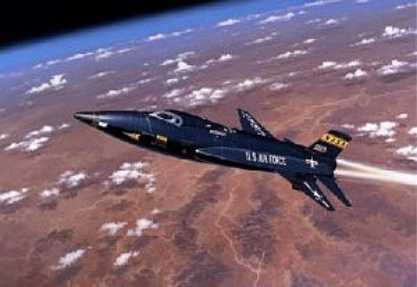
Maxime Faget designed a straight-wing shuttle orbiter called the "DC-3" which was to re-enter semi-ballistically belly first, nosing over into winged flight only after going subsonic.

---------- Post added at 08:28 PM ---------- Previous post was at 08:27 PM ----------
http://en.wikipedia.org/wiki/North_American_DC-3
Maxime Faget designed a straight-wing shuttle orbiter called the "DC-3" which was to re-enter semi-ballistically belly first, nosing over into winged flight only after going subsonic.
---------- Post added at 08:28 PM ---------- Previous post was at 08:27 PM ----------
http://en.wikipedia.org/wiki/North_American_DC-3

- Joined
- Nov 20, 2007
- Messages
- 11,969
- Reaction score
- 768
- Points
- 188
Or just weird:
http://www.unrealaircraft.com/wings/wings.php
One of my favourites:
http://www.unrealaircraft.com/wings/bac_mustard.php
Edit:
on second thoughts, maybe this one:
http://www.unrealaircraft.com/wings/pages/platform2.php
N.
http://www.unrealaircraft.com/wings/wings.php
One of my favourites:
http://www.unrealaircraft.com/wings/bac_mustard.php
Edit:
on second thoughts, maybe this one:
http://www.unrealaircraft.com/wings/pages/platform2.php
N.
Last edited:
- Joined
- Jun 22, 2008
- Messages
- 6,367
- Reaction score
- 0
- Points
- 0
Indeed, straight wings work if you configure them correctly. The F-104 had (sortof) straight wings for example, but they were extremely sharp on the edges. And it's interesting to remember that the very first supersonic aircraft had straight wings.
The Faget DC-3 is a very interesting idea, IMO, with the semi-ballistic reentry, but AFAIK there were issues with stability. It would have had less crossrange than STS as well, bad for launching into polar orbits.
The Faget DC-3 is a very interesting idea, IMO, with the semi-ballistic reentry, but AFAIK there were issues with stability. It would have had less crossrange than STS as well, bad for launching into polar orbits.
Similar threads


- Replies
- 0
- Views
- 614
