

- Joined
- Jan 7, 2008
- Messages
- 5,814
- Reaction score
- 869
- Points
- 203
- Location
- Earth
- Website
- orbides.org
- Preferred Pronouns
- she/her
I've been lately interested in the way the atmosphere of Mars looks like, and the thing seems somewhat weird.
How dense is it?
Or, better, what defines light absorption in the air?
The biggest one was about this image:

Full: http://www.awalkonmars.com/A1318-325PCM12E1v1anno.jpg (43Mb)
Take a closer look at the horizon - the distant hills are quite shaded by the air, yet they can't be too far away, probably closer than the same level of shade on Earth.
Another one of a kind:

Full: http://upload.wikimedia.org/wikipedia/commons/2/20/Victoria_Crater,_Cape_Verde-Mars.jpg (3 Mb)
Again, horizon - the distant hills are just as sharp as the foreground in terms of color.
And, we see an entirely different, yet still-bright color of the air.
Now, a different time:
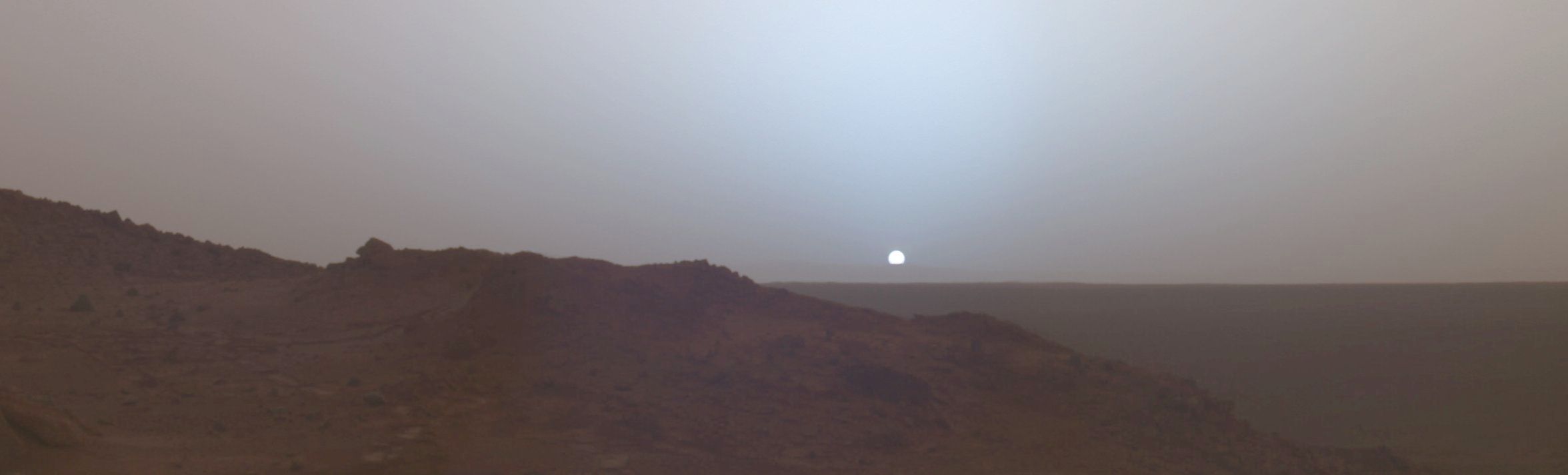
Again, the distant objects are well shaded and the air feels very dense, yet the coloration is incomparably less colorful than on Earth.
And an overhead sun picture from yet another place :
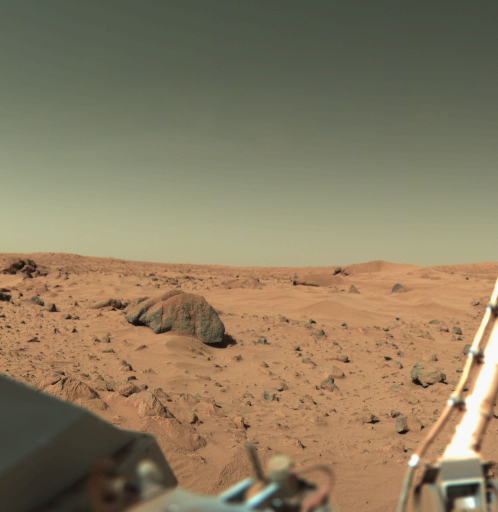
Where we see yet another sky color and clean-feeling air.
My best guess is dust to account for all that, but does it account?
What defines the way air looks on this kind of a planet?
One more interesting view:

The clouds seen from the ground.
If the air is dense enough to support clouds, what are they made of?

Looking up again, we see that there are enough air to make a halo around Phobos (Is it? Or is it a camera effect?) as well as to support some traces of clouds.
Now, for a different view:
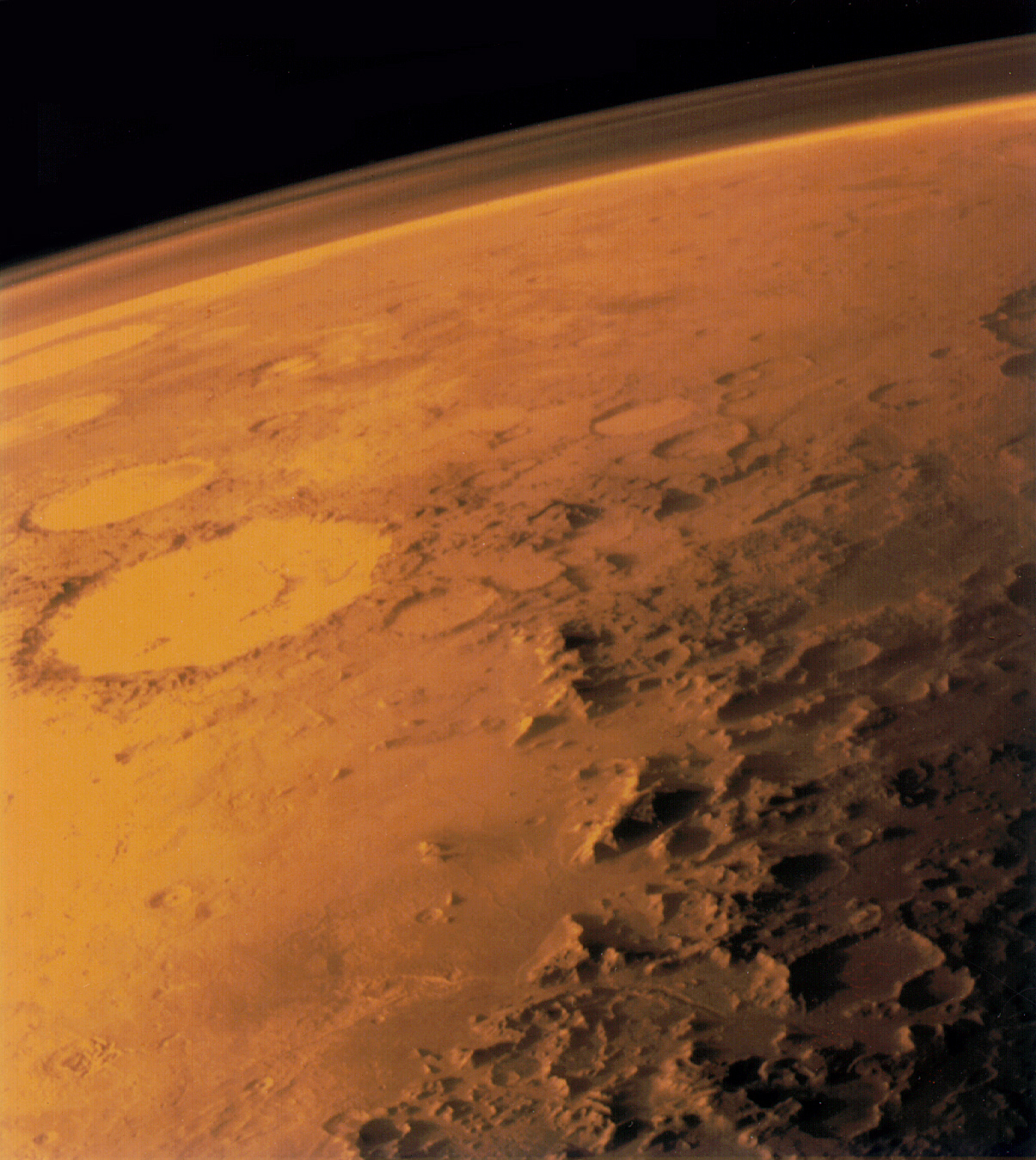
A weird-looking something in the air. Is it clouds?
What are they made from?
Notice the thickness of the air.

Here we see the thick evening-air edges on the disk.
Without any traces of the kind of clouds in above picture.

Here what look like a dense air shell visible on the edges.

Yet, a higher-away view gives a Moon-like horizon color-lessnes.


Some other images show a rather blurry surface, relative to foreground objects sharpness.
Now, the rest of the questions are:
1. What colors are the sky on Mars?
Why there are no 2 similar-colored pictures of it?
What defines them besides different cameras and exposures?
2. Does anyone know where to get some high-quality pictures of Mars - 90* UPWARDS panorama and low-orbit views?
3. Does anyone know where to get an image of Martian clouds form orbit, if they are visible?
4. And, just how much air is needed to make stars invisible at noon (for a sun shaded camera) on a planet as far from the sun as Mars?
How dense is it?
Or, better, what defines light absorption in the air?
The biggest one was about this image:
Full: http://www.awalkonmars.com/A1318-325PCM12E1v1anno.jpg (43Mb)
Take a closer look at the horizon - the distant hills are quite shaded by the air, yet they can't be too far away, probably closer than the same level of shade on Earth.
Another one of a kind:
Full: http://upload.wikimedia.org/wikipedia/commons/2/20/Victoria_Crater,_Cape_Verde-Mars.jpg (3 Mb)
Again, horizon - the distant hills are just as sharp as the foreground in terms of color.
And, we see an entirely different, yet still-bright color of the air.
Now, a different time:
Again, the distant objects are well shaded and the air feels very dense, yet the coloration is incomparably less colorful than on Earth.
And an overhead sun picture from yet another place :
Where we see yet another sky color and clean-feeling air.
My best guess is dust to account for all that, but does it account?
What defines the way air looks on this kind of a planet?
One more interesting view:
The clouds seen from the ground.
If the air is dense enough to support clouds, what are they made of?
Looking up again, we see that there are enough air to make a halo around Phobos (Is it? Or is it a camera effect?) as well as to support some traces of clouds.
Now, for a different view:
A weird-looking something in the air. Is it clouds?
What are they made from?
Notice the thickness of the air.
Here we see the thick evening-air edges on the disk.
Without any traces of the kind of clouds in above picture.
Here what look like a dense air shell visible on the edges.
Yet, a higher-away view gives a Moon-like horizon color-lessnes.
Some other images show a rather blurry surface, relative to foreground objects sharpness.
Now, the rest of the questions are:
1. What colors are the sky on Mars?
Why there are no 2 similar-colored pictures of it?
What defines them besides different cameras and exposures?
2. Does anyone know where to get some high-quality pictures of Mars - 90* UPWARDS panorama and low-orbit views?
3. Does anyone know where to get an image of Martian clouds form orbit, if they are visible?
4. And, just how much air is needed to make stars invisible at noon (for a sun shaded camera) on a planet as far from the sun as Mars?


