Alright, you guys win. :lol: To my mind, if one knowledgeable person says he or she would prefer something differently, I'm prepared to write it off as a personal idiosyncracy; when two voices say the same thing, then it starts getting different. The next version will give figures like "4.4 degrees/2 mins" or something similar.
Thanks again for the time you've both taken to look at this and to offer your comments. The disadvantage I've got is that I already knew how to do what I was attempting to describe before I wrote it, so my viewpoint can get myopic and "fresh eyes" are a great help on this.
> The range and range rate should look reasonable. I know 3 more things. [...] the range rate will decrease over time, so my arrival time is not a linear function of range.
That one I can give an answer to right now, it's one of the things I looked at when preparing this. Given reasonable LEO orbits and with the 26 degree and 130 degree parameters held constant, the transfer time will always be about the same.
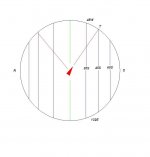
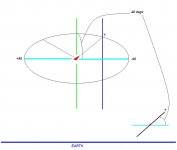
Suppose the active, chaser craft is held at a constant altitude, the 26 degree initial elevation and 130 degree transfer angle are preserved, and the delta-H is varied. Well, in order for the target to be at 26 degrees elevation, it's gotta be somewhat in front of the chaser, so the phase angle (TrL difference) at the terminal phase initiation (TPI) burn increases as delta-H increases. For example, if the active craft is at 6637 km radius (as in the tutorial's SCN), delta-Hs of 10 km, 24 km, and 50 km mean phase angles of 0.18, 0.42, and 0.87 degrees respectively, and since the active craft travels 130 degrees during the rendezvous, this means that for those delta-Hs the target must travel 129.82, 129.58, and 129.13 degrees respectively.
Now, consider this. With those constraints (active craft radius, initial elevation, active craft's transfer angle) imposed, the larger the delta-H, the higher the target which means a longer orbital period, but a larger delta-H also means that the target travels a shorter portion of its orbit. Guess what? Given reasonably small delta-Hs, those two things nearly cancel out. With the active craft's radius = 6637 km, a delta-H of 1 km means a transfer time of 1943 seconds, whereas a delta-H of 300 km means a transfer time of 2001 seconds, only one minute more. (The numbers are for the "raw" trajectory, with no braking at the end.) That difference increases if you vary the active craft's radius, but not much. For example, with the active craft's radius at 20,000 km, the difference between transfer times for delta-Hs = 1 km and 300 km is only about 90 seconds.
While varying the delta-H doesn't have much of an impact on transfer time, varying the active craft's radius while staying in LEO does increase the transfer time, but not dramatically. With delta-H = 24 km, the transfer time is 2109 seconds with the active craft at 7000 km, versus 1943 seconds with the active craft at 6637 km, 164 seconds difference.
So at any reasonable LEO radius and delta-H, the raw trajectory's transfer time will be a half hour plus some spare change. The braking phase and subsequent docking add time, but that's seems more or less constant. I haven't clocked how long it takes to get from TPI to braking phase, but every time I've run this the time from TPI to docking has been about 48-50 minutes.
> I agree with Chuck that the useful number in the chart is 4.4 degrees of drift against a killrot in two minutes @ 37 km range.
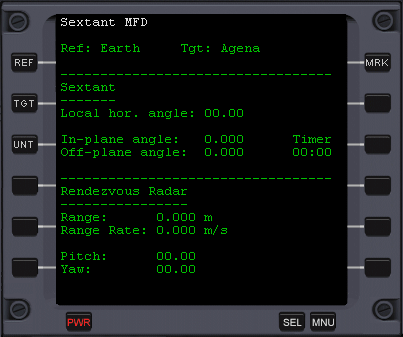
In the tutorial I said that I picked 37 km because Aldrin said that the Gemini-era technology imposed that limit, but I also said that I had tried starting MCCs at greater ranges and hadn't seen any dramatic differences. What I didn't say was that I haven't seen any differences. (The actual technique Aldrin was discussing was somewhat different from this technique.) I haven't done enough trials and other work to make anything like a definitive statement, which is why I didn't say that "on the record," but the only real change in delta-vee I've seen is that it's dropped a little with practice. I've done maybe a dozen full runs, varying different things, and RCS remaining always comes out around 280 to 282 kg. The worst was I did that "bad situation" run I described earlier (radar broken, Rinc=0.09), but I had 278 kg left at the end. So I don't think there's anything engraved in stone about the 37 km number.
With all that said, let me lay out what I'm thinking for the next version.
As it stands, there are too many MCCs. I didn't know how many MCCs the real Gemini did, so I just said "start doing them and keep doing 'em." Lunney's paper implies that they did two MCCs (see his figure 3) but makes no further statement, and I didn't want to take some marks on a graph as gospel until I had further confirmation. I've now found source that confirms that there were two (Dave Scott discussing Gemini 8 in a 1966 interview), but still have no idea at what times after TPI those were done. (You'd think that with all the inquiries NASA must get from us, they'd have an Orbinaut Liaison Officer by now. :lol: )
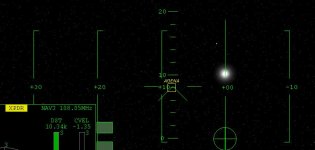
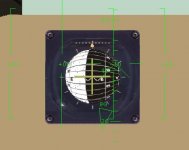
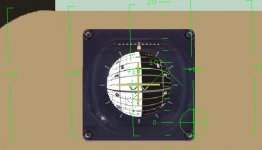
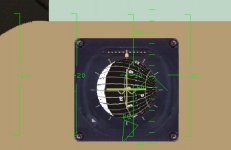
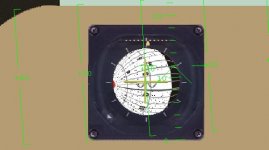
So as long as the raw trajectory takes a little over a half hour, if I can't locate more specific historical data then I'm thinking of just specifying two MCCs with 2:00 measurements centered at 10:00 and 20:00. That works out to nice round numbers; the expected angular motion is 4.051 deg. from 9:00 to 11:00, and 0.953 from 19:00 to 21:00, which is close enough to call 4 degrees and 1 degree. For a nominal trajectory, the ranges at 10:00 and 20:00 are 28.9 and 11.3 km respectively, so both are within "Aldrin's limit" if anyone is worried about that.
This would also make the technique easier to generalize. Aside from the initial TPI parameters, the only two parameters necessary would be expected angular motion from 9:00 to 11:00, and from 19:00 to 21:00, and both those could probably be well-represented by linear functions of target (or active) craft radius and delta-H.
I haven't tried doing any runs with those parameters, but will take a few cracks at it and see how it goes. If anyone else wants to give it a shot and see how I'd goes, I'd appreciate hearing about it.
Also, on getting into a coelliptic configuation with the target craft. I've found an Orbiter-friendly way to do that, even with non-spherical gravity turned on. My lunch hour is rapidly closing out on me and I'd like to grab a sandwich, but if anyone wants that procedure I'll describe it here.
SAM
Thanks again for the time you've both taken to look at this and to offer your comments. The disadvantage I've got is that I already knew how to do what I was attempting to describe before I wrote it, so my viewpoint can get myopic and "fresh eyes" are a great help on this.
> The range and range rate should look reasonable. I know 3 more things. [...] the range rate will decrease over time, so my arrival time is not a linear function of range.
That one I can give an answer to right now, it's one of the things I looked at when preparing this. Given reasonable LEO orbits and with the 26 degree and 130 degree parameters held constant, the transfer time will always be about the same.
Suppose the active, chaser craft is held at a constant altitude, the 26 degree initial elevation and 130 degree transfer angle are preserved, and the delta-H is varied. Well, in order for the target to be at 26 degrees elevation, it's gotta be somewhat in front of the chaser, so the phase angle (TrL difference) at the terminal phase initiation (TPI) burn increases as delta-H increases. For example, if the active craft is at 6637 km radius (as in the tutorial's SCN), delta-Hs of 10 km, 24 km, and 50 km mean phase angles of 0.18, 0.42, and 0.87 degrees respectively, and since the active craft travels 130 degrees during the rendezvous, this means that for those delta-Hs the target must travel 129.82, 129.58, and 129.13 degrees respectively.
Now, consider this. With those constraints (active craft radius, initial elevation, active craft's transfer angle) imposed, the larger the delta-H, the higher the target which means a longer orbital period, but a larger delta-H also means that the target travels a shorter portion of its orbit. Guess what? Given reasonably small delta-Hs, those two things nearly cancel out. With the active craft's radius = 6637 km, a delta-H of 1 km means a transfer time of 1943 seconds, whereas a delta-H of 300 km means a transfer time of 2001 seconds, only one minute more. (The numbers are for the "raw" trajectory, with no braking at the end.) That difference increases if you vary the active craft's radius, but not much. For example, with the active craft's radius at 20,000 km, the difference between transfer times for delta-Hs = 1 km and 300 km is only about 90 seconds.
While varying the delta-H doesn't have much of an impact on transfer time, varying the active craft's radius while staying in LEO does increase the transfer time, but not dramatically. With delta-H = 24 km, the transfer time is 2109 seconds with the active craft at 7000 km, versus 1943 seconds with the active craft at 6637 km, 164 seconds difference.
So at any reasonable LEO radius and delta-H, the raw trajectory's transfer time will be a half hour plus some spare change. The braking phase and subsequent docking add time, but that's seems more or less constant. I haven't clocked how long it takes to get from TPI to braking phase, but every time I've run this the time from TPI to docking has been about 48-50 minutes.
> I agree with Chuck that the useful number in the chart is 4.4 degrees of drift against a killrot in two minutes @ 37 km range.
In the tutorial I said that I picked 37 km because Aldrin said that the Gemini-era technology imposed that limit, but I also said that I had tried starting MCCs at greater ranges and hadn't seen any dramatic differences. What I didn't say was that I haven't seen any differences. (The actual technique Aldrin was discussing was somewhat different from this technique.) I haven't done enough trials and other work to make anything like a definitive statement, which is why I didn't say that "on the record," but the only real change in delta-vee I've seen is that it's dropped a little with practice. I've done maybe a dozen full runs, varying different things, and RCS remaining always comes out around 280 to 282 kg. The worst was I did that "bad situation" run I described earlier (radar broken, Rinc=0.09), but I had 278 kg left at the end. So I don't think there's anything engraved in stone about the 37 km number.
With all that said, let me lay out what I'm thinking for the next version.
As it stands, there are too many MCCs. I didn't know how many MCCs the real Gemini did, so I just said "start doing them and keep doing 'em." Lunney's paper implies that they did two MCCs (see his figure 3) but makes no further statement, and I didn't want to take some marks on a graph as gospel until I had further confirmation. I've now found source that confirms that there were two (Dave Scott discussing Gemini 8 in a 1966 interview), but still have no idea at what times after TPI those were done. (You'd think that with all the inquiries NASA must get from us, they'd have an Orbinaut Liaison Officer by now. :lol: )
So as long as the raw trajectory takes a little over a half hour, if I can't locate more specific historical data then I'm thinking of just specifying two MCCs with 2:00 measurements centered at 10:00 and 20:00. That works out to nice round numbers; the expected angular motion is 4.051 deg. from 9:00 to 11:00, and 0.953 from 19:00 to 21:00, which is close enough to call 4 degrees and 1 degree. For a nominal trajectory, the ranges at 10:00 and 20:00 are 28.9 and 11.3 km respectively, so both are within "Aldrin's limit" if anyone is worried about that.
This would also make the technique easier to generalize. Aside from the initial TPI parameters, the only two parameters necessary would be expected angular motion from 9:00 to 11:00, and from 19:00 to 21:00, and both those could probably be well-represented by linear functions of target (or active) craft radius and delta-H.
I haven't tried doing any runs with those parameters, but will take a few cracks at it and see how it goes. If anyone else wants to give it a shot and see how I'd goes, I'd appreciate hearing about it.
Also, on getting into a coelliptic configuation with the target craft. I've found an Orbiter-friendly way to do that, even with non-spherical gravity turned on. My lunch hour is rapidly closing out on me and I'd like to grab a sandwich, but if anyone wants that procedure I'll describe it here.
SAM


 ... and I'm not even sure that's what's needed here.