My launch report
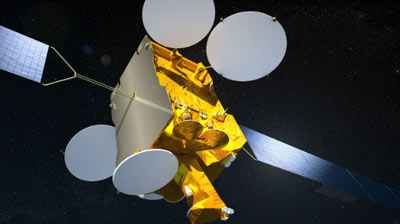
Today two communication satellites are to share ride on an Ariane 5 rocket into space. The larger one is 6 tonne Astra 2F, bound for a GEO slot that will enable high-definition Direct-to-Home satellite television services throughout the European and African continents. The other one is 3.4 tonne GSAT-10, built by the Indian Space Research Organisation. The satellite will (like many of the Indian communication satellites) provide communication links across the Indian sub-continent. It also carries a GPS navigation payload that will allow for even more precise GPS signals in India (ahead of the launch of several satellites dedicated to GPS augmentation in the next few years).
The launch was delayed from September 21 due to problems with the payload fairing (apparently an air duct got loose, and the payloads had to be checked for signs of contamination).
Launch location:
Kourou Launch pad ELA-3 5° 14'06.34"N, 52° 46'06.34"W
Launch dates and times:
[table="head"]{colsp=7}Launch times
Time Zone|
Kourou / UTC-3
|
Delhi / UTC+5.5
|
Paris /CEST
|
Universal / UTC
|
Washington / EDT
|
Los Angeles / PDT
Launch time (Primary):
|
18:18
|
02:48
|
22:18
|
21:18
|
17:18
|
14:18
on:
|
Sep. 28, 2012
|
Sep. 29, 2012
|
Sep. 28, 2012
|
Sep. 28, 2012
|
Sep. 28, 2012
|
Sep. 28, 2012
{colsp=7}
[highlight][eventTimer]2012-09-28 21:18:00?before|after;%dd% Days %hh% Hours %mm% Minutes %ss% Seconds %c%[/eventTimer] Ariane flight VA-209 Launch[/highlight]
[/table]
Live Coverage Of The Launch:
PAYLOAD 1
Astra 2F communication satellite:
Mission Summary
SES S.A. and Astrium announced in December 2009 that SES has ordered four multi-mission satellites from Astrium to provide replacement as well as incremental capacity for its SES ASTRA and SES WORLD SKIES divisions.
The new satellites, to be designated Astra 2E, Astra 2F, Astra 2G and Astra 5B, will allow the release of the existing satellites at two orbital positions (28.2 and 31.5 degrees East) and add new capacity as well as fleet deployment flexibility for the SES group over the coming years. The satellites are scheduled for launch in several steps between 2012 and 2014. The design life of each satellite is 15 years.
The four new satellites will be built on a Eurostar-3000 platform.
Three of the new spacecraft, Astra 2E, Astra 2F and Astra 2G, will serve to deliver next generation broadcast, VSAT and broadband services in Europe and Africa, and will carry Ku-and Ka-band payloads at 28.2 degrees East.
The Ku-band capacity will allow SES ASTRA to enhance and secure its existing offering to major Direct-to-Home (DTH) markets in the UK and Ireland. With a Ku-band payload specifically designed to meet the requirements of some of Europe’s largest DTH broadcasters, the satellites will have spot beam and pan-European beam switching capabilities to accommodate both pay-TV and free-to-air broadcasters, and to provide these customers with increased functionality. The Ka-band payload will allow SES ASTRA to develop next generation broadband services in Europe, including its ASTRA2Connect product.
Astra 2E, Astra 2F and Astra 2G will also include replacement and new capacity for the SES WORLD SKIES division, serving the African and the Middle Eastern markets with Ku-and Ka-band capacity. The new capacity will provide continuity of service and expansion opportunities for customers that are today already using the Astra 2B steerable beam over West Africa, as well as for new customers.
[table="head"]{colsp=2}Summary
Parameter|
Value
Working Orbit:
|
GEO
Orbital Location:
|
28.2° East
Coverage:
|
Europe, Africa
ApA at separation:
|
35937 km
PeA at separation:
|
249.5 km
Inc at separation:
|
6°
[/table]
[table="head"]Characteristics|
Astra 2F
Customer:
|
Prime contractor:
|
Platform:
|
Mass at Separation:
|
Dry Mass:
|
Stabilization:
|
Dimensions (stowed):
|
Dimensions (deployed span):
|
On-board power:
|
Communication Payload:
|
- ? Ku-band transponders
- ? Ka-band transponders
Life time:
|
Transponders coverage:
|
|
|
|
|
[/table]
PAYLOAD 2
GSAT-10 communication satellite:
Mission Summary
GSAT-10 is a 3-axis body stabilized geostationary satellite based on ISRO’s I-3K (I-3000) bus to provide communication services/augment the existing services. It carries 12 Normal C-band, 6 Extended C-band, 12 Ku-band transponders along with GAGAN (GPS Aided Geo Augmented Navigation) payload. The lift-off mass of the satellite is 3400 kg and it generates 6.0 kW of Power. The satellite will be located at 83ºE and will have a minimum operational life of 15 years.
The satellite will be ready for launch on board Ariane-5ECA during the second quarter of 2012.
[table="head"]{colsp=2}Summary
Parameter|
Value
Working Orbit:
|
GEO
Orbital Location:
|
83° East
Coverage:
|
India, South Asia
ApA at separation:
|
35937 km
PeA at separation:
|
249.5 km
Inc at separation:
|
6°
[/table]
[table="head"]Characteristics|
GSAT-10
Customer:
|
- Indian Space Research Organisation
Prime contractor:
|
- Indian Space Research Organisation
Platform:
|
Mass at Separation:
|
Dry Mass:
|
Stabilization:
|
Dimensions (stowed):
|
On-board power:
|
Payloads:
|
- 18 C-band transponders
- 12 Ku-band transponders
- GPS aided Geo Augmented Navigation (GAGAN) payload
Life time:
|
Transponder coverage:
|
|
[/table]
Launch Vehicle:
[table="head"]{colsp=2}Characteristics
|[table="head"]{colsp=2}
Ariane 5 ECA
Prime contractor:
|
Height:
| 50.5 m with upper stage and payload fairing
Diameter:
| max 11.56 m
Liftoff mass:
| 780 metric tonnes
Payload mass:
| ~10 tonnes at GTO (1500 m/s to GEO)
SOLID ROCKET BOOSTER (EAP):
|
- 2 X P241 motor
- Empty 38 tonnes
- Propellants 240 tonnes (HTPB)
- Thrust in vacuum 700 tonnes of force
- Thrust at sea level 509.9 tonnes of force
CRYOGENIC MAIN CORE STAGE (EPC):
|
- 1 X Vulcain-2 engine
- Empty 14.7 tonnes
- Propellants 170 tonnes (LOX + LH2)
- Thrust in vacuum 139 tonnes of force
- Thrust at sea level 96 tonnes of force
CRYOGENIC UPPER STAGE (ESC-A):
|
- 1 X HM7B engine
- Empty 4.54 tonnes
- Propellants 14.9 tonnes (LOX + LH2)
- Thrust in vacuum 6.7 tonnes of force
Payload Fairing:
|
- Diameter 5.4 m
- Length 17 m
- Mass 2675 kg
[/table]
[/table]
The vehicle's
reliability statistics according to
http://www.spacelaunchreport.com/log2012.html#rate:
Code:
================================================================
Vehicle     Successes/Tries Realzd Pred  Consc. Last     Dates
                             Rate  Rate* Succes Fail
================================================================
Ariane 5-ECA     35    36    .97  .95     35    12/11/02 2002-
Ariane VA209 Ascent Profile
The launcher’s attitude and trajectory are totally controlled by the two onboard computers, located in the Ariane 5 vehicle equipment bay (VEB).
7.05 seconds after ignition of the main stage cryogenic engine at T-0, the two solid-propellant boosters are ignited, enabling liftoff. The launcher first climbs vertically for 6 seconds, then rotates towards the East. It maintains an attitude that ensures the axis of the launcher remains parallel to its velocity vector, in order to minimize aerodynamic loads throughout the entire atmospheric phase, until the solid boosters are jettisoned.
Once this first part of the flight is completed, the onboard computers optimize the trajectory in real time, minimizing propellant consumption to bring the launcher first to the intermediate orbit targeted at the end of
the main stage propulsion phase, and then the final orbit at the end of the flight of the cryogenic upper stage.
The main stage falls back off the coast of Africa in the Atlantic Ocean (in the Gulf of Guinea).
On orbital injection, the launcher will have attained a velocity of approximately 9350 meters/second, and will be at an altitude of about 660 kilometers.
The fairing protecting the ASTRA 2F and GSAT-10 spacecraft is jettisoned shortly after the boosters are jettisoned at about T+197 seconds.
Ariane VA209 Ascent Timeline
[TABLE="head"]Event|Time rel lift-off|Time UTC|Comment (altitude, velocity)
Start of synchronized sequence|-00:07:00|21:11:00|
Ignition of the cryogenic main stage engine (EPC)|00:00:00|21:18:00|
Liftoff (Ignition of solid boosters)|00:00:07.3|21:18:07.3|0 km 0 m/s
End of vertical climb and beginning of pitch rotation (10 seconds duration)|00:00:12.6|21:18:12.6|0.09 km 37.4 m/s
Beginning of roll manoeuvre|00:00:17|21:18:17|0.339 km 75.6 m/s
Jettisoning of solid boosters|00:02:21|21:20:21|67.5 km 2003 m/s
Payload Fairing Separation|00:03:17|21:21:17|109.7 km 2252 m/s
Shut-down of main cryogenic stage|00:08:59|21:26:59|164.7 km 6907 m/s
Separation of main cryogenic stage|00:09:05|21:27:05|164.8 km 6933 m/s
Ignition of upper cryogenic stage (ESC-A)|00:09:09|21:27:09|164.8 km 6935 m/s
Injection|00:25:20|21:43:20|660.7 km 9350 m/s
Separation of Astra 2F satellite|00:27:44|21:45:44|968.7 km 9093 m/s
Separation of Sylda 5|00:28:54|21:46:54|1233.3 km 8884 m/s
Separation of GSAT-10 satellite|00:30:45|21:48:45|1598 km 8612 m/s
[/TABLE]
Weather forecast for Kourou, French Guiana on September 28, 2012 (6 p.m.)
Overcast in the morning, then partly cloudy. High of 91F with a heat index of 97F. Winds from the East at 5 to 15 mph.
References
http://www.arianespace.com
http://www.videocorner.tv
http://www.ses.com
http://www.isro.org
http://www.astrium.eads.net/en/news2/-kqg.html
http://www.isro.org/gsat-10/pdf/gsat-10-brochure.pdf
http://www.arianespace.com/images/launch-kits/launch-kit-pdf-eng/VA209-ASTRA-2F-GSAT-10-EN.pdf
http://english.wunderground.com
http://forum.nasaspaceflight.com
http://www.satbeams.com
http://www.spacelaunchreport.com
http://space.skyrocket.de