Updates Artemis II

I like his professional communication style. (y) All the transparency included to explain the decisions, explained in laymans terms to not appear hiding crucial information.

(Has some similarities to the communication of Robert Habeck, for those who know him.)
 
Oh well, it'a the SLS, after all. If I remember correctly, Artemis 1 got stacked in late' 21, only rolled out in summer '22 , had a rollback or two, then finally launched in late '22. Stuff like this is to be expected
 
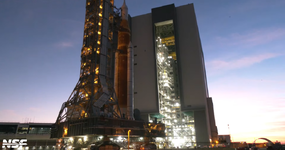
It's a nuisance that they can't physically access much of the stack while it is on the pad. It'd be neat if they could put the VAB on wheels and make it like the ULA mobile service tower.
 
It's a nuisance that they can't physically access much of the stack while it is on the pad. It'd be neat if they could put the VAB on wheels and make it like the ULA mobile service tower.

Does not help often, if you need destacking for accessing the component, you can't do that on the pad. Apollo also had a mobile service structure.

 
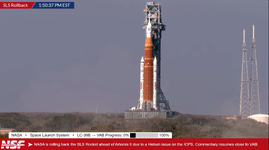
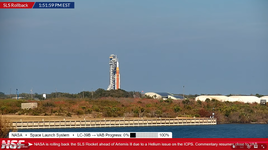
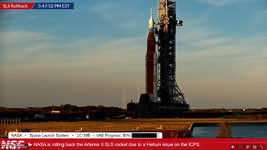
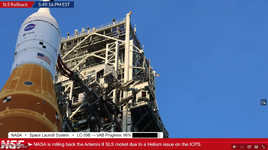
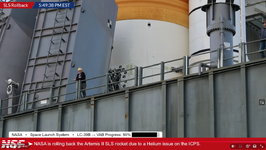
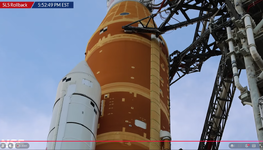
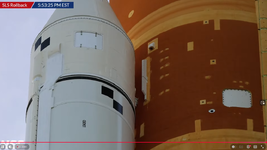
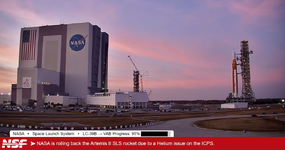
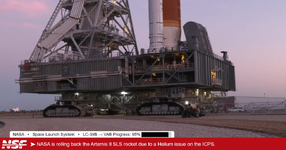
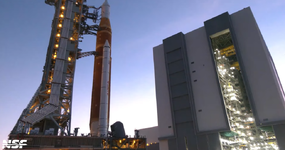
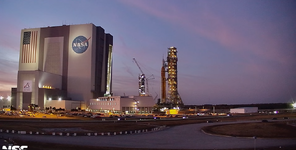
Almost there (90%).

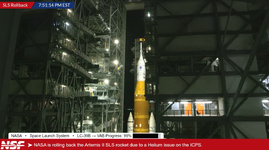
'End of March (is now) completely out of the question' (commentary)

1772059728552.png

1772059788402.png

1772059820637.png

1772060008201.png

1772060042390.png

1772062327702.png

1772062409664.png
 
Last edited:
almost painful to watch

not a particularly religious person but for this I'll make an exception
🙏
 
Does not help often, if you need destacking for accessing the component, you can't do that on the pad.
That's rather my point - if they weren't beholden to the Apollo-era crawler and VAB, designing a pad complex with cranes and staging for stack assembly and access to components on the pad even for something as large as the SLS isn't technologically infeasible. SpaceX has bits of this capability in their orbital launch and integration tower for Starship/Superheavy. But NASA, rightfully so, does utilize the existing crawler and VAB, as from a cost standpoint throwing out everything and starting new wouldn't make any sense for them. Since the SLS launch rate is fractions of a launch per year it makes more sense to just roll it back and absorb the loss of schedule.

Just dreaming out loud. SLS and all of its GSE and infrastructure is far from an optimal design to get us to the moon, but it is the best that can be done under the requirements of using Apollo and shuttle program legacy infrastructure and manufacturing technologies. I really wonder what a "modern" moon program would look like if it had to be built from scratch like was done in the 1960s. The Chinese lunar program is probably closer to such a thing.
 
That's rather my point - if they weren't beholden to the Apollo-era crawler and VAB, designing a pad complex with cranes and staging for stack assembly and access to components on the pad even for something as large as the SLS isn't technologically infeasible. SpaceX has bits of this capability in their orbital launch and integration tower for Starship/Superheavy. But NASA, rightfully so, does utilize the existing crawler and VAB, as from a cost standpoint throwing out everything and starting new wouldn't make any sense for them. Since the SLS launch rate is fractions of a launch per year it makes more sense to just roll it back and absorb the loss of schedule.

Well, in terms of effective GSE, you would have to mention the Soviets, who heavily automated things for their later launchers (especially Energia and Zenit) and pretty much serviced the whole vehicle through their "zeroth" stage (that is fixed onto the launch pad and separated on lift-off). Arianespace also does a lot of things right there, despite still following many conventions set by the first ELDO launcher.

Important is, that you can access the payload until late in prelaunch processing and that you can access any component that is prone to failures or has a limited pad-life (like the batteries). You can fix this all for example by not having the vehicle sit on the pad for weeks. The Ariane 5 for example was designed to be easily rolled back into the assembly building after a late scrub, since you need to reconnect the upper stage service arms manually to the launcher. The Ariane 6 has a mobile service gantry that can be rolled back to the launch pad in 22 minutes.
 
P3BKqm3LkUa3jDfHNy2TMa-1200-80.jpg.webp

yep
steady as she goes
 
"I believe my friend, that Rocket Caravans will rush us from star to star..."

 
Back
Top