
You are using an out of date browser. It may not display this or other websites correctly.
You should upgrade or use an alternative browser.
You should upgrade or use an alternative browser.
News Japan Earthquake, Tsunami, & Nuclear Disaster
- Thread starter Suzy
- Start date

That would be great, but...exactly which robots, where would they come from, and how would they get there?:facepalm:It would be time to put robots into action, no ? After all, Japan is the leading country in robotics... If we can operate rovers in Mars, we should be able to get a robot to bring a fire hose in the pool...
Also, can anyone find video of the emperor's address? I can't find it from this computer, partly because it's not mine and I can't install Japanese input... :dry:

Sky Captain
New member
- Joined
- Jan 29, 2009
- Messages
- 945
- Reaction score
- 0
- Points
- 0
Some images of Fukushima nuclear power station from Digital Globe.
Reactor building 4 is nearly as much damaged as building 4, whatever blew up there it was quite energetic. Those buildings are 40x40x60 m big and most likely much sturdily built than regular aprtment building of similar size.


---------- Post added at 02:45 PM ---------- Previous post was at 02:43 PM ----------
The spent fuel pool is somewhere within that mess
Reactor building 4 is nearly as much damaged as building 4, whatever blew up there it was quite energetic. Those buildings are 40x40x60 m big and most likely much sturdily built than regular aprtment building of similar size.
---------- Post added at 02:45 PM ---------- Previous post was at 02:43 PM ----------
The spent fuel pool is somewhere within that mess

Just unbelievable report about a highly qualified rescue team from the UK who were actually sent back home when they arrived in Japan because the paperwork was not correct.
http://www.bbc.co.uk/news/uk-12756366
Note: these were not a SAR team, had no relationship whatsoever to British government and I would say the British embassy did the right thing in the circumstances. Atomic battleground is no place for amateurs.

Note: these were not a SAR team, had no relationship whatsoever to British government and I would say the British embassy did the right thing in the circumstances. Atomic battleground is no place for amateurs.
I invite you take a look at their webpage and then to retract the description "amateur".
http://www.intrescue.org/
They have been present in 32 international disaster scenes. [CORRECTION: UK and International emergencies, most of the UK operations were fairly minor].
From the website on their qualifications:
We are the only UK search and rescue team to be classed as an educational institution via the National Open College Network. This means that we are robustly audited and our teaching methods and assessments verified at several points throughout the year.
All Operational members, whatever their previous skills or knowledge, must complete and pass the NOCN course and a series of challenging tests and exercises before being considered ‘operational’. Due to the wide variety of missions that the Corps may find itself deployed upon and Health & Safety legislation, the training for Operational members must include all the skills needed to carry out the mission safely and successfully in each of these environments.
Moreover they are registered with the UN as a licensed rescue organisation. You may note also that the BBC report states that they left their equipment and supplies behind for the Salvation Army UK to use. The Salvation Army are professional SAR operators?
EDIT:
List of international operations they have taken part in
Indonesian Earthquake – Oct 2009
China Earthquake – May 2008
Pakistan Earthquake – October 2005
Iran Earthquake – Dec 2003
Algeria Earthquake – May 2003
Indian Earthquake – Jan 2001
Mozambique Floods – March 2000
Turkey Earthquake – Nov 1999
Turkey Earthquake – Aug 1999
Columbia Earthquake – Jan 1999
Nicaragua Hurricane – Nov 1998
Japan Earthquake – Jan 1995
Rwanda UN Logistics – Sept 1994
Liberia UN Logistics – Aug 1993
Armenia Logistics – Dec 1992
Last edited:

- Joined
- Feb 13, 2008
- Messages
- 5,398
- Reaction score
- 8
- Points
- 0
- Location
- Khimki
- Website
- tigerofsiberia.livejournal.com
It would be time to put robots into action, no ? After all, Japan is the leading country in robotics... If we can operate rovers in Mars, we should be able to get a robot to bring a fire hose in the pool...
Not just ANY robot is okay for such work...
http://blacktrue.pavlovskyposad.ru/mus_robots.htm
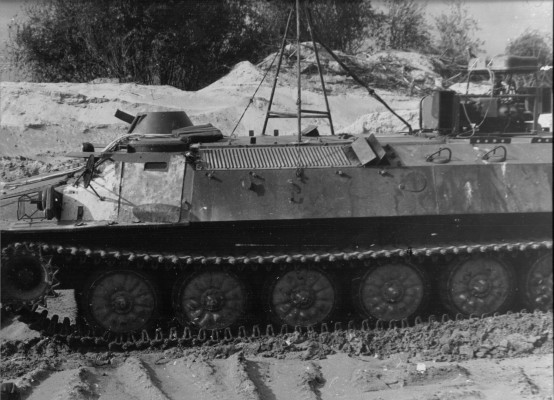
For works in the area surrounding Chernobyl power plant, armoured units with hardening against radiation were used. Much hope were put into remote controlled robots. First remote controlled units were tractors from Chelyabinsk. The first experience wasn't great, impact of temperatures and radiation wasn't accounted for. Once we tried a Japanese robot. It was a man-like robot. However, "the Japanese" stopped short of a small pile of radioactive waste. Chernobyl human personnel turned out to be tougher than the Japanese robot, because on the day of the disaster they just stepped over such heaps of debris.
Modern and advanced robot for Chernobyl zone were made in just 2 months. There were varieties: the "tiny guys" scouts weighing 38 kilograms. The task of these was to move across the "moonscape", inspect debris, measure radioactivity. Two such scouts were lost. One fell on its side of the roof and could not lift itself. Another one descended into a well in one of the plant's corridors. The radiation level was too high there. It "lived" for one day more, and was reporting back data. On another day, TV equipment malfuctioned.
In addition to scouts, there was a bulldozer robot, picker robot equipped with a number of tools, truck robot and rescue robot.
dimo_stoianov
New member
Maybe this post is evil or politically not correct but current actions of Japan government are just like this video (this little russian song is from 1936)
And original french version with english and french subtitles:
Last edited:

They are projecting to use a fire truck with a water cannon to fill the pool.
They could attach on the front a lead plate to protect the driver ? Or equip the truck with a remote system (but that would take some time I fear).
They could attach on the front a lead plate to protect the driver ? Or equip the truck with a remote system (but that would take some time I fear).
- Joined
- Feb 13, 2008
- Messages
- 5,398
- Reaction score
- 8
- Points
- 0
- Location
- Khimki
- Website
- tigerofsiberia.livejournal.com
Maybe this post is evil or politically not correct but current actions of Japan government are just like this video (this little russian song is from 1936)http://www.youtube.com/watch?v=nSIUBCrOi5U
<off_topic> The song "Tout va très bien, Madame la Marquise" is originally written in 1935 in French, and the French text can be found here. The sound is really Russian from 1936, but the footage is more likely contributes to the 80's. </off_topic>
More on the UK team, in the British parliament at 1224 GMT PM David Cameron made a statement:
Seems very clearly a case of incompetence by the British Embassy in Tokyo, which the PM now wants cleared up so that the team can go back to do its work. No indication that the Japanese govt had anything to do with this fiasco.
Do they still seem like amateurs without any credentials? Or does it seem more likely that the diplomats messed up and sent a group of necessary workers home?
Prime Minister David Cameron told the House of Commons on Wednesday that the IRC did not have the right documentation to join the aid effort... Mr Cameron also said that steps were now being taken to get the Scots aid workers back into Japan to join the effort.
Seems very clearly a case of incompetence by the British Embassy in Tokyo, which the PM now wants cleared up so that the team can go back to do its work. No indication that the Japanese govt had anything to do with this fiasco.
Do they still seem like amateurs without any credentials? Or does it seem more likely that the diplomats messed up and sent a group of necessary workers home?
I retract my statement, their work looks legit. I'm not convinced their experience covers contaminated zones.
EDIT: re - water guns. The other option is to use it as is and simply order the operator to stay there. Full MOPP 4 gear is assumed. The Japanese government is mobilizing very slowly, BTW.
EDIT #2: It may be off-topic, but reading the IRC web site stories was quite enlightening. China Earthquake May 2008 - not getting to the site, denied visas and no letter from Chinese Red Cross.
Indonesia quake 2009 - 2 days of search.
Pakistan quake 2005 -
???WTh-233? Search and rescue party that has to be rescued by the locals?
But:
A mixed success story. The crux of the problem is that they arrive too late.
EDIT: re - water guns. The other option is to use it as is and simply order the operator to stay there. Full MOPP 4 gear is assumed. The Japanese government is mobilizing very slowly, BTW.
EDIT #2: It may be off-topic, but reading the IRC web site stories was quite enlightening. China Earthquake May 2008 - not getting to the site, denied visas and no letter from Chinese Red Cross.
Indonesia quake 2009 - 2 days of search.
Pakistan quake 2005 -
2230hrs (1730hrs get) with no further contacts the search has been
closed down. The transport has not returned and the weather has turned
cold. The team decide to light a fire whilst they consider what to do
next. They had been abandoned in an unknown area with no real
knowledge of how to return to base. After some time collecting wood
and with little luck in setting the fire a local stepped forward and
takes over. With the help of a candle he has the fire going in less than 5 minutes
???WTh-233? Search and rescue party that has to be rescued by the locals?
0005hrs (1905hrs GMT 9th Oct) the car has returned and all the team
are safely back at the base camp. A meeting is held with Rob Holden,
UN Coordinator at which the rescue operation is discussed. As a non rescue person he asks for general advice and guidance on technical
matters. He is hopeful to deploy this section again prior to 0600hrs
(0100hrs GMT). Having travelled light the section are living out of
day bags.
But:
Section 1.
They try to get transport to the next site. 0930hrs (0430hrs GMT) One
small vehicle arrives and 3 are sent back with the gear. Ray and
Willie stay at the location whilst a return trip to base camp is made.
0940hrs (0440hrs GMT) a local comes and asked the 2 members to go with
him to a near by building where live sounds are reported. Ray and
Willie go on foot and by 0945hrs (0445hrs GMT) are on scene and have a
confirmed sounding. Whilst Ray contacts base by radio and requests the
sections return a small hole is cut into the floor slab and Willie
puts his head under. A hand almost immediately touches him. Due to the
lack of equipment it may not be possible to cut the reinforcing bars
and so whilst the locals enlarge the hole and with Ray▒EUR(TM)s help
knock out the bars, Willie starts a tunnel under the slab from the
side. Progress is rapid and by approx 0952hrs (0452hrs GMT) the
casualty has been reached and he was removed. After a short medical
inspection by Ray and Willie it was confirmed that the boy of approx
13 years of age has only a bruised left hip/thigh and he was carried
from the site by a relative. A search of the site was carried out and
with no equipment available, other than day bags, no further
casualties are located.
A mixed success story. The crux of the problem is that they arrive too late.
Last edited:

- Joined
- Jan 7, 2008
- Messages
- 5,814
- Reaction score
- 869
- Points
- 203
- Location
- Earth
- Website
- orbides.org
- Preferred Pronouns
- she/her


I retract my statement, their work looks legit. I'm not convinced their experience covers contaminated zones.
Very happy you think so. Appreciate your comment very much :thumbup:
They won't necessarily be deployed in contaminated zones, their exact deployment will be up to the Japanese govt.

- Joined
- Feb 6, 2008
- Messages
- 38,965
- Reaction score
- 3,937
- Points
- 203
- Location
- Wolfsburg
- Preferred Pronouns
- Sire
Instead of water guns, they should maybe thing about using aerosol extinguishers for washing radioactive contaminations out of the air and cool the reactor... such things would be much more effective, they are used here for protecting chemical plants and can really cool things quickly.
http://www.basf.com/group/corporate...ide/europe/Ludwigshafen/Fire_department/index
[ame="http://www.youtube.com/watch?v=F-UjAyHZMdY"]YouTube - Turbo Löschfahrzeug 2[/ame]
http://www.basf.com/group/corporate...ide/europe/Ludwigshafen/Fire_department/index
[ame="http://www.youtube.com/watch?v=F-UjAyHZMdY"]YouTube - Turbo Löschfahrzeug 2[/ame]
Robots are being used, but not at the Nuclear Plant :
http://www.huffingtonpost.com/2011/03/14/japan-earthquake-2011-robots_n_835475.html
http://www.huffingtonpost.com/2011/03/14/japan-earthquake-2011-robots_n_835475.html

RGClark
Mathematician
- Joined
- Jan 27, 2010
- Messages
- 1,635
- Reaction score
- 1
- Points
- 36
- Location
- Philadelphia
- Website
- exoscientist.blogspot.com
There is still some water in the pool, but the level is quite low, which explains that the radiations can easily get through.
It seems that we have 24 to 48 hours before the pool gets dry. If it is the case, there would be horrible consequencies :
- The fuel itself would melt, and possibly melt into the ground and all around the pool.
- The protective layer of the fuel rods would oxyde very fast in contact of the air. They could act like giant radioactive matches (!).
- If that happens, there would be a terrible fire in open air, and we would be in a Tchernobyl-like situation, with comparable fallouts.
So the japanese safety authorities are trying to find a way to get water in that pool. It is impossible with helicopters because of the radiation.
Update : water guns could be used to fill the pool from a distance.
(Local news)
It would be time to put robots into action, no ? After all, Japan is the leading country in robotics... If we can operate rovers in Mars, we should be able to get a robot to bring a fire hose in the pool...
Good point. They even have humanoid robots that could fill in for humans.
Other possibilities might be the humanoid robots designed with hands similar to human hands, such as NASA's [ame="http://en.wikipedia.org/wiki/Robonaut"]Robonaut[/ame], and Germany's Justin.
Bob Clark
Pardon my ignorance, but could high levels of radiation zap the delicate circuitry of a robot with EMP type bursts?
@Wishbone re: IRC, nobody's perfect, I'm sure not all rescue operations go 100% smoothly. IMO they're to be commended for their transparency in recording their mistakes so that the next rescue teams can learn from them.
@Wishbone re: IRC, nobody's perfect, I'm sure not all rescue operations go 100% smoothly. IMO they're to be commended for their transparency in recording their mistakes so that the next rescue teams can learn from them.
Pardon my ignorance, but could high levels of radiation zap the delicate circuitry of a robot with EMP type bursts?
As far as I know, we're not (yet) in those scales of radiation... But that could happen at extremely high level (also depending of the shielding of the robot circuitry).
Similar threads

- Replies
- 3
- Views
- 3K


- Replies
- 2
- Views
- 3K

- Replies
- 1
- Views
- 3K
