
Launch News (partial failure!) Yamal-402, Proton-M/Briz-M, December 8, 2012

Cosmic Penguin

Geek Penguin in GTO
News Reporter
Donator
Joined
Jan 27, 2011
Messages
3,672
Reaction score
3
Points
63
Location
Hong Kong
To be honest, after making so many reports about it, I have never been in love with the Proton. The rocket is rather heavy for its performance, it uses toxic fuel, its launching location cuts off quite a bit of its potential performance (had it launch from Kourou it would probably do more than 8 tonnes to GTO, without using a hydrogen-based upper stage!), and it's a beast that's hard to tame - from Jan. 1969 to Feb. 1970 it sets the record of 9 launch failures in 11 launches (!), and even today it's reliability is only around 90%, not exactly at the top of the list. That's why I call it the Silver Hypergolic Monster(TM). However, I still admire it for quite a few reasons, one of which is its fast turnaround time - tonight will see its 4th launch in less than two months!

Today's passenger is the second satellite in less than five weeks that will join the fleet of Gazprom Space Systems, a Russian communication company formed by the Russian oil and natural gas giant. Unlike the recently launched Yamal-300K, Yamal-402 is built by Thales Alenia Space, and the launch was contracted with the American International Launch Services.

This will be the 8th commercial mission of the year for ILS and the 77th ILS Proton mission since the Proton April 1996 first commercial flight.

This is the 1st Gazprom Space Systems satellite launched with Proton and the 8th Thales Alenia Space-built satellite launched on Proton.

ILS_Yamal402_drupal-mc_0.jpg


200px-Khrunichev_logo.svg.png


ils.jpg


logo_image_en.png


Resizer.ashx


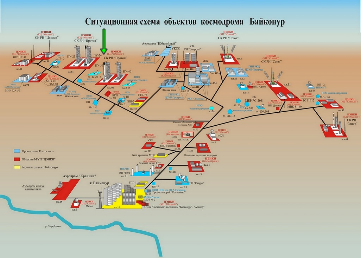
Launch location:

Baikonur Launch pad no. 200/39 46° 2'23.85"N, 63° 1'54.98"E
baik200-39.png


Launch dates and times:

[table="head"]{colsp=6}Launch times

Time Zone|
Baikonur / UTC+6
|
Moscow / UTC+4
|
Universal / UTC
|
Washington / EST
|
Los Angeles / PST

Launch time (Primary):
|
19:13:43​
|
17:13:43​
|
13:13:43​
|
08:13:43​
|
05:13:43​

on:
|
Dec. 8, 2012
|
Dec. 8, 2012
|
Dec. 8, 2012
|
Dec. 8, 2012
|
Dec. 8, 2012

{colsp=6}
[highlight][eventTimer]2012-12-08 13:13:43?before|after;%dd% Days %hh% Hours %mm% Minutes %ss% Seconds %c%[/eventTimer] Yamal-402 Launch[/highlight]​

[/table]

Live Coverage Of The Launch:


PAYLOAD

Yamal-402 communication satellite:

yamal-402__1.jpg


Mission Summary

In February 2009 Gazprom Space Systems ordered two Yamal-400 communication satellites from Thales Alenia Space. The satellites named Yamal 401 and Yamal 402 will be based on the Spacebus-4000C3 bus and are planned to be launched in 2011. According to the signed document Thales Alenia Space, as the prime contractor, will be responsible for design, manufacture, testing and turnkey delivery of Yamal-401 and Yamal-402 satellites as well as for the associated ground segment deployment. Originally planned to be launched on Ariane-5ECA vehicles, the satellites have now been transferred to Proton-M Briz-M rockets.

The Yamal-400 satellites will have guaranteed lifetime of 15 years. Yamal-402 will be placed at the 55 E orbital slot and will be equipped with 46 Ku-band transponders providing for the coverage zone over the most part of the territory of Russia, CIS, Europe, Middle East and Africa.

[table="head"]{colsp=2}Summary
Parameter|Value
Working Orbit:​
|GEO
Orbital Location:​
|55° East
Coverage:​
|Russia, Europe, southern Africa, south-east Asia
ApA at separation:​
|35696 km
PeA at separation:​
|7470 km
Inc at separation:​
|9.0°
[/table]

[table="head"]Characteristics|
Yamal-402

Customer:​
|
  • Gazprom Space Systems
    logo_image_en.png

Prime contractor:​
|
  • Thales Alenia Space
    Resizer.ashx

Platform:​
|
  • Spacebus-4000C3

Mass at Separation:​
|
  • 4460 kg

Dry Mass:​
|
  • ?

Stabilization:​
|
  • 3 axis stabilized

Dimensions (stowed):​
|
  • ?

Batteries:​
|
  • ?

Payload:​
|
  • 46 Ku-band transponders

Life time:​
|
  • 15 years

Ku-band coverage:​
|
  • 402_ku_rus.png
  • 402_ku_nord.png
  • 402_ku_euro_south_beams.png


|
3A3U8416s_5.jpg
[/table]

Launch Vehicle:

[table="head"]{colsp=2}Characteristics

proton-m_en.jpg
|[table="head"]{colsp=2}
Proton-M / Briz-M

Prime contractor:​
|
  • Khrunichev Space Centre
    khrunichev_logo.gif

GRAU Index:​
|
  • 8K82KM

Height:​
| 58.2 m with upper stage and payload fairing

Diameter:​
| max 7.4 m

Liftoff mass:​
| 705 metric tonnes

Payload mass:​
| ~22 tonnes at LEO

1st stage:​
|
  • 6 X RD-275 engines
  • Empty 30.6 tonnes
  • Propellants 419.41 tonnes (UDMH and NTO)
  • Thrust in vacuum 1069.8 tonnes of force
  • Thrust at sea level 971.4 tonnes of force

2nd stage:​
|
  • 1 X RD-0211 engine 3 X RD-0210 engines
  • Empty 11.4 tonnes
  • Propellants 156.113 tonnes (UDMH and NTO)
  • Thrust in vacuum 237.4 tonnes of force

3rd stage:​
|
  • 1 X RD-0213 engine & 1 X RD-0214 vernier engine
  • Empty 3.7 tonnes
  • Propellants 46.562 tonnes (UDMH and NTO)
  • Thrust in vacuum 59.36 (core) + 3.15 (vernier) tonnes of force

Upper Stage:​
|
briz2b.gif

  • GRAU Index: 14S43
  • Common Name: Briz-M
  • Designer & Manufacturer: Khrunichev Space Centre
  • Dimensions: Length 2.654 m, Diameter 4 m
  • Empty Mass 2.2 tonnes
  • Propellants 6 660 kg UDMH + 13 260 kg N2O4
  • Flight time: no less than 24 hours

  • Main Engine: 1 X 14D30
  • Thrust in vacuum 2.0 tonnes of force
  • ISP 328.6 s
  • Main engine restarts: up to 8 times

  • Precision Manoeuvering Engines: 4 X 11D458
  • Thrust in vacuum 400 N each
  • ISP 252 s

  • RCS Engines: 12 X 17D58E
  • Thrust in vacuum 13.3 N each
  • ISP 274 s

Payload Fairing:​
|
  • Diameter 4.35 m
  • Length 11.6 m

[/table]
[/table]

The vehicle's reliability statistics according to http://www.spacelaunchreport.com/log2012.html#rate:

Code:
================================================================ 
Vehicle     Successes/Tries Realzd Pred  Consc. Last     Dates    
                             Rate  Rate* Succes Fail    
================================================================
Proton-M/Briz-M  56    61    .92  .90      3    08/06/12 2001-


Yamal-402 Ascent Profile

The Proton-M first three stages place the orbital unit (OU), which consists of a Breeze-M upper stage, adapter system and Yamal-402, into a 51.5° inclination suborbital trajectory.

Proton-M powered flight lasts 582 seconds. The OU powered flight begins at the moment of the third stage separation.

Y402_launch.jpg


Immediately after the separation of the third stage booster, the Breeze-M stability engines start, damping the angular velocities of the third stage separation and then providing orbital unit orientation and stability during coast flight along a suborbital trajectory to await the first burn. The upper stage follows a four-burn injection profile.

Y402_timeline.jpg


Y402_orbit.jpg


Y402_track.jpg


Yamal-402 Ascent Timeline

[TABLE="head"]Event|Time rel lift-off|Time UTC|Comment
Ignition Start Sequence|-00:00:02.5|13:13:40.5|
Stage 1 Ignition (40% thrust)|-00:00:01.75|13:13:41.25|
Command Stage 1 (100% thrust)|-00:00:00.9|13:13:42.1|
Maximum Dynamic Pressure|00:01:02|13:14:45|
1st/2nd Stage Separation|00:02:00|13:15:43|
2nd/3rd Stage Separation|00:05:27|13:19:10|
Payload Fairing Separation|00:05:47|13:19:30|
3rd Stage/Breeze M Separation|00:09:42|13:23:25|
1st Burn Ignition|00:11:16|13:24:59|
1st Burn Shutdown|00:15:55|13:29:38|1st Burn's Duration 00:04:39
2nd Burn Ignition|01:07:15|14:20:58|
2nd Burn Shutdown|01:25:29|14:39:12|2nd Burn's Duration 00:18:14
3rd Burn Ignition|03:29:44|16:43:27|
3rd Burn Shutdown|03:47:34|17:01:17|3rd Burn's Duration 00:17:50
APT Jettison|03:48:55|17:02:38|
4th Burn Ignition|08:54:00|22:07:43|
4th Burn Shutdown|09:02:49|22:16:32|4th Burn's Duration 00:08:49
Spacecraft Separation|09:15:00|22:28:43|
[/TABLE]

Weather forecast for Baikonur, Kazakhstan on December 8, 2012 (7 p.m.)

Overcast in the evening, then partly cloudy. Fog overnight. Low of -1C. Winds from the WSW at 10 to 15 km/h.

Time|Temps|Dew Point|Relative Humidity|Precip|Snow|Cloud cover|Pressure|Wind|Weather
8 PM|4°C|4°C|100%|0%|0%|100%|1020 hPa|14 km/h SW|
nt_fog.gif
Fog

References
http://www.federalspace.ru
http://tvroscosmos.ru
http://www.khrunichev.ru
http://www.ilslaunch.com
http://tihiy.fromru.com/Rn/RN_Proton.htm
http://space.skyrocket.de/doc_sdat/yamal-402.htm
http://www.gazprom-spacesystems.ru/en/new_projects/yamal_402/background/
http://www.tsenki.com
http://forum.nasaspaceflight.com
http://www.novosti-kosmonavtiki.ru
http://www.spacelaunchreport.com
http://english.wunderground.com/cgi-bin/findweather/getForecast?query=44.84999847,65.50000000
 
Last edited:
Rollout video

Rollout video from tvroscosmos:
 
Less than 15 minutes to go, and the ILS coverage has started....
 
Briz-M first burn complete, three more to go....

And those guys at ILS were mistaken that the rocket disappeared into low cloud banks - it actually reappeared just as they cut to the animation! :thumbsdown: Thus most of you guys have missed Max-Q and stage separation etc..... :( at least this one does include the camera views....

 
Launch failure:

ILS DECLARES A PROTON LAUNCH ANOMALY
BAIKONUR COSMODROME, Kazakhstan, December 8, 2012– Khrunichev State Research and Production Space Center (Khrunichev) and International Launch Services (ILS) regret to announce an anomaly during the launch of the Yamal 402 satellite. The satellite had been built by Thales Alenia Space for Russian satellite operator, Gazprom Space Systems.

The Proton Breeze M rocket lifted off at 7:13 p.m. today local time from the Baikonur Cosmodrome, carrying the Yamal 402 satellite. Preliminary flight information indicates that the 4th and final burn of the Breeze M engine ended about four minutes early and subsequently separated the spacecraft.
Thales Alenia Space is recalculating all the Launch Early Orbit Phase (LEOP) parameters in order to propose the possible recovery plans to Gazprom Space Systems.

A Russian State Commission will begin the process of determining the reasons for the anomaly. ILS will release details when data becomes available. In parallel with the State Commission, ILS will form its own Failure Review Oversight Board (FROB). The FROB will review the commission’s final report and corrective action plan, in accord with U.S. and Russian government export control regulations.

ILS will work diligently to identify the cause and implement corrective actions. Additional information will be provided as it becomes available.
 
Launch failure:

ILS DECLARES A PROTON LAUNCH ANOMALY
BAIKONUR COSMODROME, Kazakhstan, December 8, 2012– Khrunichev State Research and Production Space Center (Khrunichev) and International Launch Services (ILS) regret to announce an anomaly during the launch of the Yamal 402 satellite. The satellite had been built by Thales Alenia Space for Russian satellite operator, Gazprom Space Systems.

The Proton Breeze M rocket lifted off at 7:13 p.m. today local time from the Baikonur Cosmodrome, carrying the Yamal 402 satellite. Preliminary flight information indicates that the 4th and final burn of the Breeze M engine ended about four minutes early and subsequently separated the spacecraft.
Thales Alenia Space is recalculating all the Launch Early Orbit Phase (LEOP) parameters in order to propose the possible recovery plans to Gazprom Space Systems.

A Russian State Commission will begin the process of determining the reasons for the anomaly. ILS will release details when data becomes available. In parallel with the State Commission, ILS will form its own Failure Review Oversight Board (FROB). The FROB will review the commission’s final report and corrective action plan, in accord with U.S. and Russian government export control regulations.

ILS will work diligently to identify the cause and implement corrective actions. Additional information will be provided as it becomes available.

Well do you want to hear about the good news or the bad news? ;)

The good news is that the Briz-M shutdown was exactly 4 minutes early, and the stage detected something is wrong and separated the spacecraft immediately (see the live data here: http://www.space-center.ru/LiveEvents.aspx) Luckily the shortfall isn't very large (maybe ~1000 m/s of delta-v, making the final orbit ~3000 x 36000 x 25 deg.), so the spacecraft can definitely made up the short fall, perhaps even only eating up the margins if it's lucky.

The bad news? Six failures in 51 flights in less than 7 years (not including another one that never got a chance to fire), 7 failures if you also count the Briz-KM on the Rockot rocket, and you still think that "all iz well"? Frankly this is another reason that I don't like this rocket: with an upper stage that has a low thrust (~20000 Newtons) engine that needs pump to feed fuel and requires at least 4 to 5 restarts, has to withstand the harsh conditions of space for 10 hours and still able to control itself, and is so complex that it needs an extra outer fuel tank, it really isn't hard to imagine that its reliability won't be that great. I really think that a hydrogen upper stage might be the only answer to such a problem, but those Russian guys opted not to put it on the Proton and decided to wait for Angara (first flight still ~18 months away....). Oh well.......
 
New orbit data is up:

2012-070A/39022: 3071 x 35672 km x 26.05°
2012-070C/39024: 3038 x 35680 km x 26.08°


This orbit is about 1620 m/s from GSO, so the satellite's fuel loss won't be very high (in the worse scenario, maybe costing 2-3 years worth of service life). :oh:

At least those guys at Roscosmos are still rather confident that they can hand over the satellite to GSS by January 8. :shifty: The satellite will made its first burn overnight. (http://www.federalspace.ru/main.php?id=2&nid=19753)

Edit: this report said that the satellite will lose 4 years worth of fuel, shortening the predicted lifetime to about 11 years
 
Last edited:
[FONT=VERDANA, ARIAL, HELVETICA, SANS-SERIF][SIZE=+2]Russian satellite launch fails to reach proper orbit[/SIZE][/FONT]
[FONT=VERDANA, ARIAL, HELVETICA, SANS-SERIF][SIZE=-2]
BY JUSTIN RAY
SPACEFLIGHT NOW

Posted: December 8, 2012; Updated @ 10:55 p.m. with ILS statement[/SIZE][/FONT]
spacer.gif


The Russian space industry suffered another malfunction Saturday when the upper stage of the heavy-lift Proton rocket failed to perform the full duration of its final boost-burn, leaving a domestic telecommunications satellite in a lower-than-planned orbit at the end of a 9-hour flight from the Baikonur Cosmodrome.

proton.jpg

[FONT=Verdana, Arial, Helvetica, sans-serif][SIZE=-3]The Proton rocket was rolled out to the launch pad Wednesday. Credit: Roscosmos[/SIZE][/FONT]

Launch of the Yamal 402 spacecraft occurred at the precise moment of 1313:43 GMT (8:13:43 a.m. EST) atop the Proton M/Breeze M vehicle combination en route to geosynchronous transfer orbit.

The launch came just after sunset in temperatures just above the freezing mark, but the rocket rapidly disappeared into a low cloud deck within a few seconds of flight.

It was supposed to take 9 hours and 15 minutes to reach the ascent's completion, releasing the 9,839-pound satellite into an highly elliptical orbit expected to range from 4,642 miles at perigee to 22,181 miles at apogee and inclined 9 degrees to the equator.

Getting there began with the six main engines of the 191-foot-tall rocket blasting at liftoff to send the four-stage vehicle in the skies of Kazakhstan.
The lower three stages that comprised the Proton core vehicle sequentially fired through the initial 10 minutes of flight, leaving the Breeze M upper stage to step through four burns over the next several hours to achieve a preliminary parking orbit before heading into intermediate orbits to hit the geosynchronous transfer orbit.

Overseeing the mission was International Launch Services, the commercial marketer of Proton flights. ILS reported that the first three burns by the upper stage and jettison of the donut-shaped auxiliary fuel tank on the Breeze M had been performed, presumably putting the vehicle into a 317-mile by 22,147-mile orbit inclined 48 degrees to the equator within four hours of liftoff.

The rocket would then coast away from Earth for nearly five hours until the Breeze M would re-start its engine for a fourth and final burn of the day, raising the orbit's low point from 317 miles to 4,642 miles and bringing the inclination down from 48 degrees to 9 degrees relative to the equator where it ultimately would be stationed.

But instead of delivering nearly 9 minutes of propulsion as planned, the burn lasted four minutes short of that, leaving the satellite in the "off-nominal" orbit, according to a statement released by Proton rocket-builder Khrunichev.

International Launch Services said a Russian State Commission will be formed to investigate what went wrong and the ILS would set up its own Failure Review Oversight Board to review the commission's final report and corrective action plan.

"ILS will work diligently to identify the cause and implement corrective actions. Additional information will be provided as it becomes available," the firm said.

Yamal 402 was supposed to maneuver itself into a circular geosynchronous orbit 22,300 miles up and lowering inclination where it can match Earth's rotation and appear parked over the equator at 55 degrees East longitude to begin a 15-year service life.

Whether the spacecraft has enough fuel to overcome the rocket problem and still have a sufficient reserve for its 15-year mission life was not immediately known Saturday.

yamal402.jpg

[FONT=Verdana, Arial, Helvetica, sans-serif][SIZE=-3]Yamal 402 atop its Breeze M upper stage in pre-launch preparations. Credit: Roscosmos[/SIZE][/FONT]

Built by Thales Alenia Space using the Spacebus 4000C3 platform, the satellite is equipped with a payload of 46 Ku-band transponders supporting four fixed transmission beams and one steerable beam.

Gazprom Space Systems of Moscow planned to operate Yamal 402 in expanding its orbital fleet, using the satellite to relay communications across Russia, the Commonwealth of Independent States, Europe, the Middle East and Africa.

This was the 383rd Proton rocket launch since 1965 and the 77th by International Launch Services since 1996, the 8th just this year for ILS and 11th overall by the heavy-lift booster. It is the first time ILS has launched a satellite for Gazprom Space Systems and the eighth Thales Alenia Space-built craft to ride aboard the commercial Proton.

Yamal 402 was shipped from the Thales factory in Cannes on Nov. 4 to start the launch site campaign. The satellite underwent final testing testing, the loading of maneuvering fuel, mating to the upper stage and encapsulation within the Proton's two-piece nose cone to form the Space Head Unit.

That combined element was connected to the Proton core in horizontal fashion before rolling out to the launch pad by rail on Wednesday. The booster was erected vertically and shrouded by the pad's mobile service gantry for the final days of preparations.

Saturday's flight date has held steady throughout the launch campaign.
 
That's a rather nice looking rocket though.. Especially on the ground, make one hella rocket sled!
 
I have no idea what the Russians are thinking at this moment, but apparently there's a chance that the next Proton launch (an ILS flight with Satmex-8 originally scheduled on December 27) may go as planned! :blink:(http://ria.ru/science/20121209/914023802.html)

Meanwhile it was reported that the investigation is looking at a failure of the Briz-M main engine itself. (http://www.interfax.ru/society/txt.asp?id=280047) Interestingly it shares quite a bit of components with the main engine of the Fregat upper stage, yet it never suffered from a hardware failure (only a ground processing issue) since its first flight in 2000...... :hmm:
 
RIA Novosti: Troubled Russian Satellite Reaches Designated Orbit:
MOSCOW, December 15 (RIA Novosti) - A wayward Russian satellite reached its designated geostationary orbit on Saturday after its engine was switched on for the fourth time, the Gazprom Space Systems (GSS) company said.

“The fourth and final orbit adjustment ended in success. The Yamal-402 communications satellite was taken to its geostationary orbit at the altitude of 36,000 km,” a GSS spokesman said.

{...}
 
RIA Novosti: Turbopump Bearing Blamed For Failed Russian Comsat Orbiting:
MOSCOW, December 25 (RIA Novosti) - Russian space agency Roscosmos experts say the destruction of a bearing inside the turbopump of the Briz-M upper stage's engine is the most likely reason for the initial failure of Russia’s Yamal-402 satellite to reach its designated orbit, the Kommersant business daily reported on Tuesday.

{...}
 
ILS: Roscosmos Management Releases Investigative Commission's Report
ON PROTON LAUNCH ANOMALY TO KHRUNICHEV STATE RESEARCH AND SPACE PRODUCTION CENTER
:
January 11, 2013- Roscosmos management has reviewed and approved the report provided by the Russian working group investigating the Proton launch anomaly during the Yamal 402 mission and have provided the report to Khrunichev State Research and Space Production Center (Khrunichev).The findings on the identified most probable root cause of the anomaly and the required corrective actions will be released to ILS after the report clears Russian security during the week of January 21st.

The Russian working group, convened by Roscosmos, included independent experts from TsNIIMash (Central Scientific Research Institute of Machine Building), the leading institution of Roscosmos to support design, development and research into rocket and space articles, and M.V. Keldysh Research Center, the leading Russian entity for rocket engines.

International Launch Services (ILS) has formed a Failure Review Oversight Board (FROB) which will review the Commission’s final report and corrective action plan, in accordance with U.S. and Russian government export control regulations. The FROB will begin in Moscow on January 30thand consists of ILS customers, industry subject experts, and insurance industry representatives. The FROB will provide an independent review of the investigation, root cause and corrective actions required prior to return to commercial flight. After the conclusion of the FROB, the FROB report will be briefed to ILS customers and the launch insurance industry.

The anomaly occurred during the 4th and final burn of the Breeze M engine during a planned 9 hour and 15 minute mission. The 4th burn ended about four minutes early and the spacecraft was subsequently separated. The spacecraft, built by Thales Alenia Space for Russian satellite operator Gazprom Space Systems, was successfully maneuvered to its orbital position and was declared fully operational on January 8th 2013 after completing its on orbit tests.

Additional information will be provided as it becomes available.

{...}
 
ILSlaunch.com: ILS FROB Concludes the Yamal 402 Proton Launch Anomaly Investigation

February 12, 2013 - The International Launch Servies (ILS) Failure Review Oversight Board (FROB) concluded its review on February 7, concurring on the most probable root cause and the associated corrective action plan of the December 8, 2012 anomaly of the Yamal 402 Proton launch. The FROB analyzed the findings and recommendations of the Russian working group, which included participation from experts from TsNIIMash (Central Scientific Research Institute of Machine Building), M.V. Keldysh Research Center and Khrunichev State Research and Space Production Center (Khrunichev).

The members of the FROB agreed with the findings of the Russian investigation that the most probable root cause of the failure was due to a combination of adverse conditions which affected the operation of the Breeze M main engine during the startup of the 3rd burn causing damage to a bearing on the oxidizer side of the turbo pump. This ultimately resulted in the failure of the bearing during the 4th burn and caused the 4th burn of the Breeze M to end about four minutes early, with subsequent separation of the spacecraft. The spacecraft, built by Thales Alenia Space for Russian satellite operator, Gazprom Space Systems, was successfully maneuvered to its orbital position and was declared fully operational on January 8, 2013 after completing its on orbit tests.

Spaceflight Now: Commercial Proton flights cleared to resume in March

An anomaly during a December Proton rocket launch of a Russian communications satellite was caused by the failure of a bearing inside the launcher's Breeze M upper stage, ultimately causing the launcher to release its commercial payload in the wrong orbit, International Launch Services announced Tuesday.

Experts found the most probable root cause of the mishap was a "combination of adverse conditions" leading to the failure of a bearing inside the main engine of the launcher's Breeze M upper stage.

The Dec. 8 launch carried the Yamal 402 communications satellite for Gazprom Space Systems, a division of Russian oil and gas producer Gazprom.

After lifting off from the Baikonur Cosmodrome in Kazakhstan, the three-stage Proton rocket boosted a Breeze M upper stage and the Yamal 402 satellite on an arcing suborbital trajectory. The Breeze M engine was supposed to fire four times to place the payload in an elliptical transfer orbit.

But the Breeze M's fourth burn, which was scheduled to last nine minutes, ended about four minutes early when a bearing failed on the oxidizer side of the main engine's turbopump, according to engineers who examined data from the mission.

The "adverse conditions" affected the Breeze M during the start of the upper stage's third burn, but the engine bearing did not fail until the fourth burn about five hours later.

{...}
 
Last edited:
Back
Top